Isabella Augusta
Lady Gregory was an Anglo-Irish dramatist and folklorist who co-founded the Abbey Theatre and championed Irish cultural nationalism.
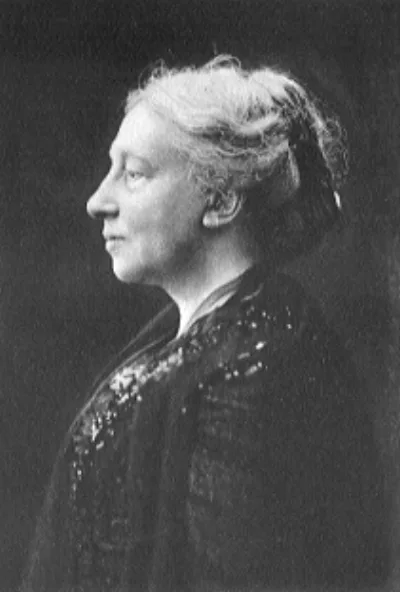
Isabella Augusta, Lady Gregory (1852–1932) was a significant figure in the Irish Literary Revival, co-founding the Irish Literary Theatre and the Abbey Theatre with W.B. Yeats and Edward Martyn. Born into the Anglo-Irish gentry, she later embraced Irish cultural nationalism, a shift reflected in her extensive writings.
Her home at Coole Park became a hub for Revival artists. Lady Gregory was a prolific writer, known for her plays, short stories, and particularly her retellings of Irish mythology and folklore. She developed a unique style, "Kiltartanese," which adapted Irish dialects for the stage. Her work aimed to make Irish legends accessible, and her efforts were highly praised by contemporaries like Yeats. She also served as a theatre manager and advocate, playing a crucial role in the development and operation of the Abbey Theatre.
Early Life and Shifting Loyalties
Born Isabella Augusta Persse in County Galway to an Anglo-Irish landowning family, her early education was influenced by her Catholic Irish-speaking nurse, who introduced her to local history and legends. She married Sir William Henry Gregory, a much older widower and former Governor of Ceylon, in 1880. They lived at Coole Park, a large estate in Galway, and also maintained a London home where they hosted literary salons. While her early life and marriage aligned her with British cultural norms, travels and experiences, particularly an affair in Egypt and subsequent writings like "Arabi and His Household," hinted at nascent political and social awareness. A later editorial project involving her husband's grandfather's correspondence solidified a shift from "soft" Unionism towards strong support for Irish nationalism and a "dislike and distrust of England."
Champion of Irish Folklore and Language
A pivotal trip to the Aran Islands in 1893 reawakened Lady Gregory's interest in the Irish language and local folklore. She began organizing Irish lessons and actively collecting tales from her surroundings, including from residents of the Gort workhouse. This dedication led to the publication of numerous volumes of folk material, such as "A Book of Saints and Wonders" and "The Kiltartan History Book." She also adapted Irish myths into English, creating "Kiltartanese" versions of stories like "Cuchulain of Muirthemne" and "Gods and Fighting Men." This unique linguistic approach, which blended English with Irish sentence structures, aimed to capture the essence of spoken Irish dialects and make ancient legends accessible to a wider audience. Her interpretations were highly regarded, with W.B. Yeats calling "Cuchulain of Muirthemne" the best book to come out of Ireland in his time.
Founding and Directing the Abbey Theatre
Lady Gregory was instrumental in the establishment of the Irish National Theatre Society, later known as the Abbey Theatre. Collaborating with W.B. Yeats and Edward Martyn, she helped found the Irish Literary Theatre in 1899, undertaking crucial fundraising efforts. After its collapse, she was a key figure in forming the Irish National Theatre Society in 1904, which secured the use of the Abbey Theatre building. She co-managed the theatre, wrote numerous short plays for its productions, including "Spreading the News" which was performed on opening night, and remained an active director until her retirement in 1928 due to ill health. Her commitment extended to defending controversial works, such as Synge's "The Playboy of the Western World," even when she did not fully agree with the play itself, viewing the ensuing riots as a "battle" between different social attitudes.
Key Ideas
- Cultural Nationalism: Transition from identifying with British rule to advocating for Irish self-determination and cultural identity.
- Folklore Revival: Collection, adaptation, and dissemination of Irish myths, legends, and folk tales.
- Kiltartanese: A unique literary dialect blending English syntax with Irish linguistic patterns for theatrical purposes.
- Theatre as a National Institution: Founding and managing the Abbey Theatre to foster Irish dramatic arts and express national identity.
Notable Quotes
“To think like a wise man, but to express oneself like the common people.”
“whatever political indignation or energy was born with me may have run its course in that Egyptian year and worn itself out”
“It is the old battle, between those who use a toothbrush and those who don't.”
Books by Isabella Augusta
4 free public domain books · Read online or download