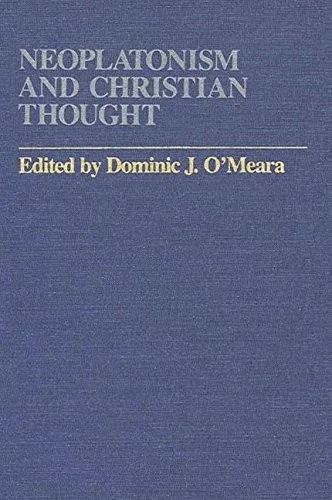
Dominic J. O'Meara
Dominic J. O'Meara's work explores Neoplatonism's profound influence on Christian theology and philosophy.
Dominic J. O'Meara's scholarship delves into the significant impact of Neoplatonism on Christian thought, particularly during Late Antiquity and the Middle Ages. Early Christian thinkers like Origen, Gregory of Nyssa, and Augustine engaged with Neoplatonic ideas, adapting concepts such as the incorporeality of God and the soul, and viewing evil as a privation of good. Augustine, in particular, found Neoplatonism a crucial philosophical bridge from Manichaeism to Christianity, adopting its emphasis on mystical contemplation while rejecting absolute monism.
Further theological developments were shaped by figures like Pseudo-Dionysius the Areopagite, whose writings, influenced by later Neoplatonists, became foundational for Greek Church Fathers. This Neoplatonic current continued through the Middle Ages, with Pseudo-Dionysius's works translated into Latin, and resurfaced prominently during the Renaissance with scholars like Marsilio Ficino. O'Meara's work examines how these philosophical threads were woven into the fabric of Christian theology, mysticism, and esotericism across different historical periods and geographical traditions, including Eastern Orthodox thought.
Neoplatonism's Impact on Early Christian Thought
Neoplatonism exerted a considerable influence on Christian theology in Late Antiquity and the Middle Ages, particularly in the East. Prominent Greek Fathers, including Basil, Gregory of Nyssa, and Gregory of Nazianzus, drew from Platonic and Neoplatonic thought, often alongside Stoicism, which sometimes led to ascetic practices. In the West, St. Augustine of Hippo was deeply affected by early Neoplatonists like Plotinus and Porphyry. Augustine found Neoplatonic concepts, such as evil as a lack of good and God's incorporeal nature, instrumental in his transition from Manichaeism to Christianity. The emphasis on mystical contemplation for direct communion with the divine, as expressed by Plotinus, also resonated with Augustine, shaping his understanding of God and the soul.
Transmission and Adaptation in Later Antiquity and the Middle Ages
The influence of Neoplatonism extended through later periods, notably via the writings of Pseudo-Dionysius the Areopagite. Influenced by later Neoplatonists like Proclus and Damascius, Pseudo-Dionysius's works became a cornerstone for subsequent Greek Church Fathers, who often believed them to be the writings of the biblical Dionysius the Areopagite. These texts were crucial for Byzantine and Roman Christianity, with John Scotus Eriugena translating them into Latin in the 9th century. Despite Neoplatonism's philosophical links with Gnosticism, which Plotinus critiqued, and its eventual suppression under Justinian I's closure of the Academy of Athens, its ideas were synthesized with Christian thought by figures within rhetorical schools like Gaza.
Neoplatonism in Eastern Orthodox and Renaissance Thought
Eastern Orthodox theology selectively incorporated elements of Greek philosophy, including Neoplatonism, adapting concepts like the Logos. The writings attributed to Dionysius the Areopagite remain a subject of debate regarding whether they represent a Neoplatonist with Christian influences or vice versa, with many Orthodox scholars favoring the latter. Figures like Gregory Palamas cited Dionysius on mystical theology and the unknowability of God. In the Renaissance, a significant revival of Neoplatonism occurred, spearheaded by Marsilio Ficino, who translated key Neoplatonic texts. This period also saw Neoplatonism intersect with Jewish Kabbalah and Christian esotericism, contributing to intellectual movements like the Cambridge Platonists.
Key Ideas
- Neoplatonism's influence on Christian theology in Late Antiquity and the Middle Ages.
- Augustine's philosophical journey from Manichaeism to Christianity via Neoplatonism.
- The role of Pseudo-Dionysius the Areopagite in shaping Christian thought.
- The selective adaptation of Neoplatonic concepts in Eastern Orthodox theology.
- The Renaissance revival of Neoplatonism and its connection to esotericism.
Books by Dominic J. O'Meara
0 free public domain books · Read online or download