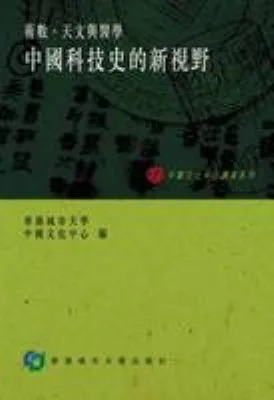
Zhongguo ke ji shi de xin shi ye
 61
61

Zhongguo ke ji shi de xin shi ye


Isolde Whitaker, Sacred Texts Editor, offers a compelling assessment: "Pei-kai Cheng's 'A New Chapter in the History of Chinese Science' is an illuminating exploration into the esoteric heart of Chinese scientific development. Cheng masterfully navigates the intricate connections between astronomy, medicine, and philosophical cosmology, revealing a rich tradition of knowledge often obscured by Western scientific paradigms. This work is indispensable for anyone seeking a deeper understanding of the symbolic language and metaphysical underpinnings that guided ancient Chinese scholars. It offers profound insights into the holistic worldview that permeated their scientific endeavors, making it a vital read for practitioners of esoteric arts and curious minds alike."
📝 Description
61
Pei-kai Cheng's 1987 book examines the philosophical basis of Chinese scientific history.
Pei-kai Cheng's "A New Chapter in the History of Chinese Science" examines the philosophical underpinnings of Chinese scientific inquiry. The work moves beyond a simple historical narrative to investigate the connections between ancient cosmology, celestial observation, and consciousness. Cheng details a worldview characterized by cyclical patterns, energetic forces, and a respect for cosmic order. The book explains how celestial movements were understood not just as data points, but as symbolic representations of earthly occurrences and guides for human conduct.
This volume invites readers interested in the esoteric origins of scientific understanding. It shows a tradition where logic and mysticism were not separate. The book is for those seeking hidden knowledge, students of ancient thought, and anyone wishing to grasp the often ignored spiritual aspects of scientific history.
This work situates Chinese scientific thought within a tradition that viewed the cosmos as a living, interconnected system. Unlike Western science, which often separates the material from the spiritual, Chinese inquiry historically integrated these dimensions. Concepts like Qi (vital energy) and the Mandate of Heaven demonstrate a worldview where natural phenomena carried moral and spiritual weight. Cheng's analysis highlights how astronomical observation was tied to divination and the maintenance of cosmic harmony, reflecting an esoteric understanding of universal laws.
💡 Why Read This Book?
Uncover the hidden spiritual dimensions of Chinese scientific history, explore the profound symbolism connecting celestial movements to terrestrial life, and gain a holistic understanding of a tradition where science and mysticism were one. Ideal for seekers of ancient wisdom, scholars of comparative history, and practitioners of Eastern metaphysical arts.
⭐ Reader Reviews
Honest opinions from readers who have explored this book.
❓ Frequently Asked Questions
What is the primary focus of this book?
The book primarily focuses on the esoteric and philosophical underpinnings of Chinese scientific development, particularly highlighting the interconnectedness of astronomy, cosmology, medicine, and divination.
Does this book require prior knowledge of Chinese history or science?
While prior knowledge can enhance the reading experience, the book is written to be accessible to a broad audience interested in esoteric history and philosophy. Cheng provides sufficient context for newcomers.
How does this book differ from standard scientific histories?
This book distinguishes itself by emphasizing the mystical, symbolic, and philosophical dimensions that informed Chinese scientific thought, rather than focusing solely on empirical data and methodologies.
What is the intended audience for this work?
The intended audience includes scholars of history and philosophy, students of esoteric traditions, practitioners of astrology and traditional medicine, and anyone curious about the spiritual dimensions of scientific inquiry.
Can this book be used for practical applications?
While not a direct how-to guide, the insights gained into the worldview and symbolic language of ancient Chinese science can inform and enrich practices in fields like astrology, traditional medicine, and contemplative disciplines.
🔮 Key Themes & Symbolism
Cosmic Harmony and Celestial Influence
This theme studies the ancient Chinese belief that the cosmos is a living, interconnected entity. The movements of celestial bodies were not seen as mere physical phenomena but as potent expressions of cosmic order, influencing earthly events and human destiny. Cheng explores how this understanding shaped astronomical observation, calendrical systems, and the very foundation of Chinese scientific thought, revealing a profound dialogue between the heavens and the human realm, where the stars served as both a map and a mirror of existence.
The Symbiosis of Science and Spirituality
Cheng illuminates the unique integration of scientific inquiry with spiritual and metaphysical beliefs in traditional China. Unlike modern Western divisions, ancient Chinese science was deeply interwoven with concepts of Qi (vital energy), Yin and Yang, and the Five Elements. This section explores how these philosophical tenets provided a framework for understanding natural phenomena, from the efficacy of herbal medicine to the predictive power of astrology, demonstrating a holistic approach where the pursuit of knowledge was intrinsically linked to spiritual cultivation.
Divination as a Form of Cosmological Understanding
This theme examines the role of divination in ancient Chinese science, not as mere fortune-telling, but as a sophisticated method of interpreting cosmic patterns and understanding the interconnectedness of the universe. Cheng illustrates how practices like I Ching and astrological prognostication were integral to scientific observation, providing insights into the subtle energies and cyclical rhythms that governed both the macrocosm and the microcosm. It reveals divination as a profound tool for discerning universal principles and aligning human actions with the cosmic flow.
💬 Memorable Quotes
Direct passages from the work, attributed to the author.
“To understand the body is to understand the heavens, and to know the heavens is to know the self.”
— This highlights the holistic philosophy, linking microcosm (human body) and macrocosm (universe) through shared principles and energetic correspondences, central to Chinese scientific thought.
“The cyclical nature of time mirrors the ebb and flow of vital energy.”
— This points to the importance of cyclical patterns and the concept of Qi (vital energy) in understanding both temporal progression and the dynamic forces governing the universe.
“Every observation is a question posed to the cosmic order.”
— This suggests that scientific inquiry in this tradition was driven by a deep curiosity and a desire to decipher the underlying order and intelligence of the universe.
“The true science lies not in dissection, but in harmonious integration.”
— This contrasts with reductionist approaches, advocating for a holistic understanding that seeks to perceive the interconnectedness and balance within natural systems.
💡 Key Ideas
Editorial paraphrase of the work's core concepts — not direct quotes.
The stars are not distant lights, but whispers of the universe's grand design.
This quote emphasizes the ancient Chinese view of celestial bodies as active participants in a cosmic dialogue, carrying profound meaning and influence beyond their physical presence.
🌙 Esoteric Significance
Tradition
This book is deeply rooted in the esoteric traditions of ancient China, particularly Taoism and Confucianism, as well as indigenous cosmological frameworks. It explores the intricate connections between I Ching (Book of Changes), Traditional Chinese Medicine (TCM), Feng Shui, and Celestial Mechanics, all viewed through a lens of universal interconnectedness and energetic flow. The emphasis is on understanding the Tao, the underlying principle of the universe, and how its manifestations are reflected in both celestial phenomena and terrestrial life, offering a path to harmony and self-cultivation.
Symbolism
Key symbols explored include the dragon and phoenix representing Yin and Yang, the Five Elements (Wood, Fire, Earth, Metal, Water) governing all transformations, and the Bagua, a symbolic map of the universe. Celestial bodies themselves are potent symbols: the Big Dipper as a cosmic regulator, the lunar phases as indicators of change, and constellations as celestial palaces. These symbols are not merely decorative but are seen as active forces and archetypal patterns that reveal the underlying order and energetic dynamics of existence, providing a rich language for understanding the world.
Modern Relevance
In an era often characterized by fragmentation and disconnection, Cheng's work offers a vital re-evaluation of holistic scientific paradigms. It provides a counterpoint to purely materialistic scientific views, demonstrating how a deep understanding of cosmic cycles and energetic interplay can foster a more integrated and harmonious relationship with nature and ourselves. The insights into ancient Chinese cosmology and its scientific applications offer profound lessons for contemporary fields such as sustainable living, personalized medicine, and psychological well-being, encouraging a return to a more balanced and spiritually informed approach to understanding reality.
👥 Who Should Read This Book
This book is a treasure for the serious seeker of hidden knowledge, offering a profound exploration of the esoteric dimensions of Chinese science. Scholars of Asian history, philosophy, and comparative religion will find invaluable insights into a unique intellectual tradition. Practitioners of astrology, Traditional Chinese Medicine, and Feng Shui will discover the deep cosmological roots of their disciplines. Beginners curious about the spiritual underpinnings of scientific inquiry will find a compelling introduction to a worldview where the rational and the mystical are inextricably linked. It is for anyone who believes that true understanding lies not just in empirical data, but in the recognition of universal patterns and profound interconnectedness.
📜 Historical Context
Pei-kai Cheng's work emerges from a rich tradition of Chinese scholarship that has long sought to interpret the intricate relationship between humanity and the cosmos. The historical context spans millennia, from the earliest astronomical observations made during the Shang and Zhou dynasties, through the sophisticated calendrical and astrological systems developed during the Han dynasty, to the philosophical advancements of the Song and Ming eras. This period saw the development of a unique scientific worldview where empirical observation was often integrated with philosophical speculation, divination, and a deep understanding of cyclical patterns. Unlike the increasingly secular and mechanistic approach of Western science, Chinese scientific thought remained profoundly spiritual and holistic, viewing the universe as a unified entity governed by subtle energies and profound correspondences. Cheng's "A New Chapter" situates itself within this ongoing intellectual legacy, offering a fresh perspective on how these ancient understandings shaped a civilization's approach to science and its place within the grand cosmic order.
📔 Journal Prompts
Reflect on a celestial event you have witnessed. How might it be interpreted through the lens of ancient Chinese cosmology?
Consider the concept of Qi (vital energy). Where do you perceive its flow in your own life and environment?
Explore the symbolism of one of the Five Elements. How does it manifest in your personal experiences or the world around you?
How does the idea of cosmic harmony resonate with your personal sense of well-being and place in the universe?
If divination is a form of understanding cosmic patterns, what patterns do you currently observe in your life or the world?
🗂️ Glossary
Qi (氣)
The fundamental vital life force or energy that animates all things in the universe according to Chinese philosophy and medicine. It is believed to flow through everything and is essential for health and balance.
Yin and Yang (陰陽)
Two complementary and interdependent forces or principles that are believed to constitute the fundamental duality of the universe. They represent opposing yet interconnected qualities such as dark/light, passive/active, and feminine/masculine.
The Five Elements (五行)
A philosophical concept that describes the dynamic relationships and cycles of five basic elements: Wood, Fire, Earth, Metal, and Water. They are believed to govern all natural phenomena and interactions, including human health and cosmic order.
Bagua (八卦)
An ancient Chinese set of eight trigrams, each consisting of three stacked horizontal lines of either yin (broken line) or yang (solid line). It is a fundamental symbol in Taoist cosmology and is used in various practices like Feng Shui and the I Ching to represent universal principles and relationships.
I Ching (易經)
Also known as the Book of Changes, it is an ancient Chinese divination text and philosophical classic. It uses hexagrams, formed from combinations of yin and yang lines, to provide insights into the dynamics of change and offer guidance for various situations.
This book appears in 2 collections
🔮 Readers Also Liked
Browse all →








From the “Astrology” Collection
View all →








More Free Astrology & Cosmology Books
View all →