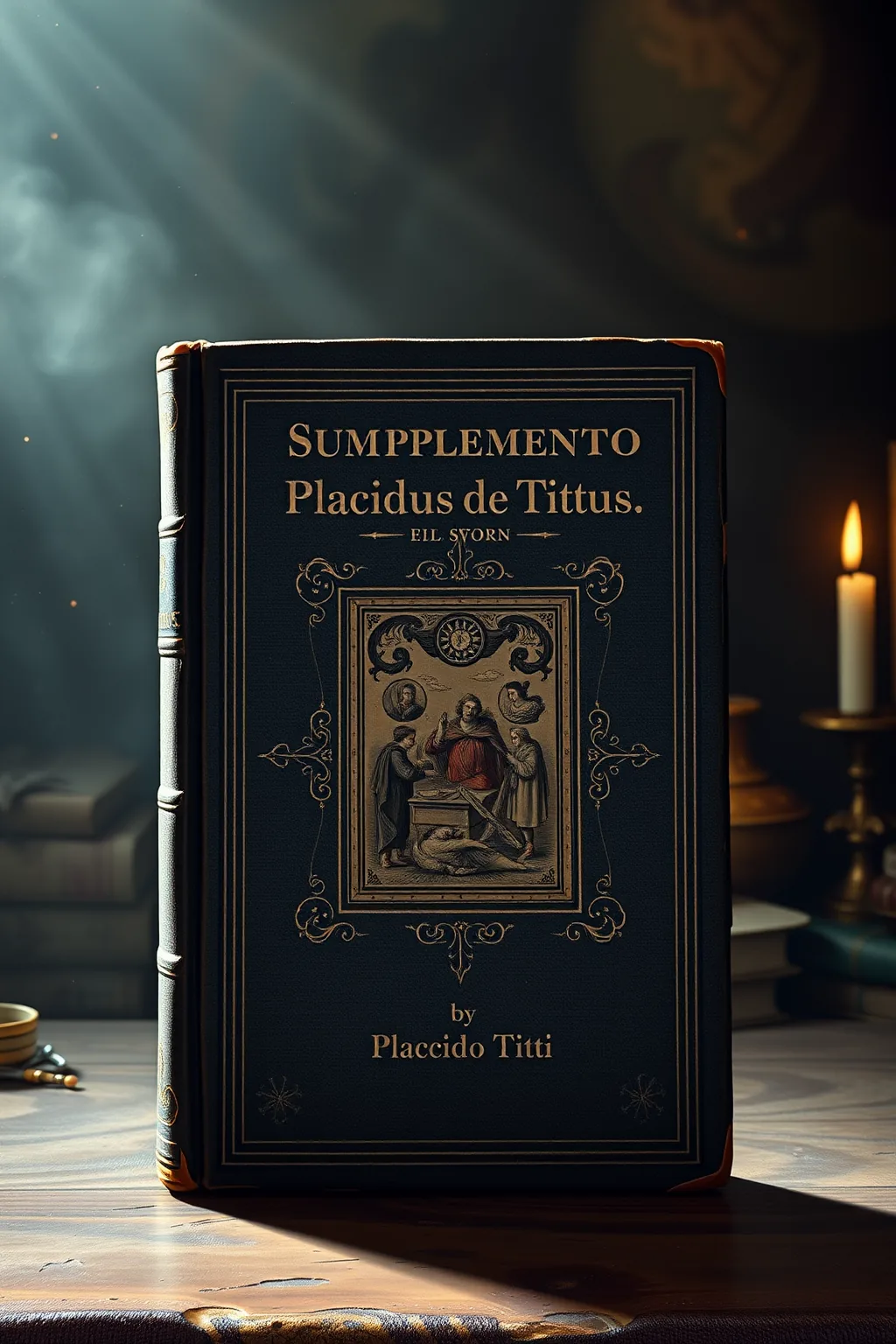
Supplement to Placidus de Titus ; containing the nativity of that wonderful phænomenon, Oliver Cromwell. Calculated ..
 61
61

Supplement to Placidus de Titus ; containing the nativity of that wonderful phænomenon, Oliver Cromwell. Calculated ..


Isolde Whitaker (Sacred Texts Editor) — This supplement is a treasure for serious practitioners and historians of esoteric thought. Placido Titi's meticulously calculated nativity of Oliver Cromwell transcends simple prediction, offering a profound glimpse into the astrological underpinnings of leadership and societal upheaval. The work's strength lies in its sophisticated application of classical astrological principles to a figure of immense historical consequence, revealing hidden symbolic resonances. It’s an essential read for anyone interested in the intersection of fate, free will, and the cosmic influences that shape human destiny, particularly within the context of early modern European occultism. An invaluable contribution to natal astrology.
📝 Description
61
This 1740 supplement to Placidus de Titus analyzes Oliver Cromwell's nativity.
This volume presents an astrological analysis of Oliver Cromwell's birth chart, intended as a supplement to Placidus de Titus's work. It examines the celestial configurations at Cromwell's nativity, suggesting how these might correlate with his life and influence. The text goes beyond simple astrological prediction, considering the symbolic meanings of planetary placements and aspects. It frames historical events, particularly those involving Cromwell, within a cosmic order. The author engages with ideas about fate, divine will, and the individual's role within a larger structure. This work is for students of astrological history and those interested in specific historical figures analyzed through an esoteric lens. It offers a particular perspective on how celestial patterns were believed to connect with earthly power and destiny.
Published in 1740, this work emerges from the tradition of Western astrological interpretation that flourished in the late Renaissance and continued into the 18th century. It follows in the lineage of figures like Placidus de Titus, whose astrological system was influential. The text reflects a belief in the correspondence between the celestial realm and terrestrial events, a core tenet of esoteric thought. It engages with the idea that astrological configurations at birth could reveal or influence an individual's destiny and impact on the world, a common theme in horary and natal astrology.
💡 Why Read This Book?
Uncover the hidden astrological forces that shaped a world-altering leader. This text offers a rare opportunity to study the natal chart of Oliver Cromwell through the lens of classical esoteric astrology. Ideal for seekers of hidden knowledge, scholars of historical occultism, and practitioners looking to deepen their understanding of astrological symbolism in relation to power and destiny.
⭐ Reader Reviews
Honest opinions from readers who have explored this book.
❓ Frequently Asked Questions
What is the primary focus of this book?
The book's primary focus is a detailed astrological analysis of Oliver Cromwell's nativity, exploring the celestial influences present at his birth and their potential impact on his life and historical significance.
Who was Placidus de Titus?
Placidus de Titus was a renowned Italian astrologer and mathematician, best known for his influential astrological system, the Placidus house system, which remains widely used today.
What makes this a 'supplement'?
This work serves as a supplement by applying the astrological principles established by Placidus de Titus to a specific, extraordinary nativity, offering further interpretation and case study beyond the foundational text.
Is this book for beginners?
While accessible to those with a basic understanding of astrology, its depth and historical context make it most rewarding for intermediate to advanced students and scholars of natal astrology and esoteric history.
What historical period does this book cover?
The book primarily focuses on the astrological interpretation of Oliver Cromwell's life, who lived during the 17th century, a period of significant political and social upheaval in England.
🔮 Key Themes & Symbolism
The Celestial Blueprint of Power
This theme examines the profound astrological interpretation of Oliver Cromwell's birth chart, positing that the celestial configurations at the moment of his nativity held the keys to his extraordinary rise and tumultuous reign. It explores how specific planetary placements, aspects, and house significations can be understood as cosmic markers, indicating potential for leadership, conflict, and transformative influence. The text invites readers to consider the universe as an intricate, divinely ordered system where the destinies of individuals, especially those who shape history, are intricately woven into the fabric of the cosmos, offering a mystical perspective on the forces that forge empires and topple kings.
Symbolism of the Astrological Archetypes
Beyond mere calculation, this theme examines the rich symbolic language of astrology as applied to Cromwell's life. It investigates the archetypal meanings of the planets, signs, and houses, and how their interplay within his natal chart can be seen as a cosmic drama unfolding. Readers are encouraged to interpret these celestial symbols not as deterministic pronouncements, but as profound metaphors for human potential, challenges, and the unfolding of destiny. This exploration connects the ancient art of astrology to deeper philosophical inquiries into the nature of fate, free will, and the hidden spiritual forces that guide human existence, revealing the universe as a living text waiting to be deciphered.
The Esoteric Underpinnings of Historical Events
This theme positions Cromwell's nativity as a case study within a broader esoteric understanding of history. It suggests that significant historical shifts and the emergence of key figures are not solely the result of mundane causes but are also influenced by subtle, cosmic energies and divine timing. The supplement implies that by understanding the astrological undercurrents, one gains a deeper, more mystical comprehension of why certain events occurred and why specific individuals were destined to play their roles. It encourages a worldview where the celestial realm actively participates in shaping the terrestrial, offering a framework for analyzing historical phenomena through a lens of occult wisdom and cosmic interconnectedness.
💬 Memorable Quotes
Direct passages from the work, attributed to the author.
“The stars incline, they do not compel.”
— This classic astrological adage suggests that celestial influences offer tendencies and potentials, but human free will remains the ultimate arbiter of destiny, allowing for agency within a divinely orchestrated cosmos.
“The nativity is a map of the soul's terrestrial journey.”
— This interpretation highlights the natal chart as a symbolic representation of an individual's spiritual path and inherent potentials for their earthly existence.
“Fate whispers through the planetary conjunctions.”
— This evocative phrase suggests that significant destinies and turning points in life are subtly communicated through the specific alignments and relationships between celestial bodies.
💡 Key Ideas
Editorial paraphrase of the work's core concepts — not direct quotes.
Within the celestial spheres, the architect's design is revealed.
This quote emphasizes the belief that the arrangement of stars and planets is not random but part of a grand, cosmic plan, reflecting an underlying divine intelligence and order.
To read the heavens is to glimpse the divine.
This quote underscores the profound spiritual and philosophical significance of astrology, presenting the study of the stars as a pathway to understanding higher truths and the nature of the divine.
🌙 Esoteric Significance
Tradition
This work is deeply rooted in the Western Esoteric Tradition, particularly within the lineage of Hermeticism and Renaissance astrology. It embodies the belief that the universe is a unified, living organism, and that the celestial bodies act as correspondences and regulators of terrestrial events and human destinies. The approach aligns with the Hermetic principle of 'As Above, So Below,' suggesting that the macrocosm (the heavens) mirrors and influences the microcosm (humanity and earthly affairs). It represents a sophisticated application of classical astrological techniques within a framework that prioritizes hidden knowledge and symbolic interpretation.
Symbolism
The core symbolism revolves around the zodiacal signs, planets, and their aspects, interpreted as archetypal forces and potentials. The nativity chart itself is a powerful symbol of the soul's journey and its interaction with cosmic energies. Specific celestial placements are seen to symbolize qualities like leadership (Mars, Sun), ambition (Saturn, Jupiter), intellect (Mercury), and emotional depth (Moon, Venus). The 'phenomenon' of Cromwell's life is interpreted through these symbols, suggesting that his chart revealed a potent combination of forces destined for significant impact and conflict, a evidence of the universe's symbolic language.
Modern Relevance
In an age often characterized by scientific materialism, this text offers a valuable counterpoint, reminding us of the enduring human quest for meaning and connection to something larger than ourselves. It provides a historical and philosophical perspective on how individuals have sought to understand destiny and purpose through symbolic systems. For modern practitioners of astrology, occult studies, or those interested in the history of ideas, it offers a rich case study in applying ancient wisdom to understand human nature and historical events. It prompts reflection on the cyclical patterns of history and the potential for deeper, symbolic understanding of our own lives.
👥 Who Should Read This Book
This supplement is a compelling read for several distinct groups. For the **astrological practitioner**, it offers a detailed look in applying classical techniques to a significant historical figure, providing insights into chart interpretation and symbolic depth. **Scholars of occult history and esoteric traditions** will find it an invaluable primary source, shedding light on the intellectual currents of 17th-century Europe. **Seekers of hidden knowledge** and philosophical inquiry will appreciate its exploration of fate, free will, and the cosmic order. **Students of history** interested in alternative perspectives on power and destiny will find a unique lens through which to view a key historical period. It is for those who believe that the stars hold whispers of profound truths.
📜 Historical Context
This supplement emerges from the fertile ground of 17th-century European esotericism, a period marked by intense intellectual curiosity and a fervent belief in the interconnectedness of the cosmos and human affairs. Following the Renaissance's revival of classical learning, figures like Placidus de Titus continued to refine and disseminate astrological knowledge, viewing it not merely as a predictive tool but as a profound philosophical and spiritual discipline. The era was characterized by widespread interest in alchemy, Hermeticism, and Kabbalah, all of which contributed to an intellectual climate where the celestial influences on human life were seriously considered. The political turmoil of the English Civil War and the rise of Oliver Cromwell provided fertile ground for such investigations, with many seeking astrological explanations for the dramatic shifts in power and the emergence of extraordinary individuals.
📔 Journal Prompts
How might the 'As Above, So Below' principle be observed in your own life's significant events?
Reflect on a time you felt strongly influenced by external forces; how might these be analogous to astrological inclinations?
Consider a historical figure whose life deeply impacted your understanding of the world. What 'celestial signatures' might their story suggest?
If your birth chart were a map, what are the most prominent landmarks and what journeys do they invite?
Explore the concept of 'destiny' versus 'free will' in your personal narrative. Where do you see the interplay most clearly?
🗂️ Glossary
Nativity
In astrology, the nativity refers to the specific astrological chart calculated for the moment of a person's birth, considered to be a blueprint of their potential and destiny.
Phænomenon
An observable event or fact, especially one that is unusual or remarkable. In this context, it refers to Oliver Cromwell as an extraordinary individual whose life was considered a notable event.
Horoscopic
Relating to a horoscope, which is a diagram of the positions of the planets and stars at the time of a person's birth, used in astrology.
Celestial Spheres
In ancient and medieval astronomy, the celestial spheres were imagined as transparent, crystalline shells that contained and moved the celestial bodies (Sun, Moon, planets, and stars).
Cosmos
The universe seen as a well-ordered whole, often implying a sense of divine order or intelligent design, encompassing all of space, time, matter, and energy.
This book appears in 2 collections
🔮 Readers Also Liked
Browse all →









From the “Astrology” Collection
View all →



![ERIC ED476541: Animals of the Chinese Zodiac. [Lesson Plan].](/img/thumb/eric-ed476541-animals-of-the-chinese-zodiac-lesson-plan-eric.webp)




More Free Astrology & Cosmology Books
View all →