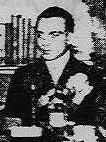
Eugen Herrigel
Eugen Herrigel was a German philosopher known for introducing Zen to Europe through his writings on archery, though his interpretations have been debated.
Eugen Herrigel, born in 1884, was a German philosopher who taught in Japan from 1924 to 1929. During his time in Japan, he studied traditional Japanese archery, known as kyūdō, under the master Awa Kenzō, reportedly with the aim of better understanding Zen Buddhism. Upon returning to Germany in 1929, Herrigel became a philosophy professor. His experiences and interpretations of kyūdō and Zen were later published, most famously in "Zen in the Art of Archery" (1948), which significantly influenced European understanding of Zen. However, scholarly analysis has questioned the accuracy of Herrigel's portrayal, suggesting his teacher Awa Kenzō did not practice Zen, and that Herrigel may have misinterpreted his teachings, possibly influenced by other writers on Zen and his own limited grasp of Japanese language. Herrigel also became a member of the Nazi Party and was active in Nazi organizations, leading to a ban from teaching for three years after World War II.
Introduction to Zen in Europe
Eugen Herrigel was a German philosopher whose life and work significantly impacted the introduction of Zen Buddhism to a wider European audience. Born in 1884, he spent a period teaching philosophy in Sendai, Japan, from 1924 to 1929. During this time, he engaged in the practice of kyūdō, the traditional Japanese art of archery. His primary motivation for this practice was reportedly to deepen his understanding of Zen. Herrigel's writings, particularly his most famous book, later translated as 'Zen in the Art of Archery,' became a foundational text for many Europeans seeking to explore Zen philosophy and practice, though the authenticity of his interpretations has been subject to scholarly debate.
Archery Practice and Interpretation
While in Japan, Herrigel studied kyūdō under the renowned archery master Awa Kenzō. Herrigel claimed to have studied archery for six years, though his actual time in Japan was slightly over five years, and his archery studies likely spanned about three of those years. A significant point of contention is whether Awa Kenzō was a practitioner of Zen. Scholars have suggested that Awa did not practice Zen himself and emphasized his own religious path centered on archery, referred to as 'The Great Doctrine of the Way of Shooting.' Herrigel's understanding of Zen through archery is believed by some to have been a misinterpretation of Awa's teachings, possibly influenced by intermediaries who struggled to translate Awa's cryptic statements and by the writings of Zen popularizer D.T. Suzuki.
Later Life and Political Affiliations
Following his return to Germany in 1929, Eugen Herrigel secured a professorship in philosophy at the University of Erlangen. His later life was marked by his involvement with the Nazi Party. He joined the party after the war's outbreak and was an active member of the Militant League for German Culture. This political affiliation led to controversy and, after 1945, he was prohibited from teaching at the university for a period of three years. Herrigel passed away in 1955. His extensive notes on Zen were later compiled and published by his wife and Hermann Tausend, with further revisions by Alan Watts.
Key Ideas
- Zen can be understood through the practice of traditional Japanese archery (kyūdō).
- The spiritual path can be integrated with physical disciplines.
Books by Eugen Herrigel
5 free public domain books · Read online or download