Zen Buddhism: India and China
 79
79

Zen Buddhism: India and China
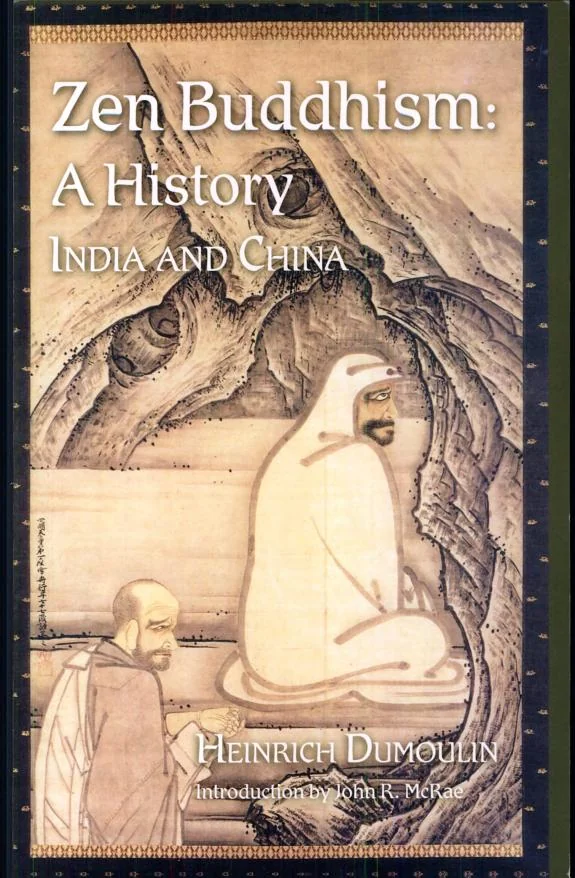
Heinrich Dumoulin's 1988 work, Zen Buddhism: India and China, remains a significant academic undertaking. Its primary strength lies in its meticulous tracing of Zen's formative centuries, moving from the foundational Indian Buddhist thought to its complex sinicization. Dumoulin’s examination of figures like Bodhidharma and Huineng, and the development of schools such as Chan during the Tang and Sung dynasties, is detailed and authoritative. However, the sheer density of historical and philosophical information can, at times, feel overwhelming for the less initiated reader, demanding considerable focus. A particularly illuminating section discusses the influence of Taoist concepts on early Chan, demonstrating how indigenous Chinese thought reconfigured Indian Buddhist doctrines. This book serves as an indispensable reference for scholars but requires dedicated study from its audience.
📝 Description
79
Heinrich Dumoulin's 1988 study traces Zen Buddhism's path from India to China.
Heinrich Dumoulin's work surveys the historical and philosophical development of Zen Buddhism, beginning with its origins in India. It follows Zen's transmission and transformation through various Chinese dynasties, with a focus on the Sung period. The book details the intellectual currents and significant individuals that shaped Zen's distinct character.
This volume is suited for dedicated students of Buddhism, scholars of religious history, and practitioners who want a thorough grasp of Zen's beginnings. It is especially useful for those studying Eastern philosophies comparatively and the historical growth of spiritual traditions, moving past basic introductions to reach the core principles and lineage.
Dumoulin's research appeared when Western academic and public interest in Eastern religions was growing. It built upon existing Buddhist scholarship while presenting a more thorough account of Zen's specific development. The book positions Zen within the larger Mahayana tradition and its interactions with Taoism and Confucianism in China, offering necessary background for understanding Zen's particular practices and doctrines.
Zen Buddhism, as detailed by Dumoulin, represents a distinct lineage within Mahayana Buddhism that emphasizes direct experience and intuitive understanding over scholasticism. Its focus on prajna (wisdom) and sunyata (emptiness) aligns with core Mahayana philosophical aims, while practices like zazen (meditation) and the use of koans highlight its unique contemplative path. The book's examination of Zen's evolution in China reveals how these esoteric principles interacted with existing cultural and philosophical frameworks, such as Taoism and Confucianism, shaping a tradition focused on awakening through disciplined practice and insight.
💡 Why Read This Book?
• Gain a granular understanding of Zen's transmission from India to China, detailing the specific doctrinal shifts that occurred during the Tang Dynasty, a period crucial for Chan's formation. • Explore the philosophical underpinnings of concepts like prajna and sunyata as interpreted within the Chan lineage, moving beyond simplistic definitions. • Appreciate the historical significance of figures like Bodhidharma and his role in establishing the foundational narrative of Zen Buddhism in China.
⭐ Reader Reviews
Honest opinions from readers who have explored this book.
❓ Frequently Asked Questions
What are the key differences between Indian Buddhism and early Chinese Zen discussed in the book?
The book highlights how early Chinese Zen, or Chan, adapted Indian Buddhist concepts like prajna and sunyata. It emphasizes Chan's focus on direct, intuitive experience and meditation (zazen) over extensive scholastic study, influenced by indigenous Taoist thought.
When did Zen Buddhism primarily develop in China according to Dumoulin?
Dumoulin situates the major formative period of Zen Buddhism in China during the Tang Dynasty (618-907 AD), with significant developments continuing through the Sung period (960-1279 AD).
Who was Bodhidharma and why is he important in Zen's history?
Bodhidharma is traditionally regarded as the founder of Chan Buddhism in China. Dumoulin explores his legend and teachings, which emphasized meditation and the direct apprehension of Buddha-nature, laying groundwork for subsequent Zen lineages.
Does the book cover Zen's development beyond China?
While the title specifies India and China, the book focuses on the foundational period. It details the transmission of Zen within China and its early doctrinal evolution, providing the necessary context for its later spread to Korea and Japan.
What is the significance of the Sung period in Zen Buddhism as described by Dumoulin?
The Sung period saw the consolidation and diversification of Chan Buddhism. Dumoulin discusses the emergence of distinct schools and the refinement of practices like koan study, solidifying Zen's place within Chinese religious life.
What is prajna in the context of Zen Buddhism as explained in this book?
Prajna, often translated as wisdom, is a central concept in Zen. Dumoulin explains it as a direct, non-conceptual insight into the true nature of reality, particularly emptiness (sunyata), attained through meditative practice.
🔮 Key Themes & Symbolism
Indian Roots and Transmission
The work meticulously details how core Buddhist doctrines originating in India, such as the concepts of emptiness (sunyata) and wisdom (prajna), were transmitted to China. Dumoulin examines the early stages of this exchange, identifying the philosophical and doctrinal elements that formed the bedrock upon which Chinese Chan Buddhism would later build its distinct practices and interpretations, moving beyond textual exegesis towards experiential realization.
Sinicization of Buddhism
A major focus is the adaptation of Indian Buddhist thought to the Chinese cultural and philosophical landscape. Dumoulin explores how Zen engaged with existing Taoist and Confucian traditions, leading to unique developments in China. This process of 'sinicization' is illustrated through the evolution of monastic practices, the master-disciple lineage, and the emphasis on direct, spontaneous enlightenment, as seen in the teachings attributed to figures like Huineng.
The Role of Meditation and Practice
Dumoulin highlights the centrality of meditative practice (zazen) and direct experience in the development of Zen. The book contrasts this with more scholastic approaches to Buddhism, explaining how techniques like koan study emerged as methods to break down conceptual barriers and foster intuitive understanding of Buddha-nature. This practical emphasis became a defining characteristic of Zen.
Key Figures and Schools
The narrative is anchored by an examination of key figures, from the legendary Bodhidharma to influential masters like Huineng. Dumoulin traces the emergence of distinct Chan schools during the Tang and Sung periods, detailing their differing interpretations and practices. Understanding these historical lineages and intellectual contributions is presented as crucial for grasping the diversity within early Zen.
💬 Memorable Quotes
Direct passages from the work, attributed to the author.
“The influence of Taoism on early Chan cannot be overstated; it provided a philosophical resonance for Buddhist ideas.”
— This statement highlights the crucial interaction between Indian Buddhism and Chinese indigenous thought. It suggests that Taoist concepts like spontaneity and emptiness provided a receptive framework for the transmission and adaptation of Buddhist doctrines in China.
“Bodhidharma's legacy is primarily one of transmitting a method of meditation focused on wall-gazing.”
— This refers to the legendary founder of Chan Buddhism. The interpretation focuses on his reputed method, emphasizing silent contemplation and introspection as the core of early Zen practice, as documented in historical accounts.
“The Sung period saw the maturation and diversification of the Chan school.”
— This observation points to a critical phase in Zen's history where its teachings and practices became more established and varied, leading to the development of distinct lineages and stylistic approaches within Chinese Buddhism.
“Koans function not as logical puzzles, but as catalysts for breaking through ordinary discursive thought.”
— This interpretation explains the purpose of koans in Zen practice. They are presented as tools designed to disrupt habitual thinking patterns and provoke a sudden, direct awakening, rather than requiring intellectual solutions.
💡 Key Ideas
Editorial paraphrase of the work's core concepts — not direct quotes.
Zen's essence lies in the direct, intuitive realization of the Buddha-nature inherent in all beings.
This paraphrased concept underscores Zen's departure from reliance on scriptures alone, pointing to its emphasis on immediate, non-conceptual insight achieved through dedicated practice and mindful awareness.
🌙 Esoteric Significance
Tradition
While Zen Buddhism is primarily a school of Mahayana Buddhism, its emphasis on direct experience, mind-to-mind transmission, and the realization of inherent Buddha-nature aligns with certain esoteric principles found across various mystical traditions. It departs from purely devotional or scholastic paths, seeking an immediate, non-dualistic awakening. Its lineage-based transmission and focus on inner transformation resonate with lineages in Hermeticism or Gnosticism that prioritize gnosis (direct knowing) over external authority.
Symbolism
Key symbols explored include the empty circle (ensō), representing emptiness, ultimate reality, and the void from which all things arise. The transmission of the Dharma from master to disciple, often depicted as a robe or bowl, symbolizes the unmediated passing of enlightened understanding, transcending mere intellectual knowledge. The figure of Bodhidharma himself serves as a potent symbol of austere practice and the uncompromising pursuit of enlightenment.
Modern Relevance
Contemporary thinkers and practitioners in fields ranging from psychology (e.g., mindfulness-based therapies) to philosophy (e.g., process philosophy, phenomenology) draw upon Zen's insights into consciousness and direct experience. Modern Zen practitioners and scholars continue to engage with Dumoulin's foundational work, seeking to understand the historical roots of practices like zazen and koan study in an increasingly globalized spiritual landscape.
👥 Who Should Read This Book
• Academic researchers in Buddhist studies and comparative religion seeking a definitive historical account of Zen's origins and early development in India and China. • Dedicated practitioners of Zen or other Buddhist meditation traditions desiring a deeper, scholarly understanding of the historical and philosophical context of their practice. • Students of esoteric traditions interested in the cross-cultural transmission of spiritual knowledge and the development of non-dualistic philosophies outside of Western frameworks.
📜 Historical Context
Published in 1988, Heinrich Dumoulin's Zen Buddhism: India and China arrived during a period of significant global engagement with Eastern spiritual traditions. Western scholarship on Buddhism had advanced considerably, yet a comprehensive historical account of Zen's formative Chinese phase, particularly detailing its Indian antecedents and early Chinese evolution, remained a desideratum. Dumoulin's work aimed to fill this gap, building upon decades of research. It engaged with the scholarly discourse surrounding the historical Buddha, the development of Mahayana thought, and the specific contributions of figures like Bodhidharma and Huineng. The book implicitly responded to earlier, often romanticized, Western interpretations of Zen by providing a rigorously researched historical and philosophical framework. Key contemporaries in Buddhist studies, such as Edward Conze and the scholars associated with the Eastern Buddhist journal, were producing influential works, and Dumoulin's study offered a detailed narrative that situated Zen within this broader academic landscape.
📔 Journal Prompts
The concept of sunyata as explored through the lens of early Chan.
Bodhidharma's attributed teachings on meditation and their historical impact.
The influence of Taoist concepts on the sinicization of Buddhist doctrines.
The role of the master-disciple relationship in transmitting Zen realization.
The practice of zazen as a path to direct insight.
🗂️ Glossary
Chan
The Chinese name for a school of Mahayana Buddhism that developed from the Indian tradition of meditation, later known as Zen in Japan, Seon in Korea, and Thien in Vietnam. It emphasizes direct experience and meditation.
Prajna
Sanskrit term for wisdom or insight, particularly the profound, non-conceptual understanding of the true nature of reality, central to Mahayana Buddhism and Zen.
Sunyata
Sanskrit term for emptiness or voidness. It refers to the doctrine that all phenomena lack inherent existence or self-nature, a core concept in Mahayana Buddhism and Zen.
Zazen
Japanese term for seated meditation, the primary practice in Zen Buddhism, involving mindful awareness and stillness to cultivate insight.
Koan
A paradoxical anecdote or riddle used in Zen Buddhism to provoke doubt and test a student's progress in Zen practice, intended to break down rational thought.
Buddha-nature
The concept that all sentient beings possess the potential for Buddhahood, an inherent purity and enlightenment that can be realized through practice.
Dharma
In Buddhism, typically refers to the teachings of the Buddha, the cosmic law and order, or the ultimate truth. In Zen, it can also refer to the transmission of enlightened understanding.