The Essence of Bhagavad Gita
 76
76

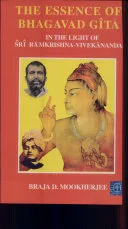
The Essence of Bhagavad Gita
Braja Dulal Mookherjee’s The Essence of Bhagavad Gita offers a commendable effort to present the venerable scripture’s core ideas with clarity. Mookherjee succeeds in untangling the often-dense philosophical arguments, particularly in his explanation of the three primary paths of yoga – karma, jnana, and bhakti. The section detailing Arjuna’s crisis before the Kurukshetra War effectively sets the stage for Krishna’s discourse, highlighting the universal struggle with duty and existential doubt. However, the work occasionally feels constrained by its brevity, sometimes glossing over the nuanced allegorical layers present in the original text. For instance, the full symbolic weight of the battlefield setting could benefit from more extensive exploration. Despite this, Mookherjee provides a solid, accessible entry point for those unfamiliar with the Gita's vast philosophical landscape. It serves as a useful primer, offering digestible insights into a text that has shaped spiritual thought for centuries.
📝 Description
76
Braja Dulal Mookherjee's 2002 book, The Essence of Bhagavad Gita, deciphers a key Hindu scripture.
Published in 2002, The Essence of Bhagavad Gita by Braja Dulal Mookherjee examines the foundational Hindu text. Mookherjee's work aims to clarify the Bhagavad Gita's core philosophical and spiritual messages for a modern readership. It goes beyond simple summarization by presenting Mookherjee's personal views on the text's deeper meanings and how they apply to personal spiritual development.
This book is for anyone wanting a straightforward grasp of the Bhagavad Gita's main ideas. It will interest students of Eastern philosophy, Yoga and Vedanta practitioners, and those curious about Hindu spiritual paths. Readers who prefer commentary that is both scholarly and easy to understand will find it valuable, especially if they are new to the Gita or wish to build on what they already know.
The Essence of Bhagavad Gita joins a long tradition of commentary on a scripture central to Hindu thought for over two thousand years. Mookherjee's approach follows scholars who have introduced Indian philosophy globally. His work engages with ongoing discussions about the Gita's ethical and metaphysical aspects, adding a contemporary perspective to a dialogue spanning centuries.
💡 Why Read This Book?
• Gain a focused understanding of *karma yoga*, the path of selfless action as described by Krishna to Arjuna on the battlefield of Kurukshetra, learning how to perform duties without attachment to results. • Grasp the essence of *jnana yoga*, the pursuit of wisdom and self-knowledge, and how Mookherjee interprets its role in achieving spiritual insight beyond mere intellectual understanding. • Explore the principles of *bhakti yoga*, the path of devotion, and its practical manifestation as presented in the text, understanding how sincere love and surrender can lead to liberation.
⭐ Reader Reviews
Honest opinions from readers who have explored this book.
❓ Frequently Asked Questions
When was The Essence of Bhagavad Gita first published?
The Essence of Bhagavad Gita by Braja Dulal Mookherjee was first published in 2002, making it a relatively modern interpretation of an ancient text.
Who is the author of The Essence of Bhagavad Gita?
The author is Braja Dulal Mookherjee, who sought to distill the core teachings of the Bhagavad Gita for a contemporary audience.
What are the main philosophical paths discussed in the book?
The book primarily discusses three paths: Karma Yoga (the yoga of action), Jnana Yoga (the yoga of knowledge), and Bhakti Yoga (the yoga of devotion).
What is the central dialogue presented in the Bhagavad Gita?
The central dialogue is between Prince Arjuna and Lord Krishna, taking place on the battlefield of Kurukshetra, concerning duty, ethics, and spiritual truth.
Is this book a direct translation of the Bhagavad Gita?
No, The Essence of Bhagavad Gita is not a direct translation but rather an interpretation and distillation of the core philosophical and spiritual teachings of the original scripture.
What makes this book relevant for modern readers?
Its relevance lies in Mookherjee's effort to present the ancient wisdom of the Gita in an accessible manner, offering practical guidance for spiritual growth in contemporary life.
🔮 Key Themes & Symbolism
The Yoga of Action (Karma Yoga)
Mookherjee highlights Karma Yoga as a central pillar of the Bhagavad Gita's teachings. This path emphasizes performing one's prescribed duties without attachment to the fruits of labor. The work explores how this principle, exemplified by Krishna's counsel to Arjuna, offers a method for spiritual purification and detachment. It posits that by engaging with the world mindfully and fulfilling responsibilities with equanimity, individuals can transform ordinary actions into a spiritual practice, thereby progressing on the path to liberation. The book clarifies that Karma Yoga is not about inaction but about a specific quality of engagement with life's tasks.
The Yoga of Knowledge (Jnana Yoga)
Jnana Yoga, the pursuit of wisdom through discernment and self-inquiry, is presented as another crucial avenue for spiritual realization. Mookherjee's interpretation focuses on the Gita's emphasis on understanding the true nature of the self (Atman) and its distinction from the transient material world. This path involves philosophical contemplation and the intellectual dismantling of illusions that bind the individual consciousness. The book elucidates how the quest for knowledge, as advocated by Krishna, leads to the realization of unity and the transcendence of ego-driven desires, paving the way for enlightenment.
The Yoga of Devotion (Bhakti Yoga)
The Essence of Bhagavad Gita dedicates significant attention to Bhakti Yoga, the path of love and surrender to the Divine. Mookherjee explains how this devotional approach, central to many Hindu traditions, offers a direct and emotionally fulfilling route to spiritual union. The book illustrates how Krishna encourages Arjuna to cultivate unwavering faith and surrender, portraying this as a powerful means to overcome spiritual obstacles. This theme underscores the personal relationship between the devotee and the Divine, suggesting that sincere love and devotion are potent forces for transformation and ultimate liberation.
Arjuna's Dilemma and Krishna's Guidance
A core theme explored is the existential crisis faced by Prince Arjuna on the battlefield of Kurukshetra, serving as a powerful metaphor for human struggle. Mookherjee uses this narrative framework to present Krishna's profound teachings on dharma (duty), morality, and the nature of reality. The dialogue between the warrior and the divine charioteer is interpreted not just as an ancient story but as a perennial guide for navigating life's moral and spiritual quandaries. The book emphasizes Krishna's role as a spiritual preceptor, offering practical and philosophical solutions to Arjuna's profound distress.
💬 Memorable Quotes
Direct passages from the work, attributed to the author.
“Perform your prescribed duty, O Arjuna, without attachment to the results.”
— This foundational principle of Karma Yoga, as articulated by Krishna, advises engaging in one's responsibilities with dedication but without being driven by the desire for personal gain or reward.
“The wise discriminate between the field and the knower of the field.”
— This concept, central to Jnana Yoga, highlights the importance of distinguishing between the material body and senses (the field) and the eternal, conscious self (the knower).
“Surrender your actions to Me, with your mind fixed on the Self, O Arjuna.”
— Representing Bhakti Yoga, this instruction emphasizes devotion and trust in the Divine as a means to transcend worldly concerns and achieve spiritual peace.
“The soul is never born and never dies, nor does it cease to exist.”
— This profound statement addresses the eternal nature of the soul (Atman), asserting its immortality and unchanging essence beyond the cycles of birth and death.
“The world is a sphere of action, and action is born of the qualities of nature.”
— This interpretation points to the interconnectedness of the material world, human activity, and the influence of the fundamental modes of material existence (gunas).
🌙 Esoteric Significance
Tradition
This work fits within the broad umbrella of Vedanta philosophy, a major school of Hindu thought, and specifically engages with its esoteric interpretations that focus on the nature of consciousness and liberation. It draws from a lineage that seeks to reveal the underlying unity of existence and the potential for self-realization. While not strictly a Western esoteric text, its exploration of inner transformation, the nature of the soul, and the paths to enlightenment aligns with universal esoteric principles concerning the development of higher consciousness.
Symbolism
The battlefield of Kurukshetra itself serves as a potent symbol, representing the human soul's struggle with its own internal conflicts and external duties. Prince Arjuna embodies the individual seeker wrestling with moral dilemmas, while Lord Krishna acts as the divine guide or higher self. The chariot symbolizes the human personality, with the senses, mind, and intellect needing to be controlled by the driver (the discerning intellect guided by wisdom) to reach the destination of spiritual freedom.
Modern Relevance
The concepts presented in The Essence of Bhagavad Gita continue to resonate with contemporary thinkers and practitioners seeking spiritual grounding. Its emphasis on detachment from outcomes, selfless action (Karma Yoga), and the pursuit of inner knowledge (Jnana Yoga) offers valuable frameworks for reading through the stresses of modern life. Practices like mindfulness and ethical engagement in the workplace can be seen as modern expressions of these ancient principles, making Mookherjee’s interpretation relevant to those interested in applied spirituality and personal development.
👥 Who Should Read This Book
• Students of comparative religion and philosophy seeking a clear introduction to the Bhagavad Gita's core teachings, understanding its place within Hindu scripture. • Practitioners of Yoga and meditation looking to deepen their theoretical understanding of the paths of action (Karma Yoga), knowledge (Jnana Yoga), and devotion (Bhakti Yoga). • Individuals interested in ethical frameworks and spiritual psychology, exploring how ancient wisdom can inform personal conduct and inner peace in the 21st century.
📜 Historical Context
The Essence of Bhagavad Gita, published in 2002, arrives in a long tradition of interpreting the Bhagavad Gita, a scripture dating back possibly to the 2nd century BCE. Mookherjee’s work follows influential commentaries from scholars and spiritual leaders like Swami Vivekananda, who championed Vedanta globally in the late 19th and early 20th centuries, and Sarvepalli Radhakrishnan, whose extensive philosophical analyses of Indian thought gained international recognition. This 2002 publication engages with the ongoing discourse concerning the Gita's ethical framework and metaphysical propositions, seeking to make its complex philosophy accessible in a modern context. It emerges at a time when interest in Eastern spirituality and comparative religion continued to grow worldwide, offering a contemporary perspective on a text that has profoundly shaped Hindu thought and practice for over two millennia. It implicitly dialogues with various schools of Vedanta, offering a synthesized view.
📔 Journal Prompts
The nature of Arjuna's duty versus his emotional turmoil on the battlefield.
Krishna's concept of performing actions without attachment to results.
The distinction between the body and the eternal soul, as explained in Jnana Yoga.
The practice of surrender to the Divine as outlined in Bhakti Yoga.
Identifying one's own 'Kurukshetra' moment and the applicable guidance from the Gita.
🗂️ Glossary
Bhagavad Gita
A 700-verse Hindu scripture, part of the epic Mahabharata, containing a dialogue between Prince Arjuna and Lord Krishna on duty, ethics, and the path to spiritual liberation.
Karma Yoga
The spiritual path of selfless action, emphasizing performing one's duties with dedication but without attachment to the outcome or personal gain.
Jnana Yoga
The spiritual path of knowledge and wisdom, involving self-inquiry, discernment, and the understanding of the true nature of reality and the self.
Bhakti Yoga
The spiritual path of devotion, characterized by love, surrender, and worship of the Divine as a means to achieve union and spiritual fulfillment.
Arjuna
The principal protagonist of the Bhagavad Gita, a warrior prince who receives spiritual instruction from Lord Krishna on the battlefield.
Krishna
A major deity in Hinduism, depicted as the divine charioteer and teacher who imparts the teachings of the Bhagavad Gita to Arjuna.
Dharma
In Hinduism, one's duty, righteousness, or moral order; the intrinsic nature or essential qualities of a being or phenomenon.