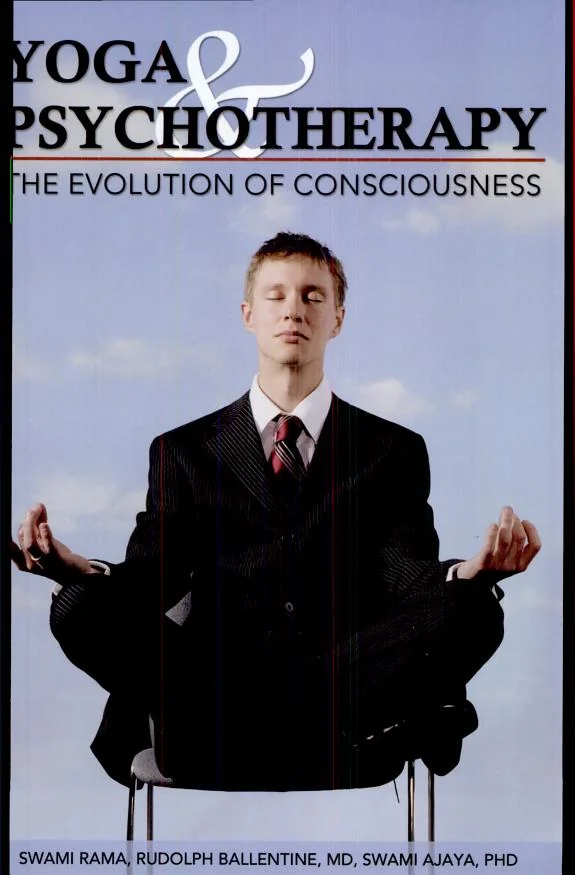
Yoga and Psychotherapy
 76
76

Yoga and Psychotherapy
Swami Rama, Rudolph Ballentine, and Swami Ajaya’s *Yoga and Psychotherapy* is an ambitious undertaking, attempting to map the intricate landscapes of Eastern yogic thought and Western psychological paradigms. The book’s strength lies in its detailed comparative approach, meticulously laying out yogic concepts like the *Pancha Koshas* and contrasting them with Western psychoanalytic frameworks. It offers a rare scholarly bridge, particularly valuable for its 1976 publication date when such integrations were less common. However, the text can sometimes feel overly academic, prioritizing conceptual dissection over practical application. The discussion on *Samadhi*, while informative, might leave readers yearning for more guidance on achieving such states, a common limitation in works bridging experiential traditions with theoretical analysis. Despite this, the work remains a significant historical document for understanding the early dialogue between yoga and psychotherapy.
📝 Description
76
Published in 1976, Yoga and Psychotherapy compares Indian yogic traditions with Western psychotherapy.
This 1976 text by Swami Rama, Rudolph Ballentine, and Swami Ajaya contrasts the ancient yogic frameworks of India with modern Western psychotherapy. It examines the philosophical foundations and practical methods of both systems, detailing their views on consciousness, suffering, and personal change. The book acts as an early connection, showing how Eastern meditation practices and Western psychological ideas can support and enhance each other. It is not a guide to merging techniques, but a serious study of shared and differing concepts.
This work is for dedicated students and practitioners of yoga and psychotherapy. It also serves scholars of comparative philosophy and religion. Readers interested in the underlying theories of mental health and personal development, regardless of their main field, will find it valuable. Those seeking the historical and philosophical origins of consciousness study, especially concerning the exchange between Eastern and Western thought in the late 20th century, will benefit. It is written for the intellectually curious.
Yoga and Psychotherapy appeared in 1976, a time of growing Western interest in Eastern spiritual disciplines. This period, sometimes called the 'New Age' movement, saw figures popularize Eastern ideas. The book presented a more academic approach, contrasting with more superficial trends. It engaged with emerging transpersonal psychology, which began incorporating spiritual experiences into psychological frameworks, a path also taken by researchers like Stanislav Grof. It offered a more grounded perspective than purely academic works, integrating practical yogic experience with psychological theory.
💡 Why Read This Book?
• Gain a structured understanding of the *Pancha Koshas*, the five yogic layers of existence, and how they offer a holistic alternative to Western psychological models of the self, as presented in the book's comparative analysis. • Explore the yogic concept of *Samskaras* and their deep parallels to Western notions of ingrained psychological patterns and learned behaviors, providing new frameworks for understanding personal conditioning. • Grasp the yogic ideal of *Samadhi* not merely as a mystical state, but as a profound psychological integration, offering a unique perspective on therapeutic outcomes beyond conventional Western goals.
⭐ Reader Reviews
Honest opinions from readers who have explored this book.
❓ Frequently Asked Questions
What is the primary difference between the yogic and Western psychological models of the mind presented in the book?
The book highlights that yogic models often view the mind as a multi-layered system (like the *Pancha Koshas*) with a focus on transcending ego, whereas Western psychology, particularly from the 1970s, often focused on ego development, pathology, and behavioral conditioning.
When was 'Yoga and Psychotherapy' first published and why is that date significant?
The book was first published in 1976. This date is significant as it falls within a period of growing Western interest in Eastern spirituality and comparative psychology, making it an early and influential text in bridging these disciplines.
Does the book offer practical techniques for combining yoga and psychotherapy?
While it explores conceptual parallels, the book primarily offers an in-depth analysis and comparison of the underlying philosophies and models rather than a direct guide to integrated therapeutic techniques.
Who are the main authors and what is their background relevant to this topic?
The authors are Swami Rama, Rudolph Ballentine, and Swami Ajaya. Swami Rama was a prominent yogi and spiritual teacher, while Ballentine and Ajaya were physicians trained in Western medicine who also studied yogic traditions.
What is the yogic concept of 'Samskaras' as discussed in the book?
*Samskaras* are described as mental impressions or subconscious imprints that condition one's thoughts, feelings, and behaviors. The book draws parallels between these and Western psychological concepts of learned responses and deep-seated psychological patterns.
Is this book suitable for someone new to both yoga and psychotherapy?
While accessible, the book assumes a certain level of intellectual engagement and familiarity with philosophical concepts. It's best suited for those with a serious interest in the theoretical underpinnings of both fields rather than absolute beginners.
🔮 Key Themes & Symbolism
Pancha Koshas vs. Ego
The work meticulously dissects the yogic concept of the *Pancha Koshas*, or five sheaths of existence, presenting them as a layered model of being that encompasses physical, energetic, mental, intellectual, and blissful dimensions. This is contrasted with Western psychological theories, particularly those focusing on the ego, defense mechanisms, and personality structures prevalent in the mid-20th century. The book argues that the yogic model offers a more expansive view of the self, extending beyond the ego to include subtler levels of consciousness and spiritual awareness, providing a framework for understanding the entirety of human experience.
Samskaras and Conditioning
A central theme is the exploration of *Samskaras*, the deep-seated mental imprints and karmic tendencies that shape an individual's perception and behavior according to yogic philosophy. The authors draw compelling parallels between these ancient concepts and Western psychological notions of conditioning, learned behaviors, and the impact of early life experiences. By examining *Samskaras*, the book suggests that both traditions grapple with how past experiences create patterns that influence present reality, offering a cross-cultural lens on the mechanisms of psychological habituation and the potential for liberation from these patterns.
Samadhi and Self-Realization
The book addresses the yogic state of *Samadhi*, often translated as profound meditative absorption or enlightenment, and its relationship to Western therapeutic goals of self-realization and psychological integration. It positions *Samadhi* not merely as an otherworldly experience but as a state of profound mental clarity, unity, and peace achievable through disciplined practice. The authors explore how the pursuit of such states, understood through a yogic lens, can inform and expand the aspirations of psychotherapy, suggesting that ultimate well-being involves transcending ordinary consciousness rather than solely optimizing its current functioning.
Comparative Consciousness Models
At its heart, *Yoga and Psychotherapy* is an exercise in comparative consciousness studies. It systematically compares the ontological and epistemological assumptions of yogic philosophy with those of Western psychology. The book highlights how different cultural and historical contexts have shaped distinct understandings of mind, suffering, and transformation. By juxtaposing these models, it encourages readers to consider the limitations of any single perspective and to appreciate the potential for a more comprehensive, integrated understanding of the human psyche that draws from diverse wisdom traditions.
💬 Memorable Quotes
Direct passages from the work, attributed to the author.
“The yogic view of man is holistic, seeing him as a complex organism composed of several layers or sheaths.”
— This statement captures the fundamental difference in perspective: yoga posits a multi-dimensional being, while earlier Western models often focused more narrowly on the psychological or biological aspects, lacking this integrated, layered approach.
“Psychotherapy seeks to resolve the conflicts within the ego, while yoga aims to transcend the ego altogether.”
— This highlights a key divergence in therapeutic aims. Western psychology often works *with* the ego to achieve balance, whereas yoga proposes a path of disidentification from the ego to realize a higher Self.
“States of deep meditation can offer insights into consciousness that are difficult to achieve through intellectual analysis alone.”
— This emphasizes the experiential component of yoga, suggesting that direct subjective experience, cultivated through practices like meditation, can unlock understanding of the mind beyond purely cognitive methods.
“The ultimate goal in yoga is not merely the absence of suffering, but the realization of one's true nature.”
— This distinguishes yogic liberation from simply alleviating distress; it is about profound self-discovery and alignment with a higher reality, a goal that appeals to but expands upon Western therapeutic aspirations.
💡 Key Ideas
Editorial paraphrase of the work's core concepts — not direct quotes.
The unconscious mind in Western psychology has parallels with the subtle impressions, or samskaras, in yogic thought.
This paraphrase points to the book's core method: finding common ground between seemingly disparate traditions by identifying analogous concepts, like the hidden influences on behavior.
🌙 Esoteric Significance
Tradition
This work aligns with the Vedantic and Tantric traditions of yoga, emphasizing the exploration of consciousness and the layered nature of reality. It interfaces with Hermetic principles of "As Above, So Below" by drawing parallels between macrocosmic spiritual laws and the inner workings of the human psyche. While departing from purely ascetic monastic traditions, it synthesizes yogic philosophy with psychological frameworks, presenting a path to spiritual realization that is deeply integrated with the human experience, a hallmark of modern esoteric adaptations.
Symbolism
Key symbolic concepts include the *Pancha Koshas* (five sheaths), representing a nested hierarchy from the physical body to the blissful self, symbolizing the complete human being. The *Chakras*, energy centers within the subtle body, function as symbolic maps of consciousness and psychological development. The concept of *Kundalini* represents the dormant spiritual energy, symbolizing the potential for profound transformation and awakening when consciously directed through yogic practices, bridging the material and spiritual realms.
Modern Relevance
Contemporary thinkers and practitioners in fields like Integral Psychology (popularized by Ken Wilber), mindfulness-based therapies (MBCT, MBSR), and somatic psychology draw heavily on the kind of integrated models presented here. The emphasis on the mind-body connection and the exploration of altered states of consciousness continues to influence therapeutic approaches seeking to address trauma and enhance well-being beyond conventional talk therapy. The book’s foundational comparative analysis remains relevant for current dialogues on consciousness and mental health.
👥 Who Should Read This Book
• Beginning students of comparative philosophy and religion: Gain an accessible yet scholarly introduction to how Eastern yogic concepts of mind and consciousness can be understood through a Western psychological lens. • Licensed psychotherapists and counselors: Discover alternative frameworks for understanding mental health and the human condition, enriching diagnostic and therapeutic approaches with yogic insights. • Dedicated practitioners of yoga and meditation: Deepen your understanding of the psychological underpinnings of yogic practices and how they relate to personal growth and the pursuit of inner peace.
📜 Historical Context
Published in 1976, *Yoga and Psychotherapy* emerged during a fertile period for cross-cultural intellectual exchange. The Western world, particularly in the 1960s and 70s, experienced a significant influx of Eastern philosophies and practices, often filtered through movements like the Beatles' interest in Transcendental Meditation or the writings of figures like Alan Watts. This book, however, offered a more structured and academic discourse than much of the popular literature. It engaged with the burgeoning field of transpersonal psychology, championed by figures like Stanislav Grof, which sought to integrate spiritual and mystical experiences into psychological frameworks. This contrasted with more traditional Freudian or behaviorist schools, which tended to pathologize or ignore such phenomena. The work provided a sophisticated bridge, drawing on the direct teachings of Swami Rama alongside the clinical perspectives of Ballentine and Ajaya, validating yogic concepts within a Western intellectual milieu.
📔 Journal Prompts
The *Pancha Koshas* as a layered model of self.
Parallels between *Samskaras* and psychological conditioning.
The yogic concept of *Samadhi* versus Western self-realization.
Mapping the subtle body's energetic centers (*Chakras*).
The role of ego-transcendence in psychological integration.
🗂️ Glossary
Pancha Koshas
The five 'sheaths' or layers of being in yogic philosophy: Annamaya (food sheath), Pranamaya (energy sheath), Manomaya (mind sheath), Vijnanamaya (wisdom sheath), and Anandamaya (bliss sheath). They represent a holistic view of the human constitution.
Samskaras
Mental impressions, latent tendencies, or subconscious imprints that influence one's thoughts, feelings, and behaviors. They are considered the seeds of karma and habit patterns.
Samadhi
A state of profound meditative absorption or profound spiritual consciousness, characterized by deep concentration, mental stillness, and a sense of unity or oneness.
Chakras
Energy centers within the subtle body, typically described as located along the spine. Each chakra is associated with specific psychological functions, emotions, and spiritual development.
Kundalini
A dormant spiritual energy believed to reside at the base of the spine. When awakened through yogic practices, it is said to rise through the central energy channel, leading to heightened consciousness and spiritual realization.
Ego
In this context, referring to the sense of 'I' or personal identity, often seen in Western psychology as the center of consciousness and defense mechanisms, which yogic philosophy suggests is a construct to be transcended.
Transpersonal Psychology
A subfield of psychology that studies phenomena beyond the individual ego, including spiritual experiences, altered states of consciousness, and peak experiences, often integrating Eastern philosophical concepts.
This book appears in 1 collection
🔮 Readers Also Liked
Browse all →









From the “Yoga” Collection
View all →








More Free Occult Philosophy Books
View all →