Witching Culture
 71
71

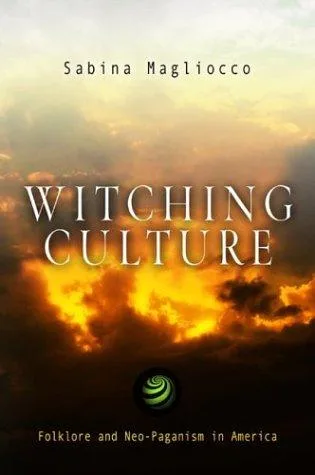
Witching Culture
Sabina Magliocco's Witching Culture offers a much-needed anthropological lens on the lived reality of modern witchcraft, a welcome departure from sensationalized portrayals. Her meticulous ethnographic approach, particularly her engagement with practitioners in California, grounds the study in tangible experience. The strength of the book lies in its nuanced depiction of witchcraft as a dynamic, socially embedded practice, rather than a static set of beliefs. A particular success is the exploration of how individuals negotiate their identities as witches within broader societal contexts.
However, the work's academic rigor, while commendable, occasionally renders its prose dense for the casual reader. While the focus on specific communities is a strength, it might leave those interested in global witchcraft traditions wanting broader comparative analysis. Magliocco's examination of the performance of ritual, especially the section detailing coven gatherings, provides a vivid, albeit sometimes challenging, window into the subject.
Read more ↓
Witching Culture provides a valuable academic resource for understanding contemporary witchcraft.
📝 Description
71
Sabina Magliocco's Witching Culture, published in 2004, moves beyond sensationalism to examine contemporary witchcraft.
This 2004 study looks at modern witchcraft not as a single, unified tradition, but as a varied and changing phenomenon. Magliocco uses ethnographic research and historical information to show how people and groups engage with magical practices today. The book considers how individuals and communities shape these traditions for their own lives, often mixing personal spirituality with group activities.
Magliocco's work appeared as academic and public interest in new religious movements and paganism grew. Coming after scholars like Ronald Hutton documented witchcraft's history, this book offers a close look at witchcraft as it was practiced around the year 2000. It places these practices within larger cultural shifts and discusses how mainstream society viewed and portrayed witchcraft.
Witching Culture offers a scholarly perspective on contemporary paganism and witchcraft, situating these practices within modern cultural and religious trends. It moves past sensationalist portrayals to focus on the lived experiences and diverse beliefs of practitioners. The book grounds its analysis in ethnographic data and historical context, demonstrating how individuals and communities actively shape and interpret magical traditions in the late 20th and early 21st centuries.
💡 Why Read This Book?
• Gain insight into the social construction of witchcraft by examining Magliocco's ethnographic data from practitioners, understanding how beliefs are shaped by community and individual experience. • Learn about the role of ritual in identity formation through specific examples of coven practices and personal magical work, as detailed in the book's fieldwork. • Understand the historical context of modern witchcraft's resurgence by considering Magliocco's analysis alongside scholarly discussions from the late 20th century, such as those by Ronald Hutton.
⭐ Reader Reviews
Honest opinions from readers who have explored this book.
❓ Frequently Asked Questions
What is the primary focus of Sabina Magliocco's "Witching Culture"?
The book primarily focuses on the anthropological and sociological aspects of contemporary witchcraft, examining its practices, beliefs, and the social dynamics of modern witch communities. It seeks to understand witchcraft as a lived, evolving cultural phenomenon.
When was "Witching Culture" first published?
"Witching Culture" was first published in 2004, positioning it as a significant scholarly contribution to the study of modern esoteric and pagan movements at the turn of the millennium.
Does the book discuss historical witchcraft accusations?
While the book's primary focus is on contemporary witchcraft, it implicitly contrasts modern practices with historical stereotypes. It aims to explain the reality of modern witchcraft rather than detailing historical witch trials.
Who would benefit most from reading "Witching Culture"?
Academics in religious studies and anthropology, students of modern paganism, and practitioners of witchcraft seeking scholarly context would benefit most from this detailed ethnographic study.
What is the author's approach in "Witching Culture"?
Sabina Magliocco employs an ethnographic approach, combining scholarly analysis with fieldwork and interviews with contemporary witches to provide an in-depth, nuanced understanding of the subject.
How does Magliocco define "witchcraft" in the book?
Magliocco defines witchcraft not as a single, fixed tradition but as a diverse set of practices and beliefs adopted and adapted by individuals and groups, often emphasizing personal spirituality and ritual efficacy.
🔮 Key Themes & Symbolism
Social Dynamics of Covens
Magliocco meticulously details the internal workings of contemporary covens, moving beyond simplistic notions of secret societies. She examines the negotiation of roles, the establishment of hierarchies, and the creation of shared identities within these groups. The book highlights how these small communities function as crucibles for developing and sustaining magical beliefs and practices, offering a grounded look at the social fabric that supports modern witchcraft and its adherents.
Ritual as Identity Performance
The work emphasizes the performative aspect of ritual in modern witchcraft. Magliocco illustrates how engaging in specific ceremonies, spellcasting, and devotional practices serves not only to enact magical change but also to solidify and express one's identity as a witch. This is explored through detailed observations of how individuals construct and perform their magical selves in both private and group settings, linking ritual action directly to self-definition.
Adaptation of Esoteric Traditions
Witching Culture analyzes how contemporary witches draw upon and adapt diverse historical and esoteric traditions to fit their modern lives. Magliocco shows how elements from Neo-Paganism, Wicca, and even older folk magic are reinterpreted and synthesized. This theme underscores the dynamic nature of esoteric practice, demonstrating how practitioners actively shape their spiritual paths by selectively integrating and innovating upon existing systems.
Witchcraft and Popular Culture
The book investigates the complex relationship between witchcraft and its representation in popular media. Magliocco examines how films, television, and literature influence public perception and even the self-understanding of modern witches. She explores the tension between the often-stereotyped images in mass culture and the lived realities of practitioners, demonstrating how media shapes both external views and internal identities.
💬 Memorable Quotes
Direct passages from the work, attributed to the author.
“The practice of witchcraft is often about enacting change in the world through ritual action.”
— This highlights the pragmatic and action-oriented nature of contemporary witchcraft, emphasizing that magic is seen by its practitioners as a tool for achieving specific outcomes, rather than purely theoretical or symbolic.
“Identity as a witch is often forged through participation in group rituals and shared belief systems.”
— This points to the communal aspect of witchcraft, suggesting that belonging to a coven or like-minded group is crucial for many in developing and affirming their identity as magical practitioners.
“Modern witches frequently synthesize diverse sources, creating personalized spiritual paths.”
— This interpretation emphasizes the eclectic and individualistic approach common in contemporary esoteric traditions, where practitioners are not bound by strict dogma but actively curate their beliefs and practices.
“Popular culture representations of witches often clash with the lived experiences of practitioners.”
— This statement addresses the disconnect between media portrayals and the reality of modern witchcraft, noting how stereotypes can obscure the complex social and spiritual lives of contemporary witches.
“The performance of ritual is integral to the construction and expression of magical identity.”
— This emphasizes that the act of performing magical rites is not just a means to an end but a fundamental way individuals embody and present their identity as witches within their chosen communities.
🌙 Esoteric Significance
Tradition
Witching Culture engages primarily with contemporary Neo-Pagan and Wiccan traditions, which themselves draw from a complex history of Western esotericism, folk magic, and nature spirituality. While not strictly Hermetic or Kabbalistic, it examines how modern practitioners reinterpret and synthesize elements from various esoteric streams, creating personalized spiritual systems. It fits within the broader study of modern magical movements that seek to revive or adapt older forms of spirituality for contemporary life, often emphasizing immanent divinity and personal experience over dogmatic theology.
Symbolism
The book implicitly touches upon recurring symbols within witchcraft, such as the symbolism of the moon, the elements (earth, air, fire, water), and natural cycles. These symbols are not treated as fixed or universally interpreted but as mutable elements within ritual and personal practice. For example, the moon's phases can represent cycles of manifestation and release, while elemental symbolism often relates to the forces practitioners seek to understand and work with in their magical endeavors.
Modern Relevance
Magliocco's work remains relevant for contemporary scholars of religion, anthropology, and sociology of belief. It provides a foundational text for understanding the social and cultural factors shaping modern witchcraft and related esoteric movements. Thinkers and practitioners interested in the evolution of alternative spiritualities, the sociology of ritual, and the construction of identity within subcultures continue to reference her ethnographic insights and theoretical frameworks.
👥 Who Should Read This Book
• Anthropologists and sociologists of religion seeking detailed case studies of contemporary esoteric communities and belief systems. • Students and scholars of modern Paganism and Wicca interested in the practical, lived realities and social organization of these traditions. • Practitioners of witchcraft or magic looking for academic context and a deeper understanding of the cultural and social dimensions of their practices.
📜 Historical Context
Published in 2004, Sabina Magliocco's "Witching Culture" arrived at a time when academic interest in contemporary Paganism and New Religious Movements was significant. Scholars like Ronald Hutton had already laid important groundwork in the late 20th century by meticulously tracing the historical evolution of witchcraft beliefs. Magliocco’s work distinguished itself by focusing on the *lived experience* and social dynamics of modern witchcraft practitioners, particularly in North America. It emerged in dialogue with anthropological studies of religion and ritual, addressing how individuals construct meaning and community through esoteric practices. While not facing overt censorship, the study offered a counter-narrative to sensationalized media portrayals, contributing to a more nuanced academic understanding of a phenomenon often misunderstood. Its reception within academia was generally positive for its rigorous ethnographic methodology and insightful analysis of a vibrant subculture.
📔 Journal Prompts
The negotiation of roles within a coven: reflect on power dynamics.
Personal magical identity: how do your rituals shape who you are?
Synthesis of traditions: which esoteric elements do you find yourself combining?
Cultural representations: how do media images of witchcraft differ from your understanding?
The performance of ritual: analyze a significant ritual you have participated in.
🗂️ Glossary
Coven
A group of witches, typically numbering around 13 members, who gather for ritual practices and mutual support. The term is strongly associated with modern Wicca and Neo-Paganism.
Neo-Paganism
A broad category of modern spiritual movements that seek to revive or create contemporary forms of polytheistic or nature-based religions, often drawing inspiration from ancient European pagan traditions.
Wicca
A specific, organized religion within Neo-Paganism, often credited to Gerald Gardner, characterized by reverence for nature, deities (often a Horned God and a Triple Goddess), and the practice of ritual magic.
Ritual
A prescribed series of actions or ceremonies, often performed for religious or magical purposes. In witchcraft, rituals are used for spellcasting, worship, initiation, and community building.
Ethnography
A qualitative research method involving the in-depth study of a particular social group or culture, typically through participant observation and interviews.
Esotericism
Belief systems and practices that are concerned with hidden knowledge or spiritual truths, often accessible only to initiates or through specialized study, encompassing traditions like Hermeticism, Kabbalah, and alchemy.
Immanence
In a religious context, the belief that the divine is present within the material world and all of creation, as opposed to transcendence, where the divine is seen as existing outside or beyond the universe.
🔮 Readers Also Liked
Browse all →







More Free Witchcraft & Paganism Books
View all →