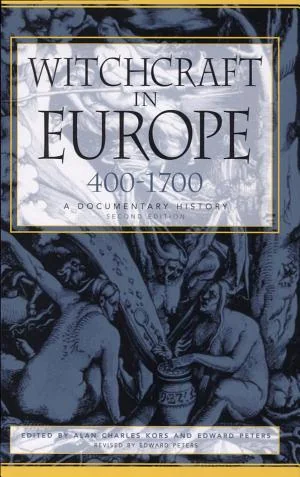
Witchcraft in Europe, 400-1700
 75
75

Witchcraft in Europe, 400-1700
Kors and Peters have significantly revised and expanded their foundational anthology, offering a more robust exploration of European witchcraft between 400 and 1700. The inclusion of recent scholarship is a welcome update, particularly in re-evaluating earlier interpretations. The strength of this edition lies in its breadth of primary texts, allowing direct engagement with historical voices. However, the sheer volume of material, while comprehensive, can occasionally feel overwhelming for the uninitiated, demanding a sustained focus. A passage discussing the legal distinction between maleficium and diabolism in the late medieval period, for instance, clearly illustrates the nuanced evolution of accusations. The verdict is clear: this remains an essential, albeit demanding, resource for serious study.
📝 Description
75
This 1998 anthology gathers primary sources and analysis on European witchcraft from 400 to 1700.
Alan Charles Kors and Edward Peters compiled this anthology to present primary source documents and scholarly analysis on the historical perception and prosecution of witchcraft in Europe. It covers the period from late antiquity through the early modern era, examining the legal, theological, and social attitudes that influenced the witch trials. The second edition reflects nearly three decades of research since the initial publication.
This volume is intended for scholars, students, and serious practitioners of Western esotericism. It addresses those interested in the historical development of occult beliefs, the sociology of deviance, and how religion and law shaped cultural understandings of witchcraft. Readers seeking a factually grounded examination of European witchcraft, free from sensationalism, will find it valuable.
The book covers the centuries from 400 to 1700 CE, a time of significant societal, religious, and intellectual change in Europe. It situates the demonization and prosecution of alleged witches within the broader historical context of the Roman Empire's decline, Christianity's rise, the Reformation, and the Enlightenment. The influence of theological arguments and legal precedents on these events is also noted.
This collection engages with the historical underpinnings of Western esoteric traditions that often intersect with beliefs about magic, spirits, and the supernatural. While focusing on the historical and legal aspects of witchcraft prosecution, it implicitly touches upon the evolution of concepts concerning ritual, maleficium, and pacts with supernatural entities. Understanding these historical persecutions provides context for the development and perception of certain magical practices and occult philosophies that emerged or persisted in Europe.
💡 Why Read This Book?
• Gain insight into the legal and theological frameworks that underpinned witch trials, such as the specific legal procedures documented from the period of the Bamberg witch trials. • Understand the evolution of demonological theory and its impact, including the influence of texts like the Malleus Maleficarum on perceptions of witchcraft. • Analyze the historical discourse surrounding the witch-cult hypothesis, appreciating the scholarly debates it generated within the academic community.
⭐ Reader Reviews
Honest opinions from readers who have explored this book.
❓ Frequently Asked Questions
What is the primary focus of Witchcraft in Europe, 400-1700?
The book focuses on the historical perception, prosecution, and scholarly interpretation of witchcraft in Europe from late antiquity to the end of the 17th century, presenting primary source documents and analysis.
What historical periods does the book cover?
It spans a broad period from 400 CE, the late Roman Empire, through the medieval era and up to 1700 CE, marking the early modern period and the decline of large-scale witch trials.
Who are the editors of Witchcraft in Europe, 400-1700?
The editors are Alan Charles Kors and Edward Peters. The book was first published in 2000, with a revised and expanded second edition appearing later.
What kind of primary sources are included?
The anthology includes a range of primary sources such as legal records, theological treatises, confessions, and contemporary accounts related to witchcraft accusations and trials across various European regions.
How does the second edition differ from the first?
The second edition is greatly expanded and incorporates remarkable scholarship that has emerged since the book's initial publication, offering updated perspectives and analyses.
Is this book suitable for beginners interested in witchcraft history?
While comprehensive, the book is geared towards serious students and scholars due to its academic rigor and the density of primary source material. Beginners might find it challenging but rewarding with dedicated effort.
🔮 Key Themes & Symbolism
The Shifting Definition of Witchcraft
The anthology meticulously charts how the concept of witchcraft transformed over a millennium. Initially associated with maleficium (harmful magic), it evolved by the late medieval period into a diabolical pact, a heresy judged by the Inquisition. This shift is evident in legal documents from regions like the Holy Roman Empire, where accusations moved from curses and crop failures to Sabbath attendance and demonic allegiance, reflecting changing theological anxieties and legal frameworks.
Demonology and the Witch Cult
Central to the discourse is the role of demonology, particularly the impact of texts like Heinrich Kramer's Malleus Maleficarum (1487). The book examines how these scholarly frameworks fueled the belief in organized diabolism and the concept of the Sabbat. It critically engages with the 'witch-cult' hypothesis, exploring the scholarly debate about whether a pre-Christian pagan religion was being persecuted, presenting evidence from diverse European locales.
Legal and Social Persecution
This collection provides stark evidence of the judicial machinery employed against accused witches. It includes excerpts from trial records, inquisitorial manuals, and legal commentaries, showcasing the procedures, evidence accepted (such as spectral evidence), and punishments meted out across different jurisdictions. The work highlights the social anxieties and scapegoating mechanisms that often underpinned these persecutions, particularly during periods of upheaval like the Reformation.
The Early Modern European Landscape
Spanning from the fall of the Western Roman Empire to the cusp of the Enlightenment, the book situates witchcraft within the broader context of European intellectual and religious history. It reflects the anxieties of an era marked by religious schism, political instability, and profound social change. Understanding witchcraft's place requires appreciating the intellectual currents of scholasticism, humanism, and early modern science that interacted with folk beliefs and demonological theories.
💬 Memorable Quotes
Direct passages from the work, attributed to the author.
“The witch was a criminal, a heretic, and a sinner against God.”
— This captures the complex perception of the accused witch during the height of the trials. It reflects how legal, religious, and moral frameworks converged to condemn individuals, viewing them not merely as perpetrators of harm but as enemies of both the state and divine order.
“Accusations often reflected social tensions and anxieties.”
— This interpretation highlights that witch trials were not solely about supernatural beliefs but frequently served as a mechanism to address societal fears, scapegoat marginalized individuals, or resolve local conflicts, particularly during times of plague, famine, or religious strife.
“The Malleus Maleficarum codified demonic theory.”
— This points to the significant influence of Heinrich Kramer's influential treatise in systematizing beliefs about witchcraft, demonology, and the perceived threat of witches, thereby shaping judicial practices and popular fear across Europe.
“Spectral evidence proved controversial in some jurisdictions.”
— This refers to the acceptance of testimony about witches' spirits or specters appearing to victims as proof during trials. Its inclusion highlights debates within legal and theological circles regarding the reliability of such evidence, particularly evident in cases like the Salem witch trials in colonial America, though this book focuses on Europe.
“The definition of witchcraft evolved significantly between 400 and 1700.”
— This signifies the core argument of the book: that witchcraft was not a static concept. Its meaning shifted from folk magic to diabolical heresy, influenced by changing religious doctrines, legal precedents, and societal structures across the centuries studied.
🌙 Esoteric Significance
Tradition
While not strictly an esoteric text itself, this book serves as a critical historical foundation for understanding the roots of Western esotericism. It provides the socio-historical context for the demonization and persecution of practices that, in some traditions, might be viewed differently. It informs lineages that engage with folk magic, ceremonial magic, and demonology by detailing the historical forces that shaped negative perceptions and legal proscriptions.
Symbolism
The book implicitly deals with symbols associated with witchcraft, such as the Sabbat, familiars (demonic spirits in animal form), and the witch's mark. Historically, these were interpreted as signs of demonic allegiance. For esoteric practitioners today, understanding these symbols requires contextualizing their historical condemnation and re-examining their potential meanings outside of the demonological framework presented in the texts.
Modern Relevance
Contemporary practitioners of witchcraft, Wicca, and various pagan traditions draw heavily on historical understanding to inform their modern practices and reclaim narratives. Scholars of comparative religion and cultural history use this work to analyze the persistence of belief systems, the psychology of persecution, and the construction of 'otherness'. It remains a crucial reference for understanding the historical forces that shaped Western views on magic and the occult.
👥 Who Should Read This Book
• Academic researchers studying the history of religion, law, and social control in medieval and early modern Europe will find exhaustive primary source material and scholarly analysis. • Students of Western esotericism seeking to understand the historical context of magic, demonology, and folk beliefs will gain critical foundational knowledge. • Cultural historians and sociologists interested in the phenomena of persecution, scapegoating, and the construction of deviant identities will find extensive case studies.
📜 Historical Context
The period from 400 to 1700 CE was a crucible for European civilization, marked by the decline of Rome, the rise of Christianity, the Reformation, and the Scientific Revolution. Within this dynamic landscape, the concept and persecution of witchcraft evolved dramatically. Early Christian thinkers grappled with folk magic, while the medieval period saw the formalization of demonology, notably codified in Heinrich Kramer's Malleus Maleficarum (1487). This era also witnessed the development of inquisitorial procedures, contrasting with earlier Germanic legal traditions. The book engages with contemporary scholarship that emerged decades after its initial publication, placing itself within ongoing academic dialogues. For instance, the work implicitly addresses debates surrounding the 'witch-cult' hypothesis, a theory popularized by scholars like Margaret Murray, and subsequent critiques that re-examined the evidence. The reception of such works often involved intense scholarly debate rather than overt censorship, given their academic nature.
📔 Journal Prompts
The evolution of maleficium into diabolism: trace the shift in accusations.
Heinrich Kramer's Malleus Maleficarum: analyze its impact on trial procedures.
The concept of the Sabbat: investigate its historical representation and scholarly debate.
Spectral evidence: reflect on its role and controversy in European witch trials.
Compare legal approaches to witchcraft in different European regions documented in the text.
🗂️ Glossary
Maleficium
Latin for 'wrongdoing' or 'harmful magic'. In the context of early witchcraft accusations, it referred to magic believed to cause physical harm, crop failure, illness, or misfortune.
Diabolism
Worship or invocation of the devil. By the late medieval period, witchcraft was increasingly defined by this concept, implying a pact with Satan and participation in demonic rituals like the Sabbat.
Malleus Maleficarum
Latin for 'Hammer of Witches'. A notorious treatise on witchcraft written by Heinrich Kramer and Jacob Sprenger, first published in 1487, which heavily influenced the persecution of witches.
Sabbat
In demonological literature, the nocturnal assembly of witches, allegedly presided over by the Devil, where they engaged in blasphemy, orgies, and pacts. Its historical reality is debated.
Inquisition
An ecclesiastical institution within the Catholic Church designed to combat heresy. Various Inquisitions played roles in the investigation and prosecution of witchcraft in different parts of Europe.
Spectral Evidence
Testimony during witch trials concerning the alleged activities of a witch's spirit or apparition, often claimed to be seen by the accuser. Its validity was a significant point of contention.
Witch-Cult Hypothesis
The theory, notably proposed by Margaret Murray, suggesting that witchcraft persecutions targeted an organized, pre-Christian pagan religion surviving in Europe. This hypothesis has been largely discredited by subsequent scholarship.