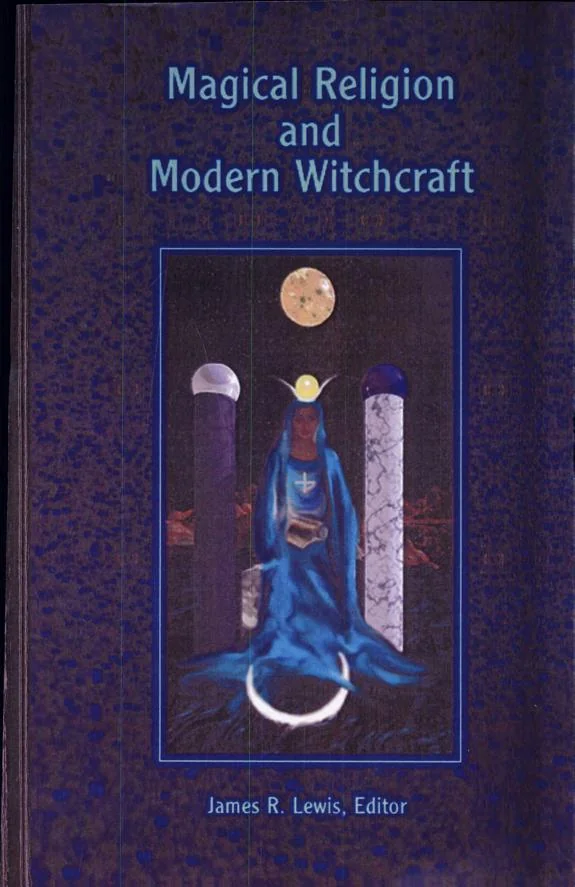
Magical Religion and Modern Witchcraft
 75
75

Magical Religion and Modern Witchcraft
James R. Lewis's "Magical Religion and Modern Witchcraft" approaches neo-Paganism with a commendable academic rigor that distinguishes it from many popular accounts. The book excels in its comprehensive mapping of the diverse landscape of post-Gardnerian witchcraft and other neo-Pagan paths, detailing their historical trajectories and theological underpinnings. A particular strength lies in its balanced treatment of the "Goddess" concept, presenting it not merely as a trend but as a significant theological and symbolic development within these traditions. However, the very breadth of its survey occasionally leads to a somewhat generalized treatment of individual traditions; a deeper dive into the nuances of, for instance, Dianic Wicca or Reconstructionist Paganism would have been beneficial. The work's methodical exploration of the relationship between neo-Paganism and Christianity, for example, offers valuable context for understanding the historical and cultural milieu. Lewis provides a solid, if at times dry, academic foundation for understanding modern Pagan spiritualities.
📝 Description
75
Published in 1996, James R. Lewis's "Magical Religion and Modern Witchcraft" surveys neo-Paganism's development.
James R. Lewis's 1996 book offers a scholarly survey of neo-Paganism, detailing its diverse expressions and evolution. The work examines the core beliefs, historical origins, and ethical considerations found within various contemporary Pagan traditions. It aims to provide a solid understanding of the movement's growth and its position within wider religious and cultural spheres.
This book is aimed at students of comparative religion, cultural historians, and anyone wanting a structured overview of modern witchcraft and neo-Paganism. It is particularly useful for those interested in academic viewpoints on these spiritual paths, moving past common stereotypes to examine theological and sociological aspects. Lewis places his study within a period of increasing scholarly interest in new religious movements, following key figures like Gerald Gardner and the formation of traditions such as Wicca.
This work engages with the academic study of contemporary esoteric movements, specifically neo-Paganism. It emerged during a time when scholarly attention to new religious movements, including those drawing on pre-Christian European traditions, was growing. Lewis's book is situated within this academic context, examining how groups define their practices and beliefs in relation to historical religious forms and modern cultural shifts.
💡 Why Read This Book?
• Gain a structured understanding of neo-Paganism's theological diversity, learning how concepts like the "Goddess" function within traditions discussed since the 1996 publication. • Grasp the historical trajectory of modern witchcraft, understanding its roots and evolution as detailed in the book's examination of post-Gerald Gardner developments. • Analyze the ethical frameworks and ritual practices common across various Pagan paths, providing a comparative perspective absent in more devotional texts.
⭐ Reader Reviews
Honest opinions from readers who have explored this book.
❓ Frequently Asked Questions
What is the primary focus of James R. Lewis's "Magical Religion and Modern Witchcraft"?
The book primarily offers a scholarly overview of neo-Paganism, examining its history, theology, ethics, and relationship with Christianity. It covers diverse traditions that emerged significantly after figures like Gerald Gardner.
When was "Magical Religion and Modern Witchcraft" first published?
The book was first published on April 19, 1996, placing it within a key period of academic study for new religious movements.
Does the book discuss Wicca specifically?
Yes, it discusses Wicca as a significant component of modern neo-Paganism, exploring its origins and development, particularly in relation to Gerald Gardner's foundational work.
What is the academic approach of the author?
James R. Lewis employs a sociological and historical approach, analyzing neo-Paganism as a religious phenomenon with distinct beliefs, practices, and social structures, rather than a devotional text.
How does the book address the concept of the Goddess?
It explores the prominence and theological significance of the "Goddess" within various neo-Pagan traditions, examining it as a central deity or divine principle.
Is this book suitable for beginners in witchcraft?
While comprehensive, its academic tone may be more suited for those interested in the scholarly study of religion or witchcraft's history rather than practical instruction.
🔮 Key Themes & Symbolism
Neo-Paganism Defined
The work meticulously defines and categorizes the emergent field of neo-Paganism, distinguishing it from earlier occult traditions and mainstream religions. It highlights the movement's focus on nature, polytheism (particularly Goddess worship), and the practice of magic and ritual as central to spiritual experience. Lewis charts how these elements coalesced in the late 20th century, providing a framework for understanding its diverse expressions from Wicca to other paths.
The Goddess Archetype
A significant portion of the book is dedicated to the concept of the "Goddess" in modern Paganism. Lewis examines her complex role, not just as a deity but as a symbol of immanence, nature, and feminine power. He traces the theological and historical influences that led to her prominence, contrasting it with patriarchal religious structures and exploring how different traditions interpret her divinity and relation to the divine masculine.
Magic, Ritual, and Ethics
The book explores the practical and theoretical dimensions of magic and ritual within neo-Paganism. It discusses how these practices are used for personal transformation, community building, and spiritual connection. Alongside this, Lewis addresses the ethical considerations that guide adherents, examining concepts of personal responsibility, harm, and the moral range of contemporary witchcraft, moving beyond sensationalized portrayals.
Historical and Cultural Intersections
Lewis situates neo-Paganism within its historical and cultural context, notably examining its relationship with Christianity and Western esoteric traditions. The work analyzes how Paganism often emerged in reaction to or dialogue with dominant religious paradigms. It highlights the historical development from earlier occult revivals and the societal reception of these new spiritual movements in the late 20th century.
💬 Memorable Quotes
Direct passages from the work, attributed to the author.
“The study of neo-Paganism requires attention to both its historical roots and contemporary manifestations.”
— This highlights Lewis's approach: grounding the discussion of modern witchcraft and Goddess spirituality in historical context while analyzing its current diverse forms.
“The concept of the Goddess serves as a central theological and symbolic element in many neo-Pagan traditions.”
— This points to the book's focus on a key doctrine within modern Paganism, emphasizing its importance for understanding adherents' beliefs and practices.
“Magic and ritual are integral to neo-Pagan religious practice and identity.”
— This underscores the functional role of magical and ritualistic activities for adherents, positioning them not as mere performance but as essential spiritual technology.
“Understanding neo-Paganism involves examining its relationship with established religions, particularly Christianity.”
— This indicates the book's engagement with comparative religion, exploring how new spiritual movements define themselves in relation to older, dominant faiths.
“The ethics of neo-Paganism emphasize personal responsibility and a connection to the natural world.”
— This focuses on the moral dimension of the traditions discussed, revealing principles that guide behavior and worldview among practitioners.
🌙 Esoteric Significance
Tradition
This work fits within the broader tradition of religious studies and sociology of religion, specifically focusing on contemporary Western Esotericism. While not originating from within an esoteric lineage itself, it critically analyzes movements like neo-Paganism and witchcraft, which draw upon esoteric concepts, Hermeticism, and ceremonial magic, reinterpreting them for a modern context. It departs from purely devotional or practitioner-focused texts by offering an objective, analytical perspective.
Symbolism
A key symbol explored is the "Goddess," representing immanence, nature, and the divine feminine, often contrasted with patriarchal deities. The book also implicitly discusses the symbolism of "magic" itself – not merely as illusion but as a technology for spiritual transformation and interaction with perceived subtle energies or divine forces. Rituals, as symbolic actions, are examined for their role in creating sacred time and space.
Modern Relevance
Contemporary scholars of religion and culture continue to cite Lewis's work for its foundational overview of neo-Paganism. Thinkers and practitioners exploring the evolution of Wicca, the development of polytheistic reconstructionism, and the sociology of spiritual but not religious (SNOR) movements find value in its analysis of the late 20th-century landscape. Its examination of the Goddess concept remains relevant in ongoing discussions about feminist theology and alternative spiritualities.
👥 Who Should Read This Book
• Students of comparative religion and sociology of religion seeking an academic overview of neo-Paganism and modern witchcraft, particularly the developments following Gerald Gardner. • Cultural historians interested in the evolution of spiritual movements in the late 20th century and their relationship with established religious traditions like Christianity. • Individuals curious about the theological and ethical frameworks of contemporary Pagan paths, desiring a structured, non-sensationalized introduction to concepts like Goddess worship and ritual practice.
📜 Historical Context
Published in 1996, James R. Lewis's "Magical Religion and Modern Witchcraft" emerged during a period of significant academic and public interest in neo-Paganism and new religious movements. The late 20th century saw the consolidation of Wicca, influenced by figures like Gerald Gardner in the mid-20th century, and the proliferation of diverse neo-Pagan paths, many centered on Goddess worship. Lewis's work arrived as scholars like Margot Adler and Aidan Kelly were also exploring these terrains. It contributed to the academic discourse by providing a structured overview of these often-misunderstood spiritualities, situating them within broader religious studies. The book's methodical approach offered a counterpoint to more sensationalized media portrayals and helped solidify the academic legitimacy of studying contemporary witchcraft and Pagan revivals.
📔 Journal Prompts
The "Goddess" as a central concept in neo-Pagan theology.
Ritual's role in contemporary witchcraft practices.
Ethical considerations within magical religion.
The historical relationship between neo-Paganism and Christianity.
Gerald Gardner's influence on modern witchcraft.
🗂️ Glossary
Neo-Paganism
A contemporary religious movement that draws inspiration from pre-Christian European pagan and polytheistic traditions, often incorporating nature worship, Goddess veneration, and magical practices.
Wicca
A modern, duotheistic or polytheistic witchcraft religion, often credited to Gerald Gardner, characterized by reverence for nature, the worship of a God and Goddess, and the practice of magic.
Goddess
In neo-Paganism, the divine feminine principle or a specific deity representing feminine power, fertility, nature, and creation, often worshipped alongside or independently of a God.
Magic
The practice of influencing events, objects, or people through supernatural or occult means, viewed within neo-Paganism as a spiritual technology for transformation and connection.
Ritual
A prescribed series of actions or words performed in a set order, used in neo-Paganism for spiritual, ceremonial, or magical purposes, often to connect with the divine or create sacred space.
Esotericism
Teachings or practices concerned with hidden knowledge or spiritual enlightenment, often involving mystical, occult, or magical elements, distinct from exoteric or public religious doctrines.
Reconstructionism
A branch of neo-Paganism that seeks to revive and reconstruct ancient polytheistic religions based on historical and archaeological evidence.