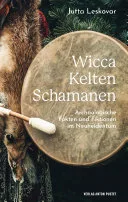
Wicca · Kelten · Schamanen
 78
78

Wicca · Kelten · Schamanen
Jutta Leskovar’s "Wicca · Kelten · Schamanen" offers a much-needed critical lens on the popular currents of modern esoteric spirituality. Rather than simply tracing lineages, Leskovar excavates the very foundations of these traditions, questioning how and why ancient symbols and practices are resurrected. The book's strength lies in its direct confrontation with what it terms "archaeological fictions"—the often romanticized interpretations of pre-Christian pasts that fuel contemporary movements like Wicca and Celtic neo-paganism. A particularly insightful section examines the appropriation of prehistoric artifacts, such as the Venus of Willendorf, as evidence for ancient goddess cults, highlighting the interpretive leaps involved. While the exploration of shamanism could benefit from further ethnographic grounding, the work’s rigorous approach to the evidence makes it a valuable counterpoint to uncritical acceptance of esoteric claims. Leskovar successfully challenges readers to consider the historical validity behind their spiritual inspirations.
📝 Description
78
Jutta Leskovar's 2014 book questions the historical basis of modern Wicca, Celtic traditions, and shamanism.
This 2014 study scrutinizes the historical and cultural underpinnings of contemporary esoteric practices, with a specific focus on Wicca, Celtic traditions, and shamanism. Leskovar challenges the common perception of pre-Christian symbolism, frequently encountered in media and reenactments. The author examines the archaeological evidence, or its absence, that supports the revival or reconstruction of these ancient religions. This creates a tension between the desire for historical accuracy and the needs of modern spiritual seekers.
The book is intended for readers interested in a critical look at modern paganism and esoteric movements. It suits those curious about the origins of popular spiritual trends, particularly the renewed interest in witchcraft, Celtic mythology, and shamanic practices. Leskovar aims for a scholarly perspective, moving beyond purely devotional or celebratory accounts of these traditions.
Within its argument, Leskovar identifies "archaeological fictions"—interpretations built on sparse evidence to meet present spiritual demands. The book considers the Venus of Willendorf as an example of ancient goddess veneration and its later use. It also investigates the movements focused on "reconstruction" and "revival" within esoteric traditions, questioning their claims to ancient origins.
This work engages with the broader landscape of 20th and 21st-century neo-paganism and the academic study of religion. It acknowledges figures like Gerald Gardner in the codification of modern Wicca and the mid-20th-century popularity of Celtic lore. Leskovar addresses the inherent difficulties in reconstructing ancient beliefs from fragmented archaeological findings and later texts, a common challenge in the study of esoteric traditions.
💡 Why Read This Book?
• Understand the "archaeological fictions" that shape modern Wicca and Celtic spirituality, gaining a critical perspective on the evidence presented for ancient goddess worship. • Analyze the 20th-century revival of pre-Christian symbolism, including its presence in media and reenactment, and question the basis of "reconstructed" religions. • Critically evaluate the fascination with ancient cultures by examining specific artifacts like the "Venus of Willendorf" and their modern interpretations.
⭐ Reader Reviews
Honest opinions from readers who have explored this book.
❓ Frequently Asked Questions
What is the main argument of "Wicca · Kelten · Schamanen" regarding ancient religions?
The book argues that many contemporary spiritual movements, like Wicca, are built upon "archaeological fictions." It questions the historical accuracy of "reconstructed" ancient religions and the symbolic interpretations used to revive them.
How does the book relate the Venus of Willendorf to modern witchcraft?
It explores how prehistoric artifacts like the Venus of Willendorf are often interpreted as evidence for ancient goddess cults and then appropriated by modern neo-pagan and witchcraft movements to legitimize their beliefs.
What is the author's stance on the revival of ancient spiritual practices?
The author takes a critical stance, examining the historical evidence behind such revivals. She questions the extent to which these modern practices accurately reflect or reconstruct ancient beliefs and traditions.
Which specific ancient cultures are primarily discussed in relation to modern esoteric movements?
The book primarily focuses on the connections between modern Wicca and Celtic traditions, examining the symbolic and cultural elements that have been revived or reinterpreted from these ancient sources.
What does the book suggest about the influence of media on perceptions of ancient symbolism?
It notes that contemporary media, such as TV series and reenactments, often feature pre-Christian symbolism, contributing to a popular fascination that may not always be grounded in rigorous historical or archaeological fact.
Is this book for beginners in Wicca or shamanism?
While accessible, the book offers a critical, academic perspective. It's best suited for those already familiar with these topics who wish to understand their historical underpinnings and the scholarly debates surrounding them.
🔮 Key Themes & Symbolism
Archaeological Fictions
This theme addresses how limited archaeological evidence is often expanded upon or reinterpreted to fit modern spiritual narratives. The book scrutinizes the creation of "fictions" that serve contemporary needs for connection to ancient pasts, particularly in movements seeking to revive or reconstruct pre-Christian religions. It questions the validity of claims based on fragmented findings, urging a more critical approach to historical reconstruction.
Symbolism of Ancient Cultures
The work examines the symbolic language of ancient cultures, such as Celtic traditions and potential prehistoric goddess cults, as represented by artifacts like the Venus of Willendorf. It analyzes how these symbols are perceived, interpreted, and often re-appropriated in modern esoteric practices, exploring the gap between original meaning and contemporary usage.
Revival and Reconstruction
A core concept is the modern drive to "reconstruct" and "revive" ancient religions. The book examines the motivations behind these movements, questioning the authenticity and historical accuracy of such endeavors. It highlights the tension between preserving historical integrity and fulfilling spiritual desires for connection to perceived ancestral wisdom.
Media and Popular Imagination
This theme explores the influence of popular culture, including media like Netflix series and reenactments, on the perception and fascination with ancient symbolism. The book critiques how these representations often amplify pre-Christian imagery, contributing to a widespread interest in esoteric traditions that may lack a firm grounding in factual history.
💬 Memorable Quotes
Direct passages from the work, attributed to the author.
“What does the Venus of Willendorf have to do with the new witch cult?”
— This question frames the book's central inquiry into the connection between prehistoric artifacts and modern witchcraft, highlighting the interpretive leaps made to link ancient objects with contemporary spiritual practices.
“Why do long-forgotten times and cultures exert such fascination on us modern people?”
— This highlights the psychological and cultural impetus behind the modern interest in ancient traditions, suggesting a deep-seated human need for connection to the past that fuels esoteric revivals.
“It teems with pre-Christian symbolism.”
— This observation points to the pervasive presence of ancient symbols in contemporary cultural phenomena, such as Viking reenactments, and sets the stage for examining the validity of these symbolic representations.
“What archaeological 'evidence' underlies these fictions?”
— This critical phrase questions the empirical basis for the narratives surrounding ancient religions and their modern revivals, implying that such "evidence" might be more interpretive fiction than solid fact.
“In the sign of (supposed) reconstruction up to the revival of 'ancient' religions.”
— This captures the book's focus on the processes of "reconstruction" and "revival" in contemporary esoteric movements, casting doubt on the authenticity and accuracy of claims to "ancient" origins.
🌙 Esoteric Significance
Tradition
This work does not align with a specific esoteric lineage like Hermeticism or Theosophy. Instead, it functions as a critical examination of various traditions – Wicca, Celtic neo-paganism, and shamanism – from an academic perspective. It departs from traditional esoteric literature by prioritizing historical and archaeological evidence over mystical experience or received tradition, acting as a meta-commentary on the construction of esoteric belief systems.
Symbolism
The book scrutinizes symbols like the "Venus of Willendorf," often interpreted as a prehistoric "Great Goddess." It analyzes how such ancient artifacts are imbued with new meaning in modern esoteric contexts, becoming symbols of fertility, feminine power, and ancient matriarchal societies, despite the speculative nature of these interpretations based on limited archaeological data.
Modern Relevance
Leskovar's critical approach speaks to contemporary scholars and practitioners who are increasingly concerned with the historical accuracy and ethical implications of spiritual traditions. Thinkers and groups focused on historical reconstruction, the sociology of religion, and critical pagan studies find value in this work's rigorous examination of evidence and its challenge to popularized myths about ancient spirituality.
👥 Who Should Read This Book
• Students of comparative religion seeking to understand the intersection of archaeology, history, and contemporary spiritual movements. • Practitioners of Wicca and Celtic neo-paganism interested in critically examining the historical claims and symbolic interpretations within their traditions. • Readers fascinated by the popular resurgence of ancient symbolism in media and culture who desire a more evidence-based perspective.
📜 Historical Context
Published in 2023, Jutta Leskovar's work emerges in an era of heightened interest in neo-paganism and the critical study of religious history. The mid-20th century saw significant developments in the codification of modern Wicca, notably by figures like Gerald Gardner, and a burgeoning academic interest in Celtic studies. Leskovar's book engages with this legacy, critically examining the claims made by revivalist movements. It implicitly responds to a broader intellectual current that seeks to separate historical scholarship from spiritual appropriation. While not directly engaging with contemporaries in a polemic fashion, the work stands in dialogue with scholars who question the uncritical acceptance of esoteric traditions' historical narratives, such as Ronald Hutton's work on the historical roots of Wicca. The book's critical stance serves as a counterpoint to more devotional or purely celebratory accounts of these traditions.
📔 Journal Prompts
The "archaeological fictions" surrounding goddess worship.
Connecting the Venus of Willendorf to modern witch cults.
The allure of pre-Christian symbolism in contemporary culture.
Motivations behind "reconstructing" ancient religions.
Evaluating the evidence for revived Celtic traditions.
🗂️ Glossary
Wicca
A modern, neopagan religious movement that typically involves the practice of witchcraft. It often draws inspiration from pre-Christian European beliefs and practices, though its structure and traditions were largely codified in the 20th century.
Celtic Traditions
Refers to the beliefs, practices, and cultural elements associated with the ancient Celtic peoples of Europe. Modern "Celtic Neo-Paganism" often seeks to revive or reconstruct these traditions.
Shamanism
A practice that involves a practitioner, known as a shaman, who is believed to act as an intermediary between the visible world and the spirit world. It is found in many cultures worldwide.
Venus of Willendorf
An 11.1-centimeter-tall (4.4 in) Eolithic or Upper Paleolithic figurine of a female figure discovered at a Paleolithic site near Willendorf, Austria. It is often interpreted as a symbol of fertility or a "Great Goddess."
Reconstructionism (Religious)
A neopagan movement that aims to revive the religious practices of pre-Christian, ethnic groups. Reconstructionists seek to base their practices on historical and archaeological evidence, though interpretation plays a significant role.
Pre-Christian Symbolism
Symbols, motifs, and imagery originating from cultures that existed before the widespread adoption of Christianity in Europe. These are often reinterpreted and used in modern esoteric and neopagan contexts.
Archaeological Fictions
A term used in the book to describe narratives or interpretations built upon limited archaeological evidence, often serving to support modern spiritual or cultural beliefs about ancient peoples.