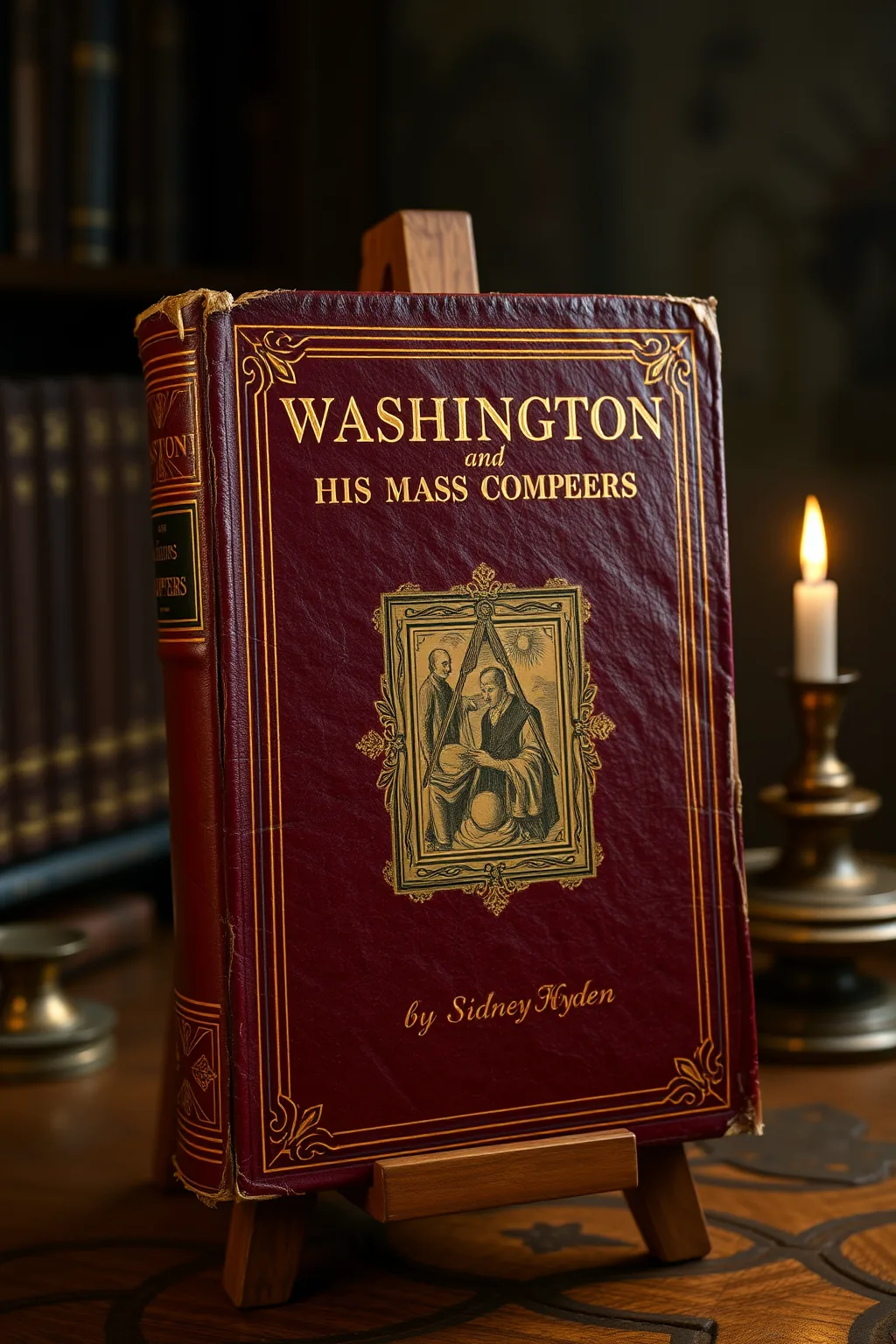
Washington and his masonic compeers
 79
79

Washington and his masonic compeers
Sidney Hayden’s "Washington and His Masonic Compeers" offers a detailed, if somewhat hagiographic, account of George Washington and his contemporaries within the context of Freemasonry. The strength of the work lies in its meticulous compilation of biographical details concerning the Masonic affiliations of numerous founding fathers and influential figures. Hayden painstakingly details lodge memberships, degrees conferred, and fraternal activities, providing a valuable resource for those tracing the presence of organized Masonry in early American leadership. A notable limitation, however, is the author’s overt admiration, which occasionally overshadows critical historical analysis, presenting a somewhat idealized portrait. The chapter detailing Washington's own Masonic journey, including his role at the laying of the cornerstone for the Capitol building in 1793, exemplifies this blend of factual reporting and celebratory tone. While the evidence presented is often compelling, the interpretation leans towards demonstrating the virtue and wisdom of these Masonic leaders. Hayden’s work ultimately serves as a dedicated chronicle of Masonic involvement among American elites, best appreciated for its archival detail rather than its critical depth.
📝 Description
79
Sidney Hayden's 1866 book examines the Masonic connections of early American leaders.
Published in 1866, Washington and His Masonic Compeers by Sidney Hayden investigates the affiliations of prominent figures in early American history with Freemasonry. The author moves beyond simple biographies to detail the presence and impact of Masonic principles and fraternal organizations on the lives of men who helped form the United States. Hayden looks at the public roles and private associations of these individuals, giving a distinct view of the political and social climate of that era. The book considers "compeers" as more than just equals; they are brothers united by a shared fraternity. It discusses how Masonic teachings, including brotherly love and mutual support, may have shaped these men. This work arose during a time of significant historical writing and growing interest in fraternal groups, especially Freemasonry, which saw a rise in popularity and public notice during the 19th century. Many publications from the mid-1800s aimed to record Masonry's history and influence, often from within. Hayden's book fits this trend, intending to recognize the contributions of Masonic members to the development of America. During this period, understanding the organizational ties of public figures was considered vital for grasping their character and public service.
This work is situated within a 19th-century tradition of Masonic historiography, which often sought to document and legitimize the fraternity's role in national development. Such writings frequently highlighted the perceived moral and civic virtues fostered by Masonic principles, aligning them with the ideals of the American founding. The book's focus on "compeers" and shared tenets reflects an interest in the brotherhood and mutual support structures inherent in fraternal orders, viewed through a lens that saw these organizations as influential forces in both private lives and public affairs.
💡 Why Read This Book?
• Gain specific insights into George Washington's personal involvement with Freemasonry, including details about his participation in significant public ceremonies like the 1793 Capitol cornerstone laying. • Understand the role of Masonic "compeers"—brothers and associates within the fraternity—in the social and political networks of the early American republic. • Explore the historical context of the mid-19th century, a period of intense interest in fraternal organizations, which shaped how authors like Hayden presented Masonic influence.
⭐ Reader Reviews
Honest opinions from readers who have explored this book.
❓ Frequently Asked Questions
What year was Washington and his Masonic Compeers first published?
The book "Washington and His Masonic Compeers" by Sidney Hayden was first published in 1866, reflecting mid-19th century scholarship on American history and fraternal organizations.
Who is the author of Washington and his Masonic Compeers?
The author of "Washington and His Masonic Compeers" is Sidney Hayden. The work first appeared in 1866.
What is the main subject of Washington and his Masonic Compeers?
The book examines the Freemasonry affiliations and interactions of George Washington and other prominent figures from the early American period, exploring their roles as Masonic 'compeers'.
Does the book focus only on George Washington?
No, while George Washington is a central figure, the book also discusses his "Masonic compeers," meaning his associates and fellow Freemasons from that era.
What historical period does Washington and his Masonic Compeers cover?
The book primarily covers the late 18th and early 19th centuries, focusing on the lives and activities of figures involved in the founding and early development of the United States.
Where can I find information on Washington's Masonic activities?
Sidney Hayden's "Washington and His Masonic Compeers" (1866) is a key source detailing George Washington's involvement with Freemasonry, including specific events and associations.
🔮 Key Themes & Symbolism
Masonic Influence on Leadership
This work investigates how membership in Masonic lodges and adherence to its principles may have shaped the public and private lives of America's founding generation. Hayden posits that the "compeers" of George Washington, united by fraternal bonds, often shared a common ethical framework derived from Masonic teachings. The book explores instances where Masonic rituals and symbolism might have informed their civic duties and decision-making processes during the critical formation years of the United States.
The Role of Fraternal Societies
Beyond Freemasonry, the book implicitly highlights the broader significance of fraternal organizations in the 18th and 19th centuries as vital social networks. These groups provided platforms for men of influence to connect, collaborate, and reinforce shared values. Hayden's account of Washington and his associates demonstrates how such affiliations could transcend purely social interactions, potentially impacting political discourse and national development during a formative era.
Biographical Examination of Key Figures
The core of "Washington and His Masonic Compeers" is a biographical exploration of prominent historical figures, with a particular focus on their connections to Freemasonry. By detailing lodge memberships, degrees, and fraternal interactions, Sidney Hayden aims to illuminate the character and motivations of these individuals. The work offers a detailed look at figures like Washington, Paul Revere, and others through the specific lens of their Masonic brotherhood.
Symbolism in American Founding
Hayden touches upon the symbolic language and shared ideals prevalent within Freemasonry and suggests their potential resonance within the broader context of American nation-building. The concept of "compeers" itself carries symbolic weight, representing not just equals but brothers united by a common pursuit of knowledge and virtue. The book implicitly links Masonic symbolism to the aspirations and foundational myths of the new republic.
💬 Memorable Quotes
Direct passages from the work, attributed to the author.
“The fraternity of Freemasons, in its most ancient and purest form, is a brotherhood of men devoted to mutual support and moral improvement.”
— This interpretation highlights the author's view of Freemasonry as a moral and supportive institution, suggesting that its principles were a guiding force for the historical figures discussed.
“Washington's Masonic affiliations were not merely social engagements but reflections of deeply held principles of order and fellowship.”
— This suggests that the author views Washington's Masonic activities as integral to his character and leadership, implying a connection between his fraternal commitments and his public service.
“Hayden details the degrees conferred upon prominent figures, linking Masonic progression to civic stature.”
— This interpretation focuses on the author's method of connecting a figure's advancement within Freemasonry to their standing and influence in secular society during the early republic.
“The principles of "Brotherly Love, Relief, and Truth" guided the actions of these Masonic leaders.”
— This interpretation posits that the core tenets of Freemasonry, as presented by Hayden, are presented as foundational to the ethical conduct and societal contributions of the individuals studied.
💡 Key Ideas
Editorial paraphrase of the work's core concepts — not direct quotes.
The "compeers" of Washington often found common ground and shared understanding within the lodge room.
This paraphrased concept emphasizes the idea that Masonic meeting places served as crucial venues for the formation of bonds and consensus among influential men of the era.
🌙 Esoteric Significance
Tradition
This work aligns with the historical tradition of Masonic apologetics and historical writing prevalent in the 19th century, which sought to document and legitimize the fraternity's role in society. While not strictly an esoteric text in the vein of Hermetic or Kabbalistic treatises, it operates within the broader stream of Western esoteric traditions by exploring the symbolic and moral dimensions of Freemasonry. It fits within the lineage that views fraternal orders as conduits for moral instruction and spiritual development, albeit presented through a historical and biographical lens.
Symbolism
The book implicitly engages with Masonic symbolism through its focus on "compeers" and the principles of "Brotherly Love, Relief, and Truth." The concept of the "lodge" itself serves as a symbolic space for brotherhood and shared endeavor. Furthermore, Hayden's references to Masonic degrees and rituals suggest an underlying symbolic structure intended to represent moral and spiritual progression, linking these internal symbols to the external actions of the historical figures.
Modern Relevance
Contemporary scholars of American history and fraternalism continue to reference works like Hayden's for their detailed accounts of Masonic membership among early American elites. Modern discussions on the social networks and cultural influences of the 18th and 19th centuries often draw upon such historical compilations. While direct adoption into modern esoteric practices might be limited, the work remains a foundational source for understanding the historical intersection of American leadership and Masonic brotherhood.
👥 Who Should Read This Book
• Students of American history interested in the social and organizational structures of the late 18th and early 19th centuries, particularly the role of fraternal societies. • Masonic researchers and brethren seeking historical context for the involvement of founding figures in Freemasonry, offering specific biographical details. • Biographers and historians examining the lives of figures like George Washington, looking for comprehensive information on their affiliations beyond public records.
📜 Historical Context
Sidney Hayden's "Washington and His Masonic Compeers" emerged in 1866, a period marked by a fervent interest in American history and the role of fraternal organizations. The mid-19th century witnessed a proliferation of Masonic literature, often aiming to document the fraternity's historical significance and its connection to national heroes. Freemasonry, having gained prominence during the colonial and revolutionary eras, was viewed by many as intrinsically linked to the fabric of the new nation. Hayden's work aligns with this trend, seeking to elevate the status of Masonry by associating it with figures like George Washington, who had publicly participated in Masonic events, such as the 1793 cornerstone laying for the U.S. Capitol. This era also saw competing narratives about secret societies, with some viewing them with suspicion while others, like Hayden, championed their positive contributions. Contemporary authors like Albert Pike were also exploring Masonic philosophy, though often from a more theoretical and ritualistic standpoint, creating a diverse field of Masonic scholarship.
📔 Journal Prompts
The concept of Masonic 'compeers' and its implications for fellowship.
Washington's participation in the 1793 Capitol cornerstone laying.
Analyzing the blend of civic duty and fraternal obligation presented.
The historical significance of lodge membership in the early republic.
Reflecting on the principles of "Brotherly Love, Relief, and Truth" as applied by historical figures.
🗂️ Glossary
Compeers
In this context, "compeers" refers to associates, equals, or fellows, specifically those who share membership in the same fraternity, such as Freemasonry, implying a bond of brotherhood and shared principles.
Freemasonry
A fraternal organization with origins in stonemasons' guilds, known for its use of allegorical rituals and symbols to impart moral and philosophical lessons to its members.
Lodge
The local assembly or chapter of Freemasons, serving as the place where members meet for rituals, discussions, and fraternal activities.
Degrees
In Freemasonry, these are stages of initiation and advancement within the fraternity, each conferring specific knowledge, symbols, and obligations upon the member.
Brotherly Love, Relief, and Truth
The core tenets or virtues emphasized within Freemasonry, representing the principles of compassion for fellow humans, assistance to those in need, and the pursuit of knowledge and integrity.
Cornerstone Laying
A ceremonial event, often conducted by Freemasons, marking the beginning of construction for a significant building, symbolizing the foundation upon which the structure will be built.
Fraternal Organization
A society or group of men united by common interests, rituals, and a code of conduct, often focused on mutual support, personal development, and charitable works.
🔮 Readers Also Liked
Browse all →






More by Sidney Hayden
All books →
More Free Freemasonry & Secret Societies Books
View all →