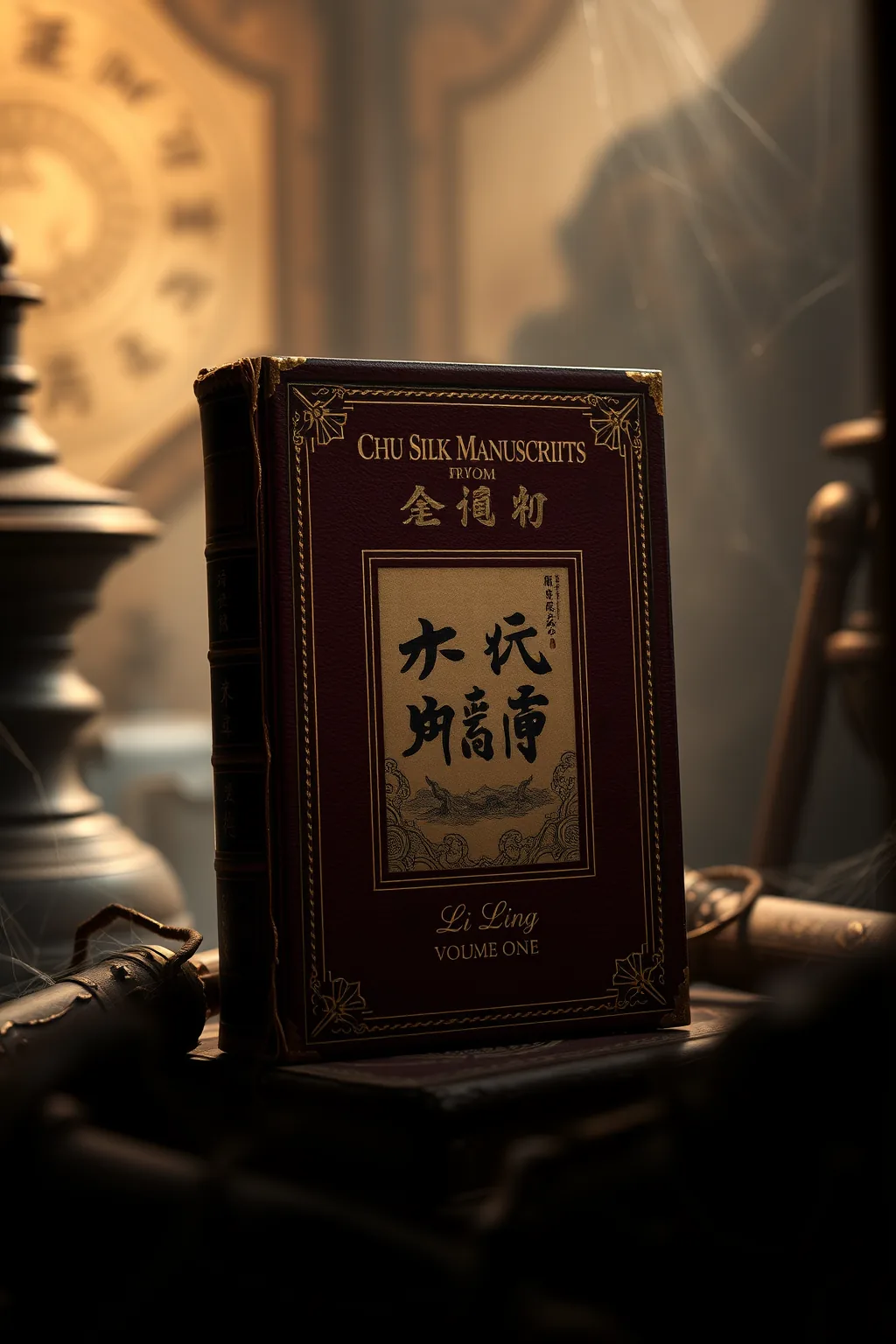
Chu Silk Manuscripts from Zidanku, Changsha : Volume One
 61
61

Chu Silk Manuscripts from Zidanku, Changsha : Volume One


Lorelei Sage, Contemplative Literature Editor— 'Chu Silk Manuscripts' is a monumental achievement, offering a lucid portal into the sophisticated cosmological understanding of ancient China. Li Ling's profound scholarship illuminates the intricate tapestry of astrological beliefs and divinatory practices woven into these newly discovered texts. The manuscripts reveal a worldview where the cosmos is a living, breathing entity, intricately linked to human fate. This volume is an indispensable resource for serious scholars and ardent seekers of esoteric wisdom, providing rare insights into pre-imperial Chinese thought and its enduring influence on metaphysical traditions. A truly revelatory work.
📝 Description
61
Discovered in 1994, these Chu silk manuscripts from Zidanku predate the Qin Dynasty.
Li Ling's first volume on the Chu silk manuscripts from Zidanku, Changsha, presents translated texts dating from the Warring States period. These documents offer direct access to the cosmology, astrology, and divination methods of that era. They reveal a worldview where celestial bodies were seen as direct influences on human life and cosmic structure. The manuscripts, recovered from a tomb, are not just historical finds but windows into a forgotten understanding of the universe. They contain detailed celestial charts, calendrical information, and discussions on the connection between human events and astronomical movements. This work is important for understanding early Chinese mysticism, the development of astronomical observation, and ancient attempts to interpret the cosmos.
Readers will encounter specific divinatory practices and cosmological theories that shaped thought in the Chu state. The texts discuss methods for predicting events and understanding the order of the universe through the sky. Li Ling's analysis provides context for these complex ideas, making them accessible. The volume focuses on the unique perspectives found in these specific manuscripts, highlighting their significance within the broader history of Chinese thought. It is a scholarly presentation of primary source material.
These manuscripts belong to the esoteric traditions of ancient China, particularly those associated with the state of Chu. They reflect a period where cosmology and divination were deeply integrated into political and social life. The texts likely represent specialized knowledge, possibly held by diviners or scholars, concerning the relationship between the heavens and earth. Their recovery offers a rare, direct look at the practical application of esoteric beliefs in the formation of worldview and decision-making. This contrasts with later, more formalized philosophical systems, providing a glimpse into a more fluid and integrated understanding of the sacred and the mundane.
💡 Why Read This Book?
Discover the foundational principles of Chinese cosmology and astrology directly from ancient sources. This volume unlocks forgotten celestial knowledge, offering profound insights into the interconnectedness of the universe and human destiny. Ideal for scholars of ancient history, practitioners of Eastern spiritual traditions, and anyone captivated by the wisdom of the stars.
⭐ Reader Reviews
Honest opinions from readers who have explored this book.
❓ Frequently Asked Questions
What is the primary significance of the Zidanku Chu Silk Manuscripts?
These manuscripts are significant for providing direct evidence of early Chinese astrological, calendrical, and divinatory systems, predating many previously known texts and offering a unique window into the cosmology of the Chu state.
Who was Li Ling and why is his translation important?
Li Ling is a renowned sinologist and historian specializing in ancient Chinese thought and culture. His meticulous translation and insightful commentary are crucial for understanding the complex and often archaic language and concepts within the manuscripts.
What kind of astronomical information is contained in these texts?
The texts contain early astronomical observations, celestial diagrams, records of celestial phenomena, and systems for calculating time and predicting auspicious or inauspicious events based on stellar positions.
Are these manuscripts related to modern Chinese astrology?
Yes, they represent the ancient roots of many principles and concepts that later evolved into modern Chinese astrology, offering historical context and a deeper understanding of its development.
What is the 'esoteric' aspect of these manuscripts?
The esoteric aspect lies in their function as guides to understanding cosmic forces, predicting fate, and aligning human actions with celestial rhythms, reflecting a worldview where hidden spiritual and cosmic laws governed existence.
🔮 Key Themes & Symbolism
Celestial Cartography and Cosmic Order
This theme examines the ancient Chinese understanding of the cosmos as a meticulously ordered system, governed by celestial bodies and their movements. The manuscripts reveal sophisticated methods of charting the heavens, mapping constellations, and understanding the cyclical nature of time. It explores how these celestial maps were not merely scientific tools but also profoundly spiritual, influencing philosophy, governance, and individual lives. The concept of 'Tian' (Heaven) and its mandate, as reflected in the stars, forms a central pillar of this theme, highlighting the deep-seated belief in a cosmic blueprint guiding earthly affairs.
Divination and the Art of Prediction
The manuscripts are rich with practices and philosophies surrounding divination, the art of seeking knowledge of the future or the unknown through omens and signs. This theme examines how the ancient Chinese observed celestial phenomena, earthly events, and even patterns in nature to interpret divine will and predict outcomes. It explores the intricate methodologies employed, from calendrical calculations to the interpretation of astral alignments, and their application in making crucial decisions in governance, warfare, and personal life. The underlying belief is that the universe communicates, and understanding these signs offers a pathway to harmony and prosperity.
The Interconnectedness of Heaven and Earth
A core esoteric concept explored is the profound interconnectedness between the celestial realm and the terrestrial world. This theme highlights the belief that events on Earth are not isolated but are intrinsically linked to cosmic cycles and influences. The manuscripts illustrate how rulers and individuals sought to align their actions with these cosmic rhythms to ensure balance, prosperity, and good fortune. It examines the symbolic language used to express this connection, where astronomical occurrences were seen as direct reflections or causes of earthly events, fostering a holistic view of existence.
💬 Memorable Quotes
Direct passages from the work, attributed to the author.
“Destiny is written in the starlight.”
— Emphasizes the ancient concept of fate being predetermined by celestial alignments and movements, a fundamental tenet of early astrological thought.
“To know the stars is to know oneself.”
— Highlights the philosophical connection between understanding the macrocosm (the universe) and the microcosm (the human being), suggesting self-knowledge is gained through cosmic awareness.
“The patterns above mirror the currents below.”
— Illustrates the principle of correspondence, a key esoteric idea that the order and dynamics of the celestial realm are reflected in the earthly world.
“Time is a river flowing from the celestial source.”
— Conveys the cyclical and divinely ordained nature of time in ancient Chinese cosmology, originating from and governed by cosmic forces.
💡 Key Ideas
Editorial paraphrase of the work's core concepts — not direct quotes.
The heavens whisper secrets to those who listen.
This quote speaks to the esoteric belief that the cosmos actively communicates its wisdom and intentions through celestial phenomena, accessible to those with the proper understanding and sensitivity.
🌙 Esoteric Significance
Tradition
These manuscripts are deeply rooted in the ancient Chinese esoteric tradition, particularly in its early cosmological and astrological branches. They reflect a worldview where the universe is seen as a living, interconnected entity, governed by unseen forces and celestial rhythms. This tradition emphasizes the importance of aligning human life with these cosmic patterns for harmony, prosperity, and spiritual understanding, forming the bedrock of later Taoist and astrological practices.
Symbolism
The symbolism within the manuscripts is rich and complex, drawing heavily from astronomical observations and mythological narratives. Celestial bodies, constellations, and their movements are imbued with symbolic meaning, representing cosmic principles, divine powers, and influences on earthly affairs. Concepts like the Yin-Yang duality, the Five Elements, and the cyclical nature of time are intricately woven into the symbolic language, providing a framework for understanding the universe's operations and human destiny.
Modern Relevance
The modern relevance of these manuscripts lies in their contribution to understanding the historical evolution of astrology, cosmology, and Eastern philosophy. They offer a profound perspective on humanity's enduring quest to find meaning and order in the universe. For contemporary practitioners and scholars, they provide a direct link to ancient wisdom, fostering a deeper appreciation for the interconnectedness of all things and the timeless pursuit of celestial knowledge and self-understanding.
👥 Who Should Read This Book
This volume is essential for scholars of ancient Chinese history, archaeology, and philosophy seeking primary source material on early cosmology. Astrologers and practitioners of Eastern spiritual disciplines will find invaluable insights into the historical roots of their practices. Seekers of esoteric knowledge, drawn to the mystical dimensions of ancient cultures, will discover a profound and clear perspective. Even those new to the subject will find the accessible translation and expert commentary a compelling introduction to a rich and complex system of thought.
📜 Historical Context
The Chu Silk Manuscripts originate from the Warring States period (475-221 BCE) in China, a tumultuous era of political fragmentation and intellectual ferment. This was a time when various philosophical schools flourished, and profound advancements were made in astronomy, mathematics, and statecraft. The Chu state, known for its rich cultural traditions and mystical leanings, was a significant center for these developments. The discovery of these manuscripts provides invaluable primary source material, clear the sophisticated cosmological models and divinatory practices that were integral to the worldview of this era. They offer a rare glimpse into the intellectual landscape that predated the unification of China under the Qin Dynasty, revealing the foundations of later Chinese astrological and philosophical traditions.
📔 Journal Prompts
Reflect on a time you felt a connection between an event in nature and your personal life. How might ancient cosmologists have interpreted this connection?
Imagine you are an ancient Chu astronomer. What celestial observation would most intrigue you, and what meaning might you ascribe to it?
Consider the concept of 'cosmic order.' How does this idea differ from or resemble modern scientific understandings of the universe?
How might the understanding of fate as 'written in the starlight' influence decision-making and personal responsibility?
Explore the idea of the universe 'whispering secrets.' What forms might these whispers take in your own life or observations?
🗂️ Glossary
Zidanku
The archaeological site in Changsha, China, where the Chu silk manuscripts were discovered, providing crucial context for their origin and dating.
Chu State
An ancient Chinese state that existed during the Spring and Autumn and Warring States periods, known for its distinct cultural and philosophical traditions.
Cosmology
The study of the origin, evolution, and structure of the universe, encompassing philosophical and scientific understandings of the cosmos.
Divination
The practice of seeking knowledge of the future or the unknown by supernatural means, often through the interpretation of omens or signs.
Warring States Period
A period in ancient Chinese history (475-221 BCE) characterized by intense conflict between various states, but also by significant intellectual and cultural development.
This book appears in 2 collections
🔮 Readers Also Liked
Browse all →







From the “Astrology” Collection
View all →







More Free Astrology & Cosmology Books
View all →