84
84

Turba Philosophorum (part 1)

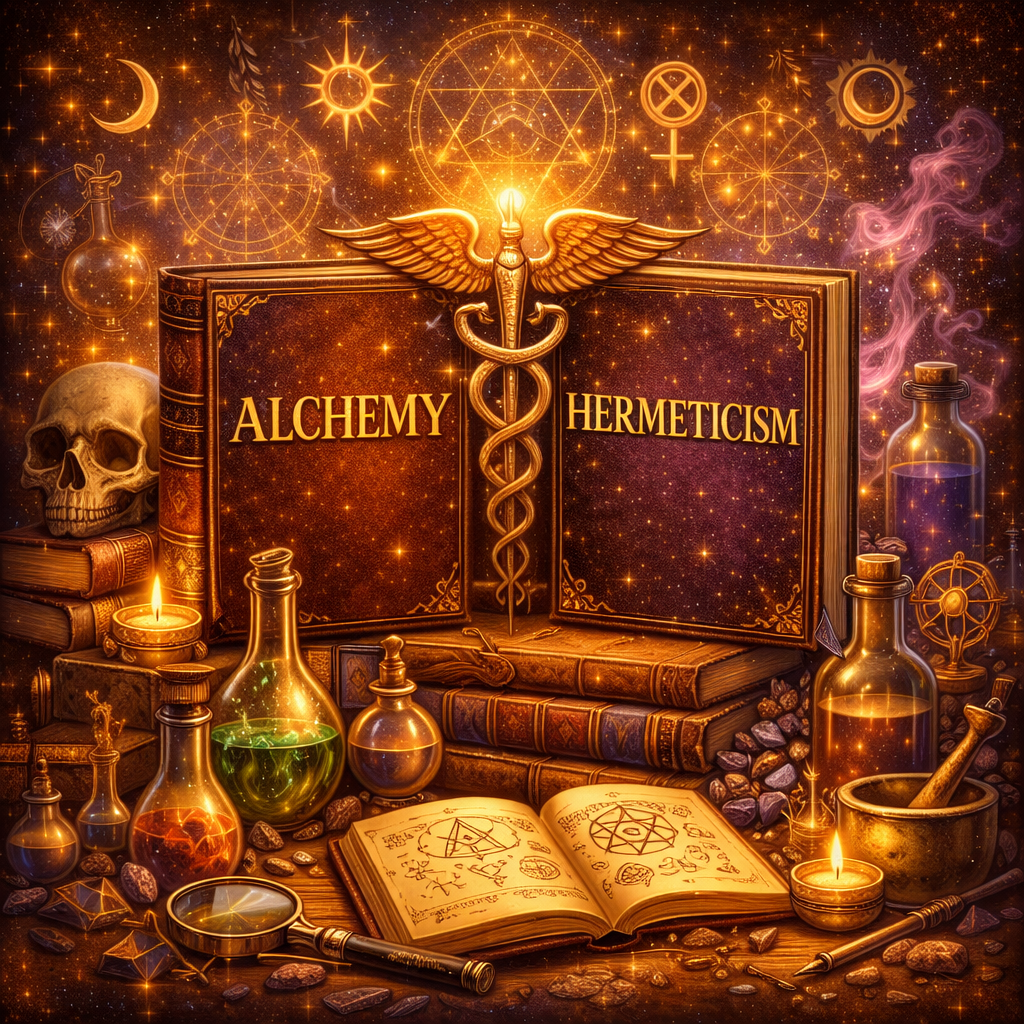

Isolde Whitaker, Sacred Texts Editor — The 'Turba Philosophorum' is an indispensable cornerstone of Western esotericism, offering a dense, allegorical tapestry of alchemical doctrine. Its true power lies not in explicit instruction, but in its capacity to ignite intuitive understanding through symbolic language. This text demands contemplation, rewarding diligent study with profound insights into the principles of transformation, the nature of matter, and the spiritual ascent. It's a vital resource for scholars of Alchemy and Hermeticism, as well as for practitioners seeking to deepen their comprehension of the Great Work. The fragmented, yet interconnected nature of the dialogue mirrors the very process of alchemical discovery, making it a challenging yet immensely rewarding read.
📝 Description
Embark on a profound alchemical journey with the 'Turba Philosophorum,' a foundational text in the Hermetic arts. This ancient dialogue, attributed to the lineage of Pythagoras and steeped in the wisdom of Hermes Trismegistus, unveils the veiled secrets of transmutation – not merely of metals, but of the very soul. Within its cryptic verses lie allegorical narratives and symbolic pronouncements, guiding the aspirant through the labyrinthine processes of spiritual purification and illumination. The 'Turba' speaks to those who seek to decipher the divine blueprint woven into the fabric of existence, offering a direct conduit to the gnosis of the Great Work. Its atmospheric prose evokes the dimly lit laboratories of medieval adepts, where the pursuit of physical gold was a metaphor for the attainment of spiritual gold. This is essential reading for earnest seekers of esoteric knowledge, philosophers, and practitioners of the Hermetic sciences who yearn to unlock the hidden potential within themselves and the cosmos.
💡 Why Read This Book?
Unravel the ancient secrets of alchemical transformation and spiritual enlightenment. The 'Turba Philosophorum' offers a unique portal into the symbolic language of the Great Work, essential for seekers of hidden knowledge, students of Hermeticism, and practitioners aiming to understand the profound parallels between material and spiritual transmutation. Dive into a text that has shaped esoteric thought for centuries.
⭐ Reader Reviews
Honest opinions from readers who have explored this book.
❓ Frequently Asked Questions
What is the 'Turba Philosophorum'?
The 'Turba Philosophorum,' meaning 'The Assembly of the Philosophers,' is a seminal alchemical text composed of dialogues between various philosophers. It presents a symbolic and allegorical exploration of the Great Work, the process of spiritual and material transformation central to alchemy.
Who is considered the author of 'Turba Philosophorum'?
The authorship is traditionally attributed to a collective of philosophers, hence 'Turba.' The text itself traces its lineage back to figures like Arisleus, a supposed disciple of Pythagoras, and implicitly to Hermes Trismegistus, underscoring its ancient and composite nature.
What are the main themes explored in the 'Turba Philosophorum'?
Key themes include the nature of the Philosopher's Stone, the dualistic principles of matter (often symbolized as male and female), the stages of alchemical processing (calcination, dissolution, separation, conjunction, etc.), and the ultimate goal of spiritual perfection and divine union.
Is this text suitable for beginners in alchemy?
While foundational, the 'Turba Philosophorum' is highly symbolic and allegorical. Beginners may find it challenging without supplementary guidance or a foundational understanding of alchemical principles and Hermetic philosophy. It's best approached with an open mind and a willingness to engage in deep study.
What is the 'Great Work' in alchemy?
The 'Great Work' (Magnum Opus) refers to the alchemical pursuit of creating the Philosopher's Stone, a legendary substance believed to transmute base metals into gold and to grant immortality. Esoterically, it represents the process of spiritual purification and the attainment of higher consciousness.
🔮 Key Themes & Symbolism
The Allegory of Transmutation
The 'Turba Philosophorum' masterfully employs allegory to describe the alchemical process, moving beyond mere metallurgy to encompass profound spiritual and psychological transformation. The 'metals' and 'elements' discussed are not solely physical substances but represent inner states, energies, and aspects of the human psyche that must be purified, refined, and united. The text guides the aspirant through the symbolic stages of the Great Work, emphasizing the cyclical nature of dissolution and reintegration, mirroring the soul's journey toward perfection and divine union. This rich symbolic language invites contemplation, urging readers to look beyond the literal to grasp the deeper metaphysical principles at play.
The Hermetic Lineage and Gnosis
This work is deeply rooted in the Hermetic tradition, tracing its lineage back to Hermes Trismegistus, the legendary founder of Hermetic philosophy. The 'Turba' positions itself as a transmission of ancient wisdom, passed down through revered figures like Pythagoras. It emphasizes the importance of divine inspiration and innate wisdom, suggesting that true alchemical knowledge is not merely learned but divinely imparted. The text serves as a conduit for gnosis, encouraging the reader to achieve direct experiential understanding of the universe's hidden laws and the interconnectedness of all things. It advocates for a path of inner knowing, illuminated by the light of ancient philosophical insights.
The Unity of Opposites
A central tenet explored within the 'Turba Philosophorum' is the profound concept of the unity of opposites, a cornerstone of Hermetic philosophy. The text frequently alludes to the necessary interplay and eventual reconciliation of seemingly contradictory forces – the masculine and feminine, the active and passive, the spiritual and material. This dynamic tension is presented as the very engine of creation and transformation within the alchemical process. The adept's task is to understand, balance, and ultimately synthesize these dualities, leading to a state of perfect equilibrium and wholeness, reflecting the microcosm (human) and the macrocosm (universe).
💬 Memorable Quotes
“Arisleus, begotten of Pythagoras, a disciple of the disciples by the grace of thrice great Hermes...”
— This opening establishes the text's lineage, linking it directly to revered ancient wisdom traditions, particularly Hermeticism and Pythagoreanism, asserting its authority and the profound nature of the knowledge it imparts.
“...had a greater gift of God and of Wisdom than was granted to any one after Hermes.”
— This highlights the perceived exceptionalism of Pythagoras and the ancient masters, suggesting a golden age of wisdom that the 'Turba' seeks to reawaken or preserve for contemporary seekers.
“Therefore he had a mind to assemble his disciples, who were now greatly increased...”
— This signifies the communal and pedagogical nature of esoteric transmission, where knowledge is shared and disseminated amongst a growing body of earnest students who are ready to receive profound teachings.
“...and had been constituted the chief persons throughout the whole world.”
— This emphasizes the far-reaching influence and paramount importance attributed to the disciples and their teachings, positioning them as leaders and custodians of universal wisdom in their era.
“...unto all who come after wisheth health and mercy.”
— This benevolent closing sentiment reveals the altruistic intention of the original scribe or compiler, offering blessings and wishing well-being to future generations who engage with this sacred knowledge.
🌙 Esoteric Significance
Tradition
The 'Turba Philosophorum' is a cornerstone of the Western Esoteric Tradition, particularly within the realms of Alchemy and Hermeticism. It embodies the Hermetic principle of 'As Above, So Below,' suggesting that the processes observed in the material world (like chemical transformations) are direct reflections of spiritual and psychological processes. It aligns with Neoplatonic ideas of emanation and return, and its emphasis on symbolic language is characteristic of Gnostic and Kabbalistic thought, aiming for direct, intuitive knowledge (gnosis) of the divine.
Symbolism
The text is replete with potent alchemical symbols. 'Metals' like gold and lead represent states of consciousness or matter; 'elements' (earth, air, fire, water) symbolize fundamental energies and principles; 'colors' (black, white, red) mark stages of purification and perfection. The 'Philosopher's Stone' is the ultimate symbol of spiritual perfection, divine union, and the realization of the Great Work. The allegorical 'marriage' of the Sun and Moon symbolizes the union of opposites, a critical step in achieving inner balance and wholeness.
Modern Relevance
In contemporary times, the 'Turba Philosophorum' continues to resonate deeply with seekers of spiritual growth, psychologists exploring archetypes (like Jung), and practitioners of various esoteric disciplines. Its allegorical framework offers profound insights into personal transformation, the integration of shadow aspects, and the pursuit of inner harmony. The text's emphasis on the interconnectedness of all things encourages a holistic worldview, relevant to ecological awareness and the search for meaning in a complex world. It remains a potent source for understanding the timeless human quest for perfection and divine connection.
👥 Who Should Read This Book
This seminal work is indispensable for serious students of Alchemy and Hermeticism, offering foundational allegorical teachings. Scholars of medieval philosophy and the history of science will find it a rich source of primary material. Spiritual seekers and practitioners of contemplative arts will benefit from its profound insights into transformation, the nature of consciousness, and the symbolic language of the soul's journey. While challenging, the 'Turba' rewards dedicated readers with a deeper understanding of the esoteric worldview and its enduring relevance to the human condition.
📜 Historical Context
The 'Turba Philosophorum' emerged during the High Middle Ages, a period of intense intellectual curiosity and the burgeoning translation of Arabic alchemical texts into Latin. This era saw a significant resurgence of interest in classical philosophy and esoteric traditions, fueled by contacts with the Islamic world, which had preserved and expanded upon ancient Greek knowledge. Alchemical texts like the 'Turba' were not merely scientific treatises but were deeply intertwined with Neoplatonic philosophy, Christian mysticism, and Gnosticism, reflecting a worldview where the material and spiritual realms were seen as intimately connected. The text's fragmented, dialogue-based format was typical of medieval philosophical discourse, aiming to stimulate debate and encourage interpretation among practitioners and scholars seeking to understand the secrets of nature and the universe.
📔 Journal Prompts
Reflect on a personal 'base metal' in your life that you wish to transmute. What symbolic process does this transformation entail?
Consider the concept of 'As Above, So Below' in relation to your daily experiences. How do outer events mirror inner states?
Identify a personal duality (e.g., logic vs. intuition, fear vs. courage). How might these opposites be harmonized within you?
What does 'perfection' mean to you in a spiritual or personal context? How does the 'Great Work' relate to this concept?
Imagine yourself as one of the philosophers in the 'Turba.' What question would you pose to the assembly about the alchemical art?
🗂️ Glossary
Hermes Trismegistus
A legendary syncretic figure, blending the Greek god Hermes with the Egyptian god Thoth. He is considered the mythical author of the Hermetic Corpus, a collection of ancient philosophical and religious writings central to Hermeticism and Western esotericism.
Pythagoras
An ancient Greek philosopher and mathematician, often credited with founding a religious movement known as Pythagoreanism. His teachings emphasized the importance of numbers, harmony, and the transmigration of souls, influencing much of subsequent Western philosophy and mysticism.
The Great Work (Magnum Opus)
In alchemy, the term refers to the process of creating the Philosopher's Stone, a legendary substance believed to transmute base metals into gold and grant immortality. Esoterically, it signifies spiritual purification, enlightenment, and the attainment of divine perfection.
Transmutation
The alchemical process of changing one substance into another, particularly the transformation of base metals into gold. Esoterically, it represents the profound transformation of the human soul, consciousness, and character through purification and spiritual development.
Gnosis
From the Greek word for 'knowledge,' gnosis refers to direct, intuitive, or spiritual knowledge of ultimate reality or divine truth. It is a core concept in Gnosticism and many esoteric traditions, emphasizing experiential understanding over mere intellectual belief.