Tumbling after
 82
82

Tumbling after
Witcover's *Tumbling after* presents a disquieting exploration of a fractured self. The novel excels in its atmospheric rendering of a reality that is subtly, then overtly, askew. The protagonist's descent into a disorienting 'otherwhere' is palpable, creating a sense of unease that lingers long after the page is turned. One particular strength is the book's ability to use the uncanny not as a cheap scare, but as a lens through which to examine profound questions of identity and memory. However, the narrative's deliberate ambiguity, while effective in parts, can sometimes feel like a barrier, leaving the reader yearning for more concrete anchors within the protagonist's shifting perceptions. The strength of its conceptual framework is also its potential limitation, as the abstract nature of the 'otherwhere' may leave some readers feeling adrift. Witcover's prose, however, consistently grounds the speculative elements in a keenly observed psychological reality. It’s a challenging but rewarding narrative for those willing to surrender to its peculiar logic.
📝 Description
82
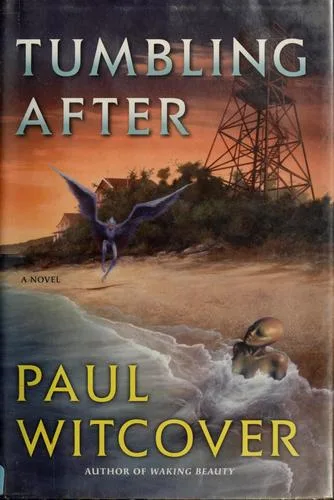
Paul Witcover's 2008 novel, Tumbling after, begins with a protagonist whose reality unravels.
Tumbling after follows a protagonist whose grasp on reality loosens after a series of inexplicable events. The narrative challenges perceptions, pulling readers into a world where the mundane frequently yields to the strange. This is a story for those who prefer literature that bends genre, especially readers drawn to psychological suspense with surreal elements.
Witcover's novel poses questions about consciousness and the self, avoiding simple answers. It is best suited for individuals interested in character studies that examine internal states. Readers looking for narratives that explore the complexities of the mind will find ample material here.
Published in 2008, *Tumbling after* engages with literary traditions that explore the uncanny and the porous boundary between the real and the imagined. It resonates with early 21st-century fiction that moved beyond strict realism to question narrative conventions and the nature of subjective experience. The novel's concept of the 'otherwhere,' a space adjacent to our own, serves as a locus for examining alienation and the search for belonging, reflecting an interest in how internal states are mirrored or shaped by perceived environments.
💡 Why Read This Book?
• Gain insight into the concept of the 'otherwhere' as a literary device for exploring psychological states, a unique approach not commonly found in conventional fiction. • Experience Witcover's specific prose style, which crafts an unsettling atmosphere through precise descriptions of subjective reality, distinct from typical genre fiction. • Understand how the narrative structure of *Tumbling after* mirrors the protagonist's fragmented consciousness, offering a unique way to engage with themes of memory and identity.
⭐ Reader Reviews
Honest opinions from readers who have explored this book.
❓ Frequently Asked Questions
What is the primary theme explored in Paul Witcover's Tumbling after?
The primary theme is the exploration of identity and memory through a fragmented consciousness. The novel uses the concept of an 'otherwhere' to represent internal psychological states and the unreliability of subjective reality.
When was Tumbling after first published?
Tumbling after was first published in 2008, placing it within a period of increased interest in literary fiction that incorporated speculative and psychological elements.
Does Tumbling after belong to a specific literary genre?
It defies easy categorization, blending elements of psychological fiction, surrealism, and speculative fiction. It's often described as literary fiction with uncanny or liminal themes.
Who is the author of Tumbling after?
The author is Paul Witcover. His work often explores the intricacies of human consciousness and the nature of reality.
What is the 'otherwhere' in Tumbling after?
The 'otherwhere' is a conceptual space within the novel, a liminal reality that seems to exist alongside or within the protagonist's own. It serves as a metaphor for displacement and altered states of perception.
Is Tumbling after a horror novel?
While it contains elements of the uncanny and can evoke a sense of unease, Tumbling after is not strictly a horror novel. Its focus is more on psychological exploration and existential questioning than on overt terror.
🔮 Key Themes & Symbolism
The 'Otherwhere' as Psychological Space
The central concept of the 'otherwhere' functions less as a physical location and more as a manifestation of the protagonist's fractured psyche. This liminal space, characterized by its instability and uncanny resemblances to the known world, serves as a potent metaphor for internal displacement and alienation. Witcover uses this device to illustrate how subjective experience can warp perception, blurring the lines between external reality and internal states. The narrative implies that the 'otherwhere' is not a place one visits, but a condition one inhabits when the self begins to unravel.
Fluidity of Memory and Identity
Tumbling after critically examines the construction of personal identity through the lens of memory. The protagonist's journey involves grappling with memories that are unreliable, contradictory, or seemingly fabricated. This challenges the notion of a stable, cohesive self, suggesting instead that identity is a fluid narrative constantly being reinterpreted and reshaped. The novel questions whether a singular truth of one's past exists or if identity is an ongoing process of constructing meaning from fragmented recollections.
The Uncanny in Everyday Reality
Witcover masterfully employs the uncanny to disrupt the reader's sense of normalcy. The 'otherwhere' often intrudes upon the protagonist's familiar surroundings, manifesting as subtle distortions or unsettling repetitions. This technique highlights how the seemingly ordinary can harbor hidden strangeness, prompting reflection on the nature of perception and the limits of rational understanding. The novel suggests that the uncanny is not merely an external phenomenon but an intrinsic aspect of consciousness itself, capable of transforming the mundane into the unsettling.
Alienation and the Search for Belonging
Fundamentally, Tumbling after is a narrative about profound alienation. The protagonist finds themselves disconnected from their own past, their relationships, and their sense of self. The exploration of the 'otherwhere' reflects this internal exile, a state of being perpetually out of place. The character's journey, though disorienting, is implicitly a search for coherence and a place to belong, even if that belonging is ultimately found within the acceptance of their own fragmented state.
💬 Memorable Quotes
Direct passages from the work, attributed to the author.
“He felt adrift in a place that was both everywhere and nowhere.”
— This captures the essence of the 'otherwhere,' emphasizing its paradoxical nature. It's a space that is all-encompassing yet lacks any defined boundaries, mirroring the protagonist's state of profound disorientation.
“The familiar became strange, and the strange began to feel like home.”
— This phrase expresses the psychological inversion central to the novel. It illustrates how the protagonist's perception shifts, leading to an unsettling comfort found in the very elements that signify their displacement.
“Was this a dream, or merely a different kind of waking?”
— This question probes the ambiguity of the protagonist's experience. It questions the very definition of reality, suggesting that the boundaries between dreams and waking life are porous and subjective within the narrative.
💡 Key Ideas
Editorial paraphrase of the work's core concepts — not direct quotes.
The edges of things seemed to fray, not violently, but as if the world itself was tired.
This line captures the novel's pervasive atmosphere of subtle disintegration. It suggests that the 'uncanny' in *Tumbling after* isn't about dramatic events, but a pervasive weariness of reality itself, a quiet unraveling of the familiar.
Memory offered no solid ground, only shifting sands that rearranged themselves with every thought.
This paraphrased concept highlights the novel's central theme of unreliable memory. It underscores how the protagonist's past is not a fixed record but a fluid, unstable foundation, directly impacting their sense of self and reality.
🌙 Esoteric Significance
Tradition
While not explicitly aligned with a single esoteric tradition, *Tumbling after* speaks to Gnostic themes of alienation from the material world and the search for hidden knowledge. The concept of the 'otherwhere' can be interpreted as a modern manifestation of the Gnostic 'pleroma' or a spiritual realm inaccessible through ordinary senses. The novel’s focus on subjective reality and the deceptive nature of perception also echoes Hermetic principles, particularly the idea that 'The All is Mind' and that one's inner state shapes external experience.
Symbolism
The 'otherwhere' itself functions as a primary symbol, representing psychological fragmentation, existential displacement, and the hidden dimensions of consciousness. The motif of 'fraying edges' symbolizes the breakdown of ordinary reality and the emergence of the uncanny. The recurring theme of shifting landscapes or unstable environments mirrors the protagonist's internal state, where memory and identity are constantly in flux, lacking firm grounding.
Modern Relevance
Contemporary practitioners of Jungian psychology and those interested in archetypal symbolism may find *Tumbling after* a compelling fictional exploration of the shadow self and the process of individuation. The novel’s portrayal of a fractured consciousness also speaks to modern anxieties surrounding information overload and the perceived unreliability of digital realities, making its themes of subjective truth and perception highly relevant to current discourse on reality and identity.
👥 Who Should Read This Book
• Readers interested in the philosophical underpinnings of identity and memory, seeking a narrative that probes these concepts through speculative fiction. • Fans of literary fiction that embraces the uncanny and surreal, appreciating atmospheric storytelling over conventional plot resolutions. • Individuals exploring themes of psychological fragmentation and existential alienation, who might find resonance in the protagonist's journey into the 'otherwhere'.
📜 Historical Context
Paul Witcover's *Tumbling after*, published in 2008, arrived at a moment when literary fiction was increasingly comfortable with speculative and psychological unease. The early 21st century saw a continued exploration of fragmented narratives and subjective realities, moving beyond the stricter tenets of postmodernism. Witcover’s work can be situated alongside authors like David Mitchell or Helen Oyeyemi, who similarly played with genre conventions and explored the porous boundaries of perception. The novel's engagement with the uncanny and the 'otherwhere' reflects a broader cultural interest in liminal spaces and altered states of consciousness, perhaps influenced by burgeoning discussions in neuroscience and philosophy regarding the self. While specific critical reception for *Tumbling after* in 2008 isn't widely documented, its publication contributed to the growing range of literary fiction that prioritized internal landscapes and existential questioning over traditional plot structures.
📔 Journal Prompts
The 'otherwhere' as a mirror for internal states.
Reflecting on the fluidity of memory and its impact on self-perception.
The uncanny intrusion into the mundane: personal experiences.
Navigating feelings of alienation and the search for belonging.
Examining the reliability of perception when faced with the inexplicable.
🗂️ Glossary
Otherwhere
A liminal, often unsettling, conceptual space within the narrative that exists adjacent to or within ordinary reality, serving as a manifestation of psychological states and fragmented consciousness.
Uncanny
The quality of being strange or mysterious, especially in an unsettling or disconcerting way. In *Tumbling after*, it refers to the subtle yet pervasive disruptions of the familiar that challenge the protagonist's sense of reality.
Fragmentation
The state of being broken into pieces. In the context of the novel, it refers to the disintegration of the protagonist's sense of self, memory, and coherent experience of reality.
Liminal Space
A transitional or in-between state or place. In the novel, the 'otherwhere' embodies a liminal space, neither fully here nor there, reflecting the protagonist's own transitional psychological state.
Subjective Reality
Reality as perceived and experienced by an individual, influenced by their consciousness, memories, and emotions. The novel heavily emphasizes how subjective reality can diverge from objective or shared reality.
Displacement
The state of being removed from one's usual or proper place. This can be literal or psychological, reflecting the protagonist's feeling of being out of sync with their life and surroundings.
Coherence
The quality of being logical and consistent. The protagonist's struggle involves a loss of coherence in their thoughts, memories, and perception of the world.
🔮 Readers Also Liked
Browse all →









More by Paul Witcover
All books →
More Free Occult Philosophy Books
View all →