Triadic Mysticism
 83
83

Triadic Mysticism
Paul E. Murphy's "Triadic Mysticism" offers a rare, unvarnished theological exposition of Kashmir Saivism, a tradition often obscured by less rigorous popularizations. Its strength lies in its systematic approach, presenting the Trika system not as a mere collection of beliefs, but as a coherent metaphysical edifice. Murphy navigates the intricate concepts of Paraśiva and the four *upāyas* with scholarly precision, making a powerful case for the tradition's "architectonic power." A notable limitation, however, is the dense prose, which, while accurate, can be challenging for those unacquainted with advanced Sanskrit philosophical terminology. The discussion surrounding Ahhinavagupta's theological contributions, particularly his emphasis on gnosis as a path to Freedom, is exceptionally well-articulated, providing a crucial anchor for understanding the tradition's intellectual lineage. This book serves as an indispensable, albeit demanding, resource for serious study.
📝 Description
83
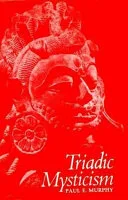
Paul E. Murphy's 1986 book systematically examines Kashmir Saivism's Trika philosophy.
Published in 1986, Paul E. Murphy's Triadic Mysticism offers a thorough theological examination of Trika, the philosophical and spiritual tradition known as Kashmir Saivism. The book maps the structure and mystical depth of this Indic theology, positing consciousness or Light as the ultimate reality. This reality is defined by absolute Freedom, a state accessible through specific spiritual practices outlined in the text. Murphy's work aims to clarify the unique doctrines of Trika for students of Indic religions, comparative theology, and metaphysics. It is particularly useful for advanced yoga and meditation practitioners seeking a philosophical basis for their experiences.
The book centers on the Triadic nature of reality and consciousness. It identifies ultimate Consciousness or Light, referred to as Paraśiva, as the supreme principle, stressing its inherent Freedom. Murphy details the four paths, or *upāyas*, through which this ultimate state can be reached: *anupāya* (non-means), *śambhavopāya* (means of Śiva), *śāktopāya* (means of Śakti), and *āṇavopāya* (means of the atom/individual). The work underscores the significance of knowledge and gnosis within this Triadic system.
Triadic Mysticism engages with the complex spiritual and philosophical system of Kashmir Saivism, a non-dualistic tradition within Indian religions that flourished historically in the Himalayan region. Unlike some Vedanta schools, its intricate ontology and epistemology made it less accessible to Western audiences. Murphy's book emerged during a time of increasing Western interest in Indian traditions, aiming to provide a rigorous theological framework for understanding Trika's core tenets and contemplative practices, thus filling a gap in scholarly and practitioner resources.
💡 Why Read This Book?
• Gain a precise theological framework for Kashmir Saivism, understanding its architectonic power and the concept of Consciousness as Freedom, as detailed in Murphy's systematic treatment. • Grasp the four *upāyas* (non-means, means of Śiva, means of Śakti, means of the atom) and how they function as distinct paths toward the ultimate goal, a core doctrine explored extensively. • Appreciate the historical and philosophical context of Trika, recognizing its unique position within Indic thought as presented through Murphy's scholarly analysis initiated in 1986.
⭐ Reader Reviews
Honest opinions from readers who have explored this book.
❓ Frequently Asked Questions
What is the primary theological focus of Triadic Mysticism?
The book's primary focus is Kashmir Saivism, known as Trika or Triadiam. It details its architectonic power and mystical profundity, identifying ultimate consciousness or Light as the highest category, characterized by Freedom.
Who was the prime theologian discussed in relation to Triadic Mysticism?
The work highlights Ahhinavagupta as the prime theologian of Triadism, particularly concerning the knowledge-oriented aspects and the attainment of the ultimate goal through specific means.
What are the four ways (upāyas) mentioned in the book?
The four ways are *anupāya* (non-means), *śambhavopāya* (means of Śiva), *śāktopāya* (means of Śakti), and *āṇavopāya* (means of the atom or individual soul), representing different paths to realizing ultimate consciousness.
When was Triadic Mysticism first published?
Triadic Mysticism was first published in 1986, marking a significant contribution to the theological treatment of Kashmir Saivism in English.
What is the ultimate goal described in Kashmir Saivism according to this book?
The ultimate goal is the realization of consciousness or Light, which is characterized by absolute Freedom. This state represents the highest category and objective of the Trika system.
Is this book suitable for beginners in Eastern philosophy?
While comprehensive, the book's theological and philosophical depth makes it more suited for serious students and scholars of Indic religions rather than absolute beginners.
🔮 Key Themes & Symbolism
Consciousness as Freedom
The central tenet explored is that ultimate reality, conceived as Consciousness or Light, possesses Freedom as its paramount characteristic. This isn't mere absence of constraint but an inherent, self-positing liberty that defines the divine nature. Murphy details how this Freedom is not just an abstract concept but the very essence of the goal attainable through the Trika path, making its realization the apex of spiritual aspiration within this tradition.
The Four Upāyas
Central to the practical application of Triadic philosophy are the four *upāyas*: *anupāya* (non-means), *śambhavopāya* (means of Śiva), *śāktopāya* (means of Śakti), and *āṇavopāya* (means of the atom). The book systematically explains these as progressive or parallel paths, ranging from direct, non-dual realization to more structured, knowledge-oriented disciplines, illustrating how the Trika system accommodates diverse approaches to achieving the ultimate goal.
Architectonic Power of Trika
Murphy emphasizes the profound 'architectonic power' of Kashmir Saivism, referring to its coherent, intricately structured metaphysical system. This theme highlights how the tradition constructs a comprehensive worldview encompassing ontology, epistemology, and soteriology with remarkable consistency. The book serves to showcase this intellectual rigor, presenting Trika as a theology of immense structural integrity and philosophical depth.
Gnosis and Triadism
The work looks at the Gnostic or knowledge-oriented dimension of Triadism, particularly as articulated by figures like Ahhinavagupta. This aspect underscores the importance of correct understanding and direct apprehension of Truth (gnosis) as a critical component of the spiritual path. It links the intellectual grasp of Trika's principles to the direct experience of Freedom, positioning knowledge as an essential, rather than incidental, element of liberation.
💬 Memorable Quotes
Direct passages from the work, attributed to the author.
“Its highest category and goal is consciousness or Light whose foremost characteristic is Freedom.”
— This statement captures the ultimate aim of Kashmir Saivism as presented by Murphy. It posits that the supreme reality is not a static deity but a dynamic, luminous consciousness, whose essential nature is liberation itself.
“Few Indic theologies equal it in architectonic power and mystical profundity.”
— This assertion highlights the unique structural integrity and deep spiritual insight of the Trika system. It positions Kashmir Saivism as a highly sophisticated and internally consistent philosophical framework within the broader range of Indian religious thought.
“The theology of these ways pertains to Gnostic or knowledge oriented Triadism whose prime theologian is Ahhinav.”
— This points to the crucial role of *jñāna* (knowledge or gnosis) within the Trika system, particularly as developed by Ahhinavagupta. It signifies that intellectual and experiential understanding are integral to the spiritual path, not merely preparatory steps.
“This goal can be attained through four ways (upayas).”
— This concise statement introduces the practical methodology of the Trika path. It indicates that the tradition offers a structured, albeit varied, approach to spiritual realization, allowing for different temperaments and capacities among practitioners.
“The first consistent theological treatment of the subject of Hindu thought known to itself as Trika or Triadiam.”
— This descriptive claim, likely from the original blurb, underscores the book's pioneering role in providing a systematic, scholarly exposition of Kashmir Saivism in English, filling a significant gap in existing literature.
🌙 Esoteric Significance
Tradition
Triadic Mysticism is firmly rooted in the lineage of Kashmir Saivism, a non-dualistic Shaivite tradition that flourished in the Indian subcontinent. This work fits within the broader Hindu philosophical landscape but departs significantly from dualistic or qualified non-dualistic schools. It aligns with esoteric traditions that posit consciousness as the ultimate ground of reality and emphasize direct experiential realization of this truth, sharing conceptual parallels with certain Gnostic and Hermetic ideas regarding divine immanence and gnosis.
Symbolism
The book explores the concept of 'Light' as a primary symbol for ultimate Consciousness (Paraśiva), representing purity, awareness, and the source of all manifestation. 'Freedom' serves as a key symbolic characteristic of this Light, denoting its unconditioned, self-luminous nature. The four *upāyas* themselves can be seen as symbolic pathways, representing different modes of engaging with the divine, from direct, unmediated recognition to more structured, knowledge-based approaches.
Modern Relevance
Contemporary scholars and practitioners of non-dual traditions, particularly those interested in comparative mysticism and theology, continue to draw upon Murphy's work. Its systematic presentation of Kashmir Saivism's complex ontology and soteriology remains a valuable reference for understanding the philosophical underpinnings of advanced meditation and contemplative practices seeking to realize Consciousness as Freedom.
👥 Who Should Read This Book
• Students of comparative theology and Indic religions seeking a rigorous, systematic exposition of Kashmir Saivism, moving beyond superficial introductions. • Advanced practitioners of meditation and yoga who wish to understand the philosophical architecture and theological underpinnings of their practice, particularly the concept of Consciousness as Freedom. • Scholars of metaphysics and ontology interested in non-dualistic systems, exploring the architectonic power and intricate doctrines of the Trika tradition as detailed by Murphy.
📜 Historical Context
Paul E. Murphy's "Triadic Mysticism," first published in 1986, arrived at a central moment for Western engagement with Indic traditions. While interest in Hinduism had grown, rigorous theological examinations of specific schools like Kashmir Saivism remained relatively scarce. Murphy's work aimed to rectify this by offering a consistent, architectonic theological treatment of Trika. This was particularly important as other Vedantic schools, like Advaita Vedanta, had broader recognition. The book provided scholars and practitioners with a detailed exposition of a complex system, highlighting its unique emphasis on Consciousness as Freedom and its four *upāyas*. Its publication predated the widespread digital dissemination of texts, making such a dedicated scholarly volume a crucial resource for understanding a tradition whose prime theologian, Ahhinavagupta, was only beginning to be studied in depth in the West.
📔 Journal Prompts
The concept of Consciousness as Freedom: How does this differ from conventional notions of liberty?
Reflecting on the *upāyas*: Which path, or combination of paths, seems most aligned with your current spiritual inclination?
Ahhinavagupta's role in Gnostic Triadism: What aspects of his theological contributions are most compelling?
The architectonic power of Trika: What elements of its structure create a sense of profound coherence?
The nature of ultimate Light: What personal or symbolic associations does this motif evoke for you?
🗂️ Glossary
Trika
A philosophical and theological system originating in Kashmir, also known as Kashmir Saivism. It emphasizes the Triadic nature of reality and consciousness, often understood as non-dual.
Kashmir Saivism
A major school of Shaivism that flourished in Kashmir, characterized by its sophisticated monistic or non-dualistic philosophy and yogic practices.
Upāya
Literally 'means' or 'method.' In Kashmir Saivism, it refers to the four principal paths or techniques through which one can attain liberation or union with the divine.
Anupāya
The 'non-means' or 'pathless path,' the highest of the four *upāyas*. It signifies a state of direct, unmediated realization without reliance on specific techniques.
Śambhavopāya
The 'means of Śiva,' one of the four *upāyas*. It involves a subtle yogic practice focused on the power of will and consciousness, transcending gross physical means.
Śāktopāya
The 'means of Śakti,' one of the four *upāyas*. This path utilizes the power of knowledge and perception, focusing on the realization of the divine as Energy or Consciousness.
Āṇavopāya
The 'means of the atom' or individual soul. This is the most grounded of the *upāyas*, involving practices aimed at purifying the individual's limited perception and realizing their true nature.