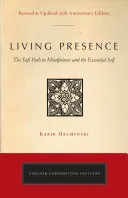
Living Presence (Revised)
 82
82

Living Presence (Revised)
Kabir Edmund Helminski's *Living Presence* revisits its foundational exploration of Sufi mindfulness, offering a refined perspective on the transformative power of the present moment. The revised edition strengthens its accessibility, particularly in its explanation of how cultivating 'presence'—a heart-centered awareness—serves as the direct conduit to the Divine. Helminski navigates the core tenets of Sufism with a clarity that avoids overly academic language, making the path feel attainable. However, while the prose is generally accessible, certain passages could benefit from more concrete examples of contemplative practices, moving beyond conceptual explanations to illustrate the lived experience of presence. The strength lies in its consistent focus on the *how* of spiritual connection, grounding abstract theology in actionable awareness. It remains a valuable illumination of a profound spiritual tradition.
This revised edition is a worthy guide for those seeking to deepen their spiritual awareness.
📝 Description
82
Living Presence (Revised) marks 25 years since its first publication, focusing on the Sufi concept of 'presence'.
Kabir Edmund Helminski's Living Presence (Revised) returns 25 years after its initial release. The book examines the core Sufi concept of 'presence,' understood as a state of heart-filled mindfulness. Helminski suggests that cultivating this awareness in the present moment is central to spiritual connection and experiencing the Divine. This revised edition offers a contemporary perspective on the mystical dimension of Islam.
This work is suited for individuals interested in esoteric traditions, especially Sufi philosophy and its practical applications. It will appeal to those seeking a more profound understanding of mindfulness, moving beyond secular interpretations to engage with the Divine. The book bridges historical Sufi practice with contemporary spiritual seeking.
Central to the text is the idea of 'presence' itself. Helminski presents this state of heart-filled mindfulness as a gateway to experiencing the Divine and allowing that energy to manifest through a person. The book details how this state can be cultivated through various spiritual disciplines.
Living Presence engages with Sufism, the mystical path within Islam that has shaped spiritual thought for over a millennium. This tradition emphasizes direct experience of the Divine through love, devotion, and disciplined practice. Helminski's work places the concept of 'presence' within this lineage, showing its continued relevance for contemporary seekers. It connects the historical practices of Sufism to modern contemplative life, offering a way to integrate these ancient teachings into daily experience.
💡 Why Read This Book?
• Gain practical methods for cultivating 'presence,' a core Sufi concept, moving beyond mere intellectual understanding to embodied awareness, as detailed in the book's sections on spiritual discipline. • Understand the historical and spiritual lineage of Sufism, as the text contextualizes its teachings within the broader Islamic mystical tradition dating back centuries. • Discover how the practice of 'presence' serves as a direct pathway to connecting with the Divine, offering a spiritual framework distinct from secular mindfulness, as explained by Helminski.
⭐ Reader Reviews
Honest opinions from readers who have explored this book.
❓ Frequently Asked Questions
What is the core teaching of Kabir Edmund Helminski's *Living Presence*?
The core teaching is that 'presence'—a state of heart-filled mindfulness and consciousness in the present moment—is the key to spiritual connection and experiencing the Divine.
Is *Living Presence* suitable for beginners to Sufism?
Yes, the revised edition is designed for accessibility, offering a clear introduction to Sufi concepts for those new to the tradition.
When was the original edition of *Living Presence* first published?
The original edition of *Living Presence* was first published on May 30, 2017.
What does 'presence' mean in the context of Sufism as described in the book?
In Sufism, as explained by Helminski, presence signifies a state of deep mindfulness and conscious awareness in the present moment, allowing for connection with the Divine.
How does this book differ from secular mindfulness guides?
While secular mindfulness often focuses on psychological well-being, *Living Presence* frames presence as a spiritual practice aimed at connecting with the Divine and allowing it to live through us.
What makes this a 'revised' edition?
This is a revised 25th-anniversary edition, suggesting updates or refinements to the original text to enhance clarity and relevance for contemporary readers.
🔮 Key Themes & Symbolism
The Nature of Presence
The book meticulously defines 'presence' not as simple awareness, but as a heart-filled state of mindfulness, a conscious engagement with the now. This state is posited as the only true space for spiritual realization. Helminski guides the reader to understand how this quality allows the Divine to be experienced directly and to manifest through the individual, moving beyond conceptual knowledge to experiential knowing.
Sufism as a Living Path
Living Presence anchors itself firmly within the Sufi tradition, the mystical heart of Islam. It emphasizes that Sufism is not merely historical dogma but a living, accessible path. The work draws from this lineage to present practices and insights that remain relevant for contemporary spiritual seekers, bridging ancient wisdom with modern life and offering a fragrant connection to the wisdom of the ancients.
The Divine in the Present
A central tenet explored is that the Divine is not a distant entity but an immanent reality accessible only in the present moment. The book argues that through cultivating presence, individuals can transcend the distractions of past regrets and future anxieties to inhabit the 'now,' where genuine connection and spiritual awakening occur.
Heart-Centered Spirituality
The emphasis on a 'heart-filled state' distinguishes this approach from purely intellectual or ascetic spiritualities. Helminski highlights the heart as the seat of spiritual perception and the center for experiencing Divine love and presence. Cultivating this heart-centered awareness is presented as fundamental to the Sufi path and to a meaningful spiritual life.
💬 Memorable Quotes
Direct passages from the work, attributed to the author.
“Presence is the quality that describes a heart-filled state of mindfulness, an experience of being conscious in the present moment.”
— This definition expresses the book's central theme, distinguishing Sufi presence from secular mindfulness by emphasizing its spiritual and emotional depth ('heart-filled'). It's presented as the core experience for spiritual connection.
“It is only in this present moment, Sufi teachings reveal, that we can connect with the Divine, and the Divine can live through us.”
— This powerful statement underscores the book's thesis: the 'now' is the sacred space for divine encounter. It suggests an active, participatory relationship with the Divine, where spiritual energy flows through the practitioner.
“Connection with the Divine is achieved solely through consciousness in the present.”
— This interpretation focuses on the exclusivity of the present moment for spiritual connection, as taught within Sufism according to Helminski. It implies that all other times are secondary or irrelevant for this specific attainment.
💡 Key Ideas
Editorial paraphrase of the work's core concepts — not direct quotes.
A heartfelt modern illumination of the Sufi path, filled with the fragrance of the ancients.
This quote, attributed to Jack Kornfield, highlights the book's success in making ancient Sufi wisdom relevant and accessible to contemporary readers, emphasizing its emotional resonance and spiritual authenticity.
The work explores how presence allows one to experience the Divine directly.
This paraphrased concept emphasizes the experiential nature of spirituality presented in the book. It suggests that the practice of presence leads to a direct, unmediated connection with the Divine, moving beyond dogma.
🌙 Esoteric Significance
Tradition
This work is firmly situated within the esoteric lineage of Sufism, the mystical dimension of Islam. It draws upon a tradition that emphasizes direct experience of the Divine through love, meditation, and remembrance (dhikr). While Sufism is integral to Islam, its esoteric path often shares common ground with other mystical traditions like Neoplatonism and Hermeticism in its focus on inner transformation and the attainment of gnosis, or direct knowledge of God.
Symbolism
While not heavily reliant on overt symbolic language in the Western esoteric sense, the concept of 'presence' itself functions symbolically, representing the Divine's immanence and accessibility. The 'heart' is another key symbol, understood not merely as a biological organ but as the spiritual center of perception and divine reception. The book implies that cultivating the heart's pure attention is the pathway to experiencing this Divine presence.
Modern Relevance
Contemporary thinkers and practitioners in fields ranging from contemplative spirituality to depth psychology find resonance in Helminski's accessible presentation of Sufi principles. Schools focusing on integral spirituality and the integration of Eastern wisdom traditions often cite or engage with Sufi concepts of presence and heart-centered awareness. The work remains relevant for those seeking authentic spiritual practice grounded in ancient wisdom but articulated for modern sensibilities.
👥 Who Should Read This Book
• Individuals exploring Islamic mysticism or Sufism who seek a clear, contemporary explanation of its core principles and practices. • Practitioners of mindfulness or meditation who wish to understand the spiritual and Divine-oriented roots of these techniques. • Seekers of spiritual depth interested in cultivating a more profound connection with the present moment and the Divine, moving beyond superficial awareness.
📜 Historical Context
Published in its revised 25th-anniversary edition, *Living Presence* emerges from a landscape where interest in comparative mysticism and Eastern spiritual traditions surged in the late 20th and early 21st centuries. Sufism, often understood through figures like Rumi or historical movements, found a contemporary voice in authors like Idries Shah, who was instrumental in introducing Sufi concepts to the West. Helminski's work contributes to this dialogue, offering a specific focus on 'presence' as a practical, interior discipline. While secular mindfulness practices gained widespread popularity, *Living Presence* provides a distinctively spiritual framework, rooting these practices within the Islamic mystical tradition. The book's reception highlights a continuing engagement with Sufi thought outside of its traditional Islamic context, resonating with seekers looking for depth beyond more generalized wellness approaches.
📔 Journal Prompts
The concept of 'heart-filled state of mindfulness'—how does this differ from your usual awareness?
Reflecting on the Divine's presence in the 'now,' identify one moment today where you felt this connection.
Consider the 'fragrance of the ancients' mentioned in the context of Sufi teachings; what does this evoke for you?
How might cultivating 'presence' alter your daily interactions and perceptions?
The idea of the Divine living through us—what are the implications of this for personal responsibility?
🗂️ Glossary
Presence
In Sufism, a heart-filled state of mindfulness and conscious awareness in the present moment, considered the gateway to connecting with the Divine.
Sufism
The mystical or esoteric dimension of Islam, focused on the pursuit of direct experience of God through love, devotion, and spiritual practices.
Divine
The ultimate reality or God, understood in Sufism as both transcendent and immanent, accessible through inner experience.
Mindfulness
A state of active, open attention on the present, characterized by awareness, clarity, and acceptance; in Sufism, it is specifically heart-centered and divinely oriented.
Heart
In the Sufi context, the spiritual center of the human being, the locus of divine perception, love, and consciousness.
Spiritual Path
The journey of inner transformation and development undertaken by a seeker aiming for spiritual realization or union with the Divine.
Remembrance (Dhikr)
A central Sufi practice involving the repetition of Divine names or phrases to cultivate constant awareness of God.