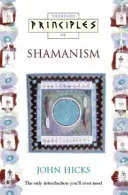
Thorsons Principles of Shamanism
 79
79

Thorsons Principles of Shamanism
Leo Rutherford's "Thorsons Principles of Shamanism" tackles the immense subject of shamanism with a clarity that belies its 1996 publication date. The work's strength lies in its straightforward presentation of complex ideas, demystifying concepts like soul retrieval for a Western audience. Rutherford avoids overly academic jargon, making the material accessible to beginners. A particularly notable section details the mechanics of the shamanic journey, describing the use of repetitive sound or rhythm to enter altered states, a technique common across many indigenous traditions. However, the book's primary limitation is its introductory nature; while it explains 'what' shamanism is and 'how' certain practices are approached, it offers less depth on the nuanced cultural variations and the profound ethical considerations that modern practitioners must navigate. The original blurb's claim that one can "change reality" is presented a bit too simplistically, lacking the necessary caveats about intention and interconnectedness. Despite this, Rutherford provides a solid, if basic, primer on ancient spiritual technology.
📝 Description
79
Leo Rutherford's Thorsons Principles of Shamanism, published in 1996, examines shamanism as a living tradition.
First appearing in 1996, Leo Rutherford's "Thorsons Principles of Shamanism" examines shamanism not as a historical artifact but as a vital, ongoing spiritual practice. The book aims to make the core ideas and methods of shamanic traditions accessible to a new audience. It acknowledges shamanism's deep history, predating recorded civilization and organized religions.
Rutherford places this ancient practice within a contemporary framework, highlighting its global reach and lasting impact. The work is suited for those new to shamanism, readers interested in comparative religion, altered states, and indigenous spirituality. It specifically addresses the connections between dreaming, personal strength, and how we perceive reality. Those looking for practical instruction in basic shamanic techniques will find the book useful.
Shamanism, with roots stretching back over 50,000 years, represents one of humanity's oldest spiritual expressions. Rutherford's work situates this ancient path within modern understanding, emphasizing its continued relevance. It connects shamanic practices to fundamental human experiences like altered consciousness, dreaming, and healing, suggesting these are not relics but active spiritual tools. The book bridges the gap between ancient traditions and contemporary seekers interested in exploring these dimensions of reality.
💡 Why Read This Book?
• Learn the foundational techniques of shamanic journeying, as detailed in Rutherford's explanations of entering altered states through rhythmic drumming, a core practice described in the book. • Understand the concept of soul retrieval, a key shamanic healing method explored in the text, and its potential role in personal wholeness. • Gain insight into the ancient origins of shamanism, tracing its roots back over 50,000 years, providing a historical perspective unavailable in more contemporary New Age materials.
⭐ Reader Reviews
Honest opinions from readers who have explored this book.
❓ Frequently Asked Questions
What is the earliest evidence of shamanism discussed in Thorsons Principles of Shamanism?
The book references archaeological evidence suggesting shamanism's presence dates back over 50,000 years, positioning it as humanity's oldest known spiritual path.
Does Thorsons Principles of Shamanism offer practical exercises?
Yes, the book introduces foundational practices such as shamanic journeying and explains concepts like soul retrieval, providing readers with theoretical knowledge and conceptual frameworks for practice.
Who is the author of Thorsons Principles of Shamanism?
The author is Leo Rutherford, and the book was first published in 1996.
What is shamanic journeying according to Leo Rutherford?
According to Rutherford's work, shamanic journeying involves entering an altered state of consciousness, often facilitated by rhythmic sounds, to connect with the spirit world for guidance or healing.
Is Thorsons Principles of Shamanism suitable for absolute beginners?
Yes, the book is described as an introductory guide, making it suitable for individuals with no prior knowledge of shamanism who are seeking a foundational understanding.
What does the book say about dreams and reality?
Rutherford's book explores how dreams can be understood as a means to access and potentially influence reality, a concept central to many shamanic traditions.
🔮 Key Themes & Symbolism
Shamanic Journeying
The book focuses heavily on the practice of shamanic journeying, defining it as a method for accessing non-ordinary reality. Rutherford outlines how practitioners utilize repetitive stimuli, such as drumming or chanting, to induce altered states of consciousness. This allows for communication with spirit guides, the retrieval of lost soul parts, and the gaining of insight for oneself or one's community. The concept is presented as a fundamental tool within shamanism for spiritual exploration and healing.
Dreaming and Reality
A core theme is the interconnectedness of dreaming and waking reality. Rutherford suggests that the dream state is not merely a passive experience but a potent dimension where one can actively engage with the fabric of existence. The work explores how understanding and working with dreams can lead to shifts in perception and potentially influence one's tangible circumstances. This perspective challenges conventional Western views on consciousness and the limitations of physical reality.
Soul Retrieval
The concept of soul retrieval is presented as a vital shamanic healing practice. The book explains that during traumatic experiences, parts of the soul can become lost or fragmented, leading to various forms of illness or spiritual imbalance. Shamanic practitioners, through journeying, aim to recover these lost soul parts and reintegrate them with the individual, thereby restoring wholeness and vitality. This practice underscores the holistic approach of shamanism to well-being.
Ancient Spiritual Path
Rutherford consistently emphasizes shamanism's status as the world's oldest spiritual path, with roots stretching back tens of thousands of years. The book serves to legitimize and preserve the understanding of these ancient traditions in a contemporary context. It highlights the universality of shamanic practices across diverse cultures and epochs, positioning it as a fundamental aspect of human spiritual evolution and a source of enduring wisdom.
💬 Memorable Quotes
Direct passages from the work, attributed to the author.
“Shamanism is the oldest spiritual path on this planet, with roots tracing back more than 50,000 years.”
— This statement anchors the book's premise, asserting shamanism's deep antiquity and its foundational role in human spiritual history, setting the stage for its exploration of ancient practices.
“This introductory guide explains: how we dream, and can change reality; shamanic journeying and soul retrieval, and much more.”
— This highlights the book's core offerings, indicating its focus on practical applications of shamanic principles, particularly concerning consciousness, dream work, and healing techniques like soul retrieval.
💡 Key Ideas
Editorial paraphrase of the work's core concepts — not direct quotes.
The work explores the nature of the shamanic journey.
This paraphrased concept points to the book's detailed examination of the process of entering altered states to interact with the spirit world, a central tenet of shamanic practice.
The book explains the practice of soul retrieval.
This paraphrased concept emphasizes a key healing modality discussed, detailing how shamans address soul fragmentation to restore an individual's spiritual and psychological integrity.
Rutherford introduces the concept of influencing reality through altered states.
This paraphrased concept underscores the book's exploration of how shamanic practices, particularly those involving dreams and spirit communication, can extend beyond personal insight to affect external circumstances.
🌙 Esoteric Significance
Tradition
Shamanism predates most formalized esoteric traditions, acting as a root source from which many later spiritual systems drew inspiration. Rutherford's work, while not strictly adhering to a single lineage like Hermeticism or Kabbalah, connects to the universal shamanic substratum. It emphasizes direct experience and intuitive knowledge, aligning with mystical approaches across traditions, but grounds itself in a more animistic and nature-centric worldview than many European esoteric schools.
Symbolism
Key symbols often found in shamanic literature, and likely explored in Rutherford's work, include the "spirit animal" or power animal, representing a guide or source of energy. The "axis mundi" or world tree is another potent symbol, representing the connection between the underworld, middle world, and upper world, facilitating the shamanic journey. The "drum" itself is a powerful symbol, acting as a vehicle for trance and spiritual travel, its rhythm a gateway to other realities.
Modern Relevance
Contemporary practices in transpersonal psychology, consciousness studies, and ecopsychology often echo or directly incorporate shamanic principles. Thinkers and practitioners exploring somatic experiencing, trauma release, and nature-based spirituality can find resonance with the foundational concepts Rutherford outlines. His work provides a gateway to understanding modern therapeutic approaches that draw on ancient techniques for healing and personal growth.
👥 Who Should Read This Book
• Aspiring practitioners of shamanic techniques: Individuals interested in learning the fundamental principles of shamanic journeying and soul retrieval will find this a clear starting point. • Students of comparative religion: Those studying the history and diversity of human spiritual practices will gain an understanding of one of the oldest known forms. • Individuals seeking alternative healing modalities: Readers curious about non-Western approaches to psychological and spiritual well-being may find the concepts of soul retrieval and spirit communication useful.
📜 Historical Context
Published in 1996, "Thorsons Principles of Shamanism" emerged during a period of renewed Western interest in indigenous spiritualities and alternative healing practices. The 1990s saw a significant rise in New Age literature, often drawing from or reinterpreting global shamanic traditions. Rutherford's work fit into this milieu, offering an accessible introduction to a practice often shrouded in mystery. Contemporaries like Michael Harner, whose book "The Way of the Shaman" (1980) was highly influential, had already laid groundwork for popularizing core shamanic concepts in the West. While Rutherford's book doesn't engage directly with specific academic debates, it reflects a broader cultural movement seeking spiritual alternatives outside mainstream religions and psychologies. Its reception was likely part of the wider acceptance and commercialization of shamanic themes in popular esotericism, sometimes leading to critiques about cultural appropriation or oversimplification.
📔 Journal Prompts
The concept of soul retrieval and its potential impact on personal wholeness.
Reflect on the role of dreams as described in the book.
Analyze the significance of the shamanic journey as a spiritual tool.
Consider the implications of shamanism being the oldest spiritual path.
Explore the idea of changing reality through altered states of consciousness.
🗂️ Glossary
Shaman
An individual who acts as an intermediary between the visible world and the spirit world, typically for purposes of healing, divination, or spiritual guidance.
Shamanic Journey
A technique used by shamans to enter an altered state of consciousness, often facilitated by rhythmic drumming, to travel to non-ordinary reality for information or healing.
Soul Retrieval
A shamanic healing practice aimed at recovering lost or fragmented parts of the soul, believed to have become separated due to trauma or illness.
Spirit Guides
Entities or beings from the spirit world that offer guidance, wisdom, and support to the shaman or practitioner during journeys.
Altered State of Consciousness
Any mental state significantly different from normal waking consciousness, often characterized by changes in perception, cognition, and emotion, induced by practices like drumming or meditation.
Non-Ordinary Reality
A term used in shamanism to describe the spiritual dimensions or realms accessible through altered states of consciousness, distinct from everyday consensus reality.
Power Animal
A spirit being, often in animal form, that provides protection, guidance, and energy to an individual within shamanic traditions.