The Dead Fathers Club
 74
74

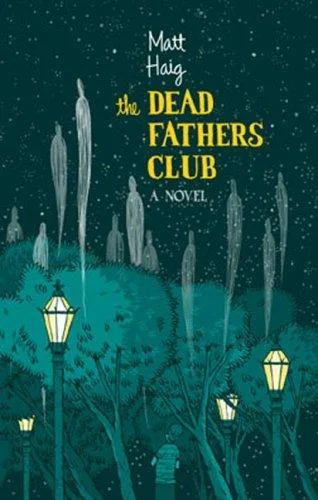
The Dead Fathers Club
Matt Haig’s The Dead Fathers Club, first published in 2008, presents a curious paradox: a novel about death that feels intensely alive. The narrative’s strength lies in its sensitive portrayal of childhood grief, filtered through the extraordinary circumstance of a spectral fatherly presence. Haig avoids sentimentality, instead offering a raw, often unsettling, look at how a child processes loss and the lingering questions death leaves behind. The ghost, rather than being a figure of terror, acts as an internal guide, a projection of Philip’s own unresolved emotions. However, the novel occasionally falters in its pacing, with certain passages feeling more drawn out than necessary, slowing the momentum of Philip’s emotional arc. The depiction of the father's ghost, while a potent symbol, sometimes strains credulity even within the narrative’s established parameters. Despite these minor reservations, the book offers a poignant examination of memory, absence, and the enduring, if spectral, bonds of family.
This is a quietly powerful exploration of loss, rendered with uncommon empathy.
📝 Description
74
Matt Haig's 2008 novel, The Dead Fathers Club, uses a father's ghost to confront a boy's grief.
Philip is a young boy whose life changes after his father dies. His father's ghost appears, not as a terrifying specter, but as a guide through Philip's confusion and sorrow. This spectral presence helps Philip understand the events leading to his father's death. The novel contrasts the ordinary experience of a child dealing with loss against the extraordinary presence of the afterlife. It shows how the past continues to shape the present.
This story appeals to readers who like literary fiction with supernatural touches, but without resorting to typical horror. It is for those interested in how people process grief and loss. Readers who enjoy character-focused stories with elements of magical realism, and who can handle difficult themes, will find the book engaging. It is also for anyone who thinks about memory and the lasting influence of parents.
The novel frames the 'dead father' as a guiding spirit, a concept that echoes traditions where ancestral figures or spirits offer wisdom. This is less about literal necromancy and more about the psychological manifestation of a deceased parent's influence on the living. It connects to the long history of ghost stories, but uses the spectral presence as a tool for emotional and psychological processing, rather than solely for suspense or horror. The book reframes the afterlife's impact as a personal, internal experience.
💡 Why Read This Book?
• Understand the symbolic weight of the "dead father" as a psychological construct, learning how a spectral presence can represent unresolved grief and familial legacy, as seen in Philip's relationship with his father's ghost. • Gain insight into the unique narrative device of a child protagonist processing profound loss, appreciating how Haig uses this perspective to explore complex emotional landscapes that differ from adult-centric accounts. • Experience a literary approach to the supernatural that serves as a metaphor for internal struggles, recognizing how the uncanny elements in the 2008 novel function to illuminate Philip's journey of self-discovery.
⭐ Reader Reviews
Honest opinions from readers who have explored this book.
❓ Frequently Asked Questions
What is the central theme of Matt Haig's The Dead Fathers Club?
The central theme is a child's processing of grief and loss following his father's death, explored through the supernatural element of his father's ghost acting as a guide.
When was The Dead Fathers Club originally published?
The novel The Dead Fathers Club was first published in 2008.
Is The Dead Fathers Club a horror novel?
While it features a ghost, it is generally considered literary fiction with supernatural elements rather than a traditional horror novel, focusing more on psychological and emotional themes.
Who is the protagonist of The Dead Fathers Club?
The protagonist is a young boy named Philip, who grapples with the death of his father and the subsequent appearance of his father's ghost.
What makes the ghost's presence in The Dead Fathers Club significant?
The ghost is significant not just as a supernatural entity, but as a manifestation of Philip's subconscious, representing his father's influence and the unresolved aspects of his death.
Does Matt Haig draw on personal experience for this novel?
While Haig has spoken about personal experiences with mental health and loss, The Dead Fathers Club is a fictional work exploring these themes through a specific narrative.
🔮 Key Themes & Symbolism
The Spectral Father Figure
The novel presents the ghost of Philip's father not as a terrifying apparition, but as a lingering presence that guides the young protagonist. This "dead father" serves as a complex symbol, embodying unresolved issues, memory, and the enduring impact of parental bonds. Haig uses this spectral presence to explore how the past continues to influence the present, even after death. It’s an exploration of the subconscious manifesting externally, allowing Philip to confront truths he might otherwise avoid, making the ghost a tool for psychological and emotional processing rather than a mere supernatural plot device.
Childhood Grief and Understanding
The narrative's core revolves around Philip's experience of profound loss at a young age. Haig meticulously details the confusion, anger, and sorrow that accompany such an event, amplified by the peculiar circumstance of his father's spectral visitation. The book examines the process of a child attempting to make sense of death and the absence it leaves, navigating adult complexities and the unknown. This perspective offers a unique lens on grief, highlighting the often-overlooked emotional world of children confronting mortality and the lingering questions that death poses to developing minds.
Legacy and Inherited Burdens
Beyond personal grief, The Dead Fathers Club looks at the concept of familial legacy and the burdens that can be passed down through generations. Philip's understanding of his father is shaped not only by memories but by the spectral revelations that uncover hidden aspects of his father's life and death. This suggests that the actions and unresolved issues of parents can cast long shadows, impacting their children's lives in ways they may not initially comprehend. The novel prompts reflection on how we inherit not just traits, but also the unresolved narratives of our ancestors.
The Boundaries of Reality
Haig masterfully blurs the lines between the tangible world and the spectral realm, questioning the nature of reality itself. The presence of the ghost is treated with a matter-of-fact tone, allowing it to integrate into Philip's lived experience. This approach invites readers to consider the subjective nature of perception and the ways in which our internal states can shape our external reality. The novel explores how the unexplained can become a part of everyday life, prompting contemplation on the unseen forces or psychological phenomena that influence human experience, especially during times of extreme emotional stress.
💬 Memorable Quotes
Direct passages from the work, attributed to the author.
“Grief is a house with many rooms.”
— This metaphor suggests that the experience of grief is not monolithic but complex and complex, with various emotions and stages to explore. It implies that coming to terms with loss involves navigating these different 'rooms' of sorrow and remembrance.
“Sometimes the dead know more about living than the living do.”
— This provocative statement challenges conventional wisdom by suggesting that those who have passed on, or perhaps the symbolic representation of them, can offer unique perspectives on life's fundamental truths. It hints at the wisdom found in confronting mortality.
“I was trying to understand my father, but maybe I was really trying to understand myself.”
— This reflects a common psychological theme where the process of understanding another person, particularly a parent, becomes a mirror for self-discovery. It underscores the idea that our relationships are deeply intertwined with our own identity formation.
“The past was a country I couldn't visit, but its echoes were always there.”
— This poetic line speaks to the indelible influence of past experiences and relationships. While one cannot literally return to or change the past, its impact continues to resonate in the present, shaping our perceptions and emotions.
💡 Key Ideas
Editorial paraphrase of the work's core concepts — not direct quotes.
He was dead, but he was still there. And he was going to help me.
This quote captures the central paradox of the novel: a father who is physically gone but remains a guiding presence. It highlights the ghost's function not as a terrifying specter, but as an internalized guide for the grieving protagonist, Philip.
🌙 Esoteric Significance
Tradition
The Dead Fathers Club does not align with a single esoteric tradition but draws loosely from archetypal themes found in spiritualism and ghost lore, common in Western esotericism. The spectral father can be viewed as a manifestation of the 'animus' or 'paternal archetype,' a concept explored in Jungian psychology, which itself has roots in alchemical and Gnostic ideas about the soul's journey. The ghost acts as a guide, similar to a spiritual mentor or daimon, assisting the protagonist in his personal gnosis – his direct knowledge and understanding of himself and his circumstances, particularly concerning his father's life and death.
Symbolism
The primary symbol is the 'dead father' himself, representing not just a deceased parent but the enduring influence of paternal authority, memory, and unresolved issues. The house Philip inhabits can symbolize his internal world or psyche, where the spectral presence makes its home. Shadows and echoes are recurring motifs, signifying the lingering presence of the past and the elusive nature of truth, suggesting that understanding often comes from perceiving what is not fully manifest but merely sensed or intuited.
Modern Relevance
In contemporary discussions surrounding mental health and trauma, The Dead Fathers Club resonates as a narrative that externalizes internal struggles. Therapists and writers exploring the impact of parental figures and inherited trauma might find its allegorical approach insightful. The novel's gentle handling of the supernatural as a tool for psychological processing aligns with modern interpretations of mythology and archetypes, where ancient symbols are re-examined for their relevance to contemporary human experience and personal development.
👥 Who Should Read This Book
• Readers interested in literary explorations of grief and loss, particularly those who appreciate narratives that incorporate speculative or supernatural elements to examine psychological states. • Individuals intrigued by the concept of family legacies and how the past influences the present, seeking stories that study the complex relationships between parents and children. • Those who enjoy character-driven fiction that prioritizes emotional depth and introspection over fast-paced plotting, appreciating a nuanced portrayal of a child's perspective on mortality.
📜 Historical Context
Published in 2008, Matt Haig's The Dead Fathers Club arrived during a period when literary fiction was increasingly open to speculative and genre-bending narratives. While not overtly occult, its exploration of a ghost's influence on a child's psyche tapped into a broader cultural interest in the supernatural and the uncanny, a trend also seen in works by authors like Haruki Murakami, who frequently blended the mundane with the surreal. Haig’s novel distinguished itself by focusing intensely on the psychological impact of grief, using the spectral presence as a vehicle for exploring memory, loss, and familial legacy. This approach offered a more introspective take on the afterlife compared to more theological or overtly spiritual explorations prevalent at the time. The novel’s reception was generally positive, with critics noting its emotional depth and unique premise, though it didn't necessarily align with any specific literary movement, standing as a distinct exploration of personal trauma through a fantastical lens.
📔 Journal Prompts
Philip's spectral father, reflect on the lingering influences of past figures in your life.
The house as a symbol of the psyche, map the emotional rooms you inhabit.
Traces of the past, identify moments where past events shape present perceptions.
The child's perspective on death, consider how early encounters with mortality shaped your understanding.
The uncanny presence, explore a time when something unexplained felt significant to your emotional state.
🗂️ Glossary
Spectral Father
Refers to the ghost of Philip's father who appears to him. More than a literal apparition, this figure symbolizes Philip's subconscious grappling with grief, memory, and his father's legacy.
Grief House
A metaphor used in the book to describe the complex and complex nature of experiencing loss. It suggests that grief is not a single emotion but a space with many rooms, each representing different feelings or stages.
Echoes
The remnants or lingering influences of past events, people, or emotions that continue to affect the present. In the novel, these echoes highlight the enduring impact of Philip's father.
Uncanny
Suggests something that is strangely familiar yet alien, often evoking a sense of unease or mystery. The spectral father's presence, treated matter-of-factly, embodies the uncanny.
Legacy
The lasting impact or inheritance from a person's life, whether tangible or intangible. The novel explores the emotional and psychological legacy Philip receives from his father.
Psychological Processing
The mental and emotional mechanisms through which individuals come to terms with experiences, particularly difficult ones like grief. The ghost's role is largely tied to this process for Philip.
Archetype
A recurring symbol or motif in literature and mythology that represents universal patterns of human nature. The 'father figure' or 'wise elder' can be seen as archetypes within the narrative.
🔮 Readers Also Liked
Browse all →






More by Matt Haig
All books →





More Free Occult Philosophy Books
View all →