This Vicious Dream

 81
81

This Vicious Dream
Stacia Stark’s *This Vicious Dream* presents a compelling, if familiar, scenario of a protected secret and a dangerous pursuer. The initial setup, grounding the protagonist in a grim, thorny confinement after a heroic past, effectively establishes high stakes. Stark’s depiction of the antagonist, a figure of dark allure and clear menace, is particularly effective in creating immediate tension. The novel shines when exploring the psychological toll of captivity and the constant threat of betrayal. However, the narrative occasionally leans into established tropes of the dark fantasy genre, particularly in the protagonist’s internal monologues regarding her predicament. A passage detailing the whispers of the thorns, seeming to offer both torment and forbidden knowledge, highlights the book’s strength in blending physical and psychic suffering. While the pacing falters slightly in the middle, the core conflict remains potent. The book ultimately delivers a dark fantasy experience, marked by its atmospheric prose and a palpable sense of danger, though it treads ground well-worn by others in the genre.
📝 Description
81
In Stacia Stark's 2025 novel, a protagonist is imprisoned for her knowledge of a dangerous grimoire.
The story begins with a protagonist confined within a literal prison of thorns and nightmares, a sharp break from her past role in protecting a kingdom. Her imprisonment is a direct result of her guardianship over a potent, world-altering grimoire. This secret knowledge makes her a target for relentless captors who seek to force her to reveal its location, pushing her to her limits.
The narrative then introduces a new character, depicted as beautiful, ruthless, and possessing dark, unsettling eyes and a cruel smile. This figure is not a rescuer but an aggressor, intent on acquiring the grimoire for their own purposes. Their methods threaten widespread destruction for anyone who stands in their way, quickly establishing a tense dynamic of conflict and raw desire.
The premise of a forbidden grimoire and the struggle for its control taps into historical anxieties surrounding dangerous texts. Throughout history, certain books and their contents were considered too perilous for common access, leading to their suppression, the formation of secret societies, and conflicts over their ownership. The 2025 publication date places this narrative within ongoing contemporary discussions about information control and the persistent fascination with hidden power.
💡 Why Read This Book?
• Understand the psychological burden of safeguarding forbidden knowledge, as exemplified by the protagonist's struggle in the 'prison of thorns.' • Experience the complex dynamics of desire and danger through the introduction of the ruthless, enigmatic antagonist who seeks the grimoire. • Explore themes of sacrifice and the corrupting influence of power, particularly evident in the protagonist's moral quandaries regarding the grimoire's secrets.
⭐ Reader Reviews
Honest opinions from readers who have explored this book.
❓ Frequently Asked Questions
What is the central conflict in 'This Vicious Dream'?
The central conflict revolves around a protagonist imprisoned for safeguarding a powerful grimoire. Her captors, and a newly arrived ruthless individual, seek this book, forcing her to protect its secrets while enduring torment.
Who is the primary antagonist in the story?
While there are captors, the primary antagonist is a new arrival described as beautiful, ruthless, and dark, who desires the grimoire for himself and will destroy anyone in his path.
What is the significance of the 'prison of thorns'?
The 'prison of thorns' serves as both a literal confinement and a metaphor for the protagonist's psychological torment and the dangerous nature of the secrets she holds.
What kind of tone does 'This Vicious Dream' establish?
The tone is dark, tense, and atmospheric, focusing on themes of captivity, danger, and the allure of forbidden knowledge.
When was 'This Vicious Dream' first published?
'This Vicious Dream' was first published on May 13, 2025.
What genre does 'This Vicious Dream' fall into?
The book is categorized under Esoteric, with elements of dark fantasy and possibly romance due to the description of the antagonist.
🔮 Key Themes & Symbolism
The Burden of Forbidden Knowledge
The narrative centers on the protagonist's role as a keeper of a powerful grimoire, a secret that has led to her imprisonment. This knowledge is not merely academic but actively dangerous, attracting those who would exploit it. The text explores the immense psychological and physical toll of bearing such a burden, where survival is contingent on silence and resilience against relentless pressure from captors and the enigmatic antagonist.
Captivity and Psychological Warfare
The 'prison of thorns and nightmares' serves as a potent symbol for the protagonist's subjugated state. Beyond physical confinement, the book details the mental anguish and manipulation employed by her captors. This theme examines how external pressures and internal fears can erode one's will, forcing difficult choices and testing the boundaries of endurance against those who seek to break her spirit for the grimoire's location.
Seduction of Power and Ruthless Ambition
The arrival of the dark, beautiful antagonist introduces the theme of seductive power. This figure represents not just a physical threat but also a temptation, embodying ambition unchecked by morality. Their ruthless pursuit of the grimoire highlights the corrupting influence of immense power and the destructive lengths individuals will go to attain it, setting up a direct conflict with the protagonist's duty.
Sacrifice and Moral Compromise
The protagonist's past heroism contrasts sharply with her current plight, raising questions about the cost of saving a kingdom. Her determination to protect the grimoire involves immense personal sacrifice. The encroaching threat from the antagonist forces her into a position where moral compromises may become necessary for survival, exploring the difficult choices faced when duty clashes with self-preservation.
💬 Memorable Quotes
Direct passages from the work, attributed to the author.
“He arrives. Beautiful. Ruthless. Dark, inscrutable eyes. A dangerously wicked grin.”
— This vivid description introduces the antagonist, immediately establishing a potent mix of allure and menace, signaling a complex and perilous new dynamic for the protagonist.
“He wants the grimoire for himself—and he'll destroy anyone who stands in his way.”
— This statement clarifies the antagonist's motive and methods, highlighting the extreme danger he poses not just to the protagonist but to anyone who might try to protect the secret.
“I'm trapped in a prison of thorns and nightmares.”
— This phrase powerfully conveys the protagonist's dire circumstances, emphasizing both her physical confinement and the psychological torment she endures.
“That secret is the only thing keeping me alive while my captors wait for me to break.”
— This reveals the precarious nature of the protagonist's existence; her survival hinges on her ability to withstand immense pressure and maintain her silence.
💡 Key Ideas
Editorial paraphrase of the work's core concepts — not direct quotes.
My crime? Knowing the location of a power that could reshape the world—a grimoire I swore to protect with my life.
This line captures the central conflict: the protagonist's very knowledge, a sacred duty, becomes her prison sentence and the target of dangerous individuals.
🌙 Esoteric Significance
Tradition
While not explicitly tied to a single historical tradition like Hermeticism or Gnosticism, *This Vicious Dream* draws upon the archetypal figure of the guardian of forbidden knowledge. This concept is present across many esoteric lineages, where initiates are tasked with protecting powerful secrets from misuse. The narrative's focus on a 'grimoire' suggests a lineage connected to ceremonial magic or alchemy, where such texts are central to unlocking hidden forces and understanding the cosmos.
Symbolism
The 'prison of thorns' is a potent symbol, representing not only physical entrapment but also the pain and suffering associated with holding dangerous secrets, akin to the painful initiation rites or spiritual trials found in various traditions. The 'grimoire' itself symbolizes concentrated arcane power and hidden wisdom, a nexus of potential creation or destruction. The antagonist’s 'dark, inscrutable eyes' often symbolize deeper meaning, unknown motives, and a connection to primal or shadow forces within the esoteric lexicon.
Modern Relevance
In contemporary esoteric circles, *This Vicious Dream* speaks to the enduring fascination with hidden power and the ethical dilemmas surrounding its acquisition and use. Thinkers and practitioners exploring Jungian shadow work, or those interested in the psychology of power and control within magical systems, might find resonance. Its themes are relevant to modern discussions on information security, censorship, and the archetypal struggle between those who hoard knowledge and those who seek to unleash it.
👥 Who Should Read This Book
['• Readers interested in dark fantasy narratives that explore themes of captivity and psychological endurance, particularly those who enjoy stories with morally complex protagonists.', '• Enthusiasts of esoteric lore who are drawn to narratives centered around forbidden texts, powerful artifacts like grimoires, and the consequences of wielding arcane knowledge.', '• Individuals seeking fiction that examines the corrupting nature of power and the ruthless pursuit of ambition, presented through a high-stakes conflict with a dangerous antagonist.']
📜 Historical Context
Published in 2025, *This Vicious Dream* emerges in an era where the allure of forbidden knowledge and hidden power continues to fascinate. Its premise echoes historical anxieties surrounding occult texts, particularly those deemed heretical or dangerous. For centuries, works like the *Grand Grimoire* or the *Picatrix* were subjects of both intense study and severe suppression, often relegated to private collections or whispered legends. This narrative taps into that long tradition of secretive scholarship and the conflicts arising from the control of esoteric information. While direct engagement with specific contemporary esoteric schools might not be explicit, the book's themes align with a broader cultural interest in occultism and fantasy that saw a resurgence in the early 21st century, influenced by works that explored dark magic and morally ambiguous heroes, such as those by authors like V.E. Schwab or Leigh Bardugo who engage with complex magic systems and their consequences.
📔 Journal Prompts
The grimoire's secret: How does the protagonist's knowledge define her imprisonment?
The antagonist's arrival: What does his ruthless ambition reveal about the nature of power?
The prison of thorns: Reflect on the dual nature of this confinement—physical and psychological.
Sacrifice for a kingdom: Consider the personal cost of protecting a world-altering secret.
Nightmares as a weapon: Analyze how the protagonist's internal torment is exploited.
🗂️ Glossary
Grimoire
A textbook of magic, typically containing instructions on how to create magical objects, workings, and spells, as well as information on summoning and commanding supernatural entities.
Prison of Thorns
A metaphorical and potentially literal confinement characterized by pain, suffering, and entrapment, reflecting the protagonist's dire situation and the dangerous nature of her secret.
Captors
Individuals or entities holding the protagonist against her will, seeking to extract information about the grimoire through coercion or torture.
Reshape the World
Refers to the immense, transformative power contained within the grimoire, capable of altering societal structures, natural laws, or the very fabric of reality.
Dark, Inscrutable Eyes
A descriptive phrase for the antagonist, suggesting deeper meaning, unknowable intentions, and a potential connection to darker, more primal forces.
Wicked Grin
An expression indicating malicious intent, cruel amusement, or dangerous confidence, characteristic of the antagonist's personality.
Secret
The crucial information held by the protagonist concerning the location or nature of the grimoire, which is both her protection and her curse.
This book appears in 1 collection
🔮 Readers Also Liked
Browse all →







From the “Grimoires” Collection
View all →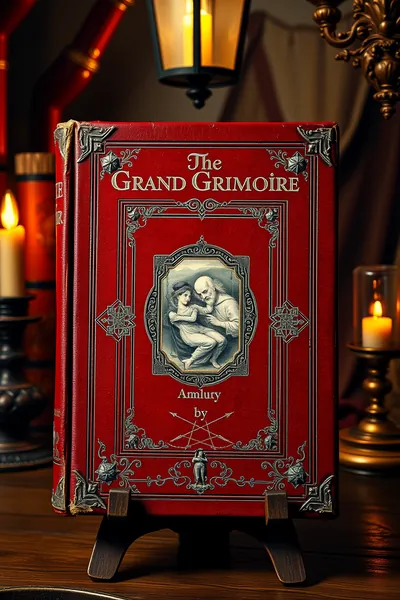





More Free Magic & Ritual Books
View all →