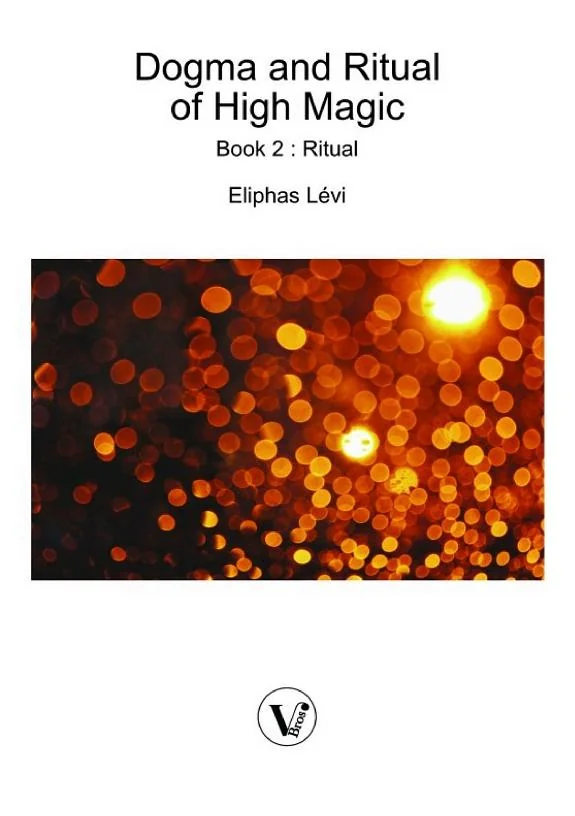
Dogma and Ritual of High Magic - Book II
 83
83

Dogma and Ritual of High Magic - Book II
Eliphas Lévi's 'Dogma and Ritual of High Magic - Book II' offers a dense, systematic exposition of ceremonial magic, a departure from more anecdotal or fragmented occult writings of its time. Lévi's strength lies in his ambition to create a philosophical architecture for magic, grounding it in what he perceived as universal laws. His treatment of the Pentagram, for instance, is particularly detailed, outlining its correspondences and applications in ritual. However, the sheer weight of his philosophical and Kabbalistic edifice can be a barrier; the text demands considerable prior knowledge and a patient disposition. A key passage, detailing the invocation of elemental spirits through specific correspondences, highlights both the book’s potential for deep understanding and its inherent challenge to the uninitiated. The work ultimately serves as a crucial, albeit demanding, primary source for understanding the formalization of Western occultism in the 19th century.
📝 Description
83
Eliphas Lévi published Book II of Dogma and Ritual of High Magic in the mid-19th century.
This volume details the core doctrines and rituals within Eliphas Lévi's system of ceremonial magic. Lévi presents his understanding of how the visible and invisible worlds interact, framing these practices as a science of the soul rather than mere superstition. He believed these methods could unlock universal secrets. The text is aimed at dedicated students of Western esoteric traditions, not casual readers. It requires engagement with complex symbolism, dense philosophy, and the practical application of occult principles. A basic knowledge of Kabbalah and Hermeticism is recommended for full comprehension of Lévi's theories.
Lévi synthesized various occult traditions, including Kabbalah, Hermeticism, and Gnosticism. His work significantly influenced later occultists such as Papus and the Hermetic Order of the Golden Dawn, impacting the course of modern occultism. The book covers fundamental concepts like the Astral Light, the Great Magical Agent, the symbolism of the Pentagram and Hexagram, and divine emanations via the Kabbalistic Tree of Life. It also outlines necessary preparations, gestures, and incantations for magical operations, stressing the roles of will, faith, and knowledge.
Published during the 19th-century occult revival in Europe, this work is a key text in Western esotericism. Lévi synthesized existing traditions like Kabbalah, Hermeticism, and Gnosticism into a structured system of ceremonial magic. He presented magic as a science capable of influencing the soul and the universe. This approach offered a framework for understanding esoteric principles that resonated with a movement seeking to reconnect with older spiritual and magical knowledge.
💡 Why Read This Book?
• Understand the foundational principles of ceremonial magic as systematized by Eliphas Lévi, offering a structured approach distinct from more intuitive magical practices. • Grasp the complex symbolism of the Pentagram and Hexagram as presented by Lévi, providing specific ritualistic applications and Kabbalistic interpretations. • Gain insight into the occult revival of the mid-19th century, recognizing how Lévi synthesized esoteric traditions to influence subsequent magical orders like the Golden Dawn.
⭐ Reader Reviews
Honest opinions from readers who have explored this book.
❓ Frequently Asked Questions
What is the 'Great Magical Agent' discussed in Dogma and Ritual of High Magic - Book II?
The Great Magical Agent refers to the universal fluid of life, known as the Astral Light, which Lévi believed permeates all existence. It is considered the medium through which magical will and imagination can manifest effects in the physical world.
When was Eliphas Lévi active in occultism?
Eliphas Lévi (Alphonse Louis Constant) was most active in the mid-19th century, publishing his seminal works, including 'Dogma and Ritual of High Magic,' between the 1850s and 1860s.
How does Lévi's work relate to the Kabbalah?
Lévi extensively integrated Kabbalistic concepts, particularly the Tree of Life, into his magical system. He used its structure to explain divine emanations, human spiritual development, and the correspondences within the universe.
Is this book suitable for beginners in magic?
While foundational, 'Dogma and Ritual of High Magic - Book II' is dense and assumes a level of familiarity with esoteric concepts. Beginners might find it challenging without supplementary reading or guidance.
What is the significance of the Pentagram in Lévi's teachings?
Lévi dedicates significant attention to the Pentagram, viewing it as a symbol of the microcosm (humanity) and the macrocosm. He details its use in invoking and banishing elemental forces and its connection to divine and infernal powers.
Does this book provide practical rituals or just theory?
The book offers both. While deeply theoretical, it also outlines specific rituals, incantations, and magical operations, detailing the required preparations and symbolic actions for practitioners.
🔮 Key Themes & Symbolism
The Astral Light
Lévi posits the existence of the Astral Light, a universal fluid and the primary agent of all life and motion, often referred to as the 'Great Magical Agent.' This luminous, omnipresent force is the medium through which the magician directs their will. Understanding its nature is crucial for manipulating the forces of the universe. The book details its properties as both a source of divine inspiration and a field for occult operations, linking it to imagination and willpower.
Symbolism of the Pentagram and Hexagram
Central to Lévi's system are the Pentagram and Hexagram. The Pentagram, representing the human microcosm and the five elements, is explored for its power in invocation and banishment. The Hexagram, symbolizing the macrocosm and the union of divine principles, is analyzed for its role in balancing opposing forces. Their correct usage, orientation, and associated rituals are meticulously described, emphasizing their importance in ceremonial practice.
Doctrine of the Will
Lévi places immense emphasis on the power of the human will, disciplined and focused through magical training. He argues that true magic is the science of directing this will, amplified by knowledge and faith, through the Astral Light to effect change. The book outlines the psychological and spiritual preparation necessary to strengthen and control the will, making it a potent instrument for magical work and spiritual attainment.
Kabbalistic Correspondences
The work is deeply interwoven with Kabbalistic principles, particularly the Tree of Life. Lévi uses its structure to map the divine emanations, the hierarchy of spiritual beings, and the pathways of occult knowledge. Understanding these correspondences—linking planets, elements, Hebrew letters, and divine names—is presented as essential for accurate magical operations and comprehending the fabric of reality.
💬 Memorable Quotes
Direct passages from the work, attributed to the author.
“The Absolute is the Infinite Intelligence, whose principal attribute is Will, and whose manifestation is Light.”
— This statement expresses Lévi's metaphysical foundation, identifying the ultimate reality with a conscious, volitional force expressed through luminous energy, setting the stage for understanding magic as the directed application of this universal will.
“The equilibrium of the Absolute is the foundation of all phenomena.”
— This principle highlights Lévi's view of cosmic order. It suggests that stability and existence arise from a balance of opposing forces, a concept he applies to magical operations requiring the harmonization of energies.
“The Pentagram is the sign of the Word made flesh, and the figure of Man.”
— This interpretation underscores the symbolic importance of the Pentagram as representing both divine manifestation in the material world and the spiritual potential inherent within the human being.
“To know, to dare, to will, and to keep silence are the four magical virtues.”
— This concise formulation presents the essential qualities required for effective magical practice according to Lévi, emphasizing intellectual understanding, courage in action, focused intent, and discretion.
“Magic is the science of the secret forces of nature.”
— This definition frames magic not as superstition but as a legitimate field of study, focused on understanding and working with the hidden energies that govern the universe, accessible through dedicated practice and knowledge.
🌙 Esoteric Significance
Tradition
Lévi's work is a central to modern Western Esotericism, particularly within the Hermetic and Kabbalistic traditions. He synthesized Renaissance Hermeticism, Kabbalah, and esoteric Christianity into a unified system of ceremonial magic. While drawing heavily on older sources, Lévi’s contribution was to present these ideas in a systematic, philosophical manner accessible to a 19th-century audience, thereby revitalizing and reinterpreting them for a new era of occult study.
Symbolism
Key symbols in Lévi's system include the Pentagram, representing the five elements and the microcosm of humanity, and the Hexagram, symbolizing the macrocosm and the union of divine polarities. The Caduceus of Hermes is also significant, illustrating the balance of forces and the path of spiritual ascent. These symbols are not merely decorative but are seen as active agents and keys to understanding the correspondences within the universe and the mechanisms of magic.
Modern Relevance
Lévi's 'Dogma and Ritual' remains a foundational text for many contemporary occultists and esoteric students. His systematic approach to ceremonial magic, his interpretations of Kabbalah, and his emphasis on the power of the will continue to influence modern magical orders, solitary practitioners, and scholars of Western Esotericism. Thinkers and groups focusing on Hermeticism, ritual magic, and symbolic studies frequently reference or build upon his foundational concepts.
👥 Who Should Read This Book
['• Students of Western Esotericism seeking a comprehensive overview of 19th-century ceremonial magic, particularly those interested in the Kabbalistic and Hermetic roots of modern occultism.', '• Practitioners of ritual magic looking to understand the theoretical underpinnings and symbolic language developed by Eliphas Lévi, a key figure in formalizing occult practices.', '• Scholars of religion and comparative mysticism interested in the intellectual history of occultism and its relationship to philosophical and religious movements of the 19th century.']
📜 Historical Context
Eliphas Lévi published 'Dogma and Ritual of High Magic' in 1854-1856, a period marked by the European occult revival. This era saw a renewed fascination with Hermeticism, Kabbalah, alchemy, and spiritualism, partly as a reaction against the perceived materialism of the Enlightenment and industrialization. Lévi synthesized these diverse streams into a coherent system of ceremonial magic, heavily influenced by Kabbalistic texts like the Zohar and Hermetic traditions. His work stood in contrast to the more spiritualist or mediumistic phenomena gaining popularity, like those explored by Allan Kardec. Lévi's writings were controversial; while widely read by occultists, they also faced scrutiny and sometimes outright condemnation from religious authorities. Despite this, his systematic approach and intellectual rigor profoundly impacted later occult organizations, notably the Hermetic Order of the Golden Dawn, which adopted many of his principles and symbols.
📔 Journal Prompts
The concept of the Astral Light as a universal medium for will and imagination.
Lévi's interpretation of the Pentagram's significance in ritual operations.
The role of 'knowledge, daring, willing, and silence' in magical practice.
How the structure of the Tree of Life informs Lévi's magical cosmology.
The balance of opposing forces as described in the Hexagram's symbolism.
🗂️ Glossary
Astral Light
The universal fluid, also called the Great Magical Agent, believed by Lévi to be the medium of life, thought, and all magical operations. It is a luminous ether connecting the material and spiritual realms.
Pentagram
A five-pointed star symbol representing the microcosm, the human being, and the four elements (earth, air, fire, water) with spirit at the apex. Lévi details its use in magical invocation and banishment.
Hexagram
A six-pointed star formed by two interlocking triangles, symbolizing the macrocosm, the union of divine opposites (masculine/feminine, spirit/matter), and the balance of universal forces.
Great Magical Agent
Synonymous with the Astral Light; the primary force or substance through which magical will is expressed and effects are produced in the visible world.
Invocation
A ritual act of calling upon or drawing down spiritual forces or intelligences, often associated with positive or constructive magical work using symbols like the upright Pentagram.
Banishment
A ritual act of repelling or sending away unwanted energies or entities, often associated with negative or destructive magical work using symbols like the inverted Pentagram.
Kabbalah
A system of Jewish mysticism and esoteric philosophy that explores the divine nature and the creation of the universe, often represented by the Tree of Life, which Lévi integrated into his magical framework.
This book appears in 1 collection
🔮 Readers Also Liked
Browse all →








![[It's magic]](/img/thumb/it-s-magic-julius-j-epstein.webp)
From the “High Magic” Collection
View all →




More Free Magic & Ritual Books
View all →