Gregory Shaw
Bernard Shaw was an Irish playwright, critic, and activist known for his influential works and controversial views on society and politics.
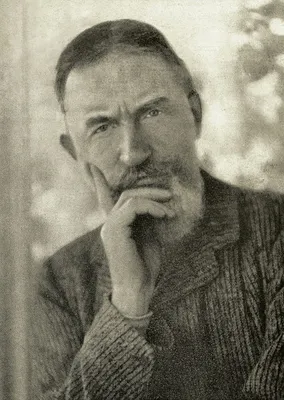
George Bernard Shaw, known as Bernard Shaw, was a prolific Irish playwright, critic, and political activist whose impact on Western theatre, culture, and politics was significant from the late 19th century until his death and beyond. He authored over sixty plays, including acclaimed works like "Man and Superman," "Pygmalion," and "Saint Joan," earning him the Nobel Prize in Literature in 1925. Shaw's early life in Dublin was marked by a complex family dynamic and a deep engagement with music and literature, leading to a rigorous self-education after his move to London. He evolved from a struggling novelist to a respected critic and, influenced by figures like Henrik Ibsen, became a leading dramatist who used his plays to explore political, social, and religious ideas with a blend of satire and allegory.
Shaw's public life was characterized by his outspoken and often contentious viewpoints. He held unconventional opinions on subjects such as eugenics, alphabet reform, vaccination, and organized religion. His political activism saw him join the Fabian Society, where he became a prominent voice advocating for gradual social change. Despite facing unpopularity for his stances on World War I and British policy in Ireland, his dramatic career continued to flourish. Throughout his life, Shaw remained engaged with political discourse, expressing admiration for both right-wing and left-wing dictatorships later in his career. He continued writing prolifically until his death at the age of ninety-four, famously refusing state honors.
Early Life and Education
Born in Dublin, George Bernard Shaw, who later preferred to be known as Bernard Shaw, came from a lower-middle-class Protestant family. His father was an alcoholic, and his mother, Lucinda Elizabeth, developed a close relationship with musician George John Lee, leading Shaw to question his paternity. Shaw's childhood was marked by his mother's emotional distance, though he found solace in the musical environment of their home. He received a formal education that he found disillusioning, attending four schools between 1865 and 1871, which he later described as prisons. Upon leaving school, he worked as a clerk in a land agency, quickly rising to head cashier. In 1873, his mother and Lee moved to London, and Shaw remained in Dublin with his father, teaching himself piano in the absence of music in the household.
Move to London and Literary Beginnings
In 1876, Shaw moved to London following his sister's death. Initially hesitant to pursue clerical work, he lived with his mother and began his writing career, initially ghost-writing a musical column for a satirical weekly under Lee's name. He also worked as a rehearsal pianist and occasional singer. Shaw spent considerable time at the British Museum Reading Room, dedicating himself to reading and writing. His early attempts at drama and novels were largely unsuccessful; his first novel, "Immaturity," written in 1879, was too bleak for publishers and wasn't released until decades later. He briefly worked for the Edison Telephone Company before committing fully to a career as an author, albeit with negligible income initially, being subsidized by his mother.
Political Awakening and Fabian Society
Shaw's intellectual and political development accelerated in the early 1880s. He became a vegetarian in 1881 and suffered an attack of smallpox, which left him with facial scars he concealed with a beard. His literary efforts continued with novels like "The Irrational Knot" and "Love Among the Artists," which were later serialized in the socialist magazine "Our Corner." In 1882, he attended a lecture by Henry George, which sparked his interest in economics, leading him to read Marx's "Das Kapital." Shaw also joined the Social Democratic Federation but was unimpressed by its leader. His involvement deepened when he encountered Sidney Webb, with whom he formed a lifelong friendship and intellectual partnership. This period marked a significant political awakening, leading Shaw to embrace socialist ideals and eventually become a key figure in the Fabian Society.
Key Ideas
- Introduction of a new realism into English-language drama
- Use of plays as vehicles for political, social, and religious ideas
- Promotion of eugenics
- Advocacy for alphabet reform
- Opposition to vaccination
- Opposition to organized religion
- Critique of British policy on Ireland
- Later expressed admiration for dictatorships of the right and left
Notable Quotes
“Schools and schoolmasters were prisons and turnkeys in which children are kept to prevent them disturbing and chaperoning their parents.”
“You knew everything that I didn't know and I knew everything you didn't know ... We had everything to learn from one another and brains enough to do it”
Books by Gregory Shaw
3 free public domain books · Read online or download