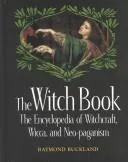
The Witch Book
 71
71

The Witch Book
Raymond Buckland’s *The Witch Book* presents a commendable effort to catalogue the vast and often misunderstood world of witchcraft. Buckland’s strength lies in his encyclopedic approach, meticulously detailing various traditions, historical periods, and key figures. His discussion on the historical evolution of witchcraft, particularly tracing its lineage from ancient roots through the European witch trials to modern Wicca, offers valuable context. However, the sheer breadth of the subject occasionally leads to a somewhat generalized treatment. For instance, while the chapter on ritual structure is informative, it sometimes lacks the granular detail that would fully satisfy an advanced practitioner seeking specific, nuanced techniques. The book’s primary value is as a comprehensive overview, a solid resource for understanding the landscape of witchcraft. Ultimately, it serves as an accessible, informative foundation for anyone seeking to grasp the scope of this complex spiritual path.
📝 Description
71
Raymond Buckland's 2001 book, The Witch Book, details witchcraft's beliefs and practices.
Published in 2001, The Witch Book by Raymond Buckland serves as a reference and practical guide to witchcraft. It covers beliefs, practices, and the evolution of the subject across various historical and contemporary traditions. Buckland, a notable figure in modern Wicca, presents the material clearly, aiming to clarify witchcraft for both beginners and experienced individuals. The book spans from ancient pagan origins to current interpretations, offering a broad overview. It is suitable for those seeking a basic understanding of witchcraft and its many forms. Students of esotericism, those interested in religious history, and people curious about the craft from an academic or personal viewpoint will find it valuable. Buckland's detailed method offers substantial content for those new to occult studies or wanting to learn about historical witch traditions beyond fictional portrayals. It is especially helpful for understanding the development of modern Pagan and Wiccan practices.
The Witch Book is situated within the context of the modern Pagan revival, which gained momentum in the mid-20th century. Buckland's direct involvement with Gerald Gardner, a central figure in modern Wicca's establishment, places him within this historical trajectory. The book acknowledges a lineage from older European folk magic and pre-Christian spiritualities, while also examining the impact of the witch trials and their subsequent misinterpretations. It addresses the resurgence of interest in Paganism and witchcraft following renewed scholarly and public attention to witch trials and ancient European religions.
💡 Why Read This Book?
• Gain a structured understanding of witchcraft's historical evolution, from pre-Christian European beliefs through the witch trials to modern movements, as detailed in Buckland's chronological accounts. • Explore the diverse methodologies and organizational structures of various witchcraft traditions, understanding distinctions between historical folklore and contemporary practices like Wicca. • Learn about the foundational elements of witchcraft, including the significance of the Wheel of the Year and the function of common magical tools, as presented in the book's practical sections.
⭐ Reader Reviews
Honest opinions from readers who have explored this book.
❓ Frequently Asked Questions
When was Raymond Buckland's 'The Witch Book' first published?
Raymond Buckland's 'The Witch Book' was first published in 2001, making it a relatively modern compilation of historical and contemporary witchcraft information.
What historical periods does 'The Witch Book' cover?
The book spans from ancient pagan beliefs and folk magic traditions to the European witch trials of the early modern period and the development of modern Wicca and other witchcraft paths.
Is 'The Witch Book' suitable for beginners?
Yes, 'The Witch Book' is highly suitable for beginners due to its comprehensive and accessible overview of various witchcraft concepts, traditions, and historical context.
Does the book discuss modern witchcraft practices?
Absolutely. Buckland details contemporary witchcraft, including Wicca, and discusses its principles, rituals, and organizational structures, drawing from his own extensive experience.
What distinguishes 'The Witch Book' from other books on witchcraft?
Its extensive scope and Buckland's authoritative, yet accessible, writing style provide a broad yet detailed survey of witchcraft's history and practice, positioning it as a significant reference work.
Does the book focus on a single tradition of witchcraft?
No, 'The Witch Book' deliberately explores a wide array of witchcraft traditions, historical interpretations, and modern paths, rather than focusing on just one.
🔮 Key Themes & Symbolism
Historical Evolution of Witchcraft
Buckland traces the lineage of witchcraft from its presumed ancient pagan roots, through the intense persecutions of the European witch trials, to its modern revival. He meticulously details how perceptions and practices shifted across centuries, differentiating between historical accusations and the self-identified practitioners of today. The work contextualizes modern witchcraft within this long and often misrepresented history, highlighting the survival and adaptation of magical traditions and beliefs. This section provides a crucial understanding of how witchcraft became what it is, moving beyond sensationalized accounts to a more grounded historical perspective.
Diversity of Traditions
A central theme is the sheer variety within witchcraft. Buckland avoids presenting a monolithic view, instead illustrating the differences and commonalities among various covens, paths, and historical interpretations. From folk magic to ceremonial practices and the structured traditions of modern Wicca, the book maps out this diverse landscape. It emphasizes that 'witchcraft' is not a single entity but a spectrum of spiritual and magical approaches, each with its own tenets, rituals, and deities, offering readers a nuanced appreciation of the craft's complex nature.
Practical Elements and Ethics
Beyond historical and theoretical exploration, 'The Witch Book' addresses the practical application of witchcraft. It covers essential elements such as ritual construction, the use of magical tools (like athames and wands), and the cyclical nature of the year as observed in traditions like Wicca, particularly the Wheel of the Year. Furthermore, Buckland touches upon the ethical frameworks that guide many practitioners, emphasizing responsibility, respect for nature, and the importance of personal integrity in magical work. This aspect grounds the esoteric subject in tangible practice and responsible engagement.
Explaining Witchcraft
Throughout the book, Buckland endeavors to clarify misconceptions surrounding witchcraft. He confronts the historical stigma, often fueled by religious and societal fear, and presents witchcraft as a legitimate spiritual path and system of magic. By providing factual information, historical context, and explanations of core beliefs and practices, he aims to educate the public and those interested in witchcraft, stripping away layers of myth and Hollywood sensationalism. The work serves as an accessible primer for anyone seeking accurate knowledge about this enduring spiritual tradition.
💬 Memorable Quotes
Direct passages from the work, attributed to the author.
“The term 'witchcraft' has been applied to a wide variety of practices, from the folk magic of the peasant to the elaborate rituals of the ceremonial magician.”
— This highlights the broad and often inconsistent usage of the term 'witchcraft' throughout history and across different cultures, underscoring the need for careful definition and contextualization.
“The persecution of alleged witches in Europe, particularly from the 15th to the 18th centuries, was a complex phenomenon driven by religious, social, and political factors.”
— This points to the crucial historical context of the witch trials, emphasizing that they were not solely about genuine witchcraft but a confluence of societal anxieties, religious dogma, and power struggles.
“Modern Wicca often traces its roots to the work of Gerald Gardner and his establishment of the first Gardnerian coven in the mid-20th century.”
— This identifies a key figure and event in the history of contemporary witchcraft, marking a significant moment in the formalization and public emergence of Wicca as a distinct spiritual path.
“The Wheel of the Year represents the cycle of seasons and festivals celebrated by many modern witches, marking significant points in the annual solar and agricultural calendar.”
— This explains a fundamental concept in many contemporary witchcraft traditions, illustrating the connection between spiritual practice, the natural world, and the cyclical rhythm of the year.
“Ethical considerations, such as the 'Law of Threefold Return,' are central to the practice of many modern witches, guiding their actions and intentions.”
— This points to the ethical framework that underpins modern witchcraft, demonstrating that it is not simply about magic but also about responsible practice and understanding the consequences of one's actions.
🌙 Esoteric Significance
Tradition
Buckland's work sits firmly within the Western Esoteric Tradition, specifically as a comprehensive overview of witchcraft, a diverse set of practices often associated with Neo-Paganism and Wicca. While not strictly tied to a single lineage like Hermeticism or Kabbalah, it draws upon and synthesizes elements from ancient European folk magic, pre-Christian European religions, and the ceremonial magic traditions that influenced modern occultism. It serves as a bridge, explaining how these diverse streams converge in contemporary witchcraft practices, particularly Wicca, which Buckland himself was instrumental in popularizing.
Symbolism
Key symbols explored include the Wheel of the Year, representing the eight major festivals (Sabbats) that mark the solar and agricultural cycles, embodying themes of life, death, and rebirth. The Pentacle, often worn with the uppermost point signifying spirit, is another significant symbol, representing the five elements (earth, air, fire, water, and spirit) and protection. The Athame, a ritual dagger, symbolizes the will and the element of fire or air, used for directing energy rather than physical cutting, highlighting the symbolic nature of magical tools.
Modern Relevance
Contemporary thinkers and practitioners in Neo-Paganism, Wicca, and various forms of eclectic witchcraft frequently cite Buckland's works as foundational texts. His clear explanations of ritual structure, historical context, and ethical considerations continue to inform new generations of witches. Modern scholarship on Western Esotericism also engages with his contributions as a primary source for understanding the development and popularization of Wicca from the mid-20th century onward, making his books essential for tracing the lineage of modern magical and spiritual movements.
👥 Who Should Read This Book
• Aspiring witches and Wiccans seeking a foundational understanding of historical and modern practices, including key concepts like the Wheel of the Year and ritual structure. • Students of comparative religion and esotericism interested in the evolution of spiritual traditions and the history of witchcraft beyond sensationalized accounts. • Researchers of folklore and mythology looking for a comprehensive survey of witch figures, beliefs, and practices across different cultures and historical periods.
📜 Historical Context
Published in 2001, *The Witch Book* emerged within the burgeoning field of modern Pagan studies and a growing public fascination with witchcraft. The mid-to-late 20th century saw a significant revival of interest in pre-Christian European religions and folk magic, spearheaded by figures like Gerald Gardner, whose influence on modern Wicca is acknowledged by Buckland. This period also witnessed increased academic scrutiny of historical witch trials, moving beyond sensationalist narratives to more nuanced sociological and historical analyses. Buckland's work is a product of this re-evaluation, aiming to synthesize historical accounts with the lived experiences of contemporary practitioners. Contemporaries like Doreen Valiente were also instrumental in shaping the narrative of modern witchcraft during this foundational period. The book implicitly engages with the legacy of demonological texts like the *Malleus Maleficarum* (1487), presenting a counter-narrative rooted in spiritual practice rather than fear and persecution.
📔 Journal Prompts
The concept of the Wheel of the Year and its seasonal festivals.
Buckland's differentiation between historical witch trials and modern witchcraft practices.
The symbolic meaning and practical use of a specific magical tool discussed in the book.
The ethical principles governing modern witchcraft, as presented by Buckland.
The historical lineage of modern Wicca, tracing its roots as described in the text.
🗂️ Glossary
Wicca
A modern, nature-based spiritual path and religion, often drawing from pre-Christian European traditions, characterized by reverence for nature, deities (often a God and Goddess), and cyclical celebrations like the Wheel of the Year.
Wheel of the Year
The cycle of eight major seasonal festivals celebrated by many Wiccans and other modern witches, marking solstices, equinoxes, and cross-quarter days, representing the continuous cycle of life, death, and rebirth.
Sabbat
One of the eight major festivals of the Wheel of the Year, often commemorating agricultural and solar events, such as Samhain, Yule, Imbolc, Ostara, Beltane, Litha, Lughnasadh, and Mabon.
Athame
A ritual dagger used in many witchcraft traditions to direct energy, cast circles, and invoke forces, typically not used for physical cutting but as a tool of symbolic power and will.
Coven
A group or congregation of witches, often led by a High Priestess and High Priest, who gather for rituals, study, and practice. The structure and size can vary significantly between traditions.
Esotericism
Systems of thought and practice concerned with hidden knowledge or spiritual truths, often involving mysticism, magic, alchemy, and divination, typically accessible only to initiates or those with specialized understanding.
Paganism
A broad term encompassing various polytheistic or nature-based religions, often drawing from ancient European, Middle Eastern, or African traditions. Modern Paganism includes movements like Wicca, Druidry, and Asatru.
🔮 Readers Also Liked
Browse all →


![The Tipperary (or Clonmel) witch case : [transcripts of newspaper reports &c. concerning Bridget Cleary, burned as a witch, and the trial of her husband and neighbours for murder, in 1895]](/img/thumb/the-tipperary-or-clonmel-witch-case-transcripts-of-newspaper-reports-c-concerning-bridget-cleary-burned-as-a-witch-and-the-trial-of-her-husband-and-neighbours-for-murder-in-1895.webp)



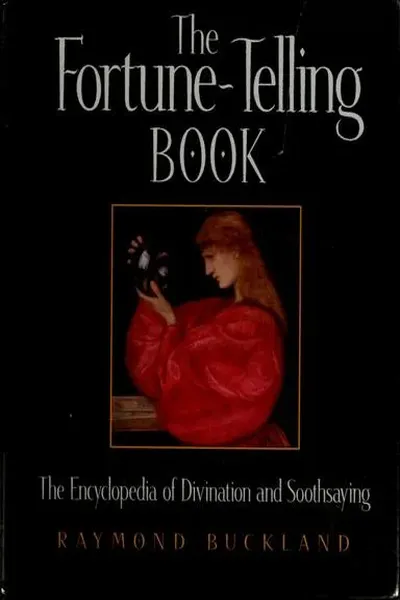
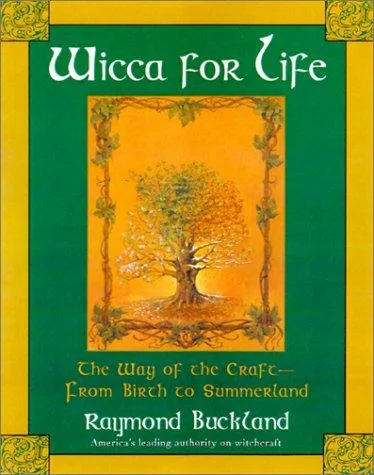
More by Raymond Buckland
All books →


More Free Witchcraft & Paganism Books
View all →


![Wicca [ Wikipedia ]](/img/thumb/wicca-wikipedia-wikipedia.webp)