The wicca handbook
 77
77

The wicca handbook
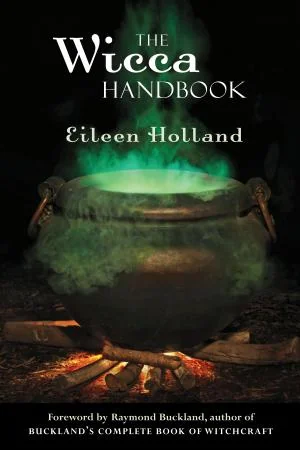
Eileen Holland's "The Wicca Handbook" functions as a competent, if somewhat conventional, entry point into the study of Wicca. Its strength lies in its clear, methodical presentation of core concepts, particularly its detailed explanation of the Wheel of the Year and the symbolic roles of the Horned God and Triple Goddess. Holland avoids overly esoteric jargon, making the material digestible for those entirely new to the subject. However, the book occasionally feels constrained by its introductory nature, offering broad strokes rather than deep dives into the nuances of different Wiccan traditions or historical debates. For instance, its treatment of the Wiccan Rede, while accurate in its common phrasing, could benefit from more exploration of its philosophical underpinnings and historical evolution. The work is a solid primer, but practitioners seeking advanced lore or comparative analysis might find it wanting.
Ultimately, "The Wicca Handbook" serves as a functional, if not particularly groundbreaking, guide for the uninitiated.
📝 Description
77
Eileen Holland's 2008 handbook explains Wiccan beliefs and practices for newcomers.
Published in 2008, Eileen Holland's "The Wicca Handbook" seeks to clarify Wiccan beliefs and practices for those new to the religion or curious about its core tenets. The book covers essential elements such as the nature of deities, the structure of rituals, the observance of seasonal festivals, and ethical guidelines within Wicca. Holland presents Wicca not as a single, uniform system, but as a spiritual path encompassing diverse traditions and viewpoints. This guide is mainly intended for individuals starting their exploration of Wicca or seeking a straightforward overview of its foundational principles. It also serves students of religion and sociology interested in contemporary paganism. The work addresses a growing need for accessible information in esoteric studies, engaging with the history of modern Wicca while offering a structured introduction.
Published in 2008, "The Wicca Handbook" appeared as Neopaganism gained more public and academic attention. Holland's work builds upon earlier texts and figures foundational to modern Wicca, like Gerald Gardner. Her approach reflects a later generation of writers focused on structuring and making Wiccan information accessible. This book responds to an increasing demand for clear guides within the field of esoteric studies, situating itself within the ongoing development of contemporary witchcraft traditions.
💡 Why Read This Book?
• Learn the foundational structure of Wiccan ritual, including the purpose and use of the ritual circle and elemental directions, providing a practical framework for understanding ceremonial practice. • Grasp the significance of the Wheel of the Year, understanding the eight sabbats like Samhain and Beltane and their connection to natural cycles and Wiccan cosmology. • Explore the core ethical principle of the Wiccan Rede, "An it harm none, do what ye will," gaining insight into a central tenet guiding Wiccan action and intent.
⭐ Reader Reviews
Honest opinions from readers who have explored this book.
❓ Frequently Asked Questions
When was Eileen Holland's "The Wicca Handbook" first published?
Eileen Holland's "The Wicca Handbook" was first published in 2008, positioning it within a wave of accessible introductions to Wicca that emerged in the early 21st century.
What are the primary deities discussed in "The Wicca Handbook"?
The handbook primarily discusses the dualistic divine often represented as the Horned God and the Triple Goddess, explaining their archetypal roles and symbolism within Wiccan belief.
Does "The Wicca Handbook" cover Wiccan holidays?
Yes, the book details the Wheel of the Year, which outlines the eight major Wiccan sabbats, including seasonal celebrations such as Yule, Beltane, and Samhain.
What is the core ethical principle presented in the book?
The core ethical principle discussed is the Wiccan Rede, famously summarized as 'An it harm none, do what ye will,' which serves as a guiding philosophy for practitioners.
Is "The Wicca Handbook" suitable for complete beginners?
Absolutely. The book is structured as a foundational guide, explaining core concepts, terminology, and practices in a clear manner suitable for those with little to no prior knowledge of Wicca.
What historical figures or movements does the book reference?
While not deeply historical, the book implicitly builds upon the foundations laid by earlier figures in modern Wicca, such as Gerald Gardner, whose work in the mid-20th century significantly shaped the religion's public perception.
🔮 Key Themes & Symbolism
The Divine Duality
The handbook elaborates on the Wiccan concept of divinity, typically expressed as a polarity between the Horned God and the Triple Goddess. These deities are not merely figures of worship but represent fundamental forces of nature, life, death, and rebirth. The Horned God embodies the wild, untamed aspects of the masculine, connected to the earth and its cycles, while the Triple Goddess represents the feminine in her three phases: Maiden, Mother, and Crone, symbolizing intuition, creation, and wisdom. Understanding this duality is presented as crucial for comprehending Wiccan cosmology and ritual dynamics.
Ritual and Practice
Central to "The Wicca Handbook" is the explication of ritual structure. This includes the creation of sacred space through the casting of a circle, the invocation of elemental guardians (often associated with the cardinal directions), and the use of symbolic tools such as the athame, wand, and chalice. The book explains that rituals are designed to facilitate altered states of consciousness, allowing for connection with the divine and the energetic forces of the universe. Emphasis is placed on intention, visualization, and communal or solitary practice.
The Wheel of the Year
The book presents the Wheel of the Year as a vital framework for Wiccan observance, marking the cyclical passage of seasons and the interconnectedness of life. It details the eight major festivals, or sabbats: Samhain, Yule, Imbolc, Ostara, Beltane, Litha, Lughnasadh, and Mabon. Each sabbat is explained in terms of its historical roots, symbolic meaning, and common practices, illustrating how Wiccans align their spiritual lives with the earth's natural rhythms and the archetypal energies associated with each turning of the wheel.
Wiccan Ethics
A central to Wiccan philosophy, as presented in the handbook, is the principle encapsulated in the Wiccan Rede: 'An it harm none, do what ye will.' This is explored not as a rigid commandment but as a flexible ethical guideline encouraging personal responsibility and awareness of the consequences of one's actions. The book interprets this as a call to live harmoniously with oneself, others, and the natural world, emphasizing free will while advocating for non-maleficence as a primary moral consideration.
💬 Memorable Quotes
Direct passages from the work, attributed to the author.
“The divine is often seen as both immanent within nature and transcendent.”
— This statement captures the dualistic understanding of divinity in Wicca, suggesting it is not separate from the world but actively present within it, while also possessing qualities beyond human comprehension.
“Rituals are designed to create sacred space and facilitate connection.”
— This highlights the purpose-driven nature of Wiccan ceremonies, emphasizing their role in establishing a boundary between the mundane and the sacred, and fostering a direct link to spiritual energies or deities.
“The Wheel of the Year follows the earth's cycles of growth, decay, and renewal.”
— This interpretation underscores the animistic and nature-reverent aspects of Wicca, showing how the calendar and major festivals are intrinsically tied to the observable, seasonal transformations of the natural world.
“Personal responsibility is key to the Wiccan Rede.”
— This emphasizes that the famous Wiccan Rede, 'An it harm none, do what ye will,' places the onus on the individual to discern the potential harm in their actions, rather than relying on external rules.
“Wicca acknowledges both masculine and feminine aspects of the divine.”
— This points to the common theological framework of the Horned God and the Triple Goddess, illustrating a belief system that values balance and the integration of complementary divine energies.
🌙 Esoteric Significance
Tradition
This work fits within the broader umbrella of modern Western Esotericism, specifically the pagan revival movements of the 20th and 21st centuries. It draws heavily from the lineage of Gardnerian and Alexandrian Wicca, which themselves incorporated elements from ceremonial magic, folk traditions, and romanticized notions of pre-Christian European spirituality. Holland's handbook positions itself within this established tradition, seeking to articulate its core tenets in a clear, systematic manner for contemporary practitioners and seekers.
Symbolism
Key symbols explored include the pentacle, representing the five elements (spirit, earth, air, fire, water) and often used as a protective or consecratory symbol. The Triple Goddess, depicted in her Maiden, Mother, and Crone aspects, symbolizes the cycles of life, death, and rebirth, as well as feminine divine power. The Horned God embodies primal masculine energy, nature, and fertility. These symbols are presented not merely as decorative elements but as potent archetypes integral to Wiccan understanding of the cosmos and the divine.
Modern Relevance
The principles and practices outlined in "The Wicca Handbook" remain relevant for contemporary earth-centered spiritualities and eco-Pagan movements. Thinkers and practitioners focused on nature-based spirituality, seasonal observance, and the integration of psychological archetypes (drawing from Jungian psychology, for instance) find resonance in its approach. It serves as a foundational text for many individuals exploring alternative spiritual paths outside of mainstream religions, contributing to the ongoing discourse on modern witchcraft and paganism.
👥 Who Should Read This Book
• Beginning students of Wicca seeking a clear, structured introduction to its core beliefs, deities, and ethical guidelines. • Individuals interested in comparative religion or anthropology looking to understand contemporary pagan movements and their practices. • Seekers of earth-centered spiritualities who wish to explore nature-based rituals, seasonal celebrations like Samhain, and the concept of the Wheel of the Year.
📜 Historical Context
Published in 2008, "The Wicca Handbook" emerged in an era where Neopaganism, and Wicca in particular, had moved from the fringes of esoteric interest to a more recognized, albeit still niche, spiritual path. This period saw a proliferation of introductory texts aimed at explaining practices that had previously been shrouded in secrecy or sensationalism. Holland's work can be seen as part of this trend, offering a structured approach that implicitly contrasts with the more direct, often intensely personal, accounts found in earlier writings from figures like Doreen Valiente in the mid-to-late 20th century. The academic study of contemporary witchcraft was also gaining traction, with scholars like Ronald Hutton providing critical historical analyses of Wicca's origins and development, offering a scholarly counterpoint to popular guides. Holland's book likely aimed to bridge this gap, providing accessible lore for a growing audience interested in earth-centered spirituality.
📔 Journal Prompts
Reflect on the symbolism of the Triple Goddess in your own life experiences.
How does the principle of 'An it harm none' apply to a recent decision you made?
Consider the cyclical nature of the Wheel of the Year and its potential influence on your personal rhythm.
Visualize the creation of a ritual circle; what elements would you include and why?
Explore the archetypal energies of the Horned God and the Triple Goddess in relation to your personal understanding of divine balance.
🗂️ Glossary
Wicca
A modern pagan religion characterized by reverence for nature, belief in a dualistic God and Goddess, and the practice of magic and ritual, often centered around the cycles of the year.
Wheel of the Year
The Wiccan annual calendar, marking eight major seasonal festivals (sabbats) that celebrate the cycles of nature, life, death, and rebirth.
Sabbats
The eight major festivals of the Wheel of the Year, including Samhain, Yule, Imbolc, Ostara, Beltane, Litha, Lughnasadh, and Mabon.
Triple Goddess
A deity often represented in three phases: Maiden (youth, new beginnings), Mother (maturity, fertility), and Crone (wisdom, endings), symbolizing the feminine divine and life cycles.
Horned God
A deity representing the masculine divine, often associated with nature, fertility, wildness, and the cycles of life and death.
Wiccan Rede
A central ethical guideline in Wicca, commonly phrased as 'An it harm none, do what ye will,' emphasizing personal responsibility and the avoidance of harm.
Casting the Circle
A ritual practice used to create a sacred, consecrated space for magical or spiritual work, often by defining boundaries and invoking elemental energies.
🔮 Readers Also Liked
Browse all →







More by Eileen Holland
All books →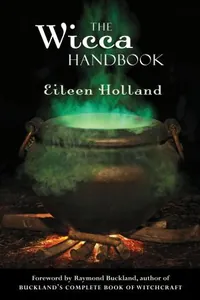



More Free Witchcraft & Paganism Books
View all →