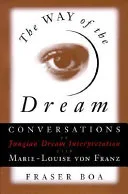
The Way of the Dream
 76
76

The Way of the Dream
Marie-Louise von Franz's direct engagement with the dreams of laypeople, as captured by Fraser Boa's cameras, offers a refreshing counterpoint to more theoretical Jungian texts. The strength of "The Way of the Dream" lies in its unvarnished presentation of dreams and von Franz's clear, authoritative interpretations, which avoid the jargon that can alienate newcomers. The filmic origin ensures a sense of immediacy. One limitation is that, by necessity, the book can only offer excerpts of the dialogues, sometimes leaving one wishing for the full conversational flow. The section discussing the 'shadow' archetype, illustrated by a dream about a dark figure, effectively demonstrates how the unconscious presents what the ego represses. Von Franz’s work here serves as an accessible primer for understanding the symbolic dialogue between the conscious and unconscious mind.
📝 Description
76
The Way of the Dream, released as a film series in 1982-1983, examines Jungian dream analysis.
This book draws from a documentary film series featuring interviews with ordinary people discussing their dreams. Marie-Louise von Franz, a close associate of Carl Jung, offers her expert commentary, explaining the symbolic language found in these dreams. The text aims to make the principles and practical applications of Jungian dream analysis accessible.
The material originates from a 1982-1983 film project by Fraser Boa. It reflects the established presence of Jungian psychology at the time and von Franz's role in continuing its dissemination. The documentary approach was intended to bring analytical psychology to a wider audience. The book follows this aim, presenting complex ideas through accessible examples and commentary.
This work is situated within the tradition of analytical psychology, a school of thought that views dreams as direct communications from the unconscious psyche. It follows Carl Jung's emphasis on the symbolic nature of dream imagery and its potential to reveal hidden psychological dynamics. The focus on archetypes and the collective unconscious connects it to broader ideas about universal human experience and mythology, often explored in esoteric traditions seeking to understand the deeper structures of the human mind.
💡 Why Read This Book?
• You will learn a structured method for analyzing dream imagery, directly applicable to your own nocturnal experiences, as exemplified by the dream examples analyzed by Marie-Louise von Franz. • You will gain insight into the concept of archetypes, understanding how universal symbols manifest in personal dreams, a core principle discussed throughout the 1982-1983 film series. • You will develop a practical appreciation for the unconscious mind's compensatory function, recognizing how dreams offer guidance for personal development, as demonstrated through the case studies presented.
⭐ Reader Reviews
Honest opinions from readers who have explored this book.
❓ Frequently Asked Questions
What is the primary focus of "The Way of the Dream"?
The book focuses on Jungian dream analysis, using real dreams from ordinary people as presented in a documentary film series, with expert commentary by Marie-Louise von Franz.
Who was Marie-Louise von Franz and why is her contribution important?
Marie-Louise von Franz was a close collaborator of Carl Jung and a prominent figure in analytical psychology. Her insights in the book are derived from decades of clinical experience and theoretical work.
What is the source material for "The Way of the Dream"?
The book is based on a documentary film series created by Canadian psychoanalyst and filmmaker Fraser Boa between 1982 and 1983.
Is prior knowledge of psychology needed to understand this book?
No, the book is designed to be accessible to a general audience, explaining complex psychological concepts in a clear and understandable manner.
What does the book teach about the unconscious mind?
It illustrates how the unconscious communicates through symbols in dreams, revealing hidden aspects of the personality and offering guidance for psychological balance and growth.
How does "The Way of the Dream" relate to Carl Jung's work?
It directly applies and expands upon Carl Jung's theories of dream analysis, the collective unconscious, and archetypes, as interpreted by his leading student, Marie-Louise von Franz.
🔮 Key Themes & Symbolism
The Symbolic Language of Dreams
The work emphasizes that dreams are not random but speak in a symbolic language unique to the dreamer, yet often tapping into universal archetypes. Von Franz guides readers to understand recurring symbols—like water, animals, or figures—not as literal events, but as signposts from the unconscious, revealing hidden dynamics within the psyche. The book meticulously breaks down specific dream elements, showing how to decode their personal and collective significance for psychological integration.
The Compensatory Function of Dreams
A central tenet explored is how dreams serve a compensatory function, balancing out one-sided conscious attitudes. If an individual is overly rational, their dreams might bring forth emotional or instinctual material. Von Franz illustrates this with examples, showing how these nocturnal messages aim to guide the dreamer towards greater wholeness (individuation) by highlighting what the conscious mind overlooks or denies. This dialogue between conscious and unconscious is vital for psychological health.
Archetypes in Personal Experience
The book connects personal dream content to the broader concept of archetypes, the universal patterns of the collective unconscious identified by Carl Jung. Figures like the Shadow, the Anima/Animus, and the Wise Old Man are shown to manifest in the dreams of everyday people. Von Franz's analysis reveals how engaging with these archetypal figures in dreams can lead to profound self-understanding and personal transformation, integrating disparate parts of the psyche.
Practical Dreamwork Methodology
Beyond theory, "The Way of the Dream" provides a practical framework for dream analysis, derived from the documentary's filmed sessions. It demonstrates how to approach a dream without preconceived notions, listening to the dreamer's associations and the dream's internal logic. The emphasis is on the dream's own message rather than imposing external interpretations, offering a method that empowers individuals to become their own dream interpreters.
💬 Memorable Quotes
Direct passages from the work, attributed to the author.
“Dreams are the natural expression of the situation in the unconscious.”
— This highlights the core Jungian idea that dreams are not arbitrary but directly reflect the hidden psychological state and offer a corrective perspective to conscious awareness.
“The collective unconscious contains the archetypes.”
— This statement points to the inherited, universal structures of the psyche that manifest in dreams and myths, forming a common ground of human experience.
“The shadow is that part of the personality which the ego does not identify with.”
— This defines the shadow archetype as the repressed, often negative, aspects of the self that must be acknowledged for psychological integration.
“Dreams compensate for the conscious attitude.”
— This explains the crucial function of dreams in bringing balance to the psyche by presenting material that the conscious mind is neglecting or is unaware of.
“The aim of analysis is to help the individual become whole.”
— This succinctly states the ultimate goal of Jungian psychology and dream analysis: the process of individuation and achieving psychological completeness.
🌙 Esoteric Significance
Tradition
This work sits firmly within the Analytical Psychology tradition founded by Carl Jung, which itself draws heavily from Hermetic, Gnostic, and alchemical symbolism. Von Franz, as Jung's foremost female colleague, represents the continuation and practical application of these esoteric underpinnings within a modern psychological framework. It bridges the gap between ancient mystical insights and contemporary therapeutic practice.
Symbolism
The book frequently engages with symbols like the 'shadow,' representing the repressed aspects of the psyche, and archetypal figures that emerge from the collective unconscious. Water often appears as a symbol of the unconscious itself, while animals can represent instinctual energies or specific psychic functions. These are not merely decorative but are interpreted as vital messages from the deeper self.
Modern Relevance
Contemporary approaches to mindfulness, transpersonal psychology, and even certain strands of creative arts therapy echo the principles laid out here. Thinkers exploring consciousness, symbolic systems, and the integration of the psyche continue to reference Jung and his associates, including von Franz, for foundational insights into the dream world.
👥 Who Should Read This Book
• Students of Jungian psychology and depth psychology seeking practical examples of archetypal analysis and the compensatory function of dreams. • Therapists and counselors looking for accessible case studies and methodologies for guiding clients through their dreamwork, inspired by Marie-Louise von Franz's approach. • Individuals interested in personal growth and self-understanding who wish to learn concrete techniques for interpreting their own dreams beyond superficial analysis.
📜 Historical Context
Published in 1994, "The Way of the Dream" draws from documentary films made between 1982 and 1983, placing it within the established discourse of Jungian analytical psychology. Marie-Louise von Franz, a key figure in disseminating Jung's ideas after his death in 1961, lent significant authority to the project. The era saw Jungian thought influencing psychotherapy, literature, and art, though it often stood in contrast to more behaviorist or Freudian approaches prevalent in academic psychology. Fraser Boa's work aimed to democratize complex dream analysis, making it accessible beyond clinical settings, reflecting a broader cultural interest in self-exploration that also fueled movements like humanistic psychology. While not subject to overt controversy, Jungian concepts like the collective unconscious were sometimes viewed skeptically by mainstream scientific psychology.
📔 Journal Prompts
The Shadow figure in your dream: what conscious attitude does it compensate for?
Reflecting on the Anima/Animus symbol: how does it manifest in your relationships?
Analyzing the dream's setting: what does the environment signify about your inner state?
The recurring symbol in your dreams: what might it be urging you to acknowledge?
Connecting dream imagery to the collective unconscious: do these symbols feel familiar?
🗂️ Glossary
Analytical Psychology
The school of psychology founded by Carl Jung, emphasizing the unconscious, archetypes, individuation, and dream analysis.
Archetype
Universal, inherited patterns of thought and imagery derived from the collective unconscious, manifesting in myths, dreams, and art.
Collective Unconscious
The deepest layer of the unconscious psyche, containing inherited psychic structures and universal patterns shared by all humanity.
Compensation (in dreams)
The tendency of dreams to present psychic material that balances or corrects a one-sided conscious attitude or perspective.
Individuation
The lifelong psychological process of differentiating the self, integrating conscious and unconscious elements to achieve wholeness.
Shadow
The unconscious aspect of the personality which the conscious ego does not identify with; often contains repressed desires, weaknesses, or instincts.
Symbol
An image, word, or idea that represents something else, often with a deeper, unconscious meaning, especially prevalent in dreams.