The Voices of Women in Witchcraft Trials
 80
80

The Voices of Women in Witchcraft Trials
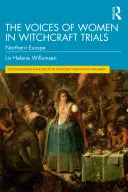
Liv Helene Willumsen's study offers a vital corrective to the often monolithic portrayal of witchcraft trials, focusing intently on the specific testimonies of accused women. The strength of "The Voices of Women in Witchcraft Trials" lies in its granular approach, dissecting courtroom discourse with a narratological lens to reveal the agency and humanity of the accused. Willumsen effectively constructs a "choir of 24 voices" that speak across eight North Sea countries, highlighting both regional particularities and shared experiences of persecution. A notable limitation, however, is the sheer density of the analysis, which, while rewarding for specialists, might present a steep learning curve for the general reader seeking a broader overview. The detailed examination of the 1649 Aberdeen trial, for instance, powerfully illustrates how accusations were framed and how the accused attempted to navigate the legal labyrinth. Ultimately, this work is an indispensable resource for understanding the subjective realities of women ensnared by witch accusations, offering a profound scholarly contribution.
📝 Description
80
Liv Helene Willumsen's 2017 book examines 72 witchcraft trials across eight North Sea nations.
This book shifts focus to the testimonies of women accused of witchcraft. Willumsen analyzes courtroom discourse from the Spanish Netherlands, Northern Germany, Denmark, Scotland, England, Norway, Sweden, and Finland. She selects three trials from each country to closely examine how accused women and witnesses spoke, defended themselves, or were implicated. This close reading reveals the linguistic strategies, social pressures, and legal systems that influenced these accounts.
The analysis is framed by early modern European history, a time of widespread fear and suspicion often directed at women. The broad geographic reach of the study highlights shared patterns and differences in persecution across the North Sea region. By comparing cases from varied legal and cultural settings, the book illustrates how gender, power, and belief systems intersected during the witch hunts.
While not strictly an esoteric text, this work engages with traditions of understanding suppressed or marginalized voices. It examines how belief systems, particularly concerning witchcraft, shaped legal proceedings and personal narratives. The focus on spoken testimony and the construction of stories within trials relates to broader studies of folklore, oral history, and the performance of identity in historical contexts. By centering the voices of accused women, it offers a counterpoint to dominant narratives, aligning with approaches that seek to recover hidden histories and challenge established interpretations of religious and social phenomena.
💡 Why Read This Book?
• Gain direct insight into the linguistic strategies used by accused women in early modern courts, as detailed in the analysis of courtroom discourse from trials in Scotland and England. • Understand the regional variations in witchcraft accusations and legal proceedings by comparing testimonies from diverse locations like Norway, Sweden, and the Spanish Netherlands. • Appreciate the application of narratology to historical legal records, learning how to interpret the construction of narratives within the 24 distinct "voices" presented.
⭐ Reader Reviews
Honest opinions from readers who have explored this book.
❓ Frequently Asked Questions
What specific time period does "The Voices of Women in Witchcraft Trials" cover?
The book primarily focuses on the early modern period, a time of intense witchcraft accusations across Europe. While specific trial dates vary, the general era explored aligns with the peak of these persecutions, roughly from the 16th to the 18th centuries.
How does the book differ from other studies on witchcraft trials?
Unlike many studies that focus on the accusers or societal structures, Willumsen's work centers the "voices of women" as accused persons or witnesses, using courtroom discourse and narratology to analyze their testimonies directly.
Which countries are included in the study?
The book examines witchcraft trials from eight countries around the North Sea: Spanish Netherlands, Northern Germany, Denmark, Scotland, England, Norway, Sweden, and Finland.
What is the "narratological approach" mentioned in the book?
The narratological approach involves analyzing the structure, style, and storytelling techniques within the trial records, treating the testimonies as narratives to understand how events were recounted and interpreted by the women involved.
Does the book present a single unified theory of witchcraft?
No, the book's strength lies in presenting a "choir of 24 voices" from different regions, highlighting the diversity of experiences and legal practices rather than a singular, unified theory.
Who is Liv Helene Willumsen?
Liv Helene Willumsen is the author of "The Voices of Women in Witchcraft Trials." She is a scholar specializing in the history of witchcraft and gender studies, with a focus on Northern European contexts.
🔮 Key Themes & Symbolism
Courtroom Discourse Analysis
The book meticulously dissects the language and narrative strategies employed within early modern witchcraft trials. By focusing on "courtroom discourse," Willumsen highlights how accused women and witnesses articulated their experiences, navigated legal questioning, and constructed their testimonies. This approach moves beyond simply reporting verdicts to understanding the performative and rhetorical dimensions of the trials, revealing the subtle ways gender, social status, and belief systems influenced the unfolding of justice, or injustice, as captured in the records from places like England and Scotland.
The "Choir of 24 Voices"
Central to the work is the concept of a "choir of 24 voices," representing accused women from eight different North Sea countries. This collective framing emphasizes the shared yet distinct experiences of women targeted during witch hunts. Each voice, drawn from detailed trial readings, contributes to a complex polyphony that challenges monolithic historical interpretations. The study allows these individual narratives, often previously silenced, to speak directly, offering a powerful evidence of female resilience and subjectivity in the face of extreme adversity.
Geographic and Legal Diversity
Willumsen's comparative study across the Spanish Netherlands, Northern Germany, Denmark, Scotland, England, Norway, Sweden, and Finland is crucial. It underscores that while witchcraft accusations were a widespread phenomenon, the legal frameworks, cultural contexts, and resulting testimonies varied significantly. Examining these differences allows for a more nuanced understanding of how accusations were processed, how women defended themselves within specific legal traditions, and how the "voices" of the accused were shaped by distinct societal norms and judicial practices.
Recovering Female Agency
By prioritizing the testimonies of accused women and witnesses, the book aims to recover and foreground female agency within historical persecution. The "voices" are not merely passive recitations of accusations but active articulations of experience, defense, and sometimes resistance. The narratological approach allows readers to see how these women shaped their own stories within the constraints of the courtroom, offering a counter-narrative to historical accounts that often reduce them to spectral figures or mere victims of mass hysteria.
💬 Memorable Quotes
Direct passages from the work, attributed to the author.
“Women come to the fore in witchcraft trials as accused persons or as witnesses.”
— This foundational statement sets the book's objective: to shift focus from the broader societal context of witch hunts to the direct experiences and testimonies of women, positioning them as central actors in the historical record.
“this book is a study of women’s voices in these trials in eight countries around the North Sea”
— This highlights the book's geographical scope and its core methodology – analyzing the spoken or recorded words of women, treating their testimonies as primary evidence of their experiences during periods of intense accusation.
“three trials are chosen for close reading of courtroom discourse”
— This indicates the book's rigorous academic approach, emphasizing detailed analysis of specific legal proceedings rather than broad generalizations, thereby allowing for deep dives into the nuances of individual cases.
“the narratological approach enables various individuals to speak”
— This explains the analytical framework used, suggesting that by treating testimonies as narratives, the author can uncover the distinct perspectives and voices of the accused women, bringing them to life for the reader.
“a choir of 24 voices of accused women are heard”
— This powerful metaphor expresses the book's achievement: presenting a collective yet individual portrait of women through their own testimonies, creating a resonant chorus that speaks across time and borders.
🌙 Esoteric Significance
Tradition
While not strictly within a defined esoteric lineage like Hermeticism or Kabbalah, the book touches upon themes resonant with certain folk magic traditions and the historical persecution of those perceived as practicing 'witchcraft.' It offers a grounded, historical counterpoint to romanticized notions of witchcraft, focusing on the lived realities of women accused within patriarchal legal systems, rather than occult practices themselves.
Symbolism
The "voices" themselves function symbolically, representing the reclaiming of suppressed narratives and the assertion of individual subjectivity against overwhelming societal and legal forces. The trials, as recorded events, symbolize the complex interplay of fear, belief, and power structures. The geographical spread across the North Sea nations can be seen as symbolizing the pervasive nature of these accusations across culturally linked but distinct regions.
Modern Relevance
Contemporary feminist scholarship and historical revisionism continue to draw on works like Willumsen's to understand the roots of gendered persecution and the importance of centering marginalized voices. Thinkers exploring trauma studies, critical legal studies, and the history of marginalized groups find value in the detailed analysis of how power operates through language and legal systems, offering parallels to modern discussions on justice and narrative.
👥 Who Should Read This Book
• Academic researchers in gender studies, early modern history, and legal history seeking detailed case studies and comparative analysis of witchcraft trials. • Students of literature and linguistics interested in applying narratology to historical legal documents and understanding courtroom discourse. • General readers with a strong interest in the history of witchcraft, women's history, and understanding the social and legal mechanisms of persecution.
📜 Historical Context
Published in 2022, Liv Helene Willumsen's "The Voices of Women in Witchcraft Trials" engages with a long-standing field of scholarship on early modern European witch hunts. The late 20th and early 21st centuries saw a significant turn towards social and gender history, challenging earlier "demonological" interpretations and focusing on the social, economic, and psychological factors driving accusations. Willumsen's work builds upon this, employing linguistic and narrative analysis to recover the subjective experiences of the accused. Key contemporaries in this broader field include historians like Robin Briggs, whose work examined the social context of accusations, and figures like Christina Larner, who critically analyzed Scottish witchcraft cases. Willumsen's specific contribution lies in her meticulous comparative study across eight North Sea nations and her focus on courtroom discourse, offering a more granular and voice-centric perspective than many earlier, broader syntheses. The reception of such works often involves reassessment of regional legal traditions and the impact of gender on judicial outcomes.
📔 Journal Prompts
The "choir of 24 voices" – how might these distinct testimonies, when heard together, alter perceptions of historical witch trials?
Reflecting on the "courtroom discourse" from the Spanish Netherlands trials, what linguistic strategies did women employ to defend themselves?
Consider the specific accusations detailed in the Scottish trials; how did the social context shape the narrative presented by the accused?
The concept of "female agency" in the face of accusation – identify one instance where an accused woman's voice actively shaped the trial's narrative.
Compare the legal frameworks implied by the trials in Norway versus England; what does this reveal about regional differences in "women's voices"?
🗂️ Glossary
Courtroom Discourse
The language, communication patterns, and interaction dynamics that occur within a legal trial setting, including testimonies, interrogations, and legal arguments.
Narratology
The study of narrative structure and storytelling techniques, applied here to analyze how testimonies and accusations were constructed and presented in witchcraft trials.
North Sea Countries
Refers to the specific group of nations included in the study: Spanish Netherlands, Northern Germany, Denmark, Scotland, England, Norway, Sweden, and Finland.
Accused Women
Refers specifically to the female individuals who were formally charged with witchcraft during the historical periods examined in the book.
Witnesses
Individuals who provided testimony during witchcraft trials, whether corroborating accusations, offering defenses, or providing contextual information.
Early Modern Period
The historical era roughly spanning from the late 15th century to the late 18th century, encompassing the peak of the European witch hunts.
Female Agency
The capacity of women to act independently and make their own free choices, particularly as evidenced through their speech and actions within the constraints of historical legal proceedings.

![D. [i. e., Doktor] Balthasar Bekkers reformierten Predigers in Amsterdam bezauberte Welt. ... 1781: Vol 2 Iss 81](/img/thumb/d-i-e-doktor-balthasar-bekkers-reformierten-predigers-in-amsterdam-bezauberte-welt-1781-vol-2-iss-81-bekker-balthasar-1634-1698.webp)