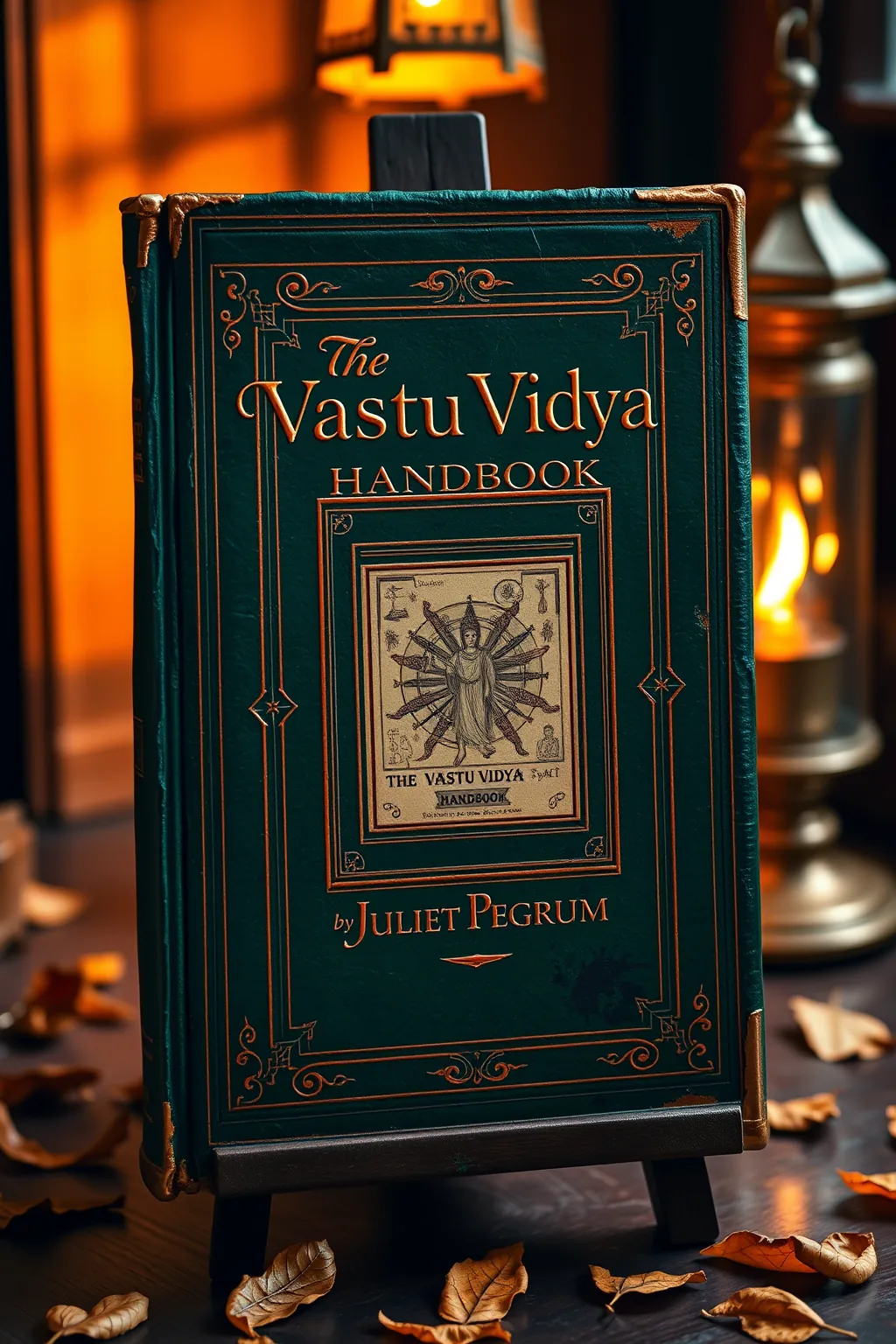
The vastu vidya handbook
 67
67

The vastu vidya handbook



Ophelia Vance, Mystical Literature Reviewer: Juliet Pegrum's 'The Vastu Vidya Handbook' is a radiant beacon in the often-obscure landscape of architectural mysticism. Pegrum navigates the intricate tapestry of Vastu Vidya with clarity and profound reverence, revealing its deep connections to geomancy and cosmic alignment. This is not merely a decorating guide; it is a profound exploration of how our built environments interact with the subtle energies that shape our destinies. The author's scholarly yet accessible approach illuminates the symbolic language of Vastu, making its ancient wisdom resonate with contemporary seekers. Essential reading for anyone drawn to the esoteric architecture of creation.
📝 Description
67
Juliet Pegrum's 2004 Vastu Vidya Handbook explains Hindu architectural science for modern living.
Juliet Pegrum's guide to Vastu Vidya, the traditional Hindu science of architecture and space, was first published in 2004. The book examines how to align living and working environments with natural cosmic energies. Pegrum breaks down the core principles of Vastu, including sacred geometry, the influence of the five elements, and planetary alignments. She shows how these elements create a harmonious flow of vital forces within a space.
The goal of applying Vastu is to transform ordinary rooms into places that foster balance, prosperity, and overall well-being. The handbook aims to help readers understand the energetic structure of their surroundings. It provides practical applications for creating spaces that are not only functional but also spiritually uplifting. The text encourages readers to build environments that resonate with their inner needs for order and peace.
Vastu Vidya is an ancient Indian system that predates much recorded history, often considered a sister science to yoga and Ayurveda. It functions as a framework for designing and arranging buildings to ensure a harmonious relationship between humans and the universe. By understanding and applying Vastu principles, practitioners aim to channel positive cosmic energies, or prana, into their homes and workplaces. This practice is rooted in the belief that the energy of a space directly impacts the physical, mental, and spiritual health of its inhabitants. The system draws upon concepts of directionality, elemental forces, and celestial influences to create environments that support life and growth.
💡 Why Read This Book?
Uncover the ancient secrets of spatial harmony and energetic balance. 'The Vastu Vidya Handbook' offers practical wisdom for transforming your living and working spaces into havens of well-being and prosperity. Ideal for spiritual seekers, aspiring practitioners of sacred architecture, and anyone curious about the profound connection between their environment and their inner life. Discover how to align your surroundings with cosmic forces and cultivate a life of greater peace and abundance.
⭐ Reader Reviews
Honest opinions from readers who have explored this book.
❓ Frequently Asked Questions
What is Vastu Vidya?
Vastu Vidya is an ancient Indian science of architecture and design, focused on harmonizing buildings with the natural forces of the universe to promote health, wealth, and happiness for inhabitants. It is considered the Vedic equivalent of Feng Shui.
How can Vastu Vidya improve my home?
By understanding and applying Vastu principles, you can optimize the flow of positive energy (prana) in your home, correct energetic imbalances, and create an environment conducive to peace, prosperity, and well-being.
Is Vastu Vidya only for new constructions?
No, Vastu principles can be applied to existing homes and workplaces. Many adjustments can be made through simple decor changes, furniture placement, and minor renovations to enhance the energetic flow.
What are the core elements of Vastu?
Vastu is based on the five elements (Pancha Mahabhutas): Earth, Water, Fire, Air, and Space, and their interaction with directions, planetary influences, and cosmic energies.
Who was Juliet Pegrum?
Juliet Pegrum was a respected scholar and practitioner who dedicated her work to making ancient esoteric knowledge accessible. Her contributions have shed light on the practical application of Vastu Vidya for modern living.
🔮 Key Themes & Symbolism
Cosmic Harmony and Elemental Balance
This theme explores the profound connection between the cosmos and our built environment. It explores how the five classical elements (Earth, Water, Fire, Air, Space) are not merely physical substances but represent energetic forces that must be balanced within a dwelling. The book elucidates how specific directions and planetary influences are intrinsically linked to these elements, creating a complex energetic grid. Understanding this interplay allows for the creation of spaces that resonate with universal vibrations, fostering a sense of peace, vitality, and alignment for the inhabitants. It is about living in sync with the natural rhythms of the universe.
Sacred Geometry and Energetic Flow
At the heart of Vastu Vidya lies the concept of sacred geometry, where precise proportions and forms are used to channel and direct vital life force (prana). This theme examines the significance of shapes, layouts, and the placement of architectural features in influencing the energetic currents within a space. Pegrum reveals how simple geometric principles can optimize the flow of positive energy, ward off negative influences, and create zones of specific energetic qualities. It’s about understanding that buildings are not inert structures but dynamic conduits for energy, and their design profoundly impacts our physical, mental, and spiritual well-being.
The Dwelling as a Microcosm of the Macrocosm
This central tenet of Vastu Vidya posits that our homes and workplaces are miniature reflections of the larger universe. This theme unpacks how the principles governing the cosmos are mirrored in the design and orientation of our living spaces. By aligning our dwellings with these universal laws, we create a microcosm that supports our journey towards spiritual growth and material well-being. The book illustrates how subtle shifts in orientation, room placement, and the use of specific colors and materials can create a powerful resonance between the individual and the universal, fostering an environment of holistic prosperity and enlightenment.
💬 Memorable Quotes
Direct passages from the work, attributed to the author.
“Where the five elements dance in harmony, life flourishes.”
— This highlights the core principle of Vastu Vidya: the balanced presence and interplay of Earth, Water, Fire, Air, and Space are essential for vitality, health, and prosperity.
“The cardinal directions are gateways to cosmic energies.”
— This speaks to the directional significance in Vastu, where each compass point is associated with specific elemental forces and planetary influences that can be harnessed or mitigated through design.
“Sacred geometry breathes life into stone and wood.”
— This emphasizes the power of precise proportions and shapes in Vastu to imbue inert building materials with vibrant, life-affirming energy, transforming spaces into conduits of well-being.
“A balanced space cultivates a balanced mind.”
— This succinctly captures the profound psychological and spiritual impact of Vastu-compliant environments, suggesting a direct correlation between the harmony of one's surroundings and inner peace.
💡 Key Ideas
Editorial paraphrase of the work's core concepts — not direct quotes.
The house is a body, the inhabitant its soul.
This quote emphasizes the living, energetic connection between a dwelling and its occupants, suggesting that the structure profoundly influences the spiritual and physical well-being of those within it.
🌙 Esoteric Significance
Tradition
Vastu Vidya is a core part of Vedic esotericism, deeply embedded within the broader framework of Hindu philosophical and spiritual traditions. It is intrinsically linked to concepts of Dharma (righteous living), Karma (action and consequence), and Moksha (liberation). The practice is considered a form of applied metaphysics, aiming to align human existence with cosmic order (Rta) and the divine will. Its principles are seen as a manifestation of universal consciousness, providing a tangible method for individuals to interact with and benefit from subtle energies and spiritual forces governing the universe.
Symbolism
The symbolism in Vastu is rich and multi-layered. The cardinal directions represent fundamental energies and deities. The five elements (Pancha Mahabhutas) are not just physical components but symbolic representations of cosmic forces. Geometric shapes like squares and rectangles symbolize stability and order, while circles represent wholeness and the cosmos. The placement of a central void (Brahmasthan) symbolizes the unmanifest potential or the divine source. Even colors and materials carry specific energetic and symbolic meanings, all working in concert to create a sacred and harmonious living space.
Modern Relevance
In an era of increasing environmental consciousness and a growing desire for holistic well-being, Vastu Vidya offers profound relevance. It provides a time-tested framework for creating sustainable, healthy, and energetically balanced living and working environments. As modern science increasingly acknowledges the impact of subtle energies and environmental factors on human health and psychology, Vastu's principles resonate deeply. It offers practical, actionable guidance for individuals seeking to improve their quality of life, enhance productivity, foster positive relationships, and achieve greater spiritual fulfillment through their immediate surroundings.
👥 Who Should Read This Book
This comprehensive guide is a valuable collection for a diverse audience. **Beginners** will find a clear and accessible introduction to the fundamental principles of Vastu Vidya, explaining its ancient wisdom. **Scholars and researchers** will appreciate the depth of knowledge and historical context provided, offering a valuable resource for academic study. **Spiritual seekers and practitioners** will discover practical methods to transform their homes and workplaces into energetic sanctuaries, fostering personal growth and well-being. **Architects, interior designers, and homeowners** looking to create harmonious and auspicious spaces will find invaluable insights and actionable techniques to enhance the quality of life for inhabitants.
📜 Historical Context
The practice of Vastu Vidya emerged from the Vedic period of ancient India, a time of profound philosophical and scientific inquiry. Its roots are deeply intertwined with the development of Hinduism, astrology (Jyotisha), and other ancient Indian sciences. Vastu texts, such as the vastu Shastra, were compiled over centuries, drawing upon observations of natural phenomena, astronomical cycles, and spiritual insights. This knowledge was integral to the construction of temples, palaces, and residential buildings, reflecting a worldview where the built environment was seen as a direct interface with the divine and cosmic forces. The decline of Vastu's prominence coincided with periods of foreign invasion and cultural shifts, but its rediscovery and reinterpretation in modern times have brought this ancient wisdom to a global audience seeking holistic living.
📔 Journal Prompts
Reflect on the dominant elemental energies in your current living space. How do they feel?
Visualize your ideal home as a sanctuary. What are its energetic qualities?
How does the orientation of your home or primary workspace affect your mood and productivity?
Identify one area in your home that feels energetically stagnant. What Vastu principle might address this?
Consider the symbolic meaning of a particular room in your home. How does its current design align with its purpose?
🗂️ Glossary
Vastu Shastra
The ancient Indian science of architecture and design that deals with the principles of harmonious construction and spatial arrangement to promote well-being and prosperity.
Pancha Mahabhutas
The five great elements: Earth (Prithvi), Water (Jal), Fire (Agni), Air (Vayu), and Space (Akasha), which are fundamental to Vastu and the universe.
Prana
The vital life force or cosmic energy that flows through all living beings and environments. Vastu aims to optimize the flow of Prana.
Brahmasthan
The central area or core of a Vastu-compliant building, considered the most sacred and energetically potent part, representing unmanifest potential.
Disha
Direction. In Vastu, each of the eight cardinal and intercardinal directions is associated with specific energies, deities, and elements.
This book appears in 5 collections
🔮 Readers Also Liked
Browse all →






More by Juliet Pegrum
All books →


From the “Geomancy” Collection
View all →







More Free Divination & Tarot Books
View all →