Tai Chi
 80
80

Tai Chi
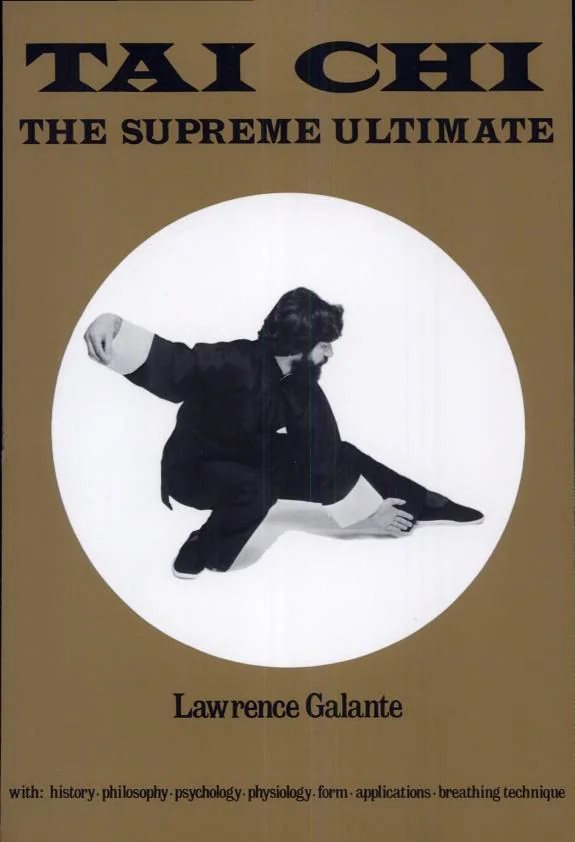
Lawrence Galante's "Tai Chi," first published in 1981, presents a dense, scholarly examination of the art that goes far beyond the superficial. What distinguishes this work is its ambitious scope, attempting to link Tai Chi not only to its Chinese roots but also to Western philosophy and esoteric traditions. The inclusion of several hundred detailed photographs is a significant asset, offering clear visual instruction for the various positions and their applications, a feature often lacking in texts focused primarily on theory. However, the sheer breadth of topics covered, from the I Ching to yoga, can sometimes feel overwhelming. The analytical approach, while thorough, occasionally prioritizes intellectual dissection over the embodied experience of Tai Chi. The book's strength lies in its comprehensive historical and philosophical grounding, making it a valuable resource for serious students. Its limitation is a potential for academic dryness that might alienate those seeking a more purely experiential guide. Galante's effort to synthesize disparate intellectual traditions around Tai Chi is commendable, though its execution is dense. It serves as a robust reference for the intellectually inclined practitioner.
📝 Description
80
Lawrence Galante's 1981 book examines Tai Chi's origins and philosophical roots.
Lawrence Galante's "Tai Chi," first published in 1981, offers a rigorous examination of the martial art's history and philosophical dimensions. The book moves beyond a simple description of physical techniques to investigate the deeper meanings embedded within Tai Chi practice. Galante connects these principles to established Western philosophical thought, creating a framework for appreciating its broad relevance.
The text is suited for serious students of mind-body disciplines. Readers interested in comparative philosophy, traditional Chinese medicine, and the connection between physical movement and spiritual growth will find substantial material. The author assumes a scholarly or deeply curious approach from the reader, providing ample depth for study.
Galante traces Tai Chi's lineage within Chinese martial arts and philosophy. He shows how foundational texts like the I Ching and Tao Te Ching shape its core principles and movements. The book also considers Tai Chi's relationship to other contemplative traditions, including yoga and Zen Buddhism.
This book situates Tai Chi within a lineage of mind-body practices that connect physical form with internal energy cultivation. It explores the metaphysical systems underlying these practices, linking them to broader philosophical traditions. The work acknowledges the esoteric dimensions of Tai Chi, treating it not merely as a physical discipline but as a path for understanding deeper realities. The inclusion of detailed photographs of postures serves as a practical guide to these principles.
💡 Why Read This Book?
• Gain a nuanced understanding of Tai Chi's philosophical roots, exploring its connections to the I Ching and Tao Te Ching, as detailed in the book's early chapters. This provides a historical and conceptual framework unavailable in purely practical guides. • Discover the intricate relationship between Tai Chi and traditional Chinese medicine, learning how specific movements are thought to influence health and energy flow, a topic extensively discussed in the latter sections. • Appreciate the visual instruction provided by several hundred detailed photographs showcasing posture applications, offering a concrete, visual learning aid that complements the text's analytical approach to the movements.
⭐ Reader Reviews
Honest opinions from readers who have explored this book.
❓ Frequently Asked Questions
When was Lawrence Galante's "Tai Chi" first published?
Lawrence Galante's "Tai Chi" was first published on January 15, 1981. This initial release date places it within a period of growing Western interest in Eastern philosophies and practices.
What is the connection between Tai Chi and the I Ching discussed in the book?
The book explores how the principles of the I Ching, the ancient Chinese 'Book of Changes,' are reflected in the cyclical, balanced, and responsive nature of Tai Chi movements and philosophy.
Does the book cover the health benefits of Tai Chi?
Yes, "Tai Chi" dedicates a significant portion to discussing the practice's relationship with health and traditional Chinese medicine, exploring its potential therapeutic applications.
How does the book illustrate Tai Chi positions?
The text is accompanied by several hundred detailed photographs that clearly demonstrate the application and execution of various Tai Chi postures.
What Western philosophies are related to Tai Chi in this book?
Galante's work analyzes Tai Chi's connections to various Western philosophical schools, drawing parallels in concepts of balance, harmony, and the interplay of forces.
Is "Tai Chi" by Lawrence Galante suitable for absolute beginners?
While it offers detailed photographic guidance, the book's comprehensive analysis of history, philosophy, and esoteric connections makes it best suited for those with some existing interest or background in Tai Chi or related disciplines.
🔮 Key Themes & Symbolism
Philosophical Synthesis
Galante's work is notable for its attempt to bridge the perceived divide between Eastern and Western thought. It meticulously examines how core Tai Chi principles, such as yielding, balance, and dynamic equilibrium, find echoes in concepts found within Western philosophy. This comparative approach aims to reveal a universal language of movement and being, suggesting that the pursuit of harmony in the body through Tai Chi is intrinsically linked to philosophical quests for order and understanding in the cosmos, as explored through texts like the Tao Te Ching.
Esoteric Body-Mind Connection
Beyond its martial or health aspects, "Tai Chi" explores the esoteric dimensions of the practice. It positions Tai Chi as a system for cultivating internal energy (Qi) and achieving a profound mind-body integration. This exploration connects it to broader esoteric traditions that emphasize the body as a vessel for spiritual development and energetic transformation, viewing physical discipline as a pathway to higher consciousness and alignment with natural laws.
Historical Lineage and Influence
The book provides a detailed account of Tai Chi's historical development, tracing its lineage and its profound connection to ancient Chinese cosmology and texts. By analyzing its relationship with foundational works such as the I Ching, the author situates Tai Chi not merely as a physical art but as a living tradition deeply embedded in a sophisticated philosophical worldview. This historical perspective highlights how the practice evolved as a means of embodying these ancient insights.
Holistic Health and Medicine
A significant theme is the integration of Tai Chi with traditional Chinese medicine (TCM). Galante explains how the slow, deliberate movements are designed to harmonize the body's vital energy, balance Yin and Yang, and support the proper functioning of internal organs according to TCM principles. This perspective frames Tai Chi as a potent form of preventative medicine and a method for maintaining long-term well-being by working in concert with the body's natural energetic systems.
💬 Memorable Quotes
Direct passages from the work, attributed to the author.
“The author also ties its use to esoteric systems.”
— This points to the book's exploration of Tai Chi's deeper, often hidden, spiritual and metaphysical dimensions, positioning it as a practice that can lead to energetic and consciousness shifts.
“Discusses health and Chinese medicine in relation to Tai Chi.”
— This indicates the text's focus on the therapeutic and preventative aspects of Tai Chi, viewing it through the lens of ancient Chinese medical theory and its understanding of vital energy (Qi).
“Includes several hundred detailed photographs showing application of the positions.”
— This emphasizes the practical, instructional value of the book, assuring readers that the theoretical discussions are supported by clear visual guidance for practicing the movements themselves.
“A comprehensive text that includes a study of the origins and history of Tai Chi.”
— This introductory statement promises a thorough investigation into the historical roots and evolutionary path of Tai Chi, setting the stage for a deep and detailed exploration.
💡 Key Ideas
Editorial paraphrase of the work's core concepts — not direct quotes.
A detailed analysis of its relationship to Western philosophy, the I Ching, Tao te Ching, yoga, and Zen.
This quote highlights the book's ambitious scope, aiming to contextualize Tai Chi within a vast array of intellectual and spiritual traditions, suggesting a universal resonance in its principles.
🌙 Esoteric Significance
Tradition
While not strictly adhering to a single Western esoteric lineage like Hermeticism or Kabbalah, Galante's "Tai Chi" engages with a broad spectrum of esoteric thought. It aligns with perennialist philosophies that seek universal truths across traditions, viewing Tai Chi as a physical manifestation of cosmic principles. Its emphasis on energy cultivation (Qi) and mind-body integration connects it to Gnostic ideas of embodied wisdom and Theosophical concepts of subtle bodies and spiritual evolution.
Symbolism
The practice itself is rich in symbolism. The Yin-Yang symbol, central to Taoism and Tai Chi, represents the dynamic interplay of complementary opposites – soft and hard, passive and active – which is mirrored in the flowing movements. The concept of Qi, or vital life force, is itself a potent symbol of the unseen energies that animate the universe and the body, and mastering its flow is a primary esoteric aim of Tai Chi practice.
Modern Relevance
Contemporary thinkers and practitioners in fields like somatic psychology, embodied cognition, and mindfulness-based stress reduction often draw implicitly or explicitly on the principles explored in works like Galante's. The holistic view of health and the emphasis on internal cultivation resonate with modern approaches to well-being that seek to integrate mind, body, and spirit, often referencing ancient practices for contemporary solutions.
👥 Who Should Read This Book
• Serious practitioners of Tai Chi seeking a deeper historical and philosophical context for their practice, moving beyond the mechanics to understand the underlying principles and influences. • Students of comparative philosophy and religion interested in the cross-cultural dialogue between Eastern and Western thought, particularly as it relates to embodied practices and ancient texts. • Individuals interested in traditional Chinese medicine and esoteric systems who wish to understand how physical disciplines like Tai Chi can be integrated with energetic and spiritual development.
📜 Historical Context
Lawrence Galante's "Tai Chi" emerged in 1981, a period marked by a burgeoning Western fascination with Eastern philosophies and martial arts. The 1970s and early 80s saw increased availability of translated texts and growing interest in practices like yoga, meditation, and martial arts, moving them from niche interests to broader cultural awareness. This era was also characterized by a comparative approach to religion and philosophy, with scholars and enthusiasts seeking common threads across diverse traditions. Galante's work engaged with this intellectual current by linking Tai Chi to established Western philosophical concepts, the I Ching, and Tao Te Ching, as well as contemporary practices like yoga and Zen. While not facing overt censorship, the book contributed to a growing academic and popular discourse on Eastern practices, standing alongside works by figures like Lin Yutang who also explored Chinese culture for Western audiences. The book's detailed approach differentiated it from simpler introductory manuals, aiming for a more rigorous, scholarly audience.
📔 Journal Prompts
The relationship between Tai Chi and Western philosophy as presented in the text.
The symbolic meaning of Qi and its cultivation through Tai Chi movements.
Tai Chi's connection to the I Ching and its cyclical principles.
The author's interpretation of esoteric systems in relation to physical practice.
The application of Tai Chi positions for health and Chinese medicine.
🗂️ Glossary
Qi (Chi)
The vital life force or energy believed in traditional Chinese culture to animate all living things. In Tai Chi, its cultivation and harmonious flow are central to practice and health.
I Ching
An ancient Chinese divination text and one of the oldest Chinese classics, often translated as the 'Book of Changes.' It explores principles of change and transformation through hexagrams.
Tao Te Ching
A foundational text of Taoism, traditionally attributed to Lao Tzu. It outlines principles of living in harmony with the Tao (the Way), emphasizing simplicity, naturalness, and non-action (wu wei).
Yin and Yang
A core concept in Chinese philosophy representing complementary, interconnected, and interdependent forces that interact to form a dynamic system. In Tai Chi, it signifies balance and reciprocal action.
Zen
A school of Mahayana Buddhism that originated in China. It emphasizes meditation, intuition, and direct experience of enlightenment, often focusing on mindfulness and present moment awareness.
Yoga
A group of physical, mental, and spiritual practices or disciplines originating in ancient India. While often associated with physical postures (asanas), it also includes meditation and ethical principles.
Esoteric Systems
Refers to teachings or practices that are intended for or understood by a particular group of people who are initiated or have special knowledge, often dealing with hidden spiritual truths or occult knowledge.