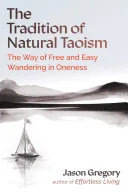
The Tradition of Natural Taoism
 83
83

The Tradition of Natural Taoism
Jason Gregory's *The Tradition of Natural Taoism* approaches the Tao Te Ching and Chuang-tzu not as historical curiosities, but as blueprints for psychological liberation. The strength of the work lies in its consistent framing of Taoism as a 'spiritual technology' for deprogramming ingrained social conditioning and dissolving the ego. Gregory's interpretation of *wu-wei* (nonaction) as spontaneous, effective action, rather than mere passivity, offers a vital corrective to common misunderstandings.
However, the book occasionally feels overly prescriptive in its application of ancient philosophy to modern psychological frameworks, sometimes flattening the nuances of the source texts. A passage discussing the realization of 'unfiltered true nature' through *xiaoyao you* (free and easy wandering) is particularly effective, illustrating the potential for unhindered existence. While it provides a valuable perspective, readers accustomed to more academic or historically focused analyses might find its practical, almost therapeutic, focus less satisfying.
Read more ↓
Overall, Gregory offers a potent, if sometimes narrowly focused, guide to harnessing Taoist principles for personal deconstruction.
📝 Description
83
Jason Gregory's 2017 book examines Taoism as a practical system for self-transformation.
This volume offers a contemporary look at Taoist principles, focusing on how they can be applied for spiritual and psychological freedom. It moves beyond simple explanations to show the Taoist tradition as a complex method for changing oneself. The author builds his analysis on core Taoist writings, creating a clear picture of how ancient teachings can help us understand consciousness and life today.
The book is for people who want a more thorough grasp of Taoism, especially those interested in its use as a spiritual tool. It will appeal to readers looking for ways to undo ingrained patterns, lessen the ego, and live more authentically. Those tired of standard self-help ideas might find its method a welcome change.
Gregory's work engages with the deep history of Taoism, a tradition from ancient China that has shaped philosophical and spiritual thought for ages. It looks at foundational texts from the 6th-4th centuries BCE, like the Tao Te Ching and the writings of Zhuang Zhou. The book connects these historical ideas to modern concerns.
The Taoist tradition, originating in ancient China, has influenced philosophical and spiritual thought for millennia. Its foundational texts, such as the Tao Te Ching attributed to Lao Tzu and the writings of Zhuang Zhou (Chuang-tzu), date back to the 6th-4th centuries BCE. These works laid the groundwork for concepts like *wu-wei* (nonaction) and the pursuit of effortless living through alignment with the Tao. This book engages with that deep history, interpreting these ancient concepts for contemporary spiritual development.
💡 Why Read This Book?
• Learn to apply *wu-wei* (nonaction) as a sophisticated strategy for deprogramming societal conditioning, a concept explored through Gregory’s interpretation of the Tao Te Ching. • Understand *xiaoyao you* (free and easy wandering) as a practical method for dissolving egoic barriers and realizing your authentic self, drawing on the philosophy of Chuang-tzu. • Gain a fresh perspective on Taoism as a 'spiritual technology' for self-transformation, distinct from typical self-help approaches, grounded in the foundational texts of the tradition.
⭐ Reader Reviews
Honest opinions from readers who have explored this book.
❓ Frequently Asked Questions
What is the primary goal of the 'spiritual technology' described in The Tradition of Natural Taoism?
The primary goal is to deprogram individuals from societal conditioning and dissolve the ego, allowing for a more authentic and spontaneous way of being, as explained through concepts like *wu-wei*.
How does Jason Gregory interpret wu-wei in his book?
Gregory interprets *wu-wei* not as idleness, but as a form of effortless, spontaneous action that aligns perfectly with the natural flow of the Tao, leading to effective outcomes without forceful effort.
What is the significance of 'xiaoyao you' according to the book?
'Xiaoyao you' represents a state of free and easy wandering, a liberated existence achieved through oneness with the Tao, enabling one to move through life without egoic constraints.
Which ancient Chinese texts are central to The Tradition of Natural Taoism?
The book draws heavily on the Tao Te Ching, attributed to Lao Tzu, and the writings of Zhuang Zhou (Chuang-tzu), foundational texts of Taoist philosophy.
What kind of reader would benefit most from this book?
Individuals interested in practical applications of Eastern philosophy for personal growth, deprogramming, and ego dissolution, especially those seeking an alternative to conventional self-help methods.
When was The Tradition of Natural Taoism first published?
The book was first published on 2025-09-09, offering a contemporary exploration of ancient Taoist principles.
🔮 Key Themes & Symbolism
Spiritual Technology
The work frames Taoism as a practical system for psychological transformation, a 'spiritual technology' designed to undo ingrained societal conditioning. It posits that by aligning with the Tao, individuals can dismantle egoic structures and achieve a state of authentic being. This approach moves beyond mere philosophical contemplation, offering actionable methods derived from ancient texts to achieve profound personal change and liberation from self-imposed limitations.
Wu-Wei and Nonaction
Central to the book is the concept of *wu-wei*, translated as nonaction. This is explored not as passivity or doing nothing, but as a state of effortless action that arises organically from unity with the Tao. The text explains how understanding and practicing *wu-wei* allows one to act with maximum effectiveness and minimal resistance, achieving goals by flowing with natural principles rather than imposing one's will against them.
Ego Dissolution and True Nature
A core objective presented is the dissolution of the ego, which the book identifies as a primary barrier to experiencing one's true, unfiltered nature. Through the principles of *xiaoyao you* (free and easy wandering), readers are guided toward shedding social constructs and personal identities that obscure their inherent essence. This process aims to reveal a state of spontaneous existence, free from the anxieties and limitations imposed by a conditioned self.
Unity with the Tao
The ultimate aim explored is achieving a state of unity or oneness with the Tao, the fundamental principle of the universe. This unity is presented as the source of effortless skills and profound understanding. By drawing on the wisdom of texts like the Tao Te Ching and Chuang-tzu, the book illustrates how aligning oneself with the natural order of existence leads to harmony, balance, and a deep sense of peace.
💬 Memorable Quotes
Direct passages from the work, attributed to the author.
“Taoism is a spiritual technology for deprogramming ourselves from socialization and dissolving the ego.”
— This statement captures the book's core thesis, positioning Taoist philosophy not just as a belief system, but as an active methodology for psychological liberation and reclaiming one's authentic self.
“Achieve skills effortlessly through unity with the Tao.”
— This highlights the practical outcome of embracing Taoist principles: mastery and proficiency arise not from strenuous effort, but from a deep, harmonious connection with the natural order of existence.
“Explores concepts of wu-wei (nonaction) and xiaoyao you (free and easy wandering in oneness).”
— This points to the specific, actionable Taoist concepts the book unpacks, defining them as pathways to achieving a state of effortless action and unhindered freedom.
“Realizing our unfiltered true nature.”
— This phrase signifies the ultimate goal of the Taoist practices discussed: to shed layers of conditioning and ego to reveal and experience one's fundamental, unadulterated essence.
“A fresh take on the ancient philosophy of oneness.”
— This suggests the book offers novel interpretations or applications of Taoist concepts, making ancient wisdom accessible and relevant for contemporary readers seeking connection and understanding.
🌙 Esoteric Significance
Tradition
This work engages with the esoteric dimensions of Taoism, viewing it not merely as a philosophy but as a practical system for altering consciousness and achieving liberation. It aligns with esoteric traditions that emphasize inner transformation, deprogramming from societal norms, and realizing a fundamental unity with the cosmos. While distinct from Western Hermeticism or Kabbalah, its focus on aligning with natural laws and uncovering hidden potentials shares common ground with Gnostic ideas of awakening to true nature.
Symbolism
Key symbols explored include the Tao itself, often represented by the Yin-Yang symbol, signifying balance, duality, and the interconnectedness of all things. The concept of the 'uncarved block' (pu) symbolizes original nature, unadulterated by artificial distinctions or desires, representing a state of pure potentiality. The idea of 'flow' or 'water' imagery, prevalent in Taoist texts, symbolizes adaptability, yielding, and the effortless power of moving with natural currents.
Modern Relevance
Contemporary thinkers and practitioners in fields like transpersonal psychology, consciousness studies, and even certain branches of secular Buddhism find resonance in Gregory's application of Taoist principles. Its emphasis on ego dissolution and deprogramming aligns with modern therapeutic approaches seeking to free individuals from limiting beliefs and societal conditioning. Practices inspired by *wu-wei* are also being explored in areas such as leadership, stress management, and sustainable living, demonstrating the enduring relevance of these ancient concepts.
👥 Who Should Read This Book
• Individuals seeking a practical framework for personal deprogramming and ego dissolution, moving beyond superficial self-help to engage with profound philosophical tools. • Students of Eastern philosophies and comparative religion interested in contemporary interpretations of classical Taoism, particularly the Tao Te Ching and Chuang-tzu. • Practitioners of meditation and mindfulness looking to deepen their understanding of non-dual awareness and effortless action, informed by concepts like *wu-wei* and *xiaoyao you*.
📜 Historical Context
The Tradition of Natural Taoism emerges from a lineage of thought stretching back to ancient China, with foundational texts like the Tao Te Ching (traditionally attributed to Lao Tzu, c. 6th century BCE) and the writings of Zhuang Zhou (Chuang-tzu, c. 4th century BCE). These works established a philosophical and spiritual framework centered on living in harmony with the Tao, the ineffable principle underlying all existence. Early Taoism offered a counterpoint to the more socially prescriptive Confucianism, emphasizing naturalness, spontaneity, and a less interventionist approach to governance and personal conduct. The development of Taoist philosophy continued through dynasties, evolving into religious forms and influencing Chinese art, medicine, and martial arts. By the 20th century, Western engagement with Taoism grew, often through translations and philosophical interpretations, sometimes focusing on its mystical or meditative aspects. Gregory's work engages this long history, specifically examining the Taoist tradition's potential as a method for psychological deconditioning and ego dissolution, a focus that appeals to contemporary interest in mindfulness and non-dualistic philosophies.
📔 Journal Prompts
The concept of *wu-wei* as effortless action, not passivity.
Realizing your 'unfiltered true nature' through *xiaoyao you*.
The implications of viewing Taoism as a 'spiritual technology'.
Deprogramming from specific societal conditioning.
Effortless skills achieved through unity with the Tao.
🗂️ Glossary
Tao
The fundamental, ineffable principle of the universe in Taoism, representing the natural order, the way of things, and the source of all existence. It is often described as formless, nameless, and eternal.
Wu-wei
Literally 'nonaction' or 'effortless action'. It signifies acting in accordance with the natural flow of the Tao, without force or excessive striving, leading to spontaneous and effective results.
Xiaoyao you
Translates to 'free and easy wandering' or 'wandering far and freely'. It describes a state of liberated existence, moving through life unburdened by societal constraints, egoic attachments, or rigid thinking.
Tao Te Ching
A foundational text of Taoism, traditionally attributed to Lao Tzu. It contains aphorisms and teachings on the nature of the Tao, virtuous living, and governance.
Chuang-tzu
A foundational text of Taoism, attributed to the philosopher Zhuang Zhou. It is known for its allegorical stories, paradoxes, and explorations of freedom, relativity, and the nature of reality.
Ego Dissolution
The process of diminishing or transcending the sense of a separate, fixed self (the ego), which is seen as an illusion or construct that hinders direct experience of reality and one's true nature.
Spiritual Technology
A framework or set of practices derived from spiritual or philosophical traditions, viewed as a systematic method for achieving specific states of consciousness or personal transformation.