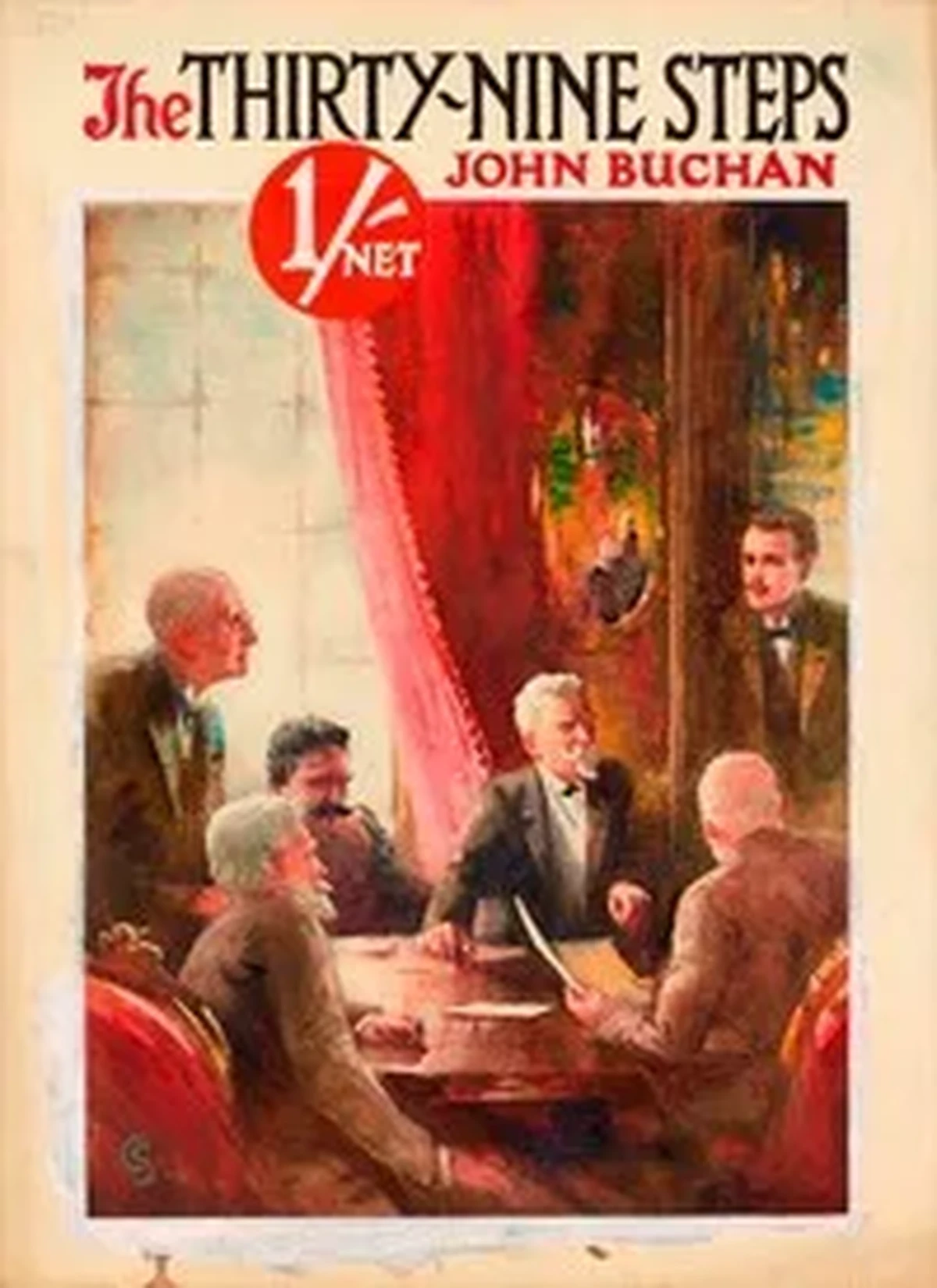
The Thirty-Nine Steps
 79
79

The Thirty-Nine Steps
Buchan’s "The Thirty-Nine Steps" operates with a relentless momentum that few thrillers have managed to replicate since. The novel’s primary strength lies in its sheer propulsive energy; Richard Hannay’s flight from an unseen enemy across the Scottish moors and London streets is rendered with visceral detail. The early chapters, establishing Hannay’s sudden plunge into danger after the Black Stone incident, are particularly effective, creating an immediate sense of peril. However, the plot occasionally strains credulity, especially concerning the ease with which Hannay evades capture and the somewhat convenient revelations that propel the narrative forward. While not a work of deep psychological exploration, its depiction of Hannay’s growing resolve and resourcefulness provides a compelling character arc. The climax, involving the unmasking of the conspiracy at the Palladium, remains a masterclass in suspenseful exposition. It’s a foundational text for the modern thriller genre, prioritizing action and intrigue above all else.
📝 Description
79
John Buchan published "The Thirty-Nine Steps" in 1915, a novel of espionage that predates the official start of World War I.
Richard Hannay, a South African engineer living in London, stumbles into a conspiracy after an encounter with a mysterious man. This man warns Hannay of a plot to destabilize Britain before he is murdered. Hannay is then framed for the murder and must go on the run, pursued by both the police and a clandestine organization known only as the "Black Stone."
Hannay’s flight takes him across the English countryside and Scotland. He must piece together the fragmented clues left by the dying man to uncover the nature of the plot and the identity of the organization behind it. The novel details his desperate attempts to evade capture while seeking to expose the threat to national security. It captures a sense of paranoia and the sudden disruption of ordinary life by hidden dangers.
While primarily an adventure thriller, "The Thirty-Nine Steps" touches upon esoteric themes through its depiction of secret societies and hidden knowledge. The "Black Stone" organization operates with an almost mystical secrecy, representing an unseen force manipulating events. Hannay's quest to uncover their plot is a journey into uncovering hidden truths, a common motif in esoteric traditions where understanding concealed structures is key to navigating reality. The novel reflects an era where anxieties about unseen influences and clandestine groups were prevalent, mirroring esoteric concerns about hidden powers shaping the world.
💡 Why Read This Book?
• Gain insight into the nascent spy thriller genre by exploring the 1915 narrative structure and character archetypes that influenced countless subsequent works. • Experience the tension of Richard Hannay's desperate flight across Britain, learning how Buchan uses geographical detail and close calls to build suspense. • Understand the pre-World War I anxieties surrounding espionage and subversion, as depicted through the shadowy "Black Stone" organization and their devastating plot.
⭐ Reader Reviews
Honest opinions from readers who have explored this book.
❓ Frequently Asked Questions
What is the "thirty-nine steps" referring to in the book?
The "thirty-nine steps" are a cryptic clue left by a murdered man, Sir Walter Bullivant's secretary. They refer to a specific sequence of actions or a location that Richard Hannay must decipher to uncover the enemy's plot.
Who are the main antagonists in "The Thirty-Nine Steps"?
The primary antagonists are agents of a foreign power, operating under the guise of the 'Black Stone' organization. Their goal is to destabilize Britain by stealing vital military plans on the eve of World War I.
Is "The Thirty-Nine Steps" based on a true story?
While not based on a single true event, the novel was heavily influenced by the real-world atmosphere of espionage and paranoia in Britain leading up to and during World War I. Buchan himself had connections to intelligence circles.
What is Richard Hannay's profession before becoming a fugitive?
Richard Hannay is a mining engineer who has spent considerable time in Rhodesia (modern-day Zimbabwe). He returns to Britain seeking a change from his adventurous life abroad when the events of the novel unfold.
Where does the chase in "The Thirty-Nine Steps" take place?
The chase begins in London and quickly extends across various parts of Britain, including the Scottish Lowlands and the Yorkshire moors. Hannay utilizes trains, roads, and his own two feet to evade his pursuers.
What is the significance of the Black Stone?
The Black Stone is a coded message or a symbol used by the foreign intelligence agency. It serves as a central MacGuffin and a point of intrigue that Richard Hannay must unravel to understand the conspiracy.
🔮 Key Themes & Symbolism
The Unseen Enemy
The novel excels at portraying a pervasive sense of threat from an invisible enemy. The "Black Stone" organization operates in the shadows, their agents indistinguishable from ordinary citizens. This theme taps into the anxieties of the early 20th century, particularly the fear of foreign infiltration and sabotage on the eve of World War I. Richard Hannay’s journey is a constant struggle against an adversary whose motives and methods are initially obscure, forcing him to rely on instinct and deduction to survive and expose their plot.
Citizenry Under Siege
"The Thirty-Nine Steps" explores how ordinary individuals can be drawn into extraordinary conflicts. Richard Hannay, a man seeking a quiet life after years abroad, is thrust into a dangerous conspiracy through no fault of his own. His transformation from a civilian to a fugitive highlights the vulnerability of society to clandestine threats. The narrative emphasizes the need for vigilance and resourcefulness, suggesting that the defense of the nation requires the active participation of its citizens, even if unexpectedly.
The Nature of Clues
The titular "thirty-nine steps" serve as a central motif, representing the fragmented and often cryptic nature of intelligence. Hannay must piece together disparate clues – a coded message, a dead man's warning, overheard conversations – to understand the full scope of the conspiracy. This theme underscores the importance of observation and interpretation in uncovering hidden truths. The novel demonstrates how seemingly minor details can hold the key to significant revelations, a concept vital in both detective work and intelligence gathering.
Race Against Time
Buchan masterfully employs the "race against time" trope, a staple of the thriller genre. The impending theft of vital military plans creates a palpable sense of urgency that drives the narrative forward at breakneck speed. Hannay’s constant pursuit by both the authorities and the conspirators intensifies the stakes. This theme reflects the geopolitical realities of 1915, where imminent conflict meant that every piece of intelligence and every strategic advantage was crucial, making delays potentially catastrophic.
💬 Memorable Quotes
Direct passages from the work, attributed to the author.
“He told me he had information of the gravest importance, and that he was being followed.”
— This represents the initial warning Hannay receives, marking the turning point from his quiet life to a desperate flight. It establishes the core conflict: a lone individual against a powerful, unseen threat.
“The thing that was most important was the fact that these men were after me.”
— This interpretation emphasizes Hannay's immediate realization of his precarious situation. His focus shifts from understanding the conspiracy to simply surviving its agents, defining the central challenge of the narrative.
“The meaning of the thirty-nine steps was revealed.”
— This signifies the climax of the puzzle-solving aspect of the novel. The cryptic clue is finally deciphered, leading to the unmasking of the conspiracy and the prevention of disaster.
💡 Key Ideas
Editorial paraphrase of the work's core concepts — not direct quotes.
I was just about to pay my tailor a visit when I heard this chap at the door.
This paraphrase captures the mundane, almost accidental beginning of Richard Hannay's ordeal. It highlights how extraordinary events can erupt from the most ordinary moments, setting the stage for his unexpected plunge into espionage and danger.
I found that the ordinary conventions of life were quite overturned.
This paraphrase conveys the profound disruption Hannay experiences. His world is turned upside down, forcing him to abandon societal norms and rely on unconventional methods to evade capture and expose the plot.
🌙 Esoteric Significance
Tradition
While "The Thirty-Nine Steps" is primarily a thriller, its themes of hidden knowledge, secret societies, and the importance of symbolic clues can be loosely aligned with certain esoteric traditions, particularly those concerned with initiation and uncovering hidden truths. It shares a superficial resemblance to Hermetic or Rosicrucian narratives where the initiate must decipher symbols and overcome trials. However, Buchan's work is firmly grounded in a realistic, secular framework rather than a supernatural or overtly mystical one.
Symbolism
The "thirty-nine steps" themselves serve as a potent, albeit secular, symbol. They represent a coded message, a sequence of actions or locations that must be deciphered, mirroring the esoteric practice of interpreting cryptic texts or symbols to gain deeper understanding. The clandestine nature of the "Black Stone" organization and their plot to steal military secrets also evokes the esoteric concept of hidden forces working behind the scenes of mundane reality, influencing events through secret machinations.
Modern Relevance
Contemporary thriller and spy fiction authors continue to draw inspiration from Buchan's pioneering work. The novel's emphasis on a lone protagonist against a vast conspiracy, the use of intricate clues, and the fast-paced chase sequences remain foundational elements in the genre. Modern espionage narratives, whether in literature or film, owe a debt to the template Buchan established, particularly in their exploration of national security threats and the blurred lines between civilian life and clandestine operations.
👥 Who Should Read This Book
• Aspiring writers and readers interested in the origins of the spy thriller genre, seeking to understand the foundational elements of suspense, chase sequences, and conspiracy plots. • History enthusiasts keen on exploring literature that reflects the anxieties and geopolitical climate of Britain during the early 20th century, specifically the pre-World War I era. • Fans of classic adventure fiction who enjoy fast-paced narratives featuring resourceful protagonists facing overwhelming odds and uncovering secret plots.
📜 Historical Context
Published in 1915, "The Thirty-Nine Steps" emerged amidst the palpable tension of World War I. John Buchan, a former Director of Information for the British government, drew upon his understanding of wartime intelligence and propaganda. The novel tapped into contemporary fears of German espionage and sabotage, a significant concern for Britain at the time. Its serialized publication in *The Pall Mall Magazine* allowed it to reach a wide audience during the conflict. The narrative reflects a broader literary trend of adventure and spy fiction that gained prominence during this era, offering escapism and reinforcing patriotic sentiments. While not directly engaging with competing intellectual currents like pacifism, its focus on national security and the efficacy of British resolve aligned with prevailing wartime discourse.
📔 Journal Prompts
Richard Hannay's sudden transition from civilian life to fugitive status.
The cryptic nature and significance of the "thirty-nine steps" as a clue.
The methods employed by the "Black Stone" organization to operate covertly.
Hannay's reliance on observation and deduction during his flight.
The role of geographical locations in intensifying the chase.
🗂️ Glossary
Black Stone
A codename or symbol associated with the foreign espionage ring whose plot Richard Hannay seeks to expose. It represents the hidden enemy and the mystery he must unravel.
Rhodesia
A former British colony in Southern Africa (now Zimbabwe). Richard Hannay's experiences as a mining engineer there are mentioned as part of his background before returning to Britain.
Palladium
The name of the London music hall where the climax of the novel takes place. It serves as the setting for the dramatic unmasking of the conspirators.
Conspiracy
A secret plan by a group to do something unlawful or harmful. In the novel, this refers to the plot by foreign agents to steal British military plans.
Fugitive
A person who has escaped from captivity or is in hiding to avoid arrest or persecution. Richard Hannay becomes a fugitive after being framed for murder.
Espionage
The practice of spying or of using spies, typically by governments or their agencies. This is the central activity driving the plot of "The Thirty-Nine Steps."
The Thirty-Nine Steps
A cryptic clue left by a murdered man, referring to a sequence or location that holds the key to uncovering the enemy's plot. It is the central puzzle of the novel.
🔮 Readers Also Liked
Browse all →









More by John Buchan
All books →

More Free Occult Philosophy Books
View all →