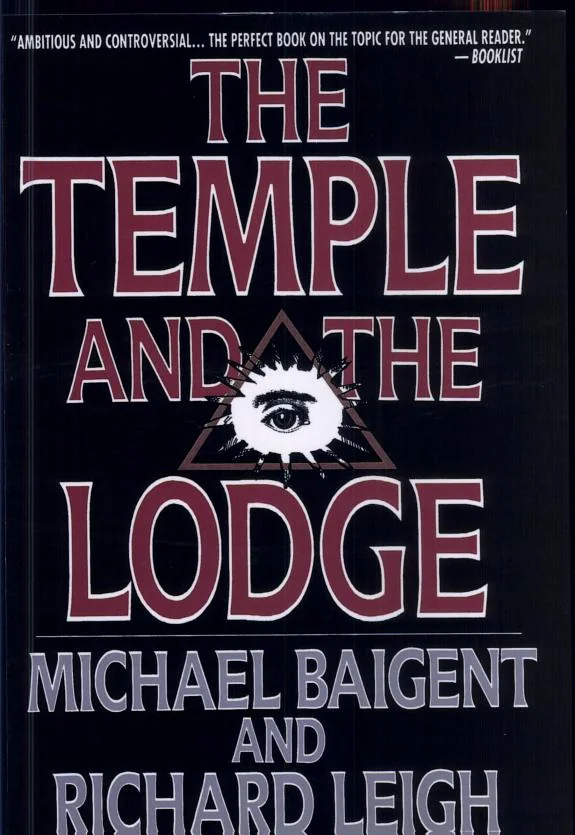
The Temple and the Lodge
 77
77

The Temple and the Lodge
Baigent and Leigh's "The Temple and the Lodge" tackles the ambitious task of connecting the shadowy legacy of the Knights Templar to the structured fraternity of Freemasonry. The strength of the work lies in its diligent cross-referencing of historical periods and symbolic parallels, presenting a compelling argument for Templar influence. They meticulously dissect Masonic rituals and regalia, suggesting direct inheritances from the chivalric order, particularly in their 1991 publication. A notable passage discusses the alleged symbolism within the Master Mason degree, proposing Templar origins for its narrative structure.
However, the book occasionally leans heavily on speculative connections, leaving some historical gaps for skeptics to exploit. While presenting a persuasive narrative, the authors sometimes treat suggestive evidence as conclusive proof. The primary limitation is its reliance on interpreting esoteric symbolism as direct historical evidence, a common challenge in this field. The work's argument for a direct, unbroken lineage can feel less substantiated than its exploration of shared thematic elements.
Read more ↓
Ultimately, "The Temple and the Lodge" offers a meticulously researched, albeit sometimes controversially interpreted, exploration into the historical underpinnings of Freemasonry.
📝 Description
77
Published in 1991, The Temple and the Lodge traces Freemasonry's origins to the Knights Templar.
Michael Baigent and Richard Leigh's 1991 book, "The Temple and the Lodge," investigates the historical development of Freemasonry. The authors trace the fraternity's lineage from the Knights Templar, a medieval military order, to its formal establishment. They scrutinize historical records and symbolic connections, aiming to distinguish documented evidence from legend concerning the Craft's genesis. The book is intended for readers interested in the historical evolution of secret societies and fraternal orders, particularly those curious about Freemasonry's esoteric aspects. It will appeal to students of Western esotericism and those seeking to understand potential links between medieval chivalric orders and modern Masonic practices. The authors adopt a scholarly approach, prioritizing evidence and critical analysis throughout their examination.
This work engages with the esoteric traditions that informed the Enlightenment and the subsequent rise of organized Masonry. It posits a direct inheritance of ritual, symbolism, and philosophy from the Knights Templar to Freemasonry. The authors examine the alleged survival and incorporation of Templar traditions through clandestine channels into developing Masonic lodges. The book analyzes specific Masonic symbols and narratives, proposing a continuous esoteric lineage connecting the medieval military order to the modern fraternity.
💡 Why Read This Book?
• Gain a detailed understanding of the proposed direct lineage between the Knights Templar and Freemasonry, specifically examining the symbolism allegedly inherited from the Templars into Masonic rituals as discussed in chapters concerning the 14th-century disbandment of the Templars. • Explore the historical context of Freemasonry's emergence, learning how Enlightenment ideals and potential Templar survivals influenced the formal establishment of lodges in the 18th century, as detailed in the book's examination of early Masonic Constitutions. • Critically assess the relationship between historical events and esoteric traditions by analyzing Baigent and Leigh's interpretation of Masonic symbols and rituals, understanding how they argue for a continuous esoteric tradition originating from the medieval period.
⭐ Reader Reviews
Honest opinions from readers who have explored this book.
❓ Frequently Asked Questions
What is the central argument of "The Temple and the Lodge" regarding Freemasonry's origins?
The central argument is that Freemasonry directly inherited its core traditions, rituals, and symbolism from the Knights Templar, suggesting an unbroken esoteric lineage from the medieval military order to the modern fraternity established in the 18th century.
When was "The Temple and the Lodge" first published?
The book was first published in April 1991, positioning it within a wave of historical and esoteric investigations that gained public attention during that era.
Which historical figures or groups are central to the book's thesis?
The Knights Templar, a medieval military order, and the early Freemasons of the 18th century are central figures. The book explores how alleged Templar survivors might have transmitted their traditions into nascent Masonic lodges.
Does the book present Freemasonry as a continuation of Templarism?
Yes, the book posits that Freemasonry is not merely inspired by but is a direct continuation and repository of the Knights Templar's esoteric knowledge and practices, albeit in a transformed state.
What kind of evidence does Baigent and Leigh use to support their claims?
They use a combination of historical records, comparative analysis of rituals and symbolism, and interpretations of alleged connections between Templar sites and early Masonic lodges, particularly focusing on the period after the Templars' suppression in 1312.
Who are the authors Michael Baigent and Richard Leigh?
Michael Baigent and Richard Leigh were investigative authors known for their work on controversial historical and religious topics, including "Holy Blood, Holy Grail." They often explored alternative theories about historical events and secret societies.
🔮 Key Themes & Symbolism
Templar-Masonic Continuity
The core thesis posits a direct, unbroken lineage from the Knights Templar to Freemasonry. This theme explores how the authors believe Templar secrets, rituals, and organizational structures were preserved and transmitted, particularly after the Templars' suppression in 1312. It examines alleged continuities in symbolism, initiatory practices, and the concept of sacred knowledge passed down through clandestine channels, suggesting that the founders of modern Masonry consciously sought to revive and embody Templar traditions.
Esoteric Symbolism and Ritual
This theme looks at the interpretation of Masonic symbols and rituals as direct inheritances from the Knights Templar. The authors analyze specific elements within Masonic degrees, such as the Master Mason's legend, identifying parallels with alleged Templar lore and initiatory experiences. It investigates how symbols like the compass, square, and various architectural motifs are reinterpreted through a Templar lens, suggesting a deeper, hidden meaning connected to ancient mysteries and chivalric ideals.
Historical Revisionism of Freemasonry
The book challenges conventional historical accounts of Freemasonry's origins, proposing a revisionist narrative rooted in medieval chivalric orders rather than solely in operative stonemason guilds or 17th-century speculative bodies. It seeks to re-contextualize the Enlightenment-era formation of Grand Lodges by linking them to a perceived ancient, esoteric tradition. This theme addresses the reception of their ideas and the debate surrounding the historical evidence presented for this alternative genealogy.
The Survival of Ancient Mysteries
Underpinning the Templar-Mason connection is the broader theme of the survival and transmission of ancient esoteric knowledge. The authors suggest that certain traditions, possibly originating from the Holy Land or earlier mystery schools, found a refuge and continuation within the Templar Order and subsequently within Freemasonry. This perspective frames Masonic lodges as inheritors of a long-standing, hidden spiritual and philosophical current in Western civilization.
💬 Memorable Quotes
Direct passages from the work, attributed to the author.
“The rituals of Freemasonry are not merely allegorical representations; they are historical reenactments.”
— This statement reflects the authors' belief that Masonic ceremonies directly embody events and teachings from the Knights Templar, suggesting the rituals serve as living historical documents rather than abstract moral lessons.
“The square and compasses are more than architectural tools; they are keys to Templar cosmology.”
— Here, the authors interpret fundamental Masonic symbols as holding esoteric meanings directly related to the worldview and spiritual teachings of the Knights Templar, moving beyond their practical or purely Masonic significance.
“The legends of the third degree echo the fate and secrets of Jacques de Molay.”
— This interpretation links the central narrative of the Master Mason degree directly to the final Grand Master of the Templars, Jacques de Molay, implying that the ritual preserves the memory and hidden knowledge associated with his martyrdom.
💡 Key Ideas
Editorial paraphrase of the work's core concepts — not direct quotes.
The suppression of the Templars in 1312 was not an end, but a transformation.
This quote expresses the core idea that the Templar Order did not truly vanish but continued its work in secret, influencing subsequent organizations like Freemasonry, thereby transforming its outward appearance while preserving its inner essence.
Freemasonry is the inheritor of a lost chivalric ideal.
This paraphrase suggests the book argues that Freemasonry serves as the modern embodiment and continuation of the spiritual, moral, and perhaps even Gnostic ideals once held by the Knights Templar.
🌙 Esoteric Significance
Tradition
This work fits within the Western esoteric tradition, specifically the lineage exploring the continuity of Gnostic, Hermetic, and chivalric esoteric currents. It attempts to bridge medieval chivalric orders, particularly the Knights Templar, with later Masonic fraternities, framing Freemasonry as a custodian of ancient, possibly pre-Christian, wisdom traditions that were allegedly preserved through Templar channels. It departs from purely Theosophical or Kabbalistic interpretations by focusing on a more historically grounded (though speculative) chivalric and Grail-related esoteric lineage.
Symbolism
Key symbols explored include the Cross of the Knights Templar and the Masonic square and compasses. The authors interpret the Templar cross not merely as a Christian symbol but as representing a more ancient geometry or cosmic order. The square and compasses, fundamental to Masonic symbolism, are seen as direct inheritances from Templar architectural and spiritual practices, representing the balance between the material (square) and the divine (compasses) or the terrestrial and the celestial.
Modern Relevance
Contemporary esotericists and Masonic researchers continue to engage with Baigent and Leigh's thesis, particularly those interested in Templarism and its alleged influence on modern occultism and fraternalism. Thinkers exploring the concept of 'sacred chivalry' or the esoteric dimensions of medieval orders often reference this work. It remains a foundational text for those seeking to connect Freemasonry to a perceived ancient lineage of warrior-mystics and guardians of hidden knowledge.
👥 Who Should Read This Book
• Students of Western Esotericism: Individuals seeking to understand the proposed connections between medieval chivalric orders, particularly the Knights Templar, and the development of Masonic ritual and philosophy. • Masonic Researchers: Freemasons and those interested in Masonic history who wish to explore alternative theories regarding the Craft's origins beyond the commonly accepted operative stonemasonry lineage. • History Enthusiasts interested in Secret Societies: Readers fascinated by historical mysteries, alleged continuities of ancient knowledge, and the evolution of fraternal organizations throughout European history.
📜 Historical Context
Published in 1991, "The Temple and the Lodge" arrived at a time when interest in the Knights Templar and Freemasonry was high, fueled partly by popular works like "The Holy Blood and the Holy Grail" (co-authored by Baigent and Leigh). The intellectual climate allowed for speculative historical theories and alternative interpretations of established narratives. Baigent and Leigh were writing against a backdrop of scholarship that generally attributed Masonic origins to operative stonemason guilds or earlier European fraternal societies, a view they explicitly contested. Their work engaged with, and implicitly critiqued, the more traditional historical accounts of Freemasonry that emerged in the 18th century, such as those by figures like David Hume or later historians of the Craft. The reception of such theories often involved debate between traditional historians and those exploring esoteric or revisionist viewpoints, with many academic historians dismissing the direct Templar-Mason link as lacking concrete evidence.
📔 Journal Prompts
The alleged transmission of Templar secrets: What historical evidence do you find most compelling or questionable?
The symbolism of the square and compasses: How does the book's interpretation differ from standard Masonic explanations?
The Knights Templar's legacy: Consider the period after their suppression in 1312. Where else might their influence have persisted besides Masonry?
Ritual as historical reenactment: Reflect on the idea that Masonic rituals directly echo Templar events.
Chivalric ideals in modern Freemasonry: How does the book connect the warrior-mystic ethos of the Templars to the principles espoused in Masonic lodges?
🗂️ Glossary
Knights Templar
A Catholic military order founded around 1119, prominent during the Crusades. Officially dissolved by Pope Clement V in 1312 under accusations of heresy and financial impropriety, their legacy has fueled numerous historical and esoteric theories.
Freemasonry
A fraternal organization that traces its origins to the late 16th century, with roots in stonemason guilds. It developed into a formal institution in the early 18th century, characterized by ritualistic degrees, moral teachings, and a system of symbolic allegory.
Esoteric
Relating to or accessible only by a select group of initiated individuals. In the context of literature and philosophy, it refers to hidden meanings, inner teachings, or mystical knowledge often contrasted with exoteric or public doctrines.
Operative Masons
Actual stonemasons and builders who were members of medieval guilds. Their practical skills and organizational structures are traditionally seen as a foundation for the speculative or philosophical Freemasonry that emerged later.
Speculative Masonry
Freemasonry as practiced from the 17th century onwards, which moved beyond the literal craft of stonemasonry to focus on allegorical and philosophical teachings, moral instruction, and esoteric symbolism.
Jacques de Molay
The last Grand Master of the Knights Templar. He was arrested in 1307 and executed by burning in 1314. His martyrdom is a significant element in many Templar legends and is often linked to Masonic lore.
Gothic Architecture
A style of architecture prevalent in Europe from the 12th to the 16th century, characterized by pointed arches, ribbed vaults, and flying buttresses. The book may link Templar builders to the development or patronage of this style.
This book appears in 1 collection
🔮 Readers Also Liked
Browse all →






From the “Freemasonry” Collection
View all →






More Free Freemasonry & Secret Societies Books
View all →