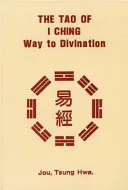
The Tao of I Ching
 82
82

The Tao of I Ching
Tsung Hwa Jou's "The Tao of I Ching" presents a refreshingly philosophical interpretation of the classic text, moving away from common divinatory mechanics to explore its deeper currents of wisdom. The book excels in its attempt to bridge the I Ching's ancient Chinese context with a more universally accessible philosophical language, particularly by framing its principles through a Taoist lens. Jou's explanation of the hexagrams as representations of dynamic forces rather than static predictions is a notable strength, offering a more empowering perspective for the modern reader. However, at times, the work's ambition to synthesize can lead to a slightly generalized discussion, potentially leaving those seeking intricate textual analysis wanting more. A particularly illuminating section discusses the concept of "the Great Ultimate" (T'ai Chi) as it relates to the constant flux represented by the hexagrams, illustrating the book's capacity for profound conceptual exploration. While not a beginner's guide to casting the coins, it serves as a valuable companion for those seeking the philosophical heart of the I Ching.
📝 Description
82
Published in December 1989, Tsung Hwa Jou's 'The Tao of I Ching' reinterprets the ancient text beyond divination.
Tsung Hwa Jou's 'The Tao of I Ching', first released in 1989, presents a philosophical interpretation of the ancient Chinese text. Jou moves past its use as a simple fortune-telling tool, instead focusing on the hexagrams and their associated writings as a system for understanding cosmic principles and human behavior. The book emphasizes the I Ching's function as a guide for aligning oneself with the natural course of events.
Jou's analysis highlights the inherent dynamism and cyclical nature of reality as depicted through the trigrams and hexagrams. This perspective encourages readers to view the I Ching as a reflective tool, showing the forces at work in any situation. By understanding these dynamics, individuals can make more informed choices. The text draws on Taoist concepts, such as the interaction of Yin and Yang, showing how these manifest within the sixty-four hexagrams.
This work situates the I Ching within broader philosophical and spiritual traditions, particularly Taoism. Jou connects the I Ching's concepts to various schools of thought, aiming to demystify its symbolic language. The book treats the I Ching not just as a divinatory tool but as a source of ethical and metaphysical insight, aligning it with practices that seek deeper understanding of universal laws and personal conduct.
💡 Why Read This Book?
• Gain a Taoist perspective on the I Ching's sixty-four hexagrams, understanding them as dynamic representations of cosmic principles rather than simple predictions, a concept explored throughout the book's analysis. • Learn to apply the I Ching as a tool for self-awareness and ethical alignment by viewing its changing lines as insights into the natural flow of events, a method detailed in Jou's philosophical framework. • Appreciate the I Ching's historical significance beyond divination, recognizing its role in shaping Chinese thought and philosophy, as contextualized within the book's historical overview.
⭐ Reader Reviews
Honest opinions from readers who have explored this book.
❓ Frequently Asked Questions
What is the primary philosophical influence on Tsung Hwa Jou's interpretation of the I Ching?
Tsung Hwa Jou's "The Tao of I Ching" is significantly influenced by Taoist philosophy. The book frames the I Ching's hexagrams and their changing lines through the lens of Taoist concepts such as Yin and Yang, the Tao, and the natural flow of existence, offering a philosophical rather than purely divinatory reading.
When was 'The Tao of I Ching' first published?
"The Tao of I Ching" by Tsung Hwa Jou was first published on December 15, 1989. This publication date places it within a period of renewed global interest in Eastern philosophical traditions and their application in Western contexts.
How does Jou's book differ from traditional I Ching divination guides?
Unlike many traditional guides focused on predictive outcomes, Jou's work emphasizes the I Ching as a system for understanding the dynamics of change and harmonizing with universal principles. It prioritizes philosophical insight and ethical guidance derived from the hexagrams.
What is the significance of the 'Tao' in relation to the I Ching according to this book?
In Jou's interpretation, the 'Tao' represents the underlying, ineffable principle of the universe – the natural order and flow. The I Ching, therefore, becomes a map or guide to understanding and aligning oneself with this Tao, reflecting its constant movement and transformation.
Who would benefit most from reading 'The Tao of I Ching'?
Individuals interested in comparative philosophy, Taoism, and the deeper meanings of the I Ching beyond simple fortune-telling would benefit. It's also valuable for students of esoteric traditions and those seeking wisdom for personal growth and ethical decision-making.
Does the book explain how to perform I Ching readings?
While "The Tao of I Ching" provides a philosophical framework for understanding the hexagrams, its primary focus is on interpretation and meaning rather than detailed instructions on casting methods. It assumes some familiarity or interest in the I Ching's structure.
🔮 Key Themes & Symbolism
Philosophy of Change
The core of Jou's work posits the I Ching as a profound exploration of change itself. It presents the sixty-four hexagrams not as static pronouncements but as dynamic representations of shifting patterns and forces within the cosmos and human experience. This perspective encourages readers to view life's circumstances as fluid and to understand the principles that govern transitions. The book emphasizes that true wisdom lies in recognizing and adapting to these transformations, drawing parallels with the Taoist concept of constant flux and the interconnectedness of all phenomena.
Taoist Principles and Harmony
Jou explicitly integrates Taoist philosophy into his interpretation of the I Ching. Concepts like the Tao, the inherent interconnectedness of all things, and the importance of acting in accordance with natural rhythms are central. The book suggests that the I Ching serves as a guide to achieving harmony by understanding and aligning oneself with the Tao. It explores how the interplay of Yin and Yang, fundamental to Taoism, is mirrored in the structure and meaning of the hexagrams, offering a framework for balanced living and decision-making.
Ethical Guidance and Self-Awareness
Beyond divination, Jou highlights the I Ching's capacity to provide ethical direction and foster self-awareness. Each hexagram and its associated judgments offer insights into appropriate conduct and potential consequences, acting as a mirror for personal reflection. The book encourages readers to use the I Ching as a tool for cultivating wisdom and making choices that are not only pragmatic but also morally sound. This ethical dimension is presented as integral to understanding one's place within the larger cosmic order.
The I Ching as a Mirror
A recurring motif is the I Ching's function as a reflective surface, showing the reader the underlying dynamics of a situation. Jou argues that the text does not dictate a fixed future but reveals the forces in play, allowing for informed action. This interpretive stance empowers the individual, shifting the focus from passive reception of fate to active engagement with circumstances. By understanding the symbolic language of the hexagrams, readers can gain clarity and make more conscious decisions aligned with natural principles.
💬 Memorable Quotes
Direct passages from the work, attributed to the author.
“The I Ching is not merely a book of divination, but a book of wisdom.”
— This statement captures Jou's core thesis: that the ancient text's value lies primarily in its philosophical and ethical teachings, offering clear insights into the nature of reality and human conduct, rather than just predictive capabilities.
“Understanding the interplay of Yin and Yang is key to interpreting the hexagrams.”
— This highlights a foundational concept, linking the I Ching's structure directly to core Taoist cosmology. It implies that a grasp of these dualistic, complementary forces is essential for unlocking the text's deeper meanings.
“The hexagrams reflect the patterns of the universe and our place within them.”
— This interpretation underscores the I Ching's role as a macrocosm/microcosm guide. It suggests the text reveals universal laws and how individual actions and situations correspond to these larger cosmic movements.
💡 Key Ideas
Editorial paraphrase of the work's core concepts — not direct quotes.
Change is the only constant, and the I Ching teaches us how to flow with it.
This paraphrased concept emphasizes the book's focus on the dynamic nature of existence, drawing a direct line to Taoist principles. It suggests the I Ching provides a framework for adapting to life's inevitable shifts with grace and understanding.
Wisdom comes from harmonizing with the natural order, not resisting it.
This paraphrased concept points to the ethical and practical application of the I Ching as presented by Jou. It advocates for alignment with universal principles as the path to true understanding and effective living.
🌙 Esoteric Significance
Tradition
Jou's work aligns with the broader esoteric interest in the I Ching as a text containing universal principles, often interpreted through a Taoist or Hermetic lens. While not strictly adhering to a single Western esoteric lineage like Kabbalah or Gnosticism, it draws parallels by viewing the I Ching's hexagrams as symbolic keys to understanding cosmic order and human consciousness. The emphasis on dynamic change and natural law connects it to perennial philosophy streams that seek underlying truths across diverse traditions.
Symbolism
Key symbols include the Yin and Yang, representing the fundamental dualities and complementary forces that drive all phenomena. The sixty-four hexagrams themselves are potent symbols, each depicting a specific situation or stage in a cycle of change, often interpreted through elemental and energetic correspondences. The concept of the Tao, the ineffable source and flow of existence, underpins the entire symbolic system, suggesting that the I Ching's structure mirrors this ultimate reality.
Modern Relevance
Contemporary thinkers and practitioners in fields ranging from psychology to business strategy continue to draw on the I Ching's principles of change and adaptation. Jou's philosophical approach is particularly relevant to those exploring systems thinking, mindfulness, and ethical decision-making frameworks. Modern interpretations often echo his emphasis on the I Ching as a tool for self-reflection and navigating complex, rapidly changing environments, making its wisdom accessible beyond traditional divination contexts.
👥 Who Should Read This Book
["• Students of Taoism and comparative philosophy: Those seeking to understand the I Ching through the specific lens of Taoist metaphysics and ethics will find Jou's integrated approach useful.", '• Esoteric practitioners interested in divination systems: Individuals exploring symbolic languages and philosophical underpinnings of ancient wisdom traditions, including divination, will appreciate the deeper conceptual framework provided.', "• Seekers of wisdom for personal growth: Readers looking for a philosophical guide to understanding life's changes, making ethical decisions, and cultivating self-awareness will find practical insights within Jou's interpretation."]
📜 Historical Context
Published in December 1989, Tsung Hwa Jou's "The Tao of I Ching" emerged during a period of significant global interest in Eastern philosophies and esoteric traditions. This era saw a growing Western audience exploring texts like the I Ching, often seeking alternatives to dominant Western philosophical and religious paradigms. Jou's work entered a landscape populated by earlier influential translations and commentaries, such as those by Richard Wilhelm (whose German translation was famously introduced by Carl Jung in 1950) and later by Thomas Cleary. While Wilhelm's edition was foundational for many, Jou's approach aimed for a more direct philosophical synthesis, particularly through a Taoist lens, distinguishing it from purely divinatory or sinological academic studies. The late 1980s also saw a rise in New Age spirituality, where the I Ching found a receptive audience looking for practical wisdom and self-understanding. Jou's book contributed to this ongoing dialogue, offering a specific interpretive framework that resonated with seekers interested in the intersection of ancient wisdom and contemporary life.
📔 Journal Prompts
The Tao of change as reflected in the I Ching's sixty-four hexagrams.
Harmonizing personal actions with the natural order described in the text.
Interpreting the interplay of Yin and Yang in a current life situation.
Ethical decision-making principles derived from the I Ching's wisdom.
The I Ching as a mirror for self-awareness and personal development.
🗂️ Glossary
Tao
The fundamental principle of the universe in Taoism; the ineffable, ultimate reality that underlies and governs all existence, often described as the natural way or flow of things.
Yin and Yang
Two complementary, interdependent forces or principles that represent the dualistic nature of reality in Taoism. Yin is typically associated with passive, dark, feminine qualities, while Yang is active, light, and masculine.
Hexagram
A figure composed of six stacked horizontal lines, each line being either solid (Yang) or broken (Yin). There are 64 unique hexagrams in the I Ching, representing fundamental archetypes and situations.
Trigram
A figure composed of three stacked horizontal lines, either solid or broken. The eight trigrams form the building blocks of the 64 hexagrams and have specific symbolic associations.
T'ai Chi
Often translated as the 'Great Ultimate', it represents the primordial unity from which Yin and Yang emerge. It symbolizes the undifferentiated state of potentiality and the source of all cosmic activity.
Change (I Ching)
In the context of the I Ching, 'change' refers not just to alteration but to the fundamental process of transformation inherent in the universe, governed by predictable patterns and principles.
Harmony
Achieving balance and alignment with the natural flow of the Tao and the principles represented by the I Ching's hexagrams; acting in accordance with cosmic and ethical order.