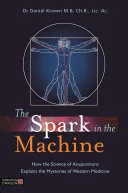
The Spark in the Machine
 83
83

The Spark in the Machine
Daniel Keown’s *The Spark in the Machine* is a refreshingly direct challenge to the intellectual inertia that often separates medical disciplines. Keown’s prose is remarkably clear, sidestepping the jargon that plagues both Western and Eastern medical texts. He makes a strong case for the systemic thinking inherent in Chinese medicine, particularly its ability to explain complex interdependencies within the body that current Western models sometimes overlook. The discussion around the concept of Qi, presented not as a mystical force but as an observable biological process, is a highlight. However, the book occasionally leans into a slightly didactic tone when defending TCM, which can feel less like critical analysis and more like advocacy. Despite this, the work’s fundamental achievement lies in its lucid exposition of how ancient diagnostic patterns can illuminate modern clinical puzzles. It’s a valuable contribution for anyone seeking a more unified view of human health.
📝 Description
83
Daniel Keown's 2014 book argues for integrating traditional Chinese medicine with Western science.
Daniel Keown's *The Spark in the Machine*, published in 2014, builds a case for combining traditional Chinese medicine (TCM) with Western biomedical understanding. The book challenges the view that acupuncture is solely a placebo or unscientific. It is written for anyone interested in how the body functions, especially those drawn to complementary and alternative medicine. The audience includes practitioners of both Western and Eastern healing traditions, alongside general readers looking for a more complete picture of health and illness.
Keown wrote this work during a time of growing global interest in Eastern practices, which often faced doubt from the scientific community. He aimed to connect these fields by creating a sensible structure for understanding older healing methods. The book examines ideas like Qi (vital energy), meridians (energy pathways), and the Five Elements, explaining them using contemporary physiology and physics. Keown suggests these historical models can account for occurrences that modern Western medicine has not yet fully explained.
This book enters a long tradition of attempts to reconcile empirical observation with vitalistic or energetic explanations of health. For centuries, various cultures have developed sophisticated systems of medicine based on concepts like Qi, or life force, and the flow of energy through the body's channels. Keown's contribution is to bridge these historic frameworks with contemporary scientific language, particularly physics and physiology, suggesting that ancient insights may align with phenomena currently outside the scope of standard Western medical models.
💡 Why Read This Book?
• You will gain a novel perspective on the body's interconnected systems, understanding how concepts like Qi and meridians, as explored in Keown's analysis, offer explanations for biological functions that Western medicine is still grappling with. • You will learn to critically assess the limitations of purely reductionist medical approaches by examining Keown's detailed comparison of Western physiology with TCM's holistic framework, as presented in the book's early chapters. • You will discover practical ways to bridge perceived divides between scientific and traditional healing modalities, fostering a more comprehensive view of health informed by the 2014 publication of this work.
⭐ Reader Reviews
Honest opinions from readers who have explored this book.
❓ Frequently Asked Questions
What is the central argument of The Spark in the Machine?
The book argues that traditional Chinese medicine (TCM), particularly acupuncture, offers valuable explanations for bodily functions and mysteries that Western medicine has not yet fully addressed, advocating for an integration of both systems for a more complete understanding of health.
Who is Daniel Keown and what is his background?
Daniel Keown is a medical doctor with a background in Western medicine who also extensively studied traditional Chinese medicine. This dual perspective allows him to critically compare and integrate the two systems, as demonstrated in his 2014 book.
How does the book explain the concept of Qi?
Keown interprets Qi not as a vague spiritual force, but as a tangible biological process, akin to energy flow within the body, which can be understood through modern physiological and physical principles.
What is the historical context of Chinese medicine's integration with Western medicine?
Historically, Chinese medicine has often been viewed with skepticism by Western science. Keown's work, published in 2014, emerged during a time of growing interest in alternative therapies, seeking to bridge this gap with rational explanations.
What are the key takeaways for readers interested in health?
Readers will learn about the complementary nature of different medical systems, gain insights into ancient diagnostic frameworks, and be encouraged to adopt a more holistic view of their own health and well-being.
Does the book offer practical advice for health practitioners?
Yes, it provides a framework for practitioners to integrate diagnostic insights and treatment concepts from both Western and Chinese medicine, fostering a more comprehensive approach to patient care.
🔮 Key Themes & Symbolism
Qi as Biological Process
Keown challenges the ethereal perception of Qi, the fundamental energy in Chinese medicine. He re-frames it as an observable, measurable biological process, potentially linked to cellular energy, bioelectricity, or fluid dynamics. This interpretation bridges the gap between ancient concepts and modern scientific understanding, suggesting that what traditional texts described as vital energy flow can be understood through contemporary physiological mechanisms, offering a concrete basis for TCM's efficacy beyond subjective experience.
Meridian Networks Reimagined
The book proposes that the meridian system, the pathways through which Qi is believed to flow in TCM, can be understood as analogous to the body's connective tissues, fascial networks, or even neural pathways. Keown argues these intricate systems facilitate communication and energy transfer throughout the organism. By examining these ancient maps through a modern anatomical and physiological lens, he demonstrates how they might represent a sophisticated understanding of systemic bodily integration that predates and complements Western anatomical discovery.
Holistic Body Systems
A core theme is the holistic nature of the body as presented in TCM, contrasting with the often reductionist approach of Western medicine. Keown highlights how TCM views the body as an interconnected whole, where imbalances in one area affect others. He uses this framework to explain complex conditions and symptoms that might seem disparate in a Western diagnostic context, advocating that this integrated perspective leads to more comprehensive and effective treatment strategies.
Integration of Medical Paradigms
The central thesis revolves around the necessity and feasibility of integrating Chinese and Western medicine. Keown doesn't dismiss Western science but argues for its expansion to include the insights of TCM. He posits that a synthesis of these two vast medical traditions can lead to a richer, more complete understanding of health, disease, and healing, offering a path forward for medical innovation and personalized care.
💬 Memorable Quotes
Direct passages from the work, attributed to the author.
“The body is not a collection of separate parts, but a dynamic, interconnected whole.”
— This expresses Keown's central argument: TCM's strength lies in its systemic view, contrasting with Western medicine's tendency towards specialization. It suggests that true understanding of health requires appreciating these interconnections.
“Qi can be understood as the energy that animates and integrates the body's functions.”
— This interpretation reframes Qi from a mystical concept to a biological reality. It implies that the observable phenomena of life and bodily processes are driven by an energetic principle that TCM has long recognized.
“Ancient diagnostic patterns offer explanations for modern medical puzzles.”
— Keown suggests that the diagnostic frameworks developed over millennia in Chinese medicine are not obsolete but hold keys to understanding complex or unexplained symptoms within the Western medical paradigm.
“The integration of East and West offers a more complete picture of human health.”
— This statement underscores the book's purpose: to demonstrate the value of combining the diagnostic and therapeutic approaches of both medical traditions for a richer, more effective approach to healthcare.
“Meridians might represent the body's communication and energy highways.”
— This offers a tangible, physiological interpretation of the meridian system, linking it to concepts like fascial networks or neural pathways, thereby making the concept more accessible to a Western scientific audience.
🌙 Esoteric Significance
Tradition
While not strictly adhering to a single esoteric lineage, *The Spark in the Machine* engages with concepts that have deep roots in Taoist philosophy and traditional Chinese cosmology, which often intersect with esoteric thought. Keown's work can be seen as an attempt to translate the energetic and philosophical underpinnings of these traditions into a language comprehensible to a scientific, materialistic worldview. It positions itself as a bridge, seeking to validate ancient wisdom through modern empirical inquiry, a common goal within certain Hermetic and alchemical traditions that sought to reconcile spiritual truths with observable phenomena.
Symbolism
The concept of Qi is a primary symbol, representing the vital life force that animates all things. Its flow through meridians, the body's energetic pathways, symbolizes interconnectedness and systemic balance. Keown interprets these not merely as symbolic but as representations of tangible biological processes, like energy transfer or communication networks. The 'machine' in the title itself symbolizes the body, and the 'spark' represents the animating principle, Qi, suggesting that understanding this vital energy is key to comprehending the body's function and dysfunction.
Modern Relevance
Keown's work remains relevant today as the global health community increasingly explores integrative and functional medicine. Thinkers and practitioners focused on the gut-brain axis, the role of fascia in systemic health, and the bioenergetics of cellular function can find resonance in his reinterpretation of TCM principles. His approach informs contemporary discussions on personalized medicine and the limitations of purely reductionist models, encouraging a more holistic view of patient care that acknowledges the energetic and systemic dimensions of health.
👥 Who Should Read This Book
• Medical practitioners and students seeking to broaden their understanding of healing modalities beyond conventional Western science, offering a rational basis for integrating TCM principles. • Enthusiasts of Eastern philosophy and medicine curious about how ancient concepts like Qi and meridians can be understood through a modern scientific lens. • Anyone interested in a comprehensive view of human physiology, looking for explanations of bodily functions that traditional Western models may not fully address.
📜 Historical Context
Published in 2014, Daniel Keown’s *The Spark in the Machine* arrived at a time when the scientific validation of Traditional Chinese Medicine (TCM) remained a contentious issue. While interest in acupuncture and herbal remedies had grown significantly since the mid-20th century, mainstream Western medicine often dismissed these practices as lacking empirical evidence or relying on placebo effects. Keown’s work emerged within this intellectual landscape, directly challenging the prevailing skepticism. He sought to provide a rational, scientifically grounded framework for understanding TCM’s efficacy, drawing parallels between ancient concepts like Qi and meridians with modern physiological understanding. This approach contrasted sharply with purely philosophical or anecdotal defenses of TCM. The book’s reception was largely within circles interested in integrative medicine, but it contributed to the ongoing discourse about bridging the gap between diverse healing traditions, a conversation that has continued with figures like Andrew Weil and Deepak Chopra, though Keown’s approach was notably more grounded in physiological explanation.
📔 Journal Prompts
The spark within the machine: Reflect on your body's energy flow.
Meridian pathways: Map perceived energetic blockages in your daily life.
Qi as animation: Consider how this concept applies to your vitality.
Bridging paradigms: Identify one area where Western and Eastern thought could merge for you.
Holistic health: Document a time when a seemingly unrelated issue affected your well-being.
🗂️ Glossary
Qi (Chi)
The fundamental life force or vital energy believed to flow through the body in traditional Chinese medicine. Keown interprets it as a tangible biological process.
Meridians
Specific pathways or channels in the body through which Qi is said to flow, connecting acupuncture points and vital organs. Keown suggests they may correspond to anatomical networks.
Five Elements
A core concept in Chinese philosophy and medicine (Wood, Fire, Earth, Metal, Water) used to categorize phenomena and explain relationships within the body and between the body and its environment.
Holistic Medicine
An approach to healthcare that emphasizes the interconnectedness of the body, mind, and spirit, treating the whole person rather than just specific symptoms or diseases.
Reductionism
A philosophical approach that explains complex phenomena by breaking them down into their simpler, fundamental parts. Often contrasted with holistic approaches in medicine.
Fascia
A band or sheet of connective tissue, primarily collagen, that surrounds muscles, groups of muscles, blood vessels, and nerves, binding some structures together while permitting others to slide smoothly over each other.
Bioelectricity
Electrical phenomena in living organisms, including nerve impulses and potentials across cell membranes, which Keown explores as a possible correlate for Qi.