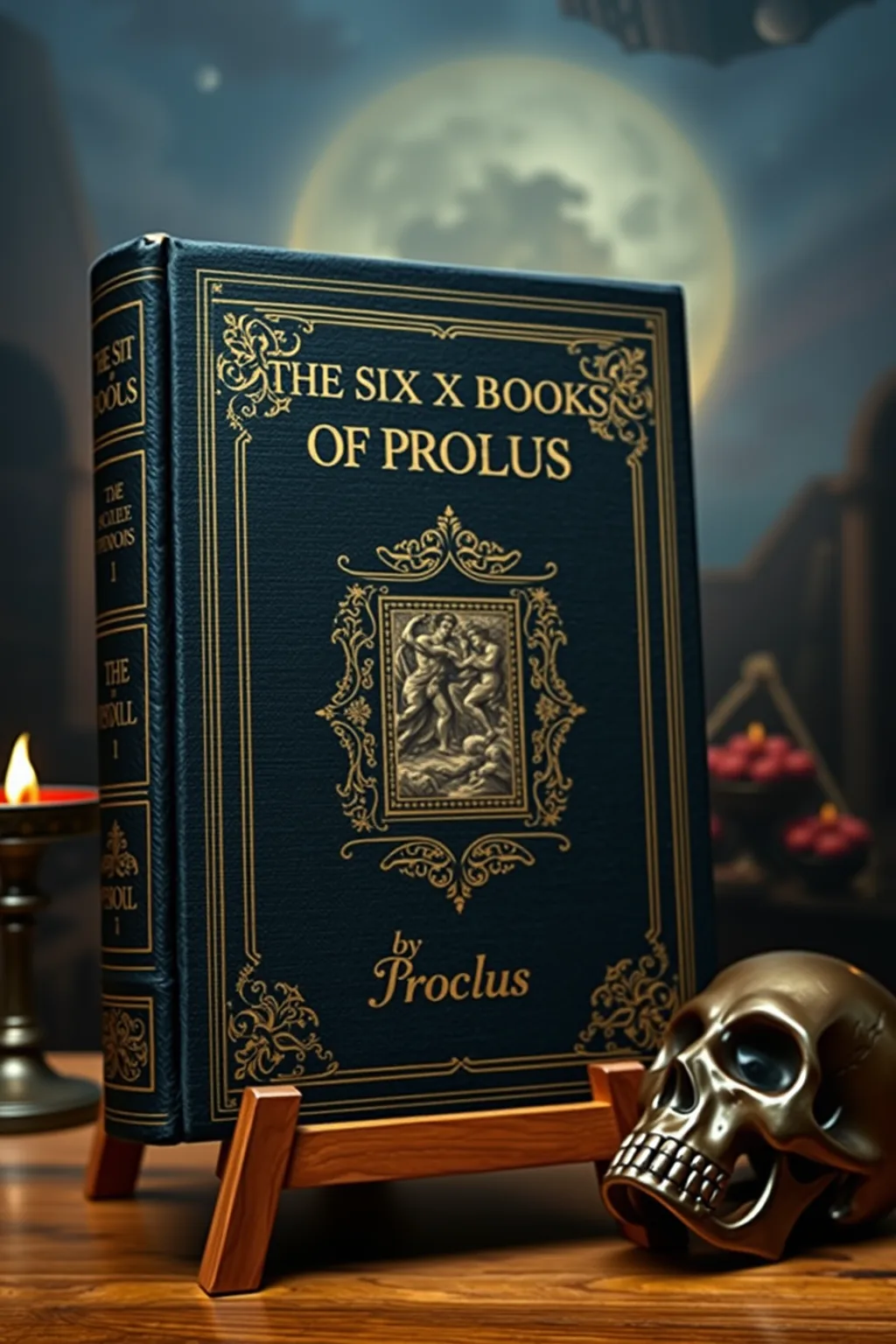
The six books of Prolus
 61
61

The six books of Prolus



Review by Alaric Kestrel (Metaphysical Studies Reviewer) — Proclus' The Six Books of Prolus stands as a testament to the enduring power of Neoplatonism. This work is a treasure trove of esoteric insights, offering readers a deep dive into the mystical underpinnings of the cosmos. Proclus' prose is both evocative and rigorous, making it accessible to both novice and seasoned scholars of the occult. The book's strengths lie in its ability to weave together complex philosophical concepts with a profound sense of symbolism and spiritual significance. This is a must-read for anyone seeking to understand the hidden dimensions of reality and the divine mysteries that lie beneath the surface of our everyday experience.
📝 Description
61
Proclus' Six Books, written around 470 CE, explains the fundamental principles of Neoplatonism.
The Six Books of Proclus presents the core doctrines of Neoplatonism, a philosophical system developed in late antiquity. Proclus, a prominent philosopher of the Athenian school, structured these books to systematically articulate the complex ideas of his predecessors, particularly Plotinus. The work covers topics such as the hierarchy of being, the nature of the One, the process of divine emanation, and the ascent of the soul back to its source.
Proclus addresses the relationship between the sensible and intelligible worlds, arguing for a unified reality structured by divine intellect. He details the functions of various divine hypostases, including the Intellect (Nous) and the Soul (Psyche), and their role in maintaining the cosmos. The text also elaborates on theological and cosmological theories, offering a comprehensive account of the structure of reality from the ultimate principle down to the material world.
As a central text of Neoplatonism, The Six Books of Proclus stands within a tradition that sought to synthesize Platonic philosophy with mystical and religious elements. This school of thought, flourishing from the 3rd to the 6th centuries CE, aimed to provide a philosophical framework for understanding divine realities and the human soul's relationship to them. Proclus' work is particularly significant for its systematic presentation and its influence on later esoteric traditions, including Hermeticism and early Christian thought, which adapted its metaphysical structures.
💡 Why Read This Book?
Read The Six Books of Prolus to gain a deeper understanding of Neoplatonism and its mystical implications. Ideal for seekers of hidden knowledge, scholars of the occult, and practitioners of esoteric traditions, this book offers a rich exploration of the divine and the human, the eternal and the transient. It is a journey into the heart of ancient wisdom, providing insights that remain relevant and transformative in the modern world.
⭐ Reader Reviews
Honest opinions from readers who have explored this book.
❓ Frequently Asked Questions
What is the primary focus of The Six Books of Prolus?
The primary focus is the exploration of Neoplatonism and its mystical implications, delving into the hidden mysteries of the cosmos and the human soul.
Who is the intended audience for this book?
The intended audience includes seekers of hidden knowledge, scholars of the occult, and practitioners of esoteric traditions.
What makes this book significant in the realm of esoteric literature?
The book's significance lies in its ability to weave together complex philosophical concepts with profound symbolism and spiritual significance, making it a cornerstone of Neoplatonic thought.
How does Proclus' work influence modern esoteric practices?
Proclus' work continues to influence modern practitioners by providing a rich foundation of mystical and philosophical insights, relevant to contemporary seekers and scholars.
Is this book suitable for beginners in the field of Neoplatonism?
While the book is rich in depth, it may be best approached by those with some prior knowledge of Neoplatonic thought and esoteric traditions.
🔮 Key Themes & Symbolism
The Divine and the Human
Proclus explores the intricate relationship between the divine and the human, revealing the hidden connections that bind us to the cosmos. This theme explores the mystical dimensions of existence, inviting readers to contemplate the eternal and the transient.
Symbolism and Mysticism
The book is rich in symbolism, using ancient myths and philosophical concepts to unveil the deeper mysteries of reality. Proclus' use of symbolism serves as a bridge between the esoteric and the everyday, making complex ideas accessible and profound.
The Mysteries of the Cosmos
Proclus explores the hidden mysteries of the cosmos, offering readers a glimpse into the interconnectedness of all things. This theme encourages a deep contemplation of the universe and our place within it, fostering a sense of spiritual inquiry and mystical understanding.
💬 Memorable Quotes
Direct passages from the work, attributed to the author.
“The divine is ever-present in the human soul, waiting to be awakened.”
— Proclus emphasizes the inherent divinity within each individual, encouraging spiritual awakening and self-discovery.
“Symbolism is the language of the divine, speaking to the soul in hidden ways.”
— Proclus' use of symbolism is a key aspect of his mystical philosophy, revealing deeper truths through ancient myths and concepts.
“The seeker of hidden knowledge must look at the depths of the soul to find the divine.”
— Proclus encourages a journey of self-discovery and spiritual inquiry, where the seeker finds the divine within.
💡 Key Ideas
Editorial paraphrase of the work's core concepts — not direct quotes.
The mysteries of the cosmos reveal the interconnectedness of all existence.
This quote highlights the mystical understanding of the universe, where all things are interconnected and interdependent.
The eternal and the transient are two sides of the same coin, each revealing the other's true nature.
This quote underscores the Neoplatonic view of the eternal and the transient, where one cannot be understood without the other.
🌙 Esoteric Significance
Tradition
The Six Books of Prolus belongs to the Hermetic and Neoplatonic traditions, drawing on ancient Greek philosophy and mystical teachings to explore the hidden dimensions of reality. Proclus' work is a core part of Neoplatonism, influencing generations of esoteric thinkers and practitioners.
Symbolism
Key symbols in the book include ancient myths and philosophical concepts, which Proclus uses to reveal deeper truths about the cosmos and the human soul. These symbols serve as a bridge between the esoteric and the everyday, making complex ideas accessible and profound.
Modern Relevance
The book remains relevant today, influencing modern practitioners of esoteric traditions and seekers of hidden knowledge. Its exploration of the divine and the human, the eternal and the transient, offers timeless insights that resonate with contemporary spiritual and philosophical inquiries.
👥 Who Should Read This Book
Beginners in the field of Neoplatonism may find the book challenging but rewarding, as it provides a deep dive into the mystical underpinnings of the cosmos. Scholars of the occult will appreciate the rich philosophical and symbolic content, while spiritual seekers will find inspiration and guidance in Proclus' exploration of the divine and the human. Practitioners of esoteric traditions will benefit from the book's insights into the hidden dimensions of reality and the interconnectedness of all things.
📜 Historical Context
The Six Books of Prolus was written during a time of great philosophical and spiritual ferment in the late Roman Empire. Proclus, a leading figure in the Neoplatonic school of thought, sought to preserve and expand upon the teachings of Plotinus and other mystics. This work was important because it provided a comprehensive exploration of Neoplatonic philosophy, bridging the gap between ancient Greek wisdom and the mystical traditions that followed. Its influence can be seen in the works of later esoteric thinkers and continues to resonate in modern spiritual and philosophical discourse.
📔 Journal Prompts
Reflect on the concept of the divine within the human soul. How does this idea resonate with your own spiritual journey?
Consider the interconnectedness of all things in the cosmos. How does this understanding influence your perception of reality?
Explore the use of symbolism in Proclus' work. How do ancient myths and philosophical concepts reveal deeper truths about existence?
Look at the relationship between the eternal and the transient. How do these concepts shape your understanding of time and existence?
Contemplate the journey of self-discovery and spiritual inquiry. How does seeking hidden knowledge transform your spiritual practice?
🗂️ Glossary
Neoplatonism
A philosophical and mystical tradition that builds upon the teachings of Plato, emphasizing the divine and the human, the eternal and the transient.
Symbolism
The use of ancient myths and philosophical concepts to reveal deeper truths about the cosmos and the human soul.
Mysticism
The exploration of the hidden dimensions of reality and the interconnectedness of all things, often through spiritual inquiry and contemplation.
Divine Mysteries
The hidden truths and insights about the divine and the human, revealed through mystical and philosophical exploration.
Cosmic Interconnectedness
The understanding that all things in the cosmos are interconnected and interdependent, revealing the deeper mysteries of existence.
This book appears in 2 collections
🔮 Readers Also Liked
Browse all →









More by Proclus
All books →

From the “Neoplatonism” Collection
View all →






More Free Alchemy & Hermeticism Books
View all →