The Secrets of Nostradamus
 81
81

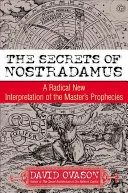
The Secrets of Nostradamus
David Ovason's "The Secrets of Nostradamus" offers a meticulous, albeit dense, examination of the 16th-century prophet's work. Unlike many popular accounts, Ovason grounds his analysis in astrological charts and alchemical lore, presenting a compelling case for understanding Nostradamus within his historical esoteric framework. The strength of the book lies in its detailed breakdown of specific quatrains, such as the analysis of the 'Great Beast' prophecy, where Ovason links astrological conjunctions to historical events. However, the sheer volume of technical astrological detail can become overwhelming for the casual reader, occasionally obscuring the narrative flow. A limitation is the author's occasional tendency to present interpretations as definitive facts without sufficient hedging. Despite this, Ovason provides a valuable scholarly resource for those serious about deciphering Nostradamus beyond superficial prophecy readings.
📝 Description
81
David Ovason's 1997 book unpacks the astrological and alchemical keys to Nostradamus's prophecies.
Published in 1997, David Ovason's "The Secrets of Nostradamus" offers a detailed look at the methods and influences behind Michel de Nostredame's prophecies. The book moves past simple prediction, aiming to decode the astrological and alchemical frameworks that informed Nostradamus's quatrains. Ovason positions Nostradamus not just as a forecaster but as a product of the esoteric traditions prevalent in 16th-century Europe.
The work is aimed at those interested in prophecy, esotericism, and Renaissance history. Readers seeking a structured, scholarly approach to Nostradamus's cryptic verses will find value here. It also serves those curious about the history of astrology, alchemy, and occult practices in the Renaissance, showing how these disciplines shaped prophetic writing.
Ovason's study places Nostradamus within the intellectual currents of the Renaissance, a period where astrology and alchemy were integrated into the understanding of the cosmos. The book acknowledges a later academic dismissal of these practices but argues for their necessity in grasping the worldview of figures like Nostradamus. It engages with the tension between skeptical historical analysis and an esoteric interpretation of his prophetic works, highlighting the symbolic and celestial frameworks he employed.
💡 Why Read This Book?
• Learn how Nostradamus's prophecies are interpreted through specific astrological charts and conjunctions mentioned in the text, offering a unique lens on 16th-century esoteric thought. • Understand the alchemical symbolism Ovason identifies within the quatrains, providing concrete examples of how this tradition might have influenced prophetic language. • Explore the concept of the 'Great Year' as a framework for understanding cyclical time, as discussed in relation to Nostradamus's visions from the Renaissance period.
⭐ Reader Reviews
Honest opinions from readers who have explored this book.
❓ Frequently Asked Questions
What is the primary focus of David Ovason's 'The Secrets of Nostradamus'?
The book primarily focuses on decoding Nostradamus's prophecies by analyzing the astrological, alchemical, and symbolic language present in his quatrains, rather than just listing predicted events.
When was 'The Secrets of Nostradamus' first published?
The book was first published in 1997, reflecting a late 20th-century resurgence of interest in Nostradamus's prophetic writings.
Does the book discuss specific astrological events related to Nostradamus's prophecies?
Yes, Ovason examines specific celestial configurations, planetary alignments, and potentially eclipses, suggesting they served as temporal or symbolic keys to understanding the quatrains.
What esoteric traditions are explored in relation to Nostradamus?
The work delves into astrology and alchemy, presenting them as significant influences on Nostradamus's prophetic methods and the symbolic content of his verses.
Is 'The Secrets of Nostradamus' suitable for beginners?
While accessible to those interested in prophecy, the book's detailed analysis of astrological and alchemical concepts makes it more suited for readers with some prior knowledge or a strong desire for in-depth study.
Does Ovason attempt to verify specific predictions made by Nostradamus?
Ovason's approach is more about decoding the *method* and *symbolism* behind the prophecies, linking them to astrological events and esoteric principles, rather than solely verifying individual predictions.
🔮 Key Themes & Symbolism
Astrological Framework of Prophecy
The work meticulously investigates the astrological underpinnings of Nostradamus's quatrains. Ovason argues that specific celestial events, such as conjunctions and planetary positions, were not merely backdrop but integral components used by Nostradamus to structure and time his prophecies. The book explores how a deep understanding of Renaissance astrology, including its complex calculations and symbolic language, is essential for unlocking the intended meanings within the verses. This theme highlights the intellectual context of the 16th century, where astrology was a respected discipline intertwined with philosophy and divination.
Alchemical Symbolism and Transformation
Ovason posits that alchemical principles and symbolism are deeply embedded within Nostradamus's prophetic writings. This theme examines how concepts like the Philosopher's Stone, the Great Work, and the symbolism of metals and transformations might have been employed by Nostradamus to represent historical cycles, societal changes, or spiritual processes. The book seeks to reveal a hidden layer of meaning, suggesting that the quatrains can be read as allegories for alchemical stages of purification and transmutation, aligning prophetic visions with esoteric alchemical philosophy.
Cyclical Time and the Great Year
A significant concept explored is Nostradamus's potential view of time as cyclical rather than strictly linear. Ovason discusses the ancient idea of the 'Great Year,' a vast cosmic cycle after which celestial bodies return to their original positions, often associated with periods of renewal or great change. The book analyzes how this concept might inform Nostradamus's prophecies, suggesting that he perceived historical patterns repeating over immense epochs. This theme connects Nostradamus to a broader tradition of cyclical cosmology found in various ancient philosophies and esoteric systems.
The Seer's Method and Intent
Beyond the content of the prophecies, Ovason focuses on *how* Nostradamus likely operated. This theme looks at the seer's potential methods, including the use of specific divinatory techniques, dream interpretation, and the synthesis of astrological data. The work attempts to reconstruct Nostradamus's intellectual process, portraying him as a learned individual applying sophisticated symbolic and astronomical knowledge. It questions whether his intent was solely to predict or to guide, using prophecy as a tool for spiritual or philosophical instruction within the context of his era.
💬 Memorable Quotes
Direct passages from the work, attributed to the author.
“The quatrains are not mere predictions but encoded astrological and alchemical texts.”
— This interpretation suggests Ovason views Nostradamus's work as a sophisticated system of symbolic communication, deeply rooted in the esoteric sciences of his time, requiring specialized knowledge to fully comprehend.
“Nostradamus employed specific celestial conjunctions to mark significant temporal junctures.”
— This highlights Ovason's focus on the astronomical basis of Nostradamus's prophecies, indicating that specific planetary alignments were used as a deliberate method for dating and contextualizing future events.
“The concept of the Great Year provides a framework for understanding historical recurrence.”
— This interpretation emphasizes Ovason's use of cyclical cosmological models, like the Great Year, to explain Nostradamus's perspective on history and the potential for recurring patterns across vast epochs.
💡 Key Ideas
Editorial paraphrase of the work's core concepts — not direct quotes.
Alchemical metaphors for transformation appear frequently in the prophetic verses.
This paraphrase points to the presence of alchemical symbolism within Nostradamus's writings, suggesting that the language of chemical transformation was used to represent broader societal or spiritual changes.
Deciphering Nostradamus requires understanding the esoteric sciences of the Renaissance.
This summarizes Ovason's core argument: that to truly grasp Nostradamus's prophecies, one must engage with the intellectual and spiritual disciplines, such as astrology and alchemy, that were prevalent and respected during the 16th century.
🌙 Esoteric Significance
Tradition
This work firmly roots itself within the Western Esoteric Tradition, particularly drawing from Renaissance Hermeticism, astrology, and alchemy. It positions Nostradamus not as an isolated phenomenon but as a product and practitioner of these integrated symbolic systems. Ovason argues that understanding his prophecies necessitates an immersion in the conceptual frameworks that defined esoteric thought in the 16th century. The book attempts to bridge the gap between historical figures and the living traditions of esoteric study, suggesting that these ancient arts hold keys to interpreting complex prophetic texts.
Symbolism
Key symbols explored include celestial bodies and their configurations, which Ovason interprets as direct indicators within the quatrains. Alchemical symbols, such as the prima materia or the process of calcination, are presented as metaphors for historical cycles and societal transformations. The concept of the 'Great Year,' representing vast cosmic cycles, is another significant motif, suggesting a cyclical view of history that permeates Nostradamus's vision. These symbols are not treated as mere decoration but as functional elements within a divinatory and philosophical system.
Modern Relevance
Contemporary practitioners of Western Esotericism, particularly astrologers and those interested in Hermetic philosophy, continue to draw upon Ovason's analytical methods. His detailed approach to decoding prophetic texts through specific symbolic and astrological lenses offers a framework for modern esoteric interpretation. Thinkers and groups exploring comparative esotericism or seeking to understand the historical evolution of occult sciences find value in Ovason's rigorous examination of Nostradamus's methods and influences, keeping alive the tradition of engaging with historical prophetic figures through their original symbolic languages.
👥 Who Should Read This Book
• Students of Renaissance Esotericism: Those researching astrology, alchemy, and Hermeticism in the 16th century will find a detailed examination of how these disciplines informed prophetic works. • Prophecy Enthusiasts Seeking Depth: Readers who are beyond a superficial interest in Nostradamus and desire a scholarly, analytical approach to his quatrains will appreciate the in-depth decoding methods. • Comparative Symbolism Researchers: Individuals studying the cross-pollination of esoteric symbols across different historical periods and traditions will find valuable insights into the symbolic language of the past.
📜 Historical Context
David Ovason's "The Secrets of Nostradamus" emerged in 1997, a period marked by a resurgence of public interest in Nostradamus, often amplified by global anxieties and media portrayals. The book situates itself within the intellectual currents of the Renaissance, a time when astrology and alchemy were considered legitimate fields of study, often integrated with philosophy and medicine. Unlike the purely skeptical academic stance that had become dominant by the late 20th century, Ovason sought to re-evaluate Nostradamus by examining his work through the lens of these esoteric traditions. This approach implicitly engages with the historical reception of Nostradamus, which has oscillated between treating him as a fraud, a madman, or a genuine prophet. By focusing on astrological charts and alchemical symbolism, Ovason aligns himself with a minority of scholars and practitioners who maintain the relevance of these disciplines for historical interpretation. He positions his work as a corrective to superficial analyses, demanding a deeper engagement with the symbolic language and scientific understanding of Nostradamus's era.
📔 Journal Prompts
Nostradamus's use of specific celestial conjunctions for temporal marking: how might this method apply to other historical prophetic systems?
The alchemical symbolism of transformation within the quatrains: what parallels exist in contemporary metaphorical language?
Reflecting on the 'Great Year' concept: consider how cyclical versus linear historical perspectives shape our understanding of events.
Analyze a personal experience through the lens of astrological symbolism as presented in the book.
Consider the intention behind Nostradamus's coded language: was it to warn, to guide, or to preserve knowledge?
🗂️ Glossary
Quatrain
A stanza of four lines, specifically referring to the four-line verses composed by Nostradamus as the primary form of his prophecies.
Conjunction
In astrology, the alignment of two or more celestial bodies in the same degree of the zodiac, often considered to have significant astrological influence.
Alchemy
An ancient proto-scientific and philosophical tradition that sought to transmute base metals into gold, achieve immortality, and understand the fundamental principles of the universe through symbolic processes.
The Great Year
A concept in ancient cosmology referring to a vast cycle of time after which celestial bodies return to their original positions, often associated with periods of renewal or significant cosmic change.
Hermeticism
A philosophical and religious tradition based on writings attributed to Hermes Trismegistus, emphasizing divine wisdom, the interconnectedness of all things, and the pursuit of spiritual knowledge.
Prima Materia
In alchemy, the fundamental, undifferentiated substance from which all matter is believed to originate; the starting point of the Great Work.
Zodiac
An astrological concept representing a belt of the heavens encompassing the paths of the Sun, Moon, and planets, divided into twelve equal segments, each associated with specific symbols and influences.
🔮 Readers Also Liked
Browse all →









More by David Ovason
All books →


More Free Occult Philosophy Books
View all →