The sea priestess

 81
81

The sea priestess
Violet M. Firth, as Dion Fortune, consistently demonstrated an ability to translate complex esoteric concepts into compelling narrative. The Sea Priestess continues this tradition, offering a story where the journey of the protagonist, Anya, mirrors the seeker's path toward inner gnosis. The portrayal of the Priestess is particularly strong, embodying a form of potent, ancient feminine spirituality that Fortune often championed. However, the pacing can feel somewhat deliberate, particularly for readers unaccustomed to the dense symbolic language characteristic of Fortune’s output. A passage describing Anya's initial encounters with the Priestess and the subtle shifts in her perception exemplifies the novel's strength in depicting the liminal spaces between the mundane and the magical. Despite its mature publication date, the work retains an enduring relevance for its exploration of spiritual mentorship. It remains a solid, if not groundbreaking, addition to Fortune's oeuvre.
📝 Description
81
Violet M. Firth published The Sea Priestess in 1989.
Violet M. Firth, writing as Dion Fortune, published The Sea Priestess in 1989. The novel follows a woman's spiritual quest, guided by a priestess, toward initiation and self-discovery. It weaves together occult lore and psychological themes, depicting the protagonist's inner transformation.
The book appeals to readers interested in occult philosophy and narrative fiction. Those who appreciate stories about spiritual development and magical practices will find its themes resonant. Readers familiar with Dion Fortune's earlier works will recognize her consistent approach to esoteric subjects and her focus on the feminine divine.
Published decades after her foundational works like *The Mystical Qabalah* (1935), The Sea Priestess revisits Dion Fortune's established themes of initiation and the feminine divine. It appeared during a period of revived interest in esoteric traditions, influenced by figures such as Aleister Crowley and the burgeoning Neopagan movement. This novel stands as a later contribution from an author who had already solidified her reputation in occult circles.
💡 Why Read This Book?
• Gain insight into Dion Fortune's later exploration of feminine spiritual authority, particularly through the character of the Priestess, offering a perspective on initiation distinct from her earlier male-centric magical training narratives. • Understand the symbolic importance of the sea in esoteric traditions as depicted in the novel, learning how it represents the unconscious and the source of psychic power, a theme Fortune developed across her works. • Experience Fortune's unique blend of psychological depth and occult symbolism, seeing how she crafts a narrative that serves as both a story and a practical allegory for spiritual development, evident in Anya's quest.
⭐ Reader Reviews
Honest opinions from readers who have explored this book.
❓ Frequently Asked Questions
What is the primary theme of The Sea Priestess by Dion Fortune?
The primary theme revolves around spiritual initiation and self-discovery, particularly focusing on the seeker's journey guided by a wise, archetypal feminine figure known as the Priestess.
Who is the author Dion Fortune?
Dion Fortune is the pen name of Violet M. Firth, a prominent British occultist and novelist of the early 20th century, known for her works on magical theory and esoteric fiction.
When was The Sea Priestess originally published?
The Sea Priestess was first published in 1989, although Dion Fortune (Violet M. Firth) was active and writing much earlier in the 20th century.
What esoteric concepts are explored in The Sea Priestess?
The novel explores concepts of spiritual lineage, ritual practice, archetypal feminine spirituality, and the symbolic representation of the unconscious, often using the sea as a central motif.
Is The Sea Priestess a good introduction to Dion Fortune's work?
While it showcases her distinctive style, readers new to Dion Fortune might find her earlier, more foundational works like 'The Mystical Qabalah' or 'Psychic Self-Defense' more accessible starting points.
What is the significance of the Priestess character?
The Priestess represents a powerful, initiated feminine spiritual guide, embodying ancient wisdom and acting as a catalyst for the protagonist's inner transformation and psychic development.
🔮 Key Themes & Symbolism
Feminine Spiritual Authority
The novel emphasizes the potent role of the Priestess as a spiritual guide and initiator, embodying a form of ancient, intuitive wisdom. This contrasts with more patriarchal structures sometimes found in esoteric traditions, highlighting the necessity and power of the feminine divine in the process of spiritual awakening and self-realization. The Priestess serves as a direct conduit to deeper truths.
The Path of Initiation
The Sea Priestess charts the seeker's journey toward spiritual attainment. It depicts initiation not as a passive reception of knowledge, but as an active, often challenging process involving psychic development, ritual engagement, and the integration of shadow aspects. The narrative illustrates that true transformation requires confronting inner obstacles and embracing the unknown.
Symbolism of the Sea
The sea functions as a pervasive and powerful symbol throughout the narrative. It represents the vast, unexplored areas of the unconscious mind, the primordial source of psychic energy, and the fluid, ever-changing nature of spiritual reality. The Priestess's connection to the sea underscores her deep, intuitive understanding of these hidden currents and powers.
Psychic and Astral Development
Fortune, through her characters and narrative, explores the development of psychic faculties and the nature of astral projection. The journey involves honing intuition, understanding subtle energies, and navigating non-physical realms. The novel suggests that these abilities are not mere curiosities but integral components of spiritual growth and self-mastery.
💬 Memorable Quotes
Direct passages from the work, attributed to the author.
“The Priestess was the guardian of the Threshold.”
— This highlights the Priestess's crucial role as a gatekeeper, controlling access to deeper spiritual knowledge and initiatory experiences. She tests the seeker and determines their readiness to cross into more profound levels of understanding and power.
“The sea holds all memories, all possibilities.”
— This interpretation emphasizes the oceanic symbolism as a repository of universal consciousness and potential. It suggests that by connecting with this vastness, one can access forgotten wisdom and the blueprints for future manifestation.
“Initiation is not given, it is taken.”
— This concept underscores the active nature of spiritual advancement. It implies that the seeker must possess the will, courage, and inner drive to claim their spiritual birthright, rather than passively waiting for enlightenment to be bestowed.
“The outer form must be broken to reveal the inner light.”
— This points to the necessity of shedding illusions, egoic attachments, and limiting beliefs. True spiritual illumination, the 'inner light,' can only emerge when the superficial self is dissolved or transformed through trials.
“She saw the patterns behind the veils.”
— This describes the heightened perception of the initiated or spiritually sensitive individual. It signifies the ability to perceive the underlying energetic structures and divine order that govern manifest reality, seeing beyond superficial appearances.
🌙 Esoteric Significance
Tradition
The Sea Priestess is rooted in the Western Esoteric Tradition, drawing significantly from Hermeticism and Qabalistic concepts, filtered through Dion Fortune's unique psychological lens. It also shows affinities with Neopaganism's emphasis on the divine feminine and nature-based spirituality. Fortune's work seeks to synthesize these elements into a coherent system of magical practice and spiritual development, often presenting a more integrated approach than some of her predecessors.
Symbolism
Key symbols include the sea, representing the unconscious, psychic potential, and the primordial waters of creation; the Priestess herself, an archetype of the Great Mother and feminine spiritual authority; and the Threshold, symbolizing the barrier between the mundane and the magical, the uninitiated and the adept. These symbols are employed to illustrate the stages and challenges of spiritual initiation.
Modern Relevance
Contemporary practitioners of Western magic, particularly those within traditions influenced by the Fraternity of the Inner Light, continue to study Fortune's works. Her emphasis on psychological integration within magical practice remains relevant for modern occultists seeking a balanced approach. The novel's exploration of feminine spiritual leadership also appeals to current discussions on gender and divinity within esoteric circles.
👥 Who Should Read This Book
• Aspiring practitioners of Western Esotericism interested in understanding the archetype of the spiritual guide and the process of initiation through narrative. • Readers familiar with Dion Fortune's other works seeking to explore her later thematic developments, particularly concerning feminine spirituality and the symbolism of the sea. • Students of comparative religion and occult history looking for a fictional representation of 20th-century esoteric thought and its engagement with ancient spiritual traditions.
📜 Historical Context
Violet M. Firth, writing as Dion Fortune, was a significant figure in British occultism during the first half of the 20th century. While *The Sea Priestess* was published posthumously in 1989, its thematic concerns align with her earlier work, particularly her focus on magical training and esoteric psychology. Fortune established the Fraternity of the Inner Light, a magical order that influenced many later esoteric practitioners. Her writings emerged during a period of intense spiritual and intellectual ferment, alongside contemporaries like Aleister Crowley, A.E. Waite, and the widespread influence of Theosophy. Fortune's approach, however, often blended Qabalistic principles with psychological interpretation, distinguishing her from purely ritualistic or Theosophical paths. The reception of her work has been consistently positive among occultists, who value its clarity and practical application, though some academic circles have been slower to engage with her specific contributions to esoteric literature.
📔 Journal Prompts
The Priestess's role as guardian of the Threshold suggests a testing process. What inner resistances must Anya overcome to 'take' initiation?
Reflect on the symbolic significance of the sea in your own inner landscape. What does its ebb and flow represent for you?
Consider the concept of 'outer form must be broken'. How does this apply to shedding limiting beliefs or egoic structures in your life?
Analyze the interplay between Anya's conscious desires and the unconscious forces represented by the sea and the Priestess.
How does the narrative illustrate the idea that spiritual authority, particularly feminine authority, operates beyond conventional structures?
🗂️ Glossary
The Threshold
In esoteric contexts, the boundary between the physical and non-physical realms, or between different states of consciousness. Crossing the Threshold signifies entering a new phase of spiritual awareness or initiatory experience.
Initiation
A ritual or process through which an individual is formally introduced into a group, society, or spiritual tradition, often involving symbolic death and rebirth, and the reception of deeper knowledge or powers.
Adepts
Individuals who have achieved a high level of spiritual attainment or mastery in occult arts and sciences, often possessing advanced knowledge and psychic abilities.
Psychic Development
The cultivation and refinement of innate extrasensory abilities, such as telepathy, clairvoyance, and intuition, often considered a crucial aspect of spiritual training in esoteric traditions.
Archetype
In Jungian psychology and esoteric thought, a universal, archaic pattern or image that derives from the collective unconscious and is sometimes believed to have objective reality. The Priestess functions as an archetype.
The Great Mother
An archetypal figure representing the feminine divine in its creative, nurturing, and sometimes destructive aspects. Often associated with nature, fertility, and the primal source of life.
Esoteric
Intended for or likely to be understood by only a small number of people with a specialized knowledge or interest; relating to the hidden or inner meaning of something.
🔮 Readers Also Liked
Browse all →









More by Violet M. Firth (Dion Fortune)
All books →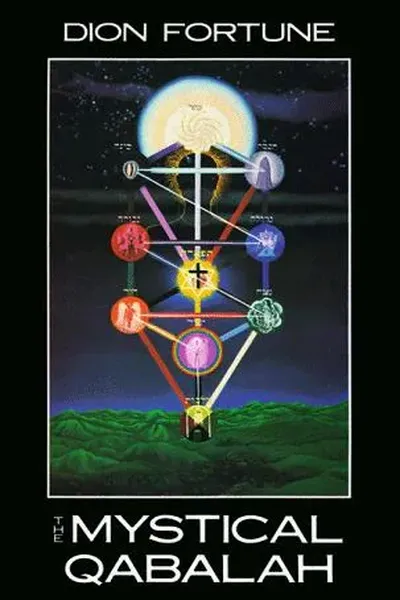



More Free Occult Philosophy Books
View all →