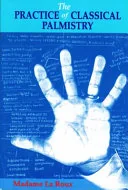
The Practice of Classical Palmistry
 78
78

The Practice of Classical Palmistry
Madame La Roux's "The Practice of Classical Palmistry" distinguishes itself by its disciplined focus on the foundational elements of hand analysis. The early chapters, which meticulously dissect the meaning of individual lines like the Life Line or the Head Line before considering their interplay, offer a clarity often missing in broader texts. This granular approach is its primary strength. However, the accompanying case studies, while illustrative, occasionally feel slightly underdeveloped, leaving one wishing for deeper commentary on the integration of multiple palm features. The detailed exploration of the mounts, linking them to specific personality traits, is a particularly strong section. Ultimately, this book provides a solid, if somewhat dry, training manual for aspiring palmists.
📝 Description
78
First published in 1993, The Practice of Classical Palmistry presents a methodical system for reading hands.
Madame La Roux's 1993 book, The Practice of Classical Palmistry, details a systematic approach to chiromancy. It begins with the close examination of individual lines and fingers, then combines these elements for a complete palm reading. The text functions as a practical manual for understanding personality through the hand's unique markings.
This volume is for dedicated students of palmistry. Beginners will find a structured introduction, while experienced readers can refine their interpretive abilities. It is especially suitable for those preferring a methodical, classical style over contemporary, simplified versions of the practice.
The book emphasizes detailed analysis of specific palm features. It covers the Mounts, finger phalanges, and the meaning of major and minor lines before integration. It also touches on client interaction and ethical considerations for conducting readings.
Emerging in the early 1990s, a time when interest in esoteric studies and New Age thought was growing, Madame La Roux's work offered a return to traditional palmistry methods. This stood apart from the generalized metaphysical self-help literature common at the time. The book's dedication to classical techniques aligns it with a lineage of palmistry that predates modern psychological interpretations, focusing on established methods of hand analysis.
⭐ Reader Reviews
Honest opinions from readers who have explored this book.
❓ Frequently Asked Questions
What is the primary focus of "The Practice of Classical Palmistry"?
The book's primary focus is on a classical, analytical approach to palmistry, emphasizing the detailed interpretation of individual lines and fingers before integrating them into a comprehensive reading of the palm.
When was "The Practice of Classical Palmistry" first published?
The book was first published on January 1, 1993, reflecting a period of renewed interest in esoteric practices.
Does the book offer guidance on how to conduct readings for others?
Yes, the author, Madame La Roux, includes a section specifically addressing how to perform a reading and interact with clients professionally.
Are there exercises for self-study included?
Indeed, the book provides self-study questions at the end of each chapter, encouraging readers to examine their own hands in relation to the material presented.
What distinguishes this book from other palmistry guides?
Its methodical approach, concentrating on the singular expression of personality through individual lines before a holistic palm interpretation, sets it apart from many generalized or popularized guides.
What role do illustrations play in the book?
Illustrations are integral to the text, serving to clarify the anatomical features of the hand and the markings that are discussed, aiding in visual comprehension.
🔮 Key Themes & Symbolism
Line-by-Line Analysis
The work meticulously breaks down the significance of each major and minor palm line, treating them as individual indicators of character and life path. This granular approach, detailed in chapters focusing on lines like the Heart Line and Head Line, prioritizes understanding these elements in isolation before synthesizing them. The book argues that a profound grasp of each line's unique expression is crucial for accurate interpretation, moving beyond a superficial overview.
Finger and Mount Interpretation
Beyond the lines, "The Practice of Classical Palmistry" dedicates significant attention to the morphology of the fingers and the prominence of the mounts. Each finger and mount is presented as a distinct facet of personality, offering insights into specific traits such as ambition, intellect, or emotional disposition. This detailed exploration, evident in the sections on 'The Fingers' and 'The Mounts', forms a crucial part of the classical method.
The Integrated Reading
While emphasizing individual components, the book culminates in the art of integration – combining the analysis of lines, mounts, and fingers into a cohesive portrait of the individual. This process, discussed in the context of performing a reading, requires the practitioner to synthesize disparate information. The work guides the student through this complex synthesis, ensuring that the whole palm reading reflects a nuanced understanding.
Practical Application and Ethics
Madame La Roux addresses the practical application of palmistry, including how to conduct readings for clients. This extends to ethical considerations, client management, and the responsibilities of a palmist. The inclusion of case studies and self-study questions underscores the book's commitment to practical training, moving beyond theoretical knowledge to applied skill development.
💬 Memorable Quotes
Direct passages from the work, attributed to the author.
“The lines are singular expressions of the personality before the palm as a whole is integrated into a reading.”
— This core principle highlights the book's methodical approach. It suggests that a deep understanding of individual palm features must precede a holistic interpretation, emphasizing a building-block methodology for palmistry.
“Each finger relates to a specific planet and carries its own distinct energies and significations.”
— This points to the astrological correspondences within classical palmistry. The interpretation of fingers is linked to planetary influences, adding a layer of symbolic meaning to their shape and size.
“The Mount of Venus, when well-developed, often indicates a strong capacity for love and artistic appreciation.”
— This is an example of a specific interpretation of a palm feature. It connects a physical aspect of the palm (the Venus mount) to personality traits (love, art), illustrating the book's interpretive framework.
“Performing a reading requires not only knowledge but also empathy and clear communication with the client.”
— This emphasizes the human element in palmistry. Beyond technical skill, the author acknowledges the importance of interpersonal dynamics and ethical conduct when working with individuals seeking insight.
“Self-study questions are provided to allow the student to examine his or her own hand in terms of the material in each chapter.”
— This highlights the pedagogical design of the book. The inclusion of exercises encourages active learning and personal application of the palmistry concepts presented.
🌙 Esoteric Significance
Tradition
This work fits within the Western Esoteric tradition, specifically drawing from classical and Renaissance-era European chiromancy. It aligns with Hermetic principles that seek correspondences between the macrocosm (the universe, planets) and the microcosm (the human being, the hand). The book's methodical analysis can be seen as an attempt to systematize the divinatory arts, bringing order and logic to what might otherwise be perceived as purely intuitive practices.
Symbolism
The primary symbols in this book are the lines (Life Line, Head Line, Heart Line, etc.), the mounts (Mount of Venus, Mount of Jupiter, etc.), and the fingers, each associated with planetary influences and specific personality traits. For instance, the Head Line symbolizes intellect and mental approach, while the Mount of Jupiter is often linked to leadership, ambition, and self-esteem. The fingers themselves, representing different archetypes (e.g., Jupiter finger for authority), add further symbolic layers.
Modern Relevance
Contemporary practitioners of Western esotericism, particularly those interested in traditional divination methods, continue to find value in Madame La Roux's systematic approach. Her focus on classical techniques informs modern approaches to palmistry that seek to ground the practice in historical methods rather than purely speculative or psychological frameworks. The book's emphasis on client interaction also remains relevant for contemporary readers seeking to build ethical and effective practice.
👥 Who Should Read This Book
['• Aspiring palmists seeking a structured curriculum: Readers new to palmistry who desire a methodical introduction to classical interpretation techniques will benefit from the chapter-by-chapter approach.', '• Students of Western Esotericism: Individuals studying the history and practice of esoteric arts, particularly divination and physiognomy, will find this book a valuable resource on traditional chiromancy.', "• Self-improvement enthusiasts interested in non-psychological self-analysis: Those looking for alternative methods of self-understanding that focus on observable physical markers rather than abstract psychological theories will find the book's approach appealing."]
📜 Historical Context
Published in 1993, "The Practice of Classical Palmistry" emerged during a period when esoteric studies were gaining traction, often under the umbrella of the New Age movement. While many popular works focused on generalized self-discovery, Madame La Roux's text offered a deliberate return to the more structured, classical methods of chiromancy. This approach contrasted with the burgeoning psychological interpretations of the hand that were also gaining currency. The book's emphasis on traditional techniques places it in dialogue with earlier palmists like William John Warner (Cheiro), whose work was influential in the late 19th and early 20th centuries. The reception of such texts in the early 90s was generally positive within esoteric circles, though mainstream academic circles largely remained skeptical of palmistry as a divinatory or analytical tool.
📔 Journal Prompts
The significance of the Head Line on your dominant hand: How does its length and clarity align with your perceived cognitive style?
Analyze the Mount of Venus: Does its prominence or flatness correspond to your approach to relationships and emotional expression?
Compare the interpretation of the Fingers and their planetary associations provided in the text with your own finger lengths and shapes.
Reflect on the author's advice regarding client interaction: What ethical considerations arise when discussing sensitive personal information revealed by the palm?
Examine the case studies presented: How does the author integrate the analysis of lines, mounts, and fingers to form a cohesive reading?
🗂️ Glossary
Chiromancy
The practice of fortune-telling or divination through the study of the palm of the hand. It involves interpreting lines, mounts, and other features to understand personality and predict future events.
Mounts
The fleshy, raised pads on the palm, located at the base of the fingers and below the thumb. Each mount is associated with a planet and specific personality traits or potentials.
Life Line
The semi-circular line that travels around the base of the thumb. In palmistry, it is traditionally associated with vitality, physical health, and major life events.
Head Line
The line that typically starts near the thumb and travels across the palm. It is interpreted as representing the person's mental faculties, intellect, and approach to thinking.
Heart Line
The line that runs horizontally across the upper palm, beneath the fingers. It is generally read as indicative of a person's emotional nature, romantic inclinations, and heart health.
Phalanges
The distinct segments or joints of the fingers. The size and development of each phalange can provide additional layers of interpretation regarding specific characteristics.
Holistic Reading
An interpretation of the palm that considers all elements—lines, mounts, fingers, texture, and shape—in conjunction, rather than focusing on individual components in isolation.
This book appears in 1 collection
🔮 Readers Also Liked
Browse all →









From the “Palmistry” Collection
View all →








More Free Occult Philosophy Books
View all →