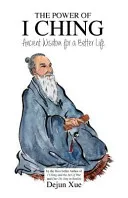
The Power of I Ching
 77
77

The Power of I Ching
Dejun Xue, Adriano Lucchese, and Tao Dong's "The Power of I Ching" offers a methodical approach to a text that has shaped East Asian thought for millennia. The strength of this work lies in its clear exposition of the I Ching's structural components – the trigrams and hexagrams – and its historical lineage, tracing its development from ancient origins through Confucian exegesis. The authors successfully demystify the foundational elements for newcomers. However, the text occasionally feels more like a scholarly report than an invitation to practice. While it details the yarrow stalk method, the practical application and intuitive understanding might require further exploration beyond these pages. A particularly insightful section is the explanation of the sixty-four hexagrams as archetypal states of change, which provides a solid conceptual framework. Ultimately, "The Power of I Ching" is a valuable, albeit somewhat dry, primer for understanding this seminal work.
📝 Description
77
Dejun Xue, Adriano Lucchese, and Tao Dong's 2023 book details the ancient Chinese divination text, the I Ching.
The Power of I Ching provides a thorough examination of the classic Chinese text used for divination and philosophical insight. It covers the text's fundamental components, such as the eight trigrams and sixty-four hexagrams that comprise its symbolic system. The authors trace the I Ching's historical path, from early versions like Gui Cang Yi and Lian Shan Yi to the widely studied Zhou Yi, along with its later interpretation through Confucian writings.
The book is intended for students of Eastern philosophy, those who practice divination, and anyone wishing to grasp the philosophical roots of Chinese culture. It is also useful for people interested in comparative religion, ancient knowledge systems, and frameworks that offer direction for personal and communal life. Specialists in sinology and cultural history will find its historical survey valuable.
Central to the I Ching are its sixty-four hexagrams. Each hexagram is built from six lines, which in turn come from combinations of three yin (broken) or yang (unbroken) lines, known as trigrams. These symbols represent fundamental states of change and cosmic interaction. The book also covers the traditional yarrow stalk divination method, a detailed practice for producing hexagrams that give advice on specific situations.
The I Ching stands as a cornerstone of East Asian esoteric thought, predating many philosophical systems. Its structure, based on the interplay of yin and yang, provides a model for understanding cosmic processes and human affairs. The text's integration with Confucianism, particularly through the Ten Wings commentaries, broadened its application from divination to ethical and political guidance. This fusion makes it a unique bridge between oracular practice and systematic philosophy, influencing Taoism and broader Chinese spiritual traditions for millennia.
💡 Why Read This Book?
• Gain a foundational understanding of the I Ching's 8 trigrams and 64 hexagrams, the core symbolic language developed over 6,500 years ago, allowing for a structured approach to interpreting change. • Learn about the historical compilation of the Zhou Yi and its commentaries around 500 BC by Confucius and his disciples, providing context for its philosophical evolution. • Understand the traditional method of divination using fifty yarrow sticks, a specific technique detailed within the work, offering a practical glimpse into ancient practices.
⭐ Reader Reviews
Honest opinions from readers who have explored this book.
❓ Frequently Asked Questions
What are the origins of the I Ching?
The I Ching, or Book of Changes, is an ancient Chinese text with origins tracing back approximately 6,500 years. Its foundational elements, the eight trigrams and sixty-four hexagrams, were developed over centuries, with significant commentary added by Confucius and his followers around 500 BC.
What is the difference between Gui Cang Yi, Lian Shan Yi, and Zhou Yi?
According to the Zhou Li (~1,100 BC), these are three historical versions of the I Ching. Gui Cang Yi and Lian Shan Yi are considered older, while Zhou Yi is the version that became most widely studied and commented upon, especially after Confucius's era.
How did Confucius influence the I Ching?
Confucius and his disciples compiled ten commentaries, known as the Ten Wings, on the Zhou Yi around 500 BC. These commentaries emphasized Confucian philosophy and provided detailed instructions on divination practices, significantly shaping the text's interpretation.
What is the significance of the trigrams and hexagrams?
The eight trigrams (Ba Gua) are fundamental symbols representing basic natural forces and concepts. Combinations of two trigrams form the sixty-four hexagrams, each representing a specific situation or stage of change, serving as the core symbolic language of the I Ching.
What is the method of divination described in the book?
The book details the ancient practice of using fifty yarrow stalks for divination. This complex process involves specific manipulations of the stalks to generate hexagrams, which are then interpreted to provide guidance.
When was the first edition of 'The Power of I Ching' published?
The first edition of 'The Power of I Ching' by Dejun Xue, Adriano Lucchese, and Tao Dong was published on May 28, 2014.
🔮 Key Themes & Symbolism
The Sixty-Four Hexagrams
The sixty-four hexagrams form the symbolic core of the I Ching, each representing a fundamental state or process of change. Composed of six lines, which are either unbroken (yang) or broken (yin), these hexagrams are derived from combinations of the eight basic trigrams. The work elucidates how each hexagram offers a unique perspective on universal patterns of interaction and transformation, providing a framework for understanding and responding to life's circumstances. Their arrangement and interpretation are central to the practice of consulting the I Ching for guidance.
The Eight Trigrams
The eight trigrams, or Ba Gua, are the building blocks of the I Ching's hexagrams. Each trigram—Heaven, Earth, Thunder, Wind, Water, Fire, Mountain, and Lake—represents fundamental natural forces and archetypal concepts. The book details their structure and significance, explaining how their combinations create the more complex sixty-four hexagrams. Understanding the trigrams is crucial for grasping the underlying principles and symbolic language of the I Ching, connecting the microcosm of human experience to the macrocosm of the universe.
Divination Methodology
Central to the I Ching's practical application is its method of divination. The book discusses the traditional approach using fifty yarrow stalks, a meticulous process designed to generate a specific hexagram reflecting a query. This ritualistic method is not merely about fortune-telling but about entering into a dialogue with the cosmic order to gain insight and clarity. The work outlines the steps involved, emphasizing the importance of focused intention and the symbolic interpretation of the resulting hexagram.
Historical Development and Commentary
The I Ching is not a static text but a living tradition that has evolved over millennia. The book traces its lineage from ancient origins to the compilation of the Zhou Yi and its subsequent interpretation through the Ten Wings, the commentaries attributed to Confucius and his disciples around 500 BC. This historical perspective highlights how the text has been understood and integrated into Chinese philosophy, particularly Confucianism, shaping its ethical and cosmological dimensions.
💬 Memorable Quotes
Direct passages from the work, attributed to the author.
“All three address eight trigrams and sixty-four hexagrams.”
— This highlights the structural consistency across different historical versions of the I Ching, emphasizing that the core symbolic language of trigrams and hexagrams has been fundamental for millennia.
“Around 500 BC, Confucius and his disciples compiled ten commentaries on Zhou Yi.”
— This points to an important moment in the I Ching's history, where Confucian philosophy significantly influenced its interpretation, shifting focus towards ethical guidance and systematic study.
“Later, around 200 AD, Zhou Yi and the commentaries underwent further compilation.”
— This indicates the ongoing process of textual preservation and scholarly engagement that solidified the I Ching's status as a classical text within Chinese intellectual history.
“Ancient Wisdom for a Better Life”
— This phrase suggests the practical utility and enduring relevance of the I Ching, positioning it not just as an ancient artifact but as a source of guidance for contemporary living.
“Instruction on how to handle fifty yarrow sticks for divine reading.”
— This refers to the specific, ritualistic methods employed in I Ching divination, underscoring the text's function as a practical tool for seeking insight and decision-making.
🌙 Esoteric Significance
Tradition
The I Ching is a foundational text within East Asian esoteric traditions, particularly in its relationship with Taoism and Confucianism, which, while often seen as philosophical, carry deep metaphysical and cosmological dimensions. It operates within a framework that sees the universe as a dynamic interplay of forces, governed by principles of change and cyclical recurrence. Unlike purely Western Hermeticism or Kabbalah, its symbolism is rooted in observations of natural phenomena and social order, providing a unique bridge between the mundane and the spiritual through patterns of transformation.
Symbolism
The core symbolism resides in the eight trigrams (Ba Gua) and the sixty-four hexagrams. The trigrams, such as Qian (Heaven) and Kun (Earth), represent primal forces and archetypes. The hexagrams, formed by combining trigrams, symbolize specific situations, relationships, and stages of development. For instance, Hexagram 1, Qian (The Creative), signifies pure yang energy, initiation, and strength, while Hexagram 2, Kun (The Receptive), embodies pure yin, nurturing, and responsiveness. These symbols function as a symbolic language to map the dynamics of existence.
Modern Relevance
Contemporary thinkers and practitioners in fields ranging from psychology to systems theory draw inspiration from the I Ching's model of change. Its cyclical view of fortune and misfortune, and its emphasis on adaptability, resonate with modern concepts of resilience and dynamic systems. Psychologists like Carl Jung saw parallels in its archetypal symbolism. Today, it continues to be consulted by individuals seeking a structured, symbolic method for self-reflection and understanding the flow of events, bridging ancient wisdom with contemporary challenges.
👥 Who Should Read This Book
['• Students of Chinese philosophy and comparative religion: They will gain a foundational understanding of a text central to East Asian intellectual history and its philosophical evolution.', '• Practitioners of divination and esoteric arts: They can learn the historical context and structural basis of a widely respected divination system, including its traditional methodology.', '• Individuals interested in ancient wisdom traditions: They will find a guide to a sophisticated system that offers insights into patterns of change, decision-making, and cosmic harmony.']
📜 Historical Context
The I Ching, or Book of Changes, emerged from a deep wellspring of ancient Chinese thought, with its earliest conceptual frameworks dating back perhaps 6,500 years. By the Spring and Autumn period (around 500 BC), it had evolved into a form that attracted the attention of Confucius and his school. Their compilation of the Ten Wings added a profound layer of Confucian interpretation, emphasizing ethical cultivation and the harmonious alignment of human action with cosmic principles. This period saw significant philosophical discourse, with thinkers like Lao Tzu and the development of Taoism offering alternative cosmologies. The subsequent consolidation of the Zhou Yi and its commentaries around 200 AD, during the Han Dynasty, cemented its status as a canonical text, influencing not only philosophy but also governance, medicine, and art. This era was characterized by a flourishing of scholarship and the systematic organization of classical knowledge.
📔 Journal Prompts
The relationship between the eight trigrams and the sixty-four hexagrams.
Interpreting the symbolic meaning of Hexagram 1, Qian (The Creative).
The ethical framework provided by the Confucian commentaries.
The practical steps in the fifty yarrow stick divination method.
How the I Ching's concept of change relates to personal growth.
🗂️ Glossary
I Ching
Also known as the Book of Changes, an ancient Chinese divination text and one of the oldest of the Chinese classics, composed of trigrams and hexagrams.
Hexagram
A symbol composed of six horizontal lines, each line being either solid (yang) or broken (yin). There are 64 hexagrams in the I Ching, representing various situations and states of change.
Trigram
A symbol composed of three horizontal lines, each either solid (yang) or broken (yin). There are eight basic trigrams (Ba Gua), which form the building blocks of the hexagrams.
Yang
In the I Ching, represented by an unbroken line (—). It symbolizes active, masculine, light, and heaven principles.
Yin
In the I Ching, represented by a broken line (– –). It symbolizes passive, feminine, dark, and earth principles.
Zhou Li
An ancient Chinese text that describes the rituals and institutions of the Zhou dynasty, mentioned for its reference to three versions of the I Ching.
Ten Wings
A collection of ten commentaries traditionally attributed to Confucius and his disciples, which explain and interpret the I Ching, particularly the Zhou Yi version.