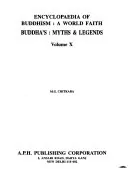
Tao and t'ai chi kung

 71
71

Tao and t'ai chi kung
Sohn’s 1989 publication, "Tao and t'ai chi kung," offers a commendable attempt to intertwine the abstract philosophy of the Tao with the physical practice of t'ai chi. The strength lies in its direct linkage of *wu wei* to the yielding yet powerful nature of t'ai chi movements, providing a conceptual framework for practitioners often focused solely on form. However, the work occasionally leans towards a somewhat generalized interpretation of Taoist concepts, lacking the granular detail that might satisfy advanced scholars of the *Daodejing*. A particularly illustrative passage discusses the 'emptiness' within t'ai chi forms as mirroring the Tao's generative void. Ultimately, it serves as a solid, if not exhaustive, bridge between philosophical Taoism and embodied practice for the dedicated student.
📝 Description
71
Robert C. Sohn's 1989 book connects Taoist philosophy with the practice of t'ai chi kung.
Published in 1989, "Tao and t'ai chi kung" examines the Taoist principles that inform the martial art of t'ai chi ch'uan. Sohn aims to show how the abstract ideas of Taoism are physically expressed through t'ai chi movements and philosophy. The book is for practitioners who seek a deeper connection between their martial training and the broader Taoist worldview. It will also interest students of Eastern thought who want to see abstract concepts made concrete.
The work arrived when Western interest in Eastern disciplines was growing. Many texts focused separately on t'ai chi techniques or general Taoism. Sohn’s approach was to synthesize these areas, linking the concept of the Tao to the practice of t'ai chi kung. This synthesis appealed to Westerners exploring alternative spiritual and physical practices.
This book sits within the tradition of translating Eastern philosophical and spiritual concepts for a Western audience. It specifically bridges the gap between theoretical Taoism, a major philosophical and religious tradition of China, and its practical application in the physical discipline of t'ai chi ch'uan. By focusing on how abstract concepts like *wu wei* and *qi* are embodied in movement, Sohn connects a spiritual cosmology to a concrete, embodied practice, offering a path toward internal harmony through external form.
💡 Why Read This Book?
• Understand the philosophical roots of t'ai chi kung by exploring how concepts like *wu wei* (non-action) are directly embodied in the movements, as detailed in the book's exploration of its core tenets. • Gain insight into the energetic principles of *qi* and *yin/yang* as they relate to t'ai chi's practice, moving beyond superficial technique to grasp its deeper energetic flow. • Connect with the historical dissemination of Eastern philosophy in the West, noting how works like Sohn's from 1989 helped synthesize ancient Taoist thought with martial arts practices for a new audience.
⭐ Reader Reviews
Honest opinions from readers who have explored this book.
❓ Frequently Asked Questions
What is the relationship between the Tao and t'ai chi kung as presented by Robert C. Sohn?
Sohn's work, published in 1989, posits that t'ai chi kung is not merely a martial art but a physical manifestation of Taoist philosophy, embodying principles like *wu wei* and the balance of *yin* and *yang*.
When was Robert C. Sohn's 'Tao and t'ai chi kung' first published?
The book 'Tao and t'ai chi kung' by Robert C. Sohn was first published in 1989, during a period of growing Western interest in Eastern spiritual and martial traditions.
What core Taoist concepts does the book link to t'ai chi practice?
The work connects fundamental Taoist ideas such as *wu wei* (non-action), the dynamic interplay of *yin* and *yang*, and the flow of *qi* (vital energy) directly to the theory and practice of t'ai chi kung.
Who would benefit most from reading 'Tao and t'ai chi kung'?
Individuals interested in the philosophical underpinnings of t'ai chi, students of Eastern philosophy seeking practical application, and practitioners desiring a deeper connection between their martial art and Taoist cosmology will find value in this text.
Does the book offer practical exercises for t'ai chi?
While primarily focused on the philosophical and energetic connections, the book's explanations of Taoist principles are intended to inform and deepen the practice of t'ai chi kung, offering a conceptual guide rather than a technical manual.
What distinguishes Sohn's approach to t'ai chi from other texts published around 1989?
Sohn's book distinguishes itself by explicitly bridging the abstract philosophy of the Tao with the embodied practice of t'ai chi kung, offering a holistic perspective that integrates mind, body, and spirit.
🔮 Key Themes & Symbolism
Embodied Taoist Philosophy
The central theme is the direct correlation between the abstract principles of Taoism and the physical practice of t'ai chi kung. Sohn argues that the art serves as a living embodiment of Taoist concepts, translating philosophical tenets into kinetic form. This includes understanding how the principles of yielding, circularity, and balance inherent in t'ai chi movements are expressions of the Tao's natural flow and harmony, offering practitioners a way to live and move in accordance with these ancient ideas.
The Flow of Qi
A significant focus is placed on *qi*, or vital energy, as the fundamental life force that permeates the universe and animates the body. The book explores how t'ai chi kung practice is designed to cultivate, circulate, and harmonize *qi*. This involves understanding the energetic pathways within the body and how specific movements and intentions in t'ai chi can facilitate this flow, leading to enhanced vitality, health, and internal power.
Wu Wei in Motion
The concept of *wu wei*, often translated as non-action or effortless action, is presented as a critical principle within t'ai chi. Sohn illustrates how *wu wei* is not about passivity but about acting in accordance with natural forces, without unnecessary force or resistance. This translates into t'ai chi movements that appear soft yet possess profound power, demonstrating how to achieve maximum effect with minimum effort by aligning with the opponent's energy and the natural momentum of the situation.
Yin and Yang Dynamics
The book examines the fundamental Taoist concept of *yin* and *yang* as the complementary, interdependent forces that shape reality. In the context of t'ai chi, this duality is explored through the interplay of opposing qualities such as soft and hard, yielding and advancing, stillness and movement, emptiness and fullness. Understanding and balancing these forces within the practice is presented as key to achieving structural integrity, dynamic balance, and effective application of technique.
💬 Memorable Quotes
Direct passages from the work, attributed to the author.
“The empty space within a t'ai chi posture is not a void, but the potential for all action.”
— This interpretation highlights how the concept of emptiness in t'ai chi is not a lack of substance but rather a state of readiness and receptivity, akin to the Tao's generative void from which all things arise.
“Wu wei in t'ai chi is yielding, not resisting, allowing the opponent's force to be redirected.”
— This concept emphasizes that *wu wei* in martial application means flowing with an opponent's energy rather than meeting force with force, thereby conserving one's own energy and achieving control.
“Harmony is found not in opposing yin and yang, but in their balanced interplay.”
— This interpretation underscores the Taoist principle that true equilibrium and efficacy in t'ai chi arise from the dynamic integration of complementary forces, rather than their static opposition.
💡 Key Ideas
Editorial paraphrase of the work's core concepts — not direct quotes.
To practice t'ai chi is to learn the Tao of movement.
This paraphrase suggests that engaging in t'ai chi is a direct method for internalizing and living the principles of the Tao, making the philosophical concept tangible through physical discipline.
The circulation of qi through the body is the unseen architecture of health and power.
This paraphrase points to the essential role of *qi* flow, unseen but fundamental, as the underlying structure supporting both physical well-being and the effective deployment of energy in practice.
🌙 Esoteric Significance
Tradition
The work aligns with the Taoist tradition, specifically exploring its manifestation in the internal martial art of t'ai chi ch'uan. It functions within the broader esoteric milieu by presenting a system where physical practice is a vehicle for spiritual cultivation and understanding universal principles, bridging the gap between philosophical abstraction and embodied experience.
Symbolism
Key symbols include the *yin-yang* symbol, representing the fundamental duality and dynamic balance inherent in the universe and t'ai chi practice. The concept of *qi* itself functions symbolically as the vital life force, the invisible energy that connects all things and is cultivated through mindful movement. The empty space within postures symbolizes receptivity and the potential for action, mirroring the Tao's generative void.
Modern Relevance
Sohn's work remains relevant for contemporary practitioners of t'ai chi and Qigong seeking deeper philosophical grounding. It informs modern discussions on embodied cognition and mind-body integration, resonating with holistic health movements and contemporary Daoist scholarship that emphasizes practical application over purely theoretical study.
👥 Who Should Read This Book
• T'ai chi practitioners seeking to deepen their understanding beyond physical form and connect their practice to its philosophical roots in Taoism. • Students of Eastern philosophy interested in exploring how abstract concepts like *wu wei* and *yin/yang* can be embodied and lived. • Individuals interested in mind-body practices that integrate spiritual principles with physical discipline for personal cultivation and well-being.
📜 Historical Context
Published in 1989, Robert C. Sohn's "Tao and t'ai chi kung" emerged during a period of significant Western engagement with Eastern philosophies and martial arts. The late 20th century saw a burgeoning interest in practices like yoga, martial arts, and meditation, often viewed as antidotes to Western materialism. While numerous books on Taoism and t'ai chi existed, Sohn’s work distinguished itself by attempting a more integrated philosophical-practical synthesis. This period also saw comparative philosophy gaining academic traction, though often remaining distinct from direct practice. Sohn’s approach, linking the abstract 'Tao' with the concrete 't'ai chi kung,' offered a tangible pathway for Westerners seeking spiritual and physical discipline. It contributed to the ongoing dialogue about how ancient Eastern wisdom could be understood and applied in a modern, globalized context, contrasting with purely academic treatises on Chinese philosophy.
📔 Journal Prompts
Reflect on the principle of *wu wei* as it applies to a challenging situation outside of t'ai chi.
Consider the interplay of *yin* and *yang* in your daily routines and how balance is achieved.
How does the concept of *qi* inform your understanding of vitality and well-being?
Analyze a specific t'ai chi movement through the lens of Taoist philosophy presented in the book.
Explore the idea of 'emptiness' as potential in your creative pursuits.
🗂️ Glossary
Tao
The fundamental principle and source of all existence in Taoism; the ineffable, natural order of the universe that is beyond human comprehension and description.
T'ai Chi Ch'uan
An ancient Chinese martial art practiced for both its defensive and health benefits, characterized by slow, flowing movements and deep breathing, often described as 'meditation in motion'.
Qi (Chi)
Vital life force or energy that is believed to permeate all living things and the universe; its cultivation and circulation are central to many Chinese practices like t'ai chi.
Wu Wei
A core Taoist concept meaning 'non-action' or 'effortless action.' It refers to acting in accordance with the natural flow of things, without excessive force or resistance.
Yin and Yang
Two complementary, interdependent, and opposing forces that are fundamental to Taoist philosophy, representing dualities such as passive/active, dark/light, female/male, which interact to create a dynamic balance.
T'ai Chi Kung
Often used interchangeably with T'ai Chi Ch'uan, but can also emphasize the cultivation aspect ('kung' meaning skill or effort) of the practice, focusing on the internal energy development and mastery.
Esoteric
Intended for or likely to be understood by only a small number of people with a specialized knowledge or interest; relating to inner, spiritual teachings.
🔮 Readers Also Liked
Browse all →








More Free Occult Philosophy Books
View all →