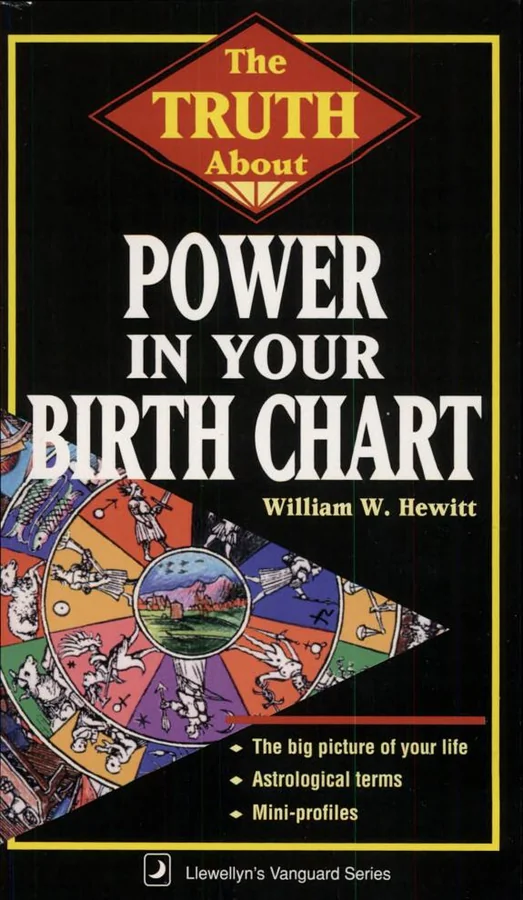
The Power in Your Birth Chart
 78
78

The Power in Your Birth Chart
William W. Hewitt's "The Power in Your Birth Chart" is a welcome corrective to the often-simplified astrology found in popular media. The book’s strength lies in its clear exposition of how a natal chart functions as a complex, individualized map, moving far beyond the simplistic Sun-sign predictions. Hewitt effectively argues that true astrological insight emerges from examining the entire chart – planets, houses, and aspects – a concept he elucidates with accessible language. A notable limitation, however, is the book's somewhat dated presentation, characteristic of mid-90s esoteric publishing, which might feel less dynamic to contemporary readers accustomed to more visually engaging material. Nonetheless, Hewitt’s insistence on the chart's specific, personal data as the key to unlocking its power remains a foundational principle for any serious student of natal astrology. It offers a solid, if unadorned, foundation for understanding one's cosmic blueprint.
📝 Description
78
William W. Hewitt's 1994 book, The Power in Your Birth Chart, argues natal astrology is more than just sun signs.
Published in 1994, William W. Hewitt's The Power in Your Birth Chart moves beyond the simplistic scope of daily horoscopes to present a thorough look at natal astrology. The book argues that a true astrological interpretation depends on a complete examination of the birth chart, not just the Sun's placement. It separates the individual natal chart from generalized Sun-sign astrology. While horoscopes give general indications, the birth chart offers a specific map of a person's psychological structure, their innate strengths, and life's obstacles. Hewitt guides readers to see the constraints of broad predictions.
The book's central purpose is to give readers tools for self-understanding and personal development by showing how their birth chart can be used. By grasping the detailed connections between celestial bodies at their birth moment, individuals can find clarity regarding their natural gifts and areas where they can grow. Hewitt's work places natal astrology within a larger esoteric context, highlighting its methods and origins.
The Power in Your Birth Chart situates natal astrology within a long-standing esoteric tradition. It focuses on the astrological framework, detailing how planetary positions, house placements, and aspects at the precise moment of birth form a personalized cosmic map. This approach emphasizes the birth chart as a blueprint for individual psychology and life paths, distinguishing it from more generalized astrological systems. The book connects this practice to a lineage of thought concerned with celestial influences on human affairs.
💡 Why Read This Book?
• Learn to interpret the specific planetary placements and house rulerships unique to your birth chart, moving beyond generalized Sun-sign horoscopes to understand your personal astrological signature. • Discover how the 1994 publication situates natal astrology within its historical esoteric context, differentiating it from earlier or contemporary astrological trends. • Gain practical methods for applying astrological insights to self-understanding, enabling you to identify and leverage your inherent strengths as detailed by your birth chart.
⭐ Reader Reviews
Honest opinions from readers who have explored this book.
❓ Frequently Asked Questions
What is the main difference between a birth chart and a horoscope?
A horoscope in newspapers typically focuses only on your Sun sign, offering generalized predictions. A birth chart, however, is a unique astrological map calculated for your exact birth date, time, and location, detailing the positions of all planets and their relationships.
When was "The Power in Your Birth Chart" first published?
The book "The Power in Your Birth Chart" by William W. Hewitt was first published in 1994.
Does the book explain astrological houses?
Yes, the book explains the significance of the twelve astrological houses, which represent different areas of life, and how planetary placements within these houses shape individual experiences.
Is this book suitable for beginners in astrology?
Yes, the book is designed to introduce readers to the fundamental concepts of natal astrology, making it accessible for those new to the subject who wish to understand their birth chart.
What kind of astrological analysis does the book emphasize?
The book emphasizes natal astrology, focusing on the personal birth chart as a tool for self-discovery and understanding individual potentials and challenges, rather than predictive astrology.
Who is the author, William W. Hewitt?
William W. Hewitt is the author of "The Power in Your Birth Chart," a work focused on understanding the personal astrological blueprint derived from an individual's birth chart.
🔮 Key Themes & Symbolism
Natal Chart as Blueprint
The central theme posits the birth chart not as a deterministic fate, but as a comprehensive, personalized blueprint of potential. This map, unique to each individual based on precise birth data, outlines inherent psychological tendencies, talents, and life challenges. Unlike generalized horoscopes, it accounts for the intricate interplay of all planetary placements, house systems, and aspects at the moment of birth, offering a nuanced understanding of the self.
Beyond Sun-Sign Superficiality
A significant focus is placed on differentiating true natal astrology from the simplistic Sun-sign columns prevalent in popular media. The book argues that focusing solely on the Sun sign neglects the vast majority of astrological information encoded in a birth chart, leading to inaccurate or irrelevant interpretations. It aims to educate readers on why newspaper astrology often fails to resonate personally.
Planetary Aspects and Houses
The work examines the mechanics of astrological interpretation, explaining the significance of planetary aspects (the angular relationships between planets) and their influence on the individual's psyche. It also elaborates on the twelve astrological houses, each representing a distinct area of life, and how the planets' positions within these houses color one's experiences and development.
Self-Awareness Through Astrology
Ultimately, the book frames astrological study as a path to profound self-awareness and personal empowerment. By understanding the symbolic language of their birth chart, individuals can gain clarity on their motivations, relationships, career paths, and spiritual inclinations, enabling them to live more consciously and aligned with their innate potential.
💬 Memorable Quotes
Direct passages from the work, attributed to the author.
“Your birth chart is not the same as the horoscope columns in the newspapers.”
— This foundational statement highlights the book's core thesis: the distinction between personalized astrological mapping and generalized Sun-sign predictions. It serves as an invitation to explore a more accurate and individualistic understanding of astrology.
“They [newspaper horoscopes] are based only on your Sun sign, commonly referred to as your 'sign'.”
— This explains the inherent limitation of popular astrology. By focusing solely on the Sun sign, it omits the complex interplay of the Moon, Ascendant, and other planetary bodies that form the complete picture of an individual's natal chart.
“If you've ever wondered why what you read in the newspapers is seldom accurate, you'll discover the secret.”
— This phrasing directly addresses a common reader frustration, promising an explanation for the perceived inaccuracies of horoscopes by revealing the underlying astrological principles that are being overlooked.
“Now you can learn the true strengths of astrology and how it applies to you.”
— This offers a direct benefit to the reader, positioning the book as a guide to understanding the practical application and personal relevance of astrological knowledge, particularly concerning individual strengths.
“Discover that your birth chart is not the same as the horoscope columns in the newspapers.”
— This statement clearly delineates the book's subject matter, setting the stage for a detailed exploration of natal charts and their unique capacity to reflect an individual's personality and life path.
🌙 Esoteric Significance
Tradition
This work firmly sits within the Western astrological tradition, specifically focusing on natal astrology. It draws implicitly from Hermetic principles that suggest a correspondence between the celestial macrocosm and the terrestrial microcosm. While not explicitly Kabbalistic or Gnostic, its emphasis on a unique, divinely (or cosmically) imprinted blueprint at birth aligns with certain metaphysical concepts prevalent in esoteric thought.
Symbolism
The primary symbol is the birth chart itself, representing the individual's cosmic signature or 'soul blueprint.' Planetary symbols (e.g., Mars for drive, Venus for affection) are interpreted within the context of their placement in signs and houses. The twelve houses symbolize the distinct arenas of life where these energies manifest, creating a symbolic map of the individual's psycho-spiritual journey.
Modern Relevance
Hewitt's focus on the birth chart as a tool for self-awareness and personal development continues to resonate. Contemporary practitioners of psychological astrology, online astrology platforms, and self-help resources often echo the principles outlined here, emphasizing the value of individualized astrological readings over generic horoscopes for understanding personality and life path.
👥 Who Should Read This Book
• Aspiring astrologers seeking to understand the foundational principles of natal chart interpretation beyond popular Sun-sign astrology. • Individuals curious about their personal strengths and life path who are looking for a structured, esoteric framework for self-discovery. • Readers interested in comparative studies of esoteric systems who want to examine how astrology functions as a symbolic language for understanding human experience.
📜 Historical Context
Published in 1994, William W. Hewitt's "The Power in Your Birth Chart" emerged during a period of renewed interest in Western esoteric traditions, following the New Age surge of the 1970s and 80s. This era saw a proliferation of astrological texts, with authors like Liz Greene and Stephen Arroyo already having established sophisticated psychological approaches to natal interpretation. Hewitt's work can be seen as contributing to the ongoing effort to legitimize natal astrology as a serious tool for self-understanding, distinct from the more commercialized horoscope industry. While not directly engaging with the astrological debates of the time in the same way a scholarly journal might, Hewitt’s book implicitly addressed the popular understanding of astrology, seeking to educate a wider audience about the depth and personal applicability of the birth chart. Its publication predates the widespread internet adoption, positioning it within the context of print-centric esoteric literature.
📔 Journal Prompts
The individual birth chart as a unique cosmic signature.
How the limitations of newspaper horoscopes compare to the specificity of your natal chart.
Interpreting the meaning of a specific planetary aspect in your chart.
The role of the astrological houses in defining life areas.
Applying natal astrological insights for personal growth.
🗂️ Glossary
Natal Chart
A personalized astrological diagram representing the positions of celestial bodies at the exact moment of an individual's birth, used for interpreting personality and life potentials.
Horoscope
In popular usage, a forecast based solely on a person's Sun sign. In a broader astrological sense, it can refer to any astrological chart, including the natal chart.
Sun Sign
The zodiac sign in which the Sun was located at the time of birth, commonly used in newspaper astrology columns.
Planetary Aspects
The angular relationships between planets in a birth chart, which are interpreted as indicators of how different energies interact within the individual.
Astrological Houses
The twelve divisions of the celestial sphere, representing different areas of life experience, within which planets are placed in a birth chart.
Ascendant (Rising Sign)
The zodiac sign that was rising on the eastern horizon at the exact time and location of birth, representing the outward personality and physical appearance.
Esoteric
Relating to or dealing with the occult, mystical, or supernatural. Knowledge or wisdom that is specialized or secret.
This book appears in 1 collection
🔮 Readers Also Liked
Browse all →



![Animadversio astrologica: or, a discourse touching astrology. To which are added, these considerations, I. Of the mutability of sublunary beings. ... IV. The causes of several phenomena's [sic] ... By D. Irish, ... 1701](/img/thumb/animadversio-astrologica-or-a-discourse-touching-astrology-to-which-are-added-these-considerations-i-of-the-mutability-of-sublunary-beings-iv-the-causes-of-several-phenomena-s-sic-by-d-irish-1701-iris.webp)




From the “Natal Astrology” Collection
View all →








More Free Astrology & Cosmology Books
View all →