A Thousand Suns
 79
79

A Thousand Suns
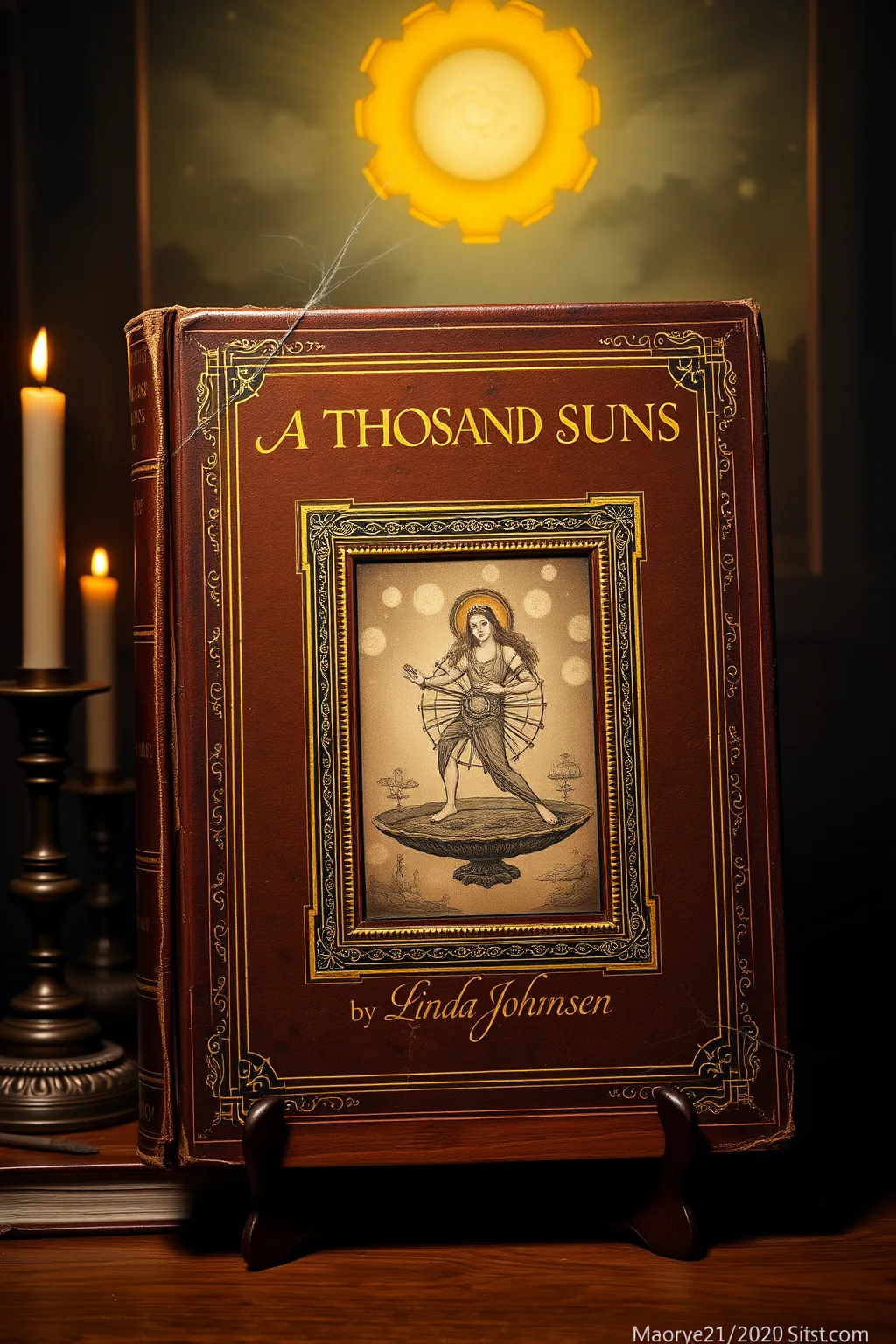
Linda Johnsen’s "A Thousand Suns" offers a structured entry point into the complex world of Vedic Astrology. The book’s strength lies in its accessible presentation of Jyotish, demystifying concepts like the Grahas and Bhavas for a Western audience. Johnsen skillfully avoids the pitfalls of overly deterministic astrological systems, framing the birth chart as a map of potential rather than an unchangeable fate. A notable passage details the influence of Saturn (Shani) as a planet of discipline and karma, which feels particularly grounded. However, the book occasionally leans towards a simplified explanation, which might leave seasoned practitioners wanting deeper dives into nuanced interpretive techniques. The initial publication date of 2004 means some modern astrological software and interpretive frameworks are not referenced. Despite this minor limitation, "A Thousand Suns" provides a clear and encouraging introduction to understanding one's celestial blueprint.
📝 Description
79
Linda Johnsen's A Thousand Suns, published in 2004, explains Vedic Astrology.
A Thousand Suns introduces the system of Vedic Astrology, known as Jyotish. This Indian tradition views birth moments as a celestial map, detailing personality, life events, and spiritual paths. The book guides readers in understanding their birth charts, which are charts calculated from astronomical data. It covers the predictive and remedial aspects of Jyotish, encouraging a conscious approach to one's destiny. Johnsen presents this system not as predetermined fate, but as a tool for self-awareness and personal power.
This book is for people interested in existence's deeper aspects and their place within it. It suits those seeking an alternative or complement to Western astrology, especially those drawn to Eastern philosophies. Readers focused on self discovery, understanding karmic patterns, and potential will find it useful. It serves both newcomers to Jyotish and those with some background wanting a clearer, more complete grasp of its principles and applications for the future.
Vedic Astrology, or Jyotish, has roots in ancient Indian Vedas, with principles codified over centuries. Sage astronomers like Parasara and Varahamihira developed its systematic approach, with foundational texts like the Brihat Parasara Hora Shastra appearing between the 7th and 10th centuries CE. In the 20th century, K.S. Krishnamurti modernized elements of Jyotish, increasing its global reach. Johnsen's work appeared in 2004, a time when interest in such systems was growing.
💡 Why Read This Book?
• Gain insight into Vedic Astrology's unique approach to personality and destiny, distinct from Western systems, by understanding the role of the Lagna (Ascendant) as introduced in Chapter 3. • Discover how your Vedic birth chart functions as a predictive tool by learning about the Dasha system, which Johnsen explains as a framework for life's unfolding timings. • Develop a more conscious relationship with your life path by exploring how Jyotish concepts, such as the influence of the Grahas (planets), can illuminate karmic patterns and potentials.
⭐ Reader Reviews
Honest opinions from readers who have explored this book.
❓ Frequently Asked Questions
What is the primary difference between Vedic Astrology and Western Astrology?
Vedic Astrology (Jyotish) uses a sidereal zodiac, which aligns with the actual constellations, while Western Astrology typically uses a tropical zodiac based on the seasons. Vedic Astrology also places a greater emphasis on planetary periods (Dashas) and lunar mansions (Nakshatras).
How does 'A Thousand Suns' explain the concept of karma in astrology?
The book interprets the birth chart as a reflection of past karma, outlining tendencies and life lessons. It suggests that understanding these patterns through Vedic Astrology empowers individuals to consciously work with their karma rather than being passively controlled by it.
What are the 'Grahas' mentioned in the book?
Grahas are the nine planets considered in Vedic Astrology: the Sun, Moon, Mercury, Venus, Mars, Jupiter, Saturn, Rahu, and Ketu. Each Graha represents different energies, psychological functions, and influences on life events.
Can Vedic Astrology help in predicting future events?
Yes, Vedic Astrology, as presented in 'A Thousand Suns,' uses systems like the Dasha periods to forecast likely trends and influences in different areas of life. It's viewed as a predictive science that helps anticipate challenges and opportunities.
Is Vedic Astrology considered a religious practice?
While deeply intertwined with the philosophical and cosmological worldview of ancient India, Vedic Astrology is primarily considered a science or a system of knowledge rather than a religious dogma. Its practice focuses on understanding celestial influences.
What is the significance of the 'Lagna' in Vedic Astrology?
The Lagna, or Ascendant, is the zodiac sign rising on the eastern horizon at the exact moment of birth. Johnsen explains it as the primary lens through which one experiences life and the starting point for interpreting the entire birth chart.
🔮 Key Themes & Symbolism
The Birth Chart as Cosmic Blueprint
The central thesis of 'A Thousand Suns' is that the moment of birth expresses a divine cosmic blueprint, visualized in the Vedic birth chart (Kundali). This chart, meticulously calculated based on astronomical positions, is presented not as rigid destiny, but as a map of potentials, challenges, and innate strengths. Johnsen guides readers to see how the placement of the Grahas (planets) within the Bhavas (houses) and Rashis (zodiac signs) at the time of their birth offers useful insights into their personality, karmic predispositions, and life's unfolding journey, encouraging a proactive engagement with their unique celestial signature.
Jyotish as a Science of Light
Vedic Astrology, Jyotish, translates to 'the science of light.' 'A Thousand Suns' illuminates this concept by explaining how the celestial bodies' light, as perceived from Earth at birth, influences our consciousness and life experiences. It moves beyond mere symbolism to present Jyotish as a sophisticated system for understanding universal energies and their specific manifestation in an individual's life. The book emphasizes that this 'light' provides awareness, enabling individuals to navigate their path with greater clarity and purpose, harnessing their inherent potentials.
Karma, Destiny, and Free Will
A core theme explored is the intricate relationship between karma, destiny, and free will within the Vedic astrological framework. Johnsen presents the birth chart as a record of past karmic actions (sanchita karma) manifesting in the present life (prarabdha karma). However, the text strongly advocates for the power of conscious choice and spiritual practice (kriya-mana karma) to influence future outcomes. Understanding one's astrological chart, according to the book, is not about accepting a predetermined fate but about gaining the wisdom to act wisely and shape a more positive destiny.
Planetary Influences and Life Areas
The book systematically details the influence of the nine Grahas (planets) and how their positions in the twelve Bhavas (houses) shape specific areas of life, from personality and relationships to career and spirituality. For instance, the placement of Jupiter (Guru) is often associated with wisdom and fortune, while Saturn (Shani) signifies discipline and karmic lessons. Johnsen explains how understanding these planetary dynamics within one's chart allows for a deeper comprehension of life's circumstances and the timing of events.
💬 Memorable Quotes
Direct passages from the work, attributed to the author.
“The birth chart expresses our personality, experiences, spiritual potential.”
— This core statement highlights the comprehensive nature of Vedic Astrology, suggesting that the precise moment of birth holds a detailed celestial map of an individual's entire life trajectory and inner landscape.
“Understanding your Vedic birth chart helps you generate a much more positive future.”
— This interpretation underscores the empowering aspect of Jyotish, suggesting that self-knowledge derived from astrological analysis can be actively used to manifest beneficial outcomes and shape one's destiny.
“The birth chart is a map of your personality and spiritual potential.”
— This interpretation focuses on the dual nature of the astrological chart, encompassing both the psychological makeup (personality) and the inherent spiritual capacities an individual possesses.
💡 Key Ideas
Editorial paraphrase of the work's core concepts — not direct quotes.
Ancient sages of India created just such maps to help us find our way through the unknown terrain ahead.
This paraphrase emphasizes the practical, guiding function of Vedic Astrology, positioning it as an ancient wisdom tradition designed to provide clarity and direction for life's journey.
Jyotish is a yoga science that maps your future.
This concise paraphrase frames Vedic Astrology as a spiritual discipline ('yoga science') with a predictive capability, linking self-awareness to foresight and conscious life planning.
🌙 Esoteric Significance
Tradition
The work fits within the broad lineage of Indian esoteric sciences, specifically Jyotish, which is considered one of the Vedangas (limbs of the Vedas). It departs from purely philosophical interpretations by offering a practical, chart-based system for understanding individual destiny and karma. While drawing from ancient Vedic sources, Johnsen's presentation aims for accessibility to a modern, often Western, audience, bridging the gap between traditional knowledge and contemporary spiritual seeking.
Symbolism
Key symbols include the Grahas (planets), such as Jupiter (Guru) representing expansion and wisdom, and Saturn (Shani) symbolizing karma, discipline, and limitation. The Rashis (zodiac signs) and Bhavas (houses) also function symbolically, mapping cosmic energies onto specific life areas and personality archetypes. The sun itself, in the title 'A Thousand Suns,' symbolizes consciousness, the soul, and the divine spark within each individual, reflecting the informative purpose of Jyotish.
Modern Relevance
Contemporary practitioners of holistic wellness, comparative mythology, and spiritual counseling often reference Vedic principles. Modern astrology has seen a resurgence, with many turning to Jyotish for its depth in understanding karma and reincarnation. Thinkers exploring consciousness studies and transpersonal psychology may find parallels in Jyotish's view of the birth chart as a psycho-spiritual map, influencing contemporary approaches to self-discovery and personal growth.
👥 Who Should Read This Book
• Aspiring Vedic Astrologers seeking a foundational text that clearly explains the core principles and interpretive framework of Jyotish. • Individuals interested in comparative astrology looking to understand the distinctions and unique insights offered by the sidereal zodiac and Dasha systems. • Seekers of self-knowledge interested in exploring their life path, karmic patterns, and spiritual potential through a sophisticated astrological lens.
📜 Historical Context
Published in 2004, Linda Johnsen's "A Thousand Suns" emerged during a period of significant Western engagement with Eastern spiritual and philosophical systems. Vedic Astrology, or Jyotish, has roots stretching back millennia, codified in ancient Indian texts attributed to sages like Parasara. By the late 20th century, figures such as K.S. Krishnamurti had introduced innovations like the K.P. System, popularizing Jyotish globally. Johnsen's work arrived amidst a burgeoning interest in comparative spirituality, often fueled by New Age movements and a desire for alternative frameworks beyond Western esotericism. This era saw increased availability of translated texts and cross-cultural exchange, making systems like Jyotish accessible to a broader audience. While not facing overt censorship, the proliferation of astrological systems meant "A Thousand Suns" entered a crowded field, competing for attention with both traditional Western astrology and other esoteric disciplines.
📔 Journal Prompts
Your Lagna's symbolic meaning and its expression in your daily life.
The Dasha periods outlined in the book and potential upcoming influences.
Interpreting the primary Graha influencing your 10th house of career.
How the concept of 'karma' in Vedic Astrology applies to a specific life challenge.
Personal reflections on the symbolism of the Sun (Surya) in your chart.
🗂️ Glossary
Jyotish
The traditional Sanskrit name for Vedic Astrology, meaning 'science of light.' It is an ancient system originating in India used for understanding cosmic influences and predicting life events.
Graha
Literally 'seizer' or 'planet' in Sanskrit. Refers to the Sun, Moon, and the five visible planets (Mercury, Venus, Mars, Jupiter, Saturn), plus the lunar nodes Rahu and Ketu, which exert significant influences in Vedic Astrology.
Rashi
The Sanskrit term for the twelve zodiac signs (Aries, Taurus, etc.) used in Vedic Astrology. These are based on the sidereal zodiac, aligning with the actual constellations.
Bhava
The Sanskrit term for the twelve houses in a Vedic birth chart. Each house represents a different area of life, such as self, wealth, siblings, home, children, health, relationships, and spirituality.
Lagna
The Ascendant, or the zodiac sign rising on the eastern horizon at the exact moment and location of birth. It is considered the most crucial point in the Vedic birth chart, influencing personality and life direction.
Dasha
A unique predictive system in Vedic Astrology that divides a person's life into periods ruled by specific planets. It helps in timing events and understanding the unfolding influences throughout life.
Nakshatra
Lunar mansions or star constellations. The Vedic zodiac is divided into 27 Nakshatras, providing a more detailed layer of interpretation beyond the Rashi (sign) placement.