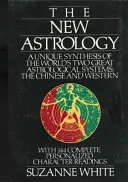
The New Astrology A Unique Synthesis Of The World's Two Great Astrological Systems
 82
82

The New Astrology A Unique Synthesis Of The World's Two Great Astrological Systems
Suzanne White’s 1988 exploration, The New Astrology, offers a bold departure from the standard 12-sign zodiac by proposing a system of 144 distinct astrological designations. This expansive approach, a synthesis of two major astrological traditions, promises a more granular understanding of personality and fate. The strength of White’s thesis lies in its ambition to provide greater specificity, moving beyond broad archetypes to unique astrological combinations. However, the sheer complexity of 144 signs can feel overwhelming, potentially obscuring the intuitive clarity many seek in astrology. A particularly striking aspect is the detailed breakdown of how these combined influences manifest, moving beyond simple Sun-sign archetypes. While ambitious, the system demands considerable study to master. Ultimately, it's an intriguing, if demanding, expansion for the dedicated astrological student.
📝 Description
82
Suzanne White's 1988 book, The New Astrology, proposed a 144-sign zodiac system.
Published in 1988, The New Astrology by Suzanne White offers a significant departure from the standard twelve zodiac signs. White argues that the traditional system is too general for a complete astrological profile. She introduces a synthesis of two major astrological traditions to create a more detailed framework of 144 distinct signs. This expanded system aims to provide a more specific understanding of individual personalities and life paths.
The book is for readers who feel the conventional astrological models are insufficient. It will appeal to those interested in exploring alternative astrological theories and seeking a more detailed astrological analysis. Individuals desiring a more precise astrological map for self-understanding will find White's approach particularly useful. The work challenges the ancient 12-sign zodiac, a central element in Western astrology since antiquity, by suggesting a more complex structure.
The New Astrology emerged during the late 20th century, a time when interest in esoteric studies and astrology saw a resurgence. While Western astrology, with roots in Hellenistic and medieval periods, remained prevalent, new syntheses and systems began to appear. White's work directly engages with the established 12-sign zodiac, a structure present since antiquity, by proposing a radical expansion. This move reflects a broader trend within some astrological circles to re-examine and augment traditional frameworks for greater specificity.
💡 Why Read This Book?
• Gain a more detailed astrological map: Understand how Suzanne White’s synthesis of two major astrological systems creates 144 unique signs, offering a level of specificity beyond the traditional 12-sign zodiac. • Explore a novel approach to self-understanding: Discover how this expanded system can provide fresh perspectives on personal strengths, challenges, and life path, moving beyond conventional astrological interpretations. • Engage with astrological innovation: Learn about a significant departure from established astrological frameworks, first proposed in 1988, that challenges the reader to reconsider the foundational elements of celestial interpretation.
⭐ Reader Reviews
Honest opinions from readers who have explored this book.
❓ Frequently Asked Questions
What is the core innovation of Suzanne White's 'The New Astrology'?
The book's central innovation is the expansion of the traditional 12-sign zodiac to a system of 144 distinct signs, created by synthesizing two major astrological traditions for a more personalized astrological profile.
When was 'The New Astrology' first published and by whom?
'The New Astrology' was first published on April 15, 1988, authored by Suzanne White.
Does this book require prior knowledge of astrology?
While some familiarity with basic astrological concepts can be helpful, White's work aims to introduce her unique system, making it accessible to those interested in exploring a new approach, even if they are not deeply versed in traditional astrology.
What are the 'two great astrological systems' combined in this book?
The book combines elements of Western tropical astrology with a system that appears to draw from Chinese astrology, creating a hybrid framework for the 144 signs.
How does 'The New Astrology' differ from standard horoscopes?
Unlike standard horoscopes which rely on 12 Sun signs, this book proposes 144 unique signs, offering a much more granular and individualized astrological interpretation based on complex combinations of influences.
Is this book suitable for experienced astrologers?
Yes, experienced astrologers may find this book particularly stimulating as it offers a novel framework that challenges and expands upon established astrological methodologies and interpretations.
🔮 Key Themes & Symbolism
Expansion of the Zodiac
The central tenet of White's work is the expansion from the familiar 12 zodiac signs to a more intricate system of 144 distinct signs. This is achieved by merging aspects of Western tropical astrology with elements from Chinese astrology, specifically the 12 animals and their associated elements. The aim is to provide a more precise astrological profile, acknowledging that the traditional 12 signs might be too broad for nuanced individual analysis.
Synthesis of Astrological Traditions
White's method involves a sophisticated layering of astrological systems. The book details how the 12 Western zodiac signs are combined with the 12 animal signs of the Chinese zodiac, along with their respective elemental associations. This creates a complex grid where each individual's birth chart is situated within one of the 144 unique combinations, offering a richer predictive and descriptive tool.
Personalized Self-Understanding
The ultimate goal of this expanded astrological framework is to facilitate deeper self-knowledge. By moving beyond general archetypes, the 144 signs are presented as keys to understanding unique personality traits, life challenges, and potential paths. This system offers a more intricate blueprint for individuals seeking to comprehend their place in the cosmos and their personal journey.
Challenging Astrological Norms
Published in 1988, 'The New Astrology' presented a significant challenge to the established norms of Western astrology. While the 12-sign zodiac has been a consistent feature since antiquity, White's work proposed a radical revision, suggesting that a more comprehensive understanding required a vastly expanded system, thereby pushing the boundaries of astrological thought.
💬 Memorable Quotes
Direct passages from the work, attributed to the author.
“There are not 12 but 144 signs of the zodiac, each distinct, each unique, each vital to everyone's quest for self-understanding.”
— This statement expresses the book's revolutionary premise, highlighting the move from a simple 12-sign system to a complex 144-sign matrix as the foundation for deeper personal insight.
“By combining the astrol”
— This incomplete phrase from the original blurb suggests the book's methodology involves integrating different astrological traditions or components to construct its novel 144-sign system.
“A thoroughly new, totally original way of looking at the zodiac is discovered.”
— This emphasizes the unique and innovative nature of White's contribution to astrological theory, positioning it as a singular development rather than an incremental change.
“For those convinced that there is nothing new under the sun--or the stars--Suzanne White offers a startling and provocative thesis.”
— This suggests the book is designed to surprise and challenge readers who believe all astrological concepts have been explored, presenting White's 144-sign system as a genuinely novel astrological discovery.
“Each distinct, each unique, each vital to everyone's quest for self-understanding.”
— This reinforces the idea that the 144 signs are not merely theoretical constructs but practical tools, each offering essential information for an individual's journey of self-discovery.
🌙 Esoteric Significance
Tradition
This work fits within the broader Hermetic and Renaissance magical traditions that sought to understand the cosmos through symbolic systems and correspondences. While not explicitly Kabbalistic or Gnostic, its ambition to create a more comprehensive celestial map reflects the Hermetic principle of 'As Above, So Below.' White's synthesis of Western and Eastern astrological elements can be seen as a modern manifestation of the syncretic tendencies often found in esoteric thought, aiming for a universal language of the stars.
Symbolism
The primary symbolism lies in the numerical expansion from 12 to 144. The number 12 itself carries significant weight in esoteric traditions (12 tribes, 12 apostles, 12 months). Expanding this to 144 (12x12) amplifies this symbolic power, suggesting a deeper, more intricate manifestation of celestial order. The integration of the 12 Chinese zodiac animals alongside the 12 Western signs introduces a rich layer of animalistic and elemental symbolism, bridging two distinct cosmological viewpoints.
Modern Relevance
White's approach to synthesizing astrological systems has influenced contemporary astrologers who favor more complex and nuanced interpretations. Modern practitioners exploring comparative astrology or seeking to move beyond the limitations of single-system analysis might draw inspiration from her methodology. The desire for personalized spiritual tools and detailed self-analysis, prevalent today, finds a precursor in White's ambitious 144-sign framework.
👥 Who Should Read This Book
• Dedicated students of Western astrology seeking to expand their interpretive toolkit beyond the traditional 12 signs. • Individuals interested in comparative esoteric studies, particularly those curious about the intersection of Western and Chinese astrological principles. • Readers engaged in deep self-exploration who find conventional astrological profiles insufficient and desire a more granular analysis of their personality and life path.
📜 Historical Context
Suzanne White's 'The New Astrology,' released in 1988, emerged during a vibrant period for esoteric thought and astrological revival. The late 20th century saw a significant resurgence of interest in spiritual and metaphysical practices, often seeking to synthesize diverse traditions. While mainstream astrology largely adhered to the Hellenistic-rooted 12-sign system, alternative approaches gained momentum. White's work directly challenged the antiquity and sufficiency of the 12-sign zodiac, proposing a novel system derived from combining Western tropical astrology with Chinese zodiacal concepts. This move was provocative, as it questioned a core tenet of a practice with millennia of history. The book's reception likely varied, with some embracing its complexity and others finding it overly elaborate compared to simpler, more established astrological methods. It stands as an example of the era's drive to innovate and expand upon traditional esoteric frameworks.
📔 Journal Prompts
Your unique position within the 144 signs: explore the dual influences at play.
The synthesis of Western and Chinese zodiacal elements: what new insights does this combination offer?
Beyond the 12 archetypes: how does a more granular astrological system change your perception of self?
The quest for self-understanding: how can an expanded astrological vocabulary aid this journey?
Reflecting on the number 144: what symbolic resonance does this amplified number hold for you?
🗂️ Glossary
144 Signs
The expanded zodiacal system proposed by Suzanne White, created by combining the 12 signs of Western astrology with the 12 animal signs of Chinese astrology and their elemental associations.
Western Tropical Astrology
The dominant form of Western astrology, which uses the apparent path of the Sun through the sky (the ecliptic) divided into 12 equal segments, starting with Aries at the vernal equinox.
Chinese Zodiac Animals
A 12-year cycle where each year is represented by an animal (Rat, Ox, Tiger, Rabbit, Dragon, Snake, Horse, Goat, Monkey, Rooster, Dog, Pig), often associated with specific personality traits and elemental influences.
Synthesis
In the context of this book, the process of merging and integrating distinct astrological systems (Western and Chinese) to create a new, more complex framework.
Astrological Profile
A detailed description of an individual's personality, potential, and life path based on their birth chart, interpreted through astrological principles.
Vernal Equinox
The point in the year (around March 20th or 21st) when the Sun crosses the celestial equator moving north, marking the beginning of spring in the Northern Hemisphere and the traditional start of the astrological year (Aries).
Elemental Associations
The connection of astrological signs or celestial bodies to the classical elements (Earth, Air, Fire, Water) or the five elements of Chinese philosophy (Wood, Fire, Earth, Metal, Water), influencing their characteristics and interactions.