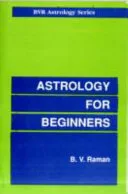
Astrology for Beginners
 84
84

Astrology for Beginners
Bangalore Venkat Raman’s Astrology for Beginners is a work that takes its title seriously, laying out the foundations of Jyotisha with a clarity that belies the subject’s potential for confusion. Raman’s strength lies in his systematic approach, moving from the basic elements—the planets, signs, and houses—to more complex concepts like planetary periods and transits without overwhelming the uninitiated. The early sections, detailing the nature of each planet and the characteristics of the zodiac signs, are particularly well-handled. However, the book’s limitation for a modern reader might be its reliance on a traditional framework that assumes a certain cultural context, which may not always be immediately apparent to a Western beginner. A specific passage that stands out is the explanation of the Nakshatras, the lunar mansions, which are central to Vedic astrology and offer a nuanced layer of interpretation often absent in Western systems. Overall, Astrology for Beginners serves as a solid, if somewhat traditional, entry point into the vast field of Vedic astrological study.
📝 Description
84
Bangalore Venkat Raman's Astrology for Beginners, published in 1992, systematically introduces Vedic astrology.
This book offers a structured approach to the principles and practices of Vedic astrology, aimed at newcomers. It covers core concepts needed to understand astrological charts and their interpretations. The text breaks down elements like zodiac signs, planetary rulers, and houses (Bhavas), along with planetary aspects (Drishti). It also explains the calculation of planetary periods (Dashas) and transits (Gocharas), which are essential for analyzing birth charts. Raman's work is designed for individuals with no prior astrological knowledge, especially those interested in the Indian astrological tradition. It caters to students and curious individuals wanting to learn about the potential influence of celestial bodies on human life as understood through the Vedic system.
Published in 1992, the book appeared during a time of increasing global interest in Eastern philosophies. While Western astrology was already established, Vedic astrology, or Jyotisha, was gaining more attention in the West. Raman's effort made this ancient Indian system more accessible, connecting traditional knowledge with a modern international audience looking for astrological insights.
This book situates itself within the Jyotisha tradition, one of the oldest systems of astrology. Originating in ancient India, Jyotisha is a complex framework for understanding karma, destiny, and life events through the lens of celestial movements. It differs from Western astrology in its use of the sidereal zodiac and its emphasis on specific planetary periods (Dashas) for predictive timing. Raman's work aims to make this sophisticated system understandable to a broader audience, bridging the gap between ancient Indian cosmology and contemporary seekers of astrological knowledge.
💡 Why Read This Book?
• Learn the foundational principles of Vedic astrology, including the distinct interpretations of planets and zodiac signs as presented in the chapter on 'The Signs and their Rulers', offering a unique perspective not found in Western systems. • Understand the mechanics of planetary periods (Dashas) and transits (Gocharas) as explained in dedicated sections, providing practical tools for analyzing astrological influences over time. • Gain insight into the significance of the Nakshatras (lunar mansions), a core element of Jyotisha detailed within the text, which adds a layer of interpretive depth to astrological readings.
⭐ Reader Reviews
Honest opinions from readers who have explored this book.
❓ Frequently Asked Questions
What is the primary astrological system discussed in Astrology for Beginners?
The book primarily focuses on Vedic astrology, also known as Jyotisha. This ancient Indian system of astrology uses a sidereal zodiac and has distinct interpretations for planets, houses, and astrological periods compared to Western tropical astrology.
Who was Bangalore Venkat Raman?
Bangalore Venkat Raman (1912-1999) was a highly respected Indian astrologer and author who dedicated his life to the study and propagation of Vedic astrology. He authored numerous books and articles, aiming to systematize and popularize Jyotisha.
When was Astrology for Beginners first published?
Astrology for Beginners was first published in 1992. This edition aimed to make the complex subject of Vedic astrology accessible to a broader audience interested in astrological studies.
Does the book explain how to cast an astrological chart?
Yes, the book covers the fundamental calculations and principles required to understand and interpret an astrological chart within the Vedic framework, including planetary positions and house placements.
What are the key differences between Vedic and Western astrology discussed in the book?
Raman's work implicitly highlights differences by focusing on the sidereal zodiac, the Nakshatras (lunar mansions), and the Dasha system (planetary periods), which are central to Vedic astrology but not typically emphasized in Western astrology.
Is Astrology for Beginners suitable for complete novices?
Absolutely. The book is explicitly designed for beginners, systematically introducing concepts from basic planetary significations to chart interpretation, making it an accessible starting point for those new to astrology.
🔮 Key Themes & Symbolism
Vedic Astrological Foundations
The book meticulously details the bedrock of Vedic astrology (Jyotisha), explaining the inherent nature and significations of the nine planets (Grahas) and the twelve zodiac signs (Rashis). It emphasizes the sidereal zodiac, a key distinction from Western astrology. Raman provides clear explanations of the Nakshatras, the 27 lunar mansions, which are crucial for precise astrological analysis in the Indian tradition, offering a depth of interpretation specific to this lineage.
Planetary Periods and Transits
A significant focus is placed on understanding the dynamic flow of astrological influences through planetary periods (Dashas) and transits (Gocharas). The book outlines how these temporal cycles, particularly the Vimshottari Dasha system, are calculated and interpreted to forecast potential events and life phases. This section provides practical tools for readers to analyze the unfolding of an individual's astrological blueprint over time.
Chart Interpretation Basics
Astrology for Beginners guides readers through the essential components of an astrological chart, including the twelve houses (Bhavas) and planetary aspects (Drishti). It explains how planetary placements within these houses, and their interactions, shape personality, destiny, and life experiences. The emphasis is on building a systematic approach to reading a natal chart, equipping beginners with the initial skills for astrological assessment.
Jyotisha's Philosophical Underpinnings
While practical, the work touches upon the philosophical context of Jyotisha, framing astrology as a science of time and destiny. It suggests that understanding celestial patterns can offer guidance and help individuals align with cosmic rhythms. Raman presents astrology not merely as prediction but as a tool for self-understanding and spiritual growth within the framework of Indian cosmology.
💬 Memorable Quotes
Direct passages from the work, attributed to the author.
“The planets are the lords of the signs.”
— This concise statement highlights the fundamental relationship between celestial bodies and the zodiacal segments they govern, forming a core principle for astrological interpretation.
“The houses represent different areas of life experience.”
— This interpretation explains that each of the twelve houses in an astrological chart corresponds to a specific domain of human life, such as career, relationships, or health.
“Dasha systems map out planetary influences over time.”
— This interpretation refers to the various period-based astrological systems in Jyotisha, which are used to delineate the sequential unfolding of planetary energies throughout a person's life.
💡 Key Ideas
Editorial paraphrase of the work's core concepts — not direct quotes.
Transits show the current unfolding of destiny.
This paraphrased concept underscores the dynamic nature of astrology, suggesting that the movement of planets in real-time interacts with the birth chart to reveal ongoing life experiences.
Nakshatras add fine-grained detail to astrological readings.
This paraphrased concept emphasizes the importance of the lunar mansions in Vedic astrology, providing a more nuanced and detailed layer of analysis beyond the broader zodiacal signs.
🌙 Esoteric Significance
Tradition
This work firmly belongs to the Vedic or Jyotisha tradition, one of the oldest continuously practiced astrological systems in the world. Jyotisha is considered a Vedanga, an auxiliary discipline of the Vedas, implying a scriptural and spiritual lineage. Raman's approach adheres to the classical principles of this tradition, emphasizing its role as a science of time and destiny, deeply intertwined with Hindu philosophy and cosmology.
Symbolism
Key symbols include the twelve zodiac signs (Rashis), each representing archetypal energies, and the nine planets (Grahas), which act as cosmic messengers influencing human affairs. Crucially, the Nakshatras, or lunar mansions, function as finer divisions of the zodiac, each with unique deities and symbolic meanings, offering a profound layer of interpretation specific to the Vedic system.
Modern Relevance
Raman's work continues to be relevant for contemporary practitioners and students of Vedic astrology worldwide. His clear exposition serves as a foundational text for many learning Jyotisha outside of India. Thinkers and astrologers exploring comparative astrology, the influence of Eastern philosophies on modern spirituality, and predictive techniques often reference Raman's contributions as a bridge between classical Jyotisha and the global esoteric community.
👥 Who Should Read This Book
• Aspiring students of Vedic astrology seeking a systematic introduction to Jyotisha, who will benefit from Raman's clear explanations of planets, signs, and houses. • Individuals interested in comparative religious studies or esoteric traditions, as the book provides insight into a major Indian philosophical and divinatory system. • Those curious about astrological systems beyond the Western tradition, offering a foundational understanding of concepts like Nakshatras and Dashas.
📜 Historical Context
Bangalore Venkat Raman's Astrology for Beginners, published in 1992, emerged in an era where global interest in Eastern spiritual traditions, including Vedic astrology, was steadily increasing. This period saw a greater exchange of esoteric knowledge between India and the West, partly fueled by the growing New Age movement. Raman, a prolific author and proponent of Jyotisha since the mid-20th century, aimed to systematize and present this ancient Indian science in an accessible format. His work offered an alternative to the prevailing Western tropical astrology, which uses a different zodiac and set of interpretive techniques. While not facing direct censorship, the dissemination of Vedic astrological texts like Raman's contributed to a broader academic and popular discourse on comparative astrology, challenging the dominance of Western astrological frameworks and highlighting the rich diversity within astrological traditions.
📔 Journal Prompts
The characteristics of Aries as described in Chapter 3.
Your natal placement of the Moon according to the sidereal zodiac.
The concept of planetary aspects (Drishti) in Jyotisha.
The significance of the 7th House in chart interpretation.
How the Vimshottari Dasha system might apply to life phases.
🗂️ Glossary
Jyotisha
The traditional Indian system of astrology, also known as Vedic astrology. It is considered a Vedanga, or limb of the Vedas, and uses a sidereal zodiac.
Graha
Literally 'seizer' or 'planet' in Sanskrit. Refers to the nine celestial bodies used in Vedic astrology: the Sun, Moon, Mars, Mercury, Jupiter, Venus, Saturn, Rahu, and Ketu.
Rashi
The Sanskrit term for a zodiac sign. There are twelve Rashis, each spanning 30 degrees of the ecliptic, similar to Western astrological signs but calculated using the sidereal zodiac.
Bhava
The Sanskrit term for a house in an astrological chart. There are twelve Bhavas, each representing a different sphere of life experience.
Nakshatra
A lunar mansion or constellation division in Vedic astrology. There are 27 Nakshatras, each covering 13 degrees and 20 minutes of the ecliptic, offering a more detailed layer of interpretation.
Dasha
A system of planetary periods in Vedic astrology that indicates the timing of events and the unfolding of karmic influences throughout a lifetime. The Vimshottari Dasha is the most common system.
Gochar
The Sanskrit term for planetary transits, referring to the current movement of planets through the zodiac and their relationship to the natal chart.