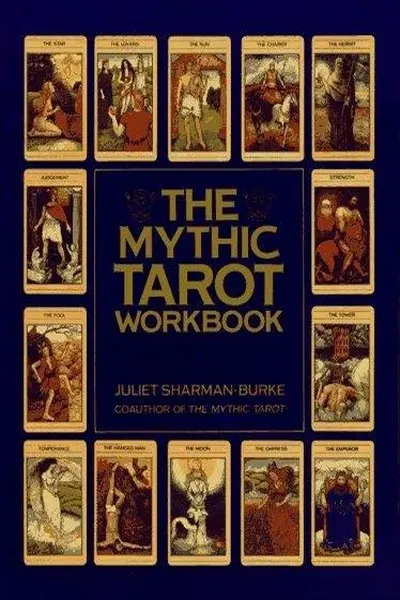
The Mythic Tarot Workbook

 83
83

The Mythic Tarot Workbook
Juliet Sharman-Burke’s *The Mythic Tarot Workbook* offers a structured pathway for those seeking to engage with the tarot on a deeper, archetypal level. Its strength lies in its systematic approach, providing concrete exercises that encourage personal reflection and the integration of tarot imagery into one's psychological landscape. The workbook effectively translates the rich symbolism of the Mythic Tarot deck into actionable steps for self-inquiry, particularly in its exploration of the Major Arcana's narrative potential. A limitation, however, is its inherent reliance on familiarity with the accompanying deck; the workbook is less effective as a standalone resource. The exercises concerning the "Shadow Aspect" of the Major Arcana cards, for instance, require direct engagement with the deck's specific artwork and interpretations to yield their full impact. Ultimately, this workbook serves as a solid, if specialized, tool for dedicated students of the Mythic Tarot.
📝 Description
83
Juliet Sharman-Burke's 1997 workbook guides users through the archetypal imagery of her tarot deck.
Published in 1997, *The Mythic Tarot Workbook* by Juliet Sharman-Burke is a practical manual for those using her tarot deck. It moves beyond simple prediction, focusing instead on the archetypal figures and personal mythology found within the cards. The book contains exercises and meditations designed to help users connect with the tarot as a tool for self-understanding and psychological insight.
This guide is for tarot practitioners who want a deeper engagement with the cards, especially those already familiar with Sharman-Burke's Mythic Tarot. It also appeals to students of Jungian psychology, mythology, and those interested in personal growth through symbolic language. The workbook aims to illuminate the unconscious through structured activities and reflection.
Emerging in the late 20th century, a time of renewed interest in esoteric thought and Jungian ideas, *The Mythic Tarot Workbook* connected with a growing appreciation for tarot's psychological depth. Sharman-Burke's approach aligns with thinkers like Carl Jung and Joseph Campbell, viewing the tarot not just as a divinatory tool but as a symbolic system reflecting universal human experiences and the path to individuation.
💡 Why Read This Book?
• Learn to interpret the Major Arcana not just as divinatory tools but as representations of psychological archetypes, as detailed in the workbook's structured exercises on figures like the Hero. • Develop a personal mythology by applying the workbook's meditations to connect the symbolic language of the tarot, such as the Court Cards, to your own life narrative. • Gain practical skills in introspection through guided journaling prompts specifically designed to explore the symbolic interactions presented in the Mythic Tarot, fostering a deeper understanding of Jungian concepts.
⭐ Reader Reviews
Honest opinions from readers who have explored this book.
❓ Frequently Asked Questions
What is the primary purpose of The Mythic Tarot Workbook?
The workbook's primary purpose is to provide practical exercises and meditations for users of Juliet Sharman-Burke's Mythic Tarot deck, facilitating a deeper understanding of the cards' archetypal and psychological meanings beyond simple divination.
Is The Mythic Tarot Workbook suitable for beginners?
While beginners can use it, the workbook is most effective when paired with Juliet Sharman-Burke's Mythic Tarot deck. It assumes some familiarity with tarot basics and focuses on archetypal interpretation.
What psychological theories influence this workbook?
The workbook is heavily influenced by Jungian psychology, particularly Carl Jung's theories on archetypes, the collective unconscious, and the process of individuation, as applied to tarot imagery.
Can I use this workbook with a different tarot deck?
It is specifically designed for Juliet Sharman-Burke's Mythic Tarot deck. While some exercises might be adaptable, their full benefit is realized through engagement with the deck's unique imagery.
How does this workbook differ from a standard tarot guide?
Unlike standard guides that focus on general meanings and divination, this workbook emphasizes personal exploration and psychological integration, using specific exercises and journaling prompts tied to archetypal narratives.
What kind of exercises are included in the workbook?
Exercises include guided meditations, journaling prompts, and creative activities designed to help users explore the archetypal figures and stories within the Major and Minor Arcana, such as the 'Hero's Journey' concept.
🔮 Key Themes & Symbolism
Archetypal Psychology in Tarot
The workbook frames the tarot, particularly the Major Arcana, as a visual representation of universal archetypes akin to those identified by Carl Jung. It encourages users to recognize figures like the Hero, the Wise Old Man, and the Great Mother within the cards, and to see these as patterns active in their own lives. This approach moves tarot interpretation from predictive fortune-telling toward a tool for psychological self-understanding and integration, exploring the unconscious through symbolic language.
The Hero's Journey Archetype
Central to the workbook's methodology is the application of Joseph Campbell's monomyth, or the Hero's Journey, to the tarot narrative. Major Arcana cards are presented as stages or encounters within this universal quest. Users are guided to map their own life challenges and transformations onto this structure, using the tarot imagery as a symbolic guide for overcoming obstacles and achieving personal growth, fostering a sense of agency and purpose.
Personal Mythology and Self-Discovery
This resource facilitates the construction of a personal mythology by prompting users to identify how the archetypal energies depicted in the tarot manifest in their individual experiences. Through exercises and meditations, the workbook encourages introspection, helping individuals to understand their own life narratives in the context of timeless symbolic patterns. It serves as a vehicle for self-discovery, revealing deeper layers of the psyche.
Symbolic Language of the Unconscious
The workbook emphasizes the tarot's role as a bridge to the unconscious mind. It teaches readers to interpret the symbolic language of the cards—colors, figures, and actions—as messages from the deeper psyche. By engaging with these symbols through structured activities, users can gain insights into their motivations, fears, and potentials, fostering a dialogue between the conscious and unconscious aspects of the self.
💬 Memorable Quotes
Direct passages from the work, attributed to the author.
“The cards are a mirror to the soul.”
— This statement expresses the workbook's core philosophy: that the tarot's symbolic imagery reflects the user's inner world, serving as a tool for introspection and self-awareness rather than an external source of prophecy.
“Recognize the archetypes within your own life.”
— This is a directive to actively identify the universal patterns and figures represented in the tarot, such as the Hero or the Shadow, within one's personal experiences and psychological makeup.
“The journey of the Fool is the journey of life.”
— This highlights the narrative potential of the Major Arcana, framing the Fool's progression as a metaphor for the entire human experience, encompassing the stages of the Hero's Journey and personal transformation.
“Work with the cards to understand your inner landscape.”
— This emphasizes the workbook's practical, psychological approach, encouraging users to employ the tarot not just for answers, but for a deeper exploration and comprehension of their own mind and emotions.
“Each card tells a story of human potential.”
— This interpretation suggests that the tarot imagery is not static but dynamic, offering narratives that illuminate the possibilities for growth, change, and the realization of one's inherent capacities.
🌙 Esoteric Significance
Tradition
This workbook operates within the Western Esoteric tradition, specifically drawing from Hermeticism and Jungian psychology. It bridges the symbolic language of tarot, a practice with roots in Renaissance Europe and later occult revival movements, with the analytical framework of depth psychology. It departs from purely mystical or divinatory interpretations by grounding the tarot in archetypal patterns of the human psyche, aligning with a modern, psychological hermeneutics of esoteric symbols.
Symbolism
Key symbols explored include the archetypal figures of the Major Arcana, such as the Hero, representing the journey of individuation, and the Wise Old Man or Great Mother, embodying distinct psychological energies. The workbook also implicitly engages with the symbolism of the Minor Arcana suits (Wands, Cups, Swords, Pentacles) as elemental forces and modes of experience, encouraging users to see these not just as abstract concepts but as active components of their inner world.
Modern Relevance
The work remains relevant for contemporary practitioners of Jungian analysis, archetypal psychology, and modern tarot enthusiasts who seek a deeper, psychological understanding of the cards. It informs modern approaches to self-help, personal development, and narrative therapy that utilize symbolic systems. Thinkers and practitioners in fields like mythology studies and transpersonal psychology continue to find value in its structured method for exploring the collective unconscious through tarot imagery.
👥 Who Should Read This Book
• Tarot students seeking to move beyond basic meanings to explore the psychological and archetypal dimensions of the cards, especially those familiar with the Mythic Tarot deck. • Individuals interested in Jungian psychology and mythology who wish to apply archetypal concepts to their personal lives through a symbolic medium. • Practitioners of self-reflection and personal development who are looking for structured exercises and journaling prompts to enhance their introspection and understanding of their inner world.
📜 Historical Context
Published in 1997, *The Mythic Tarot Workbook* emerged during a significant period of renewed interest in esoteric traditions and depth psychology. The preceding decades had seen a growing acceptance of tarot as a sophisticated symbolic system, heavily influenced by the work of Carl Jung and mythologists like Joseph Campbell. This era, often termed the 'New Age' or 'Esoteric Revival,' saw numerous authors exploring the psychological dimensions of divination and occult practices. Sharman-Burke's workbook aligns directly with this trend, offering a structured, Jungian-inspired approach to tarot interpretation. Contemporaries like Sallie Nichols, whose *Jung and Tarot: An Archetypal Journey* (1980) was foundational, paved the way for such psycho-spiritual applications. Unlike purely historical or divinatory texts, Sharman-Burke's work engaged directly with the burgeoning field of archetypal psychology, making tarot accessible as a tool for personal development and self-understanding.
📔 Journal Prompts
The Fool's journey through the Major Arcana: map your own initiatory stages.
Identify the 'Shadow Aspect' of a Court Card and its manifestation in your relationships.
Reflect on the archetypal 'Hero's Journey' as it appears in your current life challenges.
Consider the symbolic meaning of the elemental suits (Wands, Cups, Swords, Pentacles) in your daily decision-making.
How does the 'Wise Old Man' or 'Great Mother' archetype appear in your life guidance?
🗂️ Glossary
Archetype
In Jungian psychology, a universal, archaic pattern and image that derives from the collective unconscious and is the psychic counterpart of an inherited structure. Examples include the Hero, the Mother, and the Shadow.
Individuation
The psychological process of integrating the conscious and unconscious aspects of the personality, leading to the development of the unique, whole self. The tarot is often seen as a map for this journey.
Major Arcana
The 22 trump cards of the tarot deck, representing significant life events, spiritual lessons, and archetypal forces. They often depict a narrative journey.
Minor Arcana
The 56 cards of the tarot deck, divided into four suits (Wands, Cups, Swords, Pentacles), representing everyday experiences, challenges, and situations.
Mythic Tarot
A specific tarot deck and accompanying system created by Juliet Sharman-Burke, notable for its rich, classical, and archetypal imagery designed for psychological exploration.
Jungian Psychology
A school of psychology founded by Carl Jung, emphasizing the exploration of the unconscious, archetypes, the collective unconscious, and the process of individuation.
Monomyth (Hero's Journey)
A concept described by Joseph Campbell, referring to a basic narrative pattern found in many myths and stories worldwide, involving a hero's departure, initiation, and triumphant return.
🔮 Readers Also Liked
Browse all →









More by Juliet Sharman-Burke
All books →




More Free Divination & Tarot Books
View all →