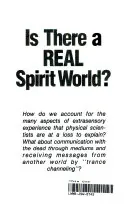
The merciless

 78
78

The merciless
Danielle Vega’s *The Merciless* eschews conventional narrative for a more disorienting, philosophical exploration. The book's strength lies in its unflinching commitment to portraying the dissolution of self and the unreliable nature of perception. One particularly striking passage describes the protagonist feeling their limbs detach, not with horror, but with a strange, detached curiosity, illustrating the work's unique emotional register. However, this very dedication to abstract concepts can render the narrative opaque for readers seeking concrete engagement. The lack of a clear plot progression or relatable character arc, while intentional, might alienate those unaccustomed to such experimental forms. Ultimately, *The Merciless* offers a challenging, albeit sometimes inaccessible, dive into existential dread and the fragility of identity.
📝 Description
78
Danielle Vega's 2017 novel, The Merciless, questions the nature of consciousness and reality.
The Merciless is a speculative novel that prioritizes abstract concepts and existential themes over traditional plot. Vega's narrative engages with perception, identity, and the fundamental nature of existence, often through unsettling and surreal scenarios. The book does not aim to provide simple answers. Instead, it prompts readers to confront complex questions about their place in the universe. Vega challenges conventional narrative structures, opting for evocative imagery and philosophical inquiry rather than straightforward storytelling. This approach is suited for readers who appreciate experimental literature and philosophical exploration.
This work is intended for those interested in existentialism, surrealism, and the more abstract aspects of metaphysical thought. It appeals to individuals seeking literature that provokes thought and discomfort rather than offering easy resolutions. Readers who enjoy deconstructions of traditional narrative forms and explorations of psychological landscapes will likely connect with its unconventional method. The book is for those who find meaning in ambiguity and the questioning of established realities.
Published in 2017, The Merciless emerged during a period of increased interest in experimental fiction and philosophical engagement. While not directly tied to a specific historical movement, its approach echoes the challenges to rationalism found in Surrealism and Dadaism. Vega's work engages with post-modern concerns by questioning established norms and realities through its narrative construction and thematic focus. The novel reflects a broader contemporary trend of literary innovation and thematic depth within speculative fiction.
💡 Why Read This Book?
• Gain a visceral understanding of the 'dissolving self' concept, as depicted through unsettling narrative shifts, offering a literary exploration of ego death not found in typical psychological texts. • Experience the deliberate use of 'liminal spaces' to evoke psychological unease and explore transitional states, providing a unique method for contemplating personal change. • Confront the idea of 'perceptual distortion' as presented in the text, challenging your assumptions about reality and the reliability of sensory input in a way few books dare.
⭐ Reader Reviews
Honest opinions from readers who have explored this book.
❓ Frequently Asked Questions
What is the central theme explored in The Merciless by Danielle Vega?
The central theme is the dissolution of self and the unreliability of perception. The work explores how identity can become fluid and uncertain, and how our understanding of reality is constructed and potentially fragile.
When was The Merciless originally published?
The book was first published in 2017, placing it within a contemporary literary landscape interested in experimental fiction and existential themes.
Does The Merciless have a traditional plot structure?
No, The Merciless deliberately deviates from traditional plot structures. It prioritizes philosophical inquiry and evocative imagery over linear narrative progression.
What kind of reader would appreciate The Merciless?
Readers who enjoy experimental literature, existential philosophy, and works that challenge conventional narrative forms would find this book engaging. It appeals to those comfortable with ambiguity and psychological depth.
Are there specific literary movements that influence The Merciless?
While not directly aligned with a single historical movement, its experimental nature and questioning of reality echo aspects of Surrealism and Dadaism's challenges to rationalism.
What does the book suggest about reality?
The book suggests that reality is a subjective construct, heavily influenced by our perceptions. It explores how 'perceptual distortion' can lead to a questioning of what is objectively real.
🔮 Key Themes & Symbolism
The Dissolving Self
The narrative relentlessly pursues the disintegration of a stable identity. Characters, or perhaps a singular consciousness, experience a profound loss of self-definition, where personal boundaries blur and the very concept of 'I' becomes questionable. This theme is explored not as a tragic fall, but as an existential condition, forcing the reader to consider the constructed nature of identity and its potential fragility in the face of overwhelming existential pressures or altered states of consciousness.
Perceptual Distortion
Vega employs pervasive 'perceptual distortion' to challenge the reader's grasp on reality. The text manipulates sensory input and narrative perspective, making it difficult to discern objective truth from subjective experience. This technique serves to underscore the book's exploration of how our understanding of the world is mediated through unreliable senses and internal states, questioning the very foundation of what we consider 'real'.
Liminal Spaces
The book frequently utilizes 'liminal spaces' – thresholds, transitional zones, and ambiguous environments – to mirror the characters' psychological states. These settings are not merely backdrops but active participants in the narrative, embodying the uncertainty and fluidity of existence. They represent moments of profound change or stasis, where the familiar dissolves and the unknown looms, highlighting themes of transformation and existential drift.
Existential Disquiet
A pervasive sense of 'existential disquiet' permeates the work. It arises from the confrontation with meaninglessness, the absurdity of existence, and the isolation of consciousness. The Merciless does not offer solace but instead amplifies these feelings, creating an atmosphere of unease that prompts deep reflection on fundamental questions of being, purpose, and the human condition in a seemingly indifferent universe.
💬 Memorable Quotes
Direct passages from the work, attributed to the author.
“The edges of my being began to fray, like old cloth worn thin.”
— This imagery captures the core theme of the dissolving self, depicting identity not as solid but as something fragile and prone to disintegration under existential strain.
“The room shifted, not in its dimensions, but in its very truth.”
— This illustrates the concept of perceptual distortion, suggesting that reality itself is mutable and influenced by the observer's state of mind, rather than being fixed and objective.
“The silence was not an absence of sound, but a presence of something else.”
— This points to the book's exploration of existential disquiet, where even perceived emptiness is imbued with a profound, unsettling significance.
“My reflection offered no recognition, only a stranger wearing familiar skin.”
— This vividly portrays the crisis of identity and the dissolving self, where the protagonist no longer recognizes themselves, even in their own image.
💡 Key Ideas
Editorial paraphrase of the work's core concepts — not direct quotes.
I stood on a threshold, but the door had vanished.
This quote embodies the motif of liminal spaces, highlighting a state of being trapped between states or possibilities, with no clear path forward or backward.
🌙 Esoteric Significance
Tradition
While not explicitly adhering to a singular esoteric tradition like Hermeticism or Gnosticism, *The Merciless* engages with themes resonant within Western esotericism, particularly those concerning the nature of consciousness and reality. It touches upon concepts akin to the dissolution of the ego found in some mystical paths and the exploration of subjective realities explored in certain branches of occult philosophy. Its departure lies in its secular, philosophical framing rather than overt spiritual doctrine, making it a modern, introspective take on perennial esoteric questions.
Symbolism
The book utilizes symbolism to represent abstract concepts. The motif of 'fraying edges' symbolizes the disintegration of the self, moving from a cohesive identity to a fragmented state. 'Liminal spaces,' such as doorways without rooms or shifting landscapes, represent transitional phases and existential uncertainty. The recurring image of a distorted or unrecognized reflection signifies the crisis of identity and the loss of self-awareness characteristic of profound psychological or spiritual upheaval.
Modern Relevance
Contemporary thinkers and practitioners in fields like transpersonal psychology and experimental literature find resonance in *The Merciless*. Its unflinching portrayal of existential dread and the constructed nature of reality aligns with modern philosophical inquiries into consciousness and simulation theory. Artists and writers exploring themes of identity fragmentation and subjective experience in the digital age can draw inspiration from Vega’s techniques for depicting altered states of perception and the dissolution of the ego.
👥 Who Should Read This Book
• Students of existential philosophy and literature seeking narrative explorations of themes like alienation, absurdity, and the search for meaning. • Readers interested in experimental fiction that challenges traditional narrative structures and examines psychological landscapes. • Individuals drawn to introspective works that provoke thought about consciousness, identity, and the nature of reality.
📜 Historical Context
Published in 2017, *The Merciless* emerged within a literary landscape increasingly open to experimental and philosophically dense narratives. While not directly affiliated with specific schools like the Beat Generation or the French New Novel, its exploration of consciousness and reality echoes their challenges to conventional forms. The year 2017 saw authors like Jeff VanderMeer gaining recognition for his unsettling, genre-bending works, indicating a market for texts that pushed narrative boundaries. Vega’s approach, focusing on internal states and existential dread, can be seen as a contemporary engagement with post-modern concerns about subjectivity, distinct from the more politically charged literary currents of earlier decades. The work’s reception would have occurred against a backdrop where authors like Helen Oyeyemi were also celebrated for their surreal and allegorical storytelling, suggesting a broader cultural receptiveness to the uncanny and the introspective.
📔 Journal Prompts
The protagonist's 'dissolving self': When has your sense of identity felt most fluid?
Reflect on a 'liminal space' you have inhabited. What transitions did it signify?
Analyze the instances of 'perceptual distortion.' How might your own senses be misinterpreting reality?
The book's 'existential disquiet': What fundamental questions about existence does it provoke for you?
Consider the motif of the unrecognized reflection. What does this symbol suggest about self-awareness?
🗂️ Glossary
Dissolving Self
A state where the boundaries of personal identity become blurred or cease to exist, leading to a profound questioning of one's own existence and individuality.
Perceptual Distortion
The alteration or misinterpretation of sensory input, leading to a subjective experience of reality that deviates significantly from objective consensus.
Liminal Space
A transitional or in-between state or location, often characterized by ambiguity, uncertainty, and the breakdown of familiar structures or identities.
Existential Disquiet
A feeling of unease, anxiety, or dread arising from contemplating fundamental questions of existence, meaning, and human freedom.
Threshold
A symbolic point of entry or transition, representing a boundary between different states of being, knowledge, or reality.
Subjectivity
The quality of being based on or influenced by personal feelings, tastes, or opinions, particularly concerning the perception of reality.
Fragmentation
The process of breaking down into smaller, disconnected pieces; in the context of identity, it refers to a loss of coherence and wholeness.
🔮 Readers Also Liked
Browse all →







More by Danielle Vega
All books →
More Free Occult Philosophy Books
View all →