The medicine woman inner guidebook

 73
73

The medicine woman inner guidebook
Carol Bridges’ The Medicine Woman Inner Guidebook offers a refreshing departure from the often-dogmatic approach to archetypal exploration. Bridges positions the "medicine woman" not as a historical relic but as an accessible energetic blueprint for healing and connection. The strength of the work lies in its consistent, almost meditative, focus on inner experience. For example, the exploration of "sacred space" transcends mere location, emphasizing its creation through conscious intention and ritual. However, the book's highly personal and symbolic language, while evocative, can sometimes feel opaque to readers accustomed to more direct instruction. A reader might find passages discussing the "serpent" as a symbol of transformation particularly challenging without prior grounding in symbolic interpretation. Despite this, Bridges delivers a potent invitation to self-discovery, urging a profound re-engagement with the natural world and one's own innate wisdom. It is a valuable, if demanding, companion for deep inner work.
📝 Description
73
Carol Bridges' The Medicine Woman Inner Guidebook, published in 1992, reframes the medicine woman archetype as an internal energetic landscape.
Published in 1992, The Medicine Woman Inner Guidebook by Carol Bridges is not a standard self-help text. Instead, it invites readers to understand the "medicine woman" not as a historical figure, but as an internal energetic state accessible to everyone. Bridges employs a distinctive, almost poetic writing style to guide readers through the archetype's origins and its modern-day presence. The book is structured to foster introspection, prompting readers to connect with their innate healing abilities and ancestral knowledge.
This work is for individuals drawn to shamanic practices, earth-based spirituality, and deep inner exploration. It speaks to those who feel separated from nature and wish to restore a sacred connection to themselves and the earth. Readers interested in feminine archetypes, ancestral healing, and the symbolic language of dreams and intuition will find particular value here. The book suits those who seek spiritual growth through personal empowerment, rather than adherence to external doctrines.
Released in 1992, The Medicine Woman Inner Guidebook arrived during a surge of interest in New Age and neo-pagan thought. This period saw renewed attention to indigenous spiritual traditions and the reclamation of feminine divine symbols, a trend influenced by figures like Marija Gimbutas. Bridges' book contributed to this movement by offering a personal, introspective view of the medicine woman archetype, differing from purely academic analyses. It emerged alongside other works on goddess spirituality and earth-centered paths, providing a more inward-focused perspective within the broader spiritual landscape.
💡 Why Read This Book?
• You will learn to identify and cultivate the "medicine woman" archetype within yourself, moving beyond external roles to harness inner healing capacities, as described in the book's exploration of the archetype as an energetic principle. • You will gain practical methods for creating "sacred space" not just in your home but as a mental and spiritual state, fostering a deeper connection to your intuition and the natural world. • You will discover how to access "Ancestral Wisdom" through introspective practices, allowing you to integrate inherited spiritual knowledge and strengthen your personal connection to your lineage.
⭐ Reader Reviews
Honest opinions from readers who have explored this book.
❓ Frequently Asked Questions
What is the core message of The Medicine Woman Inner Guidebook?
The book's core message is that the "medicine woman" archetype is an internal energetic blueprint for healing and connection, accessible to everyone. It guides readers to rediscover their own innate wisdom and sacred relationship with the natural world.
Is this book about historical medicine women?
No, while inspired by indigenous roles, Carol Bridges presents the "medicine woman" primarily as an internal energetic landscape and archetype, not a literal historical figure. The focus is on personal, inner exploration.
What kind of practices does the book suggest?
The book encourages introspection, meditation, and the cultivation of "sacred space" as a state of consciousness. It focuses on developing intuitive abilities and connecting with "Ancestral Wisdom".
Who is Carol Bridges?
Carol Bridges was an author and artist known for her work exploring indigenous spirituality and feminine archetypes. The Medicine Woman Inner Guidebook, first published in 1992, is one of her notable contributions to esoteric literature.
What is the 'Inner Journey' as discussed in the book?
The 'Inner Journey' in Bridges' work refers to the personal process of self-discovery and integration of archetypal energies, particularly the medicine woman, leading to a more holistic and connected sense of self.
Does the book require prior knowledge of shamanism?
While prior interest in shamanic themes or archetypal psychology can be beneficial, the book is written to guide the reader through its concepts. It is designed for personal exploration, not necessarily academic study.
🔮 Key Themes & Symbolism
The Medicine Woman Archetype
This theme centers on the concept of the "medicine woman" as an internal energetic force rather than a specific historical role. Bridges presents her as a guide to intuition, healing, and a profound connection with the Earth. The archetype embodies wisdom, nurturing, and the ability to restore balance. The book encourages readers to recognize and activate this inner archetype, fostering self-reliance in their spiritual and healing practices. It’s about finding the healer within, connected to natural rhythms and cycles.
Inner Journey and Self-Discovery
The book frames its core practice as an 'Inner Journey,' a process of deep introspection and self-exploration. This journey involves understanding one's own psyche and integrating the medicine woman archetype. It emphasizes the importance of personal experience and intuitive knowing over external doctrines. Readers are guided to look inward for answers, cultivating a more direct and personal relationship with the sacred. This theme highlights self-empowerment through conscious exploration of one's inner landscape.
Sacred Space and Connection
Bridges defines 'Sacred Space' not merely as a physical location but as a cultivated state of being—a conscious awareness of the divine within oneself and in nature. The book guides readers in creating and maintaining this sacredness in their daily lives through intention and ritual. This fosters a deeper connection to the Earth, its cycles, and the inherent sacredness of all things. It’s about transforming ordinary environments and experiences into opportunities for spiritual communion.
Ancestral Wisdom and Lineage
This theme explores the concept of 'Ancestral Wisdom,' suggesting that inherent knowledge and spiritual power are passed down through generations. The medicine woman archetype is seen as a conduit to this ancestral lineage. The book encourages readers to connect with their own heritage, both biological and spiritual, to access this deep wellspring of guidance. It’s about recognizing that we are part of a continuum and can draw strength and wisdom from those who came before.
💬 Memorable Quotes
Direct passages from the work, attributed to the author.
“Sacred space is a state of awareness cultivated through intention.”
— This captures Bridges' view that sacredness is not inherent to a place but is actively created by the individual's consciousness and focused intent, transforming any environment.
“The serpent sheds its skin, a symbol of transformation and renewal.”
— This interpretation of a symbolic motif emphasizes the constant cycle of change and rebirth that the medicine woman archetype facilitates, encouraging readers to embrace shedding old patterns.
“The Inner Journey requires courage to face the shadow and embrace the light.”
— This interpretation focuses on the dualistic nature of self-discovery within the 'Inner Journey,' suggesting that true healing involves acknowledging and integrating all aspects of the self, both positive and negative.
💡 Key Ideas
Editorial paraphrase of the work's core concepts — not direct quotes.
The medicine woman is the inner healer, the wise woman within us all.
This paraphrased concept highlights the book's central thesis: the medicine woman is not an external figure but an internalized aspect of consciousness, representing innate healing and wisdom available to everyone.
Listen to the whispers of your ancestors; they hold ancient knowledge.
This paraphrased concept speaks to the theme of 'Ancestral Wisdom,' encouraging direct intuitive connection with one's lineage for guidance and understanding, bypassing conventional learning methods.
🌙 Esoteric Significance
Tradition
This work draws significantly from indigenous shamanic traditions and animistic philosophies, reframing them through a modern psychological and archetypal lens. While not strictly adhering to a single lineage like Hermeticism or Kabbalah, it aligns with traditions that emphasize direct experience, nature reverence, and the interconnectedness of all life. Bridges departs from some shamanic practices by focusing on the internal, symbolic manifestation of the medicine woman archetype rather than requiring ecstatic trance states or external spirit guides, making the wisdom more universally accessible.
Symbolism
Key symbols in the book include the "serpent," representing transformative power, shedding of old selves, and primal energy; the "Earth Mother," embodying nurturing, fertility, and the grounding force of nature; and the "sacred circle," signifying wholeness, unity, and the cyclical nature of life. These symbols are not merely decorative but function as archetypal keys, unlocking deeper layers of understanding about the medicine woman's role in healing, balance, and spiritual growth within the reader's psyche.
Modern Relevance
Contemporary practitioners of ecopsychology, depth psychology, and modern shamanism often reference Bridges' approach. Her emphasis on the internal medicine woman archetype speaks to modern therapeutic modalities that seek to integrate personal healing with ecological consciousness. Thinkers and practitioners focused on reclaiming feminine divine imagery and earth-based spirituality continue to find value in her framework for personal empowerment and reconnecting with nature's wisdom.
👥 Who Should Read This Book
• Individuals exploring archetypal psychology and feminine spirituality will find a unique perspective on the medicine woman as an internal energetic principle, offering a different lens than Jungian or patriarchal interpretations. • Aspiring healers and spiritual practitioners seeking to deepen their connection to nature and their own intuitive abilities will benefit from Bridges' guidance on cultivating "sacred space" and accessing "Ancestral Wisdom." • Readers interested in personal growth and self-empowerment who feel disconnected from their inner lives or the natural world can use this book as a catalyst for introspection and reconnection.
📜 Historical Context
The Medicine Woman Inner Guidebook, emerging in 1992, arrived during a significant period of resurgence for esoteric and earth-centered spiritualities. The early 1990s saw a widespread interest in indigenous traditions, goddess spirituality, and the reclamation of feminine power, partly influenced by scholars like Riane Eisler and Marija Gimbutas. This context provided fertile ground for Bridges' work, which offered a deeply personal and introspective interpretation of the medicine woman archetype. It stood apart from more academic or overtly political feminist spiritual movements by focusing on individual inner experience and the cultivation of personal power. While influential authors like Starhawk were exploring ritual and community in neo-paganism, Bridges' approach was more solitary, emphasizing the internal landscape. The book contributed to a broader dialogue about spiritual healing and the integration of ancient wisdom into modern life, resonating with individuals seeking non-traditional paths to self-understanding.
📔 Journal Prompts
The medicine woman archetype as an inner healer: what qualities do you recognize?
Describe a personal "sacred space" and the intentions that define it.
Reflect on the "serpent's" symbolism of transformation in your own life.
How does "Ancestral Wisdom" manifest in your intuition or decision-making?
Explore the "Inner Journey" you are currently undertaking and its challenges.
🗂️ Glossary
Medicine Woman
In Bridges' context, an internal archetype representing innate healing wisdom, connection to nature, and intuitive knowing, accessible to all individuals regardless of gender or historical role.
Inner Journey
The personal process of introspection, self-discovery, and integration of archetypal energies, particularly the medicine woman archetype, leading to deeper self-understanding and spiritual connection.
Sacred Space
A state of consciousness cultivated through intention and awareness, representing a connection to the divine within oneself and the natural world, rather than solely a physical location.
Ancestral Wisdom
The inherent knowledge, spiritual power, and intuitive guidance passed down through generations, accessible through introspection and connection to one's lineage.
Archetype
A universal, archaic pattern of the collective unconscious, serving as a fundamental psychic structure that influences behavior and perception, such as the medicine woman.
Symbolism
The use of images, figures, or colors to represent abstract ideas or concepts; in the book, symbols like the serpent and circle unlock deeper meanings related to transformation and wholeness.
Intuition
The ability to understand something immediately, without the need for conscious reasoning; presented in the book as a primary tool for accessing inner wisdom and the medicine woman archetype.
🔮 Readers Also Liked
Browse all →







More by Carol Bridges
All books →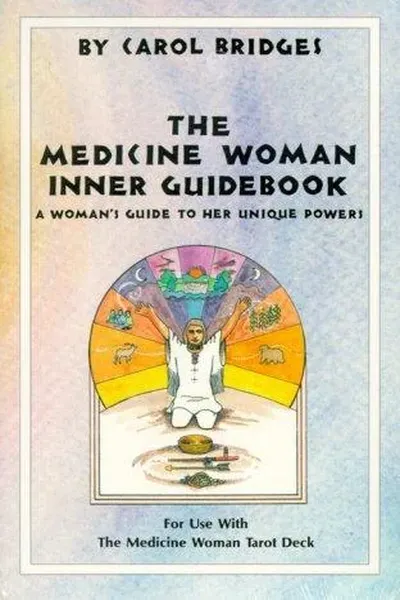
More Free Divination & Tarot Books
View all →