The medical I ching
 62
62

The medical I ching



Isolde Whitaker, Sacred Texts Editor — Miki Shima's "The Medical I Ching" is an illuminating synthesis, bridging the profound wisdom of the ancient Chinese oracle with the intricate tapestry of human physiology. Shima's unique perspective reveals the I Ching's hexagrams as dynamic blueprints for health, offering esoteric insights into energetic imbalances and pathways to restoration. This work is a testament to the holistic vision of ancient Chinese medicine, presenting a sophisticated system for self-understanding and well-being. It is an indispensable resource for practitioners of Traditional Chinese Medicine, seasoned I Ching scholars, and any serious seeker of profound self-knowledge. Its strength lies in its ability to make complex energetic concepts accessible through the universally recognized language of the I Ching.
📝 Description
62
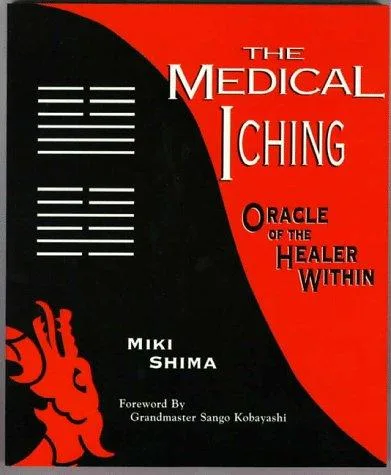
Miki Shima’s 1993 book, "The Medical I Ching," connects the ancient Chinese text to human physiology.
Miki Shima's "The Medical I Ching" interprets the sixty-four hexagrams of the I Ching as a system for understanding human health. Shima posits that the I Ching's principles offer a framework for diagnosing imbalances in the body, mind, and spirit. The book details correspondences between specific hexagrams and internal energies, suggesting a method for perceiving the connections between cosmic patterns and personal vitality.
This work is intended for readers interested in a deeper application of the I Ching beyond simple divination. It guides the reader to view the universe as an interconnected energetic field. Shima aims to bridge ancient prognostic methods with the pursuit of inner harmony and physical well-being. Understanding the book requires a willingness to examine the links between universal principles and individual health.
This book sits within the tradition of applying the I Ching to practical life sciences, extending beyond its common use as an oracle. It draws on the I Ching's philosophical underpinnings, particularly its concept of dynamic change and balance, to map onto physiological and psychological states. This approach aligns with esoteric practices that seek correspondences between macrocosmic order and microcosmic human experience, viewing the body as a reflection of universal patterns.
💡 Why Read This Book?
Uncover the hidden energetic blueprint of your health through the ancient wisdom of the I Ching. "The Medical I Ching" offers a unique esoteric perspective, revealing profound connections between cosmic forces and your physical, mental, and emotional well-being. Ideal for seekers of holistic health, practitioners of ancient arts, and anyone drawn to the mystical underpinnings of vitality. Discover a new dimension of self-awareness and healing.
⭐ Reader Reviews
Honest opinions from readers who have explored this book.
❓ Frequently Asked Questions
What is the primary focus of "The Medical I Ching"?
The book's core focus is on interpreting the I Ching hexagrams through the lens of Traditional Chinese Medicine, revealing their connections to bodily health, energetic imbalances, and the principles of holistic well-being.
Is this book suitable for beginners to the I Ching?
While it offers profound insights, a basic familiarity with the I Ching is beneficial. However, its clear explanations and unique approach can still be valuable for dedicated beginners eager to explore this specialized application.
How does this book differ from standard I Ching interpretations?
This work distinctly integrates the I Ching's symbolic language with the energetic framework of Chinese medicine, offering a medical and psychosomatic interpretation often absent in conventional readings.
Can this book be used for self-diagnosis?
While it provides profound insights into energetic patterns, it is not a substitute for professional medical advice or diagnosis. It serves as a powerful tool for self-reflection and understanding energetic states.
What is the philosophical significance of connecting the I Ching to medicine?
It highlights the ancient understanding of the universe as a unified system where cosmic harmony directly influences physical and mental health, emphasizing the body as a microcosm of the greater cosmos.
🔮 Key Themes & Symbolism
Hexagramic Energetic Correspondences
This theme studies the profound mapping of each I Ching hexagram to specific energetic patterns, physiological systems, and emotional states within the human body. Shima meticulously details how the dynamic interplay of yin and yang, as represented in the trigrams and hexagrams, directly correlates with the flow of Qi (vital energy) and the balance of the body's core elements. Understanding these correspondences allows for a deeper, more nuanced perception of health and illness, moving beyond superficial symptoms to address underlying energetic disharmonies. It reveals the I Ching as a sophisticated diagnostic tool and a guide to restoring vital equilibrium.
The Body as a Microcosm of the Cosmos
Central to "The Medical I Ching" is the ancient philosophical concept that the human body is a miniature reflection of the greater universe. Each hexagram, therefore, is not just a symbol of external events but also a potent representation of internal states and processes. This perspective encourages a holistic view, where planetary influences, seasonal shifts, and cosmic cycles are seen to resonate within our very being. By studying the I Ching through this lens, readers are invited to perceive their health and vitality as intrinsically linked to the grander energetic currents of existence, fostering a sense of interconnectedness and cosmic belonging.
Restorative Principles and Harmonious Living
Beyond diagnosis, "The Medical I Ching" offers a profound roadmap to achieving and maintaining health through the application of the I Ching's inherent wisdom. The book elucidates how understanding specific hexagrams can guide individuals toward practices, dietary choices, and lifestyle adjustments that foster energetic balance and well-being. It emphasizes proactive cultivation of harmony, viewing health not merely as the absence of disease but as a state of vibrant, dynamic equilibrium. The esoteric knowledge contained within these pages empowers readers to align their lives with natural rhythms, thereby promoting resilience, vitality, and a profound sense of inner peace.
💬 Memorable Quotes
Direct passages from the work, attributed to the author.
“Seek balance not in stillness, but in the dynamic flow of cosmic tides within.”
— This highlights the I Ching's emphasis on continuous change and adaptation, suggesting that true health lies in harmonizing with life's natural cycles rather than resisting them.
“Each hexagram whispers secrets of the unseen forces that shape our vital essence.”
— This emphasizes the book's esoteric nature, positioning the I Ching as a key to unlocking hidden knowledge about the subtle energies that govern our health and being.
“The oracle's wisdom is the physician's deepest insight.”
— This connects the practice of divination with medical understanding, proposing that the profound symbolic insights of the I Ching can offer profound diagnostic and healing perspectives.
💡 Key Ideas
Editorial paraphrase of the work's core concepts — not direct quotes.
The body is a temple, its architecture etched in the language of the hexagrams.
This quote suggests that our physical form and its inherent energies are directly mirrored and explained by the symbolic language of the I Ching, implying a divine or cosmic blueprint for health.
To know the hexagram is to know the pulse of creation within yourself.
This quote underscores the deep, personal connection between the ancient I Ching system and an individual's fundamental life force, suggesting self-discovery through its study.
🌙 Esoteric Significance
Tradition
This work deeply draws from the venerable traditions of Taoism and Traditional Chinese Medicine (TCM), two pillars of ancient Chinese esoteric thought. It integrates the philosophical underpinnings of the Tao, emphasizing natural flow and balance, with the diagnostic and therapeutic methodologies of TCM, such as the concepts of Qi, Yin and Yang, and the Five Elements. The I Ching itself is considered a foundational text within these traditions, revered for its ability to illuminate the underlying patterns and principles governing all phenomena, including human health and consciousness.
Symbolism
The core symbolism of "The Medical I Ching" lies in the sixty-four hexagrams, each a potent combination of eight trigrams. These symbols are not merely abstract diagrams but represent complex energetic archetypes and dynamic processes. Shima elucidates how these archetypes correspond to specific organ systems, emotional states, and physiological functions within the body. The lines of the hexagrams (solid for Yang, broken for Yin) and their changing nature further symbolize the constant flux and interplay of forces, offering a symbolic language for understanding health, disease, and the path to energetic harmony.
Modern Relevance
In an age increasingly focused on holistic and preventative healthcare, "The Medical I Ching" offers profound and timely relevance. It provides a sophisticated framework for understanding the psychosomatic nature of illness, highlighting how emotional and mental states can manifest as physical ailments. The book empowers individuals with ancient tools for self-awareness and self-care, encouraging a deeper connection to their own bodies and the natural world. Its insights are important for modern practitioners of complementary and alternative medicine, as well as for anyone seeking a more integrated and conscious approach to personal well-being and vitality.
👥 Who Should Read This Book
This book is a treasure for dedicated seekers of holistic health and esoteric wisdom. Beginners to the I Ching may find it challenging without foundational knowledge, but those with a serious interest in Chinese metaphysics and medicine will be deeply rewarded. Scholars of ancient philosophies and divination systems will find a unique and insightful perspective. Practitioners of Traditional Chinese Medicine, acupuncture, and herbalism will discover a powerful complementary text that enriches their understanding of energetic diagnostics and treatment principles. Ultimately, anyone yearning to explore the profound interconnectedness of the cosmos and their own well-being will find profound guidance within these pages.
📜 Historical Context
Written during a period of renewed global interest in Eastern philosophies and holistic healing practices, Miki Shima's "The Medical I Ching" emerged as a significant contribution to the esoteric literature of the late 20th century. This era saw a growing dissatisfaction with purely materialistic approaches to health and a burgeoning curiosity about ancient systems that viewed the body, mind, and spirit as interconnected. The book tapped into a rich vein of tradition, building upon centuries of I Ching scholarship and the established principles of Traditional Chinese Medicine. Its emergence coincided with the popularization of practices like acupuncture and herbalism in the West, providing a philosophical and symbolic framework that resonated deeply with practitioners and seekers alike, positioning it as a bridge between ancient wisdom and modern wellness.
📔 Journal Prompts
Reflect on a recent physical or emotional imbalance you've experienced. Which hexagram(s) might represent this state, and what insights do they offer for restoration?
Consider the concept of the body as a microcosm. How do you see universal principles reflected in your personal health and daily life?
Explore the dynamic interplay of Yin and Yang in your own energy levels and moods. How can you cultivate greater balance according to the principles discussed?
If you were to consult the I Ching for a health-related question, what would it be, and what kind of symbolic answer would you hope to receive?
How can the wisdom of the I Ching's changing lines guide you in navigating a current life transition or challenge, both physically and energetically?
🗂️ Glossary
Qi (Chi)
The vital life force or energy that flows through all living beings and the universe. In TCM, imbalances in Qi are considered the root of illness.
Yin and Yang
The fundamental dualistic principle representing complementary opposites, such as dark/light, passive/active, cold/hot. Their dynamic balance is essential for health and harmony.
Hexagram
A symbol composed of six stacked lines, each of which is either solid (Yang) or broken (Yin). There are 64 unique hexagrams in the I Ching, representing fundamental archetypes and situations.
Trigram
A symbol composed of three stacked lines, representing fundamental elements or forces such as Heaven, Earth, Thunder, Water, Mountain, Wind, Fire, and Lake. Two trigrams combine to form a hexagram.
Five Elements (Wu Xing)
A classical Chinese system of correspondences that describes interactions and relationships between phenomena, including Wood, Fire, Earth, Metal, and Water. These elements are often related to organs and emotions in TCM.
This book appears in 4 collections
🔮 Readers Also Liked
Browse all →








From the “I Ching” Collection
View all →







More Free Divination & Tarot Books
View all →