The Major Arcana

 78
78

The Major Arcana
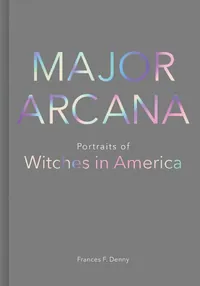
Timothy Burger’s *The Major Arcana* presents a refreshingly grounded take on a well-trodden subject. Instead of relying on mystical pronouncements, Burger anchors his interpretations in relatable scenarios and psychological underpinnings, particularly evident in his discussion of The Tower as a necessary, albeit disruptive, dismantling of false structures. The strength lies in its accessibility; the prose is clear, and the exercises are practical. However, the book occasionally leans too heavily on modern psychological parallels, sometimes at the expense of the card's deeper, perhaps less easily quantifiable, esoteric currents. A reader seeking purely historical or occult lineage might find this emphasis on personal narrative a limitation. Burger effectively bridges the gap between esoteric symbolism and everyday experience, offering a useful entry point for newcomers. The work ultimately serves as a competent, if not revolutionary, guide to the archetypal forces within the Major Arcana.
📝 Description
78
Timothy Burger’s 2024 book, The Major Arcana, examines the 22 tarot cards as archetypes for personal development.
This volume looks at the 22 Major Arcana cards not just as tools for divination, but as fundamental forces in personal growth. Timothy Burger connects traditional tarot symbolism with modern psychological and philosophical ideas. He gives each card individual attention, explaining its imagery, its numerological connections, and its potential place in a person's life story. The book encourages readers to actively use the cards, suggesting exercises to help them absorb the lessons from each Major Arcana figure. Burger's core idea is that the Major Arcana represents a path through common human experiences. From The Fool's beginning to The World's conclusion, the cards are shown as steps in a process of understanding and integrating the self. The text seeks to make tarot's complex symbols clear and accessible to newcomers, while also giving experienced practitioners new ways to think about the cards.
Published in 2024, The Major Arcana focuses on practical applications and relatable stories. It acknowledges tarot's history, which began in 15th-century Italy and later entered various esoteric traditions. However, the book avoids outdated language and overly academic writing. Its structure follows the cards in their usual order, much like the Fool's journey, creating a consistent narrative flow. Burger also includes practical elements such as guided meditations, journaling prompts, and symbolic analysis exercises for each card, moving beyond just theory.
This book engages with the Western esoteric tradition, specifically the study of the tarot. Tarot decks, particularly those with 22 Major Arcana cards, have been used for divination and self-reflection since at least the late 18th century within occult circles. Works in this vein often connect the card imagery to Kabbalah, astrology, and alchemical symbolism, viewing the sequence of the Major Arcana as a spiritual or psychological path. Burger's contribution updates this tradition by integrating contemporary psychological theories and philosophical concepts, aiming to make these esoteric symbols relevant for modern personal development.
💡 Why Read This Book?
• Gain a practical framework for understanding The Fool's journey, directly applicable to your own life transitions, by engaging with Burger's specific chapter exercises for this card. • Decode the symbolic language of The High Priestess, learning to identify its visual cues and their meaning within the context of intuition and hidden knowledge as detailed in the book. • Apply the concept of The Hierophant to understanding established systems and traditions in your life, by following the book's guidance on its numerological and archetypal significance.
⭐ Reader Reviews
Honest opinions from readers who have explored this book.
❓ Frequently Asked Questions
When was Timothy Burger's 'The Major Arcana' first published?
The Major Arcana by Timothy Burger was first published on October 26, 2024, positioning it as a contemporary addition to esoteric literature.
What is the primary focus of 'The Major Arcana' by Timothy Burger?
The book focuses on the 22 Major Arcana cards of the tarot, exploring their meanings for personal transformation through a blend of traditional interpretations and modern perspectives.
Does this book require prior tarot knowledge?
No, the book is designed to be accessible to beginners while offering fresh insights for experienced tarot readers, demystifying complex symbolism.
What kind of exercises are included in 'The Major Arcana'?
The book offers practical exercises, symbol interpretation guidance, and journaling prompts tailored to each Major Arcana card to encourage active engagement and self-reflection.
How does Burger's approach differ from other tarot books?
Burger integrates traditional tarot interpretations with modern psychological and philosophical viewpoints, using relatable personal stories and focusing on practical application for personal growth.
What is the historical context of the Major Arcana cards discussed in the book?
The book acknowledges the historical roots of tarot, often traced to 15th-century Italy, and its evolution within esoteric traditions, while presenting a contemporary perspective.
🔮 Key Themes & Symbolism
Archetypal Journey
The book frames the 22 Major Arcana cards as stages of a universal human journey, mirroring the Fool's progression from innocence to wisdom. Each card represents a distinct archetype or life lesson, from the initial impulse of The Magician to the completion represented by The World. Burger emphasizes how understanding these archetypes can illuminate an individual's own life path, offering a structured approach to navigating challenges and opportunities. This theme positions tarot as a map of the psyche and a guide for spiritual evolution.
Symbolic Interpretation
Central to the work is the detailed analysis of the visual and symbolic language inherent in each Major Arcana card. Burger unpacks common motifs like the keys held by The Hierophant or the scales carried by Justice, explaining their traditional meanings and contemporary relevance. The text encourages readers to look beyond surface-level imagery to grasp the deeper esoteric significance, fostering a more profound connection with the cards' messages. This focus on symbolism is crucial for unlocking the tarot's potential as a tool for introspection.
Personal Transformation
Burger's primary objective is to present the Major Arcana as catalysts for personal growth and transformation. The book moves beyond mere prediction, focusing instead on how the energies and lessons of each card can be integrated into daily life. Through practical exercises and relatable examples, readers are encouraged to confront their own shadows, embrace change, and cultivate self-awareness. The Major Arcana are thus depicted as potent forces for psychological and spiritual evolution, offering a pathway to greater self-understanding.
Modern Esoteric Synthesis
This work synthesizes historical tarot traditions with contemporary psychological and philosophical thought. Published in 2024, it reflects a modern approach to esoteric studies, making ancient wisdom accessible without diluting its core meaning. Burger bridges the gap between occult studies and secular self-help, demonstrating how archetypal symbolism can be relevant to modern life. This synthesis aims to provide a holistic understanding of the Major Arcana, appealing to a broad audience interested in both spiritual depth and practical application.
💬 Memorable Quotes
Direct passages from the work, attributed to the author.
“The Fool's leap is not recklessness, but faith in the unseen path.”
— This interpretation highlights the optimistic and trust-based nature of the Fool archetype, suggesting that bold steps forward are guided by an inner knowing rather than blind chance.
“The Emperor's structure provides order, but beware its rigidity.”
— This points to the dual nature of the Emperor card, emphasizing its role in establishing stability and authority while cautioning against the potential for excessive control or inflexibility.
“The Devil represents the chains we forge ourselves, often through desire.”
— This highlights the self-imposed nature of limitations and attachments symbolized by The Devil, framing it as an internal struggle with materialism and unhealthy compulsions.
“The World signifies completion, but also the readiness for a new cycle.”
— This suggests that the culmination represented by The World card is not an endpoint but a transition, indicating a state of wholeness that prepares one for future beginnings.
💡 Key Ideas
Editorial paraphrase of the work's core concepts — not direct quotes.
Temperance calls for balance, a conscious merging of opposing forces.
This paraphrase captures the essence of the Temperance card as a call for harmonious integration, illustrating its function in blending disparate elements into a unified whole.
🌙 Esoteric Significance
Tradition
This work engages with the Western Esoteric tradition, particularly its modern psychological and archetypal interpretations of tarot, influenced by Carl Jung's theories of the collective unconscious. While acknowledging the historical roots of tarot in cartomancy and Hermeticism, Burger’s approach emphasizes the Major Arcana as universal psychological stages rather than solely as tools for divination or ceremonial magic. It fits within a contemporary stream of esoteric literature that seeks to integrate ancient symbolism with modern self-understanding.
Symbolism
Key symbols explored include The Fool, representing the innocent beginning of a spiritual journey and the potential for unbridled experience; The High Priestess, embodying intuition, the subconscious, and hidden knowledge, often depicted with a veiled presence; and The Tower, symbolizing sudden upheaval, the destruction of false structures, and the revelation of truth. Burger interprets these symbols not just as static images but as dynamic forces within the human psyche.
Modern Relevance
Burger’s integration of psychological concepts and practical exercises aligns with contemporary trends in mindfulness, personal development, and self-help. Modern practitioners of Jungian psychology, archetypal astrology, and even secular spiritual coaching often draw upon the symbolic language of the Major Arcana as presented in works like this. The emphasis on internal transformation and self-awareness makes the book relevant to individuals seeking meaning and guidance outside traditional religious frameworks.
👥 Who Should Read This Book
• Aspiring tarot practitioners seeking a foundational understanding of the Major Arcana that balances historical context with practical application. • Individuals interested in Jungian psychology and archetypal symbolism, looking to explore universal human experiences through the lens of tarot. • Readers of esoteric or metaphysical literature who appreciate contemporary interpretations that bridge ancient wisdom with modern psychological insights.
📜 Historical Context
The Major Arcana, as a distinct set of cards within the tarot deck, gained prominence in esoteric circles during the late 18th and 19th centuries, notably through figures like Antoine Court de Gébelin who linked them to ancient Egyptian mysteries. By the early 20th century, movements like the Hermetic Order of the Golden Dawn had codified elaborate symbolic interpretations, influencing countless subsequent works. Timothy Burger’s 2024 publication, *The Major Arcana*, enters this rich lineage. While acknowledging the historical development from 15th-century Italian playing cards, Burger’s work diverges from the more rigid, historical interpretations favored by some occultists. It deliberately avoids the dense, symbolic language prevalent in works by A.E. Waite, for instance, choosing instead a more psychologically-oriented and accessible approach. This contemporary perspective can be seen as a response to the burgeoning interest in tarot as a tool for personal development, moving away from purely divinatory or strictly ceremonial magic applications that characterized earlier esoteric discourse.
📔 Journal Prompts
The Fool's initial step: what potential awaits your conscious embrace?
Reflect on the symbolism of The Hierophant's teaching, and its role in your established beliefs.
Consider the disruptive energy of The Tower; how can it serve your growth?
The Hermit's lantern illuminates a solitary path; what inner wisdom are you seeking?
Analyze the balance represented by Temperance in your daily interactions.
🗂️ Glossary
Archetype
Universal, archaic patterns and images that derive from the collective unconscious and are the psychic counterpart of instinct. In tarot, the Major Arcana cards represent key archetypes.
Esoteric
Intended for or likely to be understood by only a small number of people with a specialized knowledge or interest; dealing with hidden meanings or knowledge.
Major Arcana
The set of 22 trump cards in a tarot deck, traditionally depicting allegorical figures and events representing significant spiritual lessons and life stages.
Symbolism
The use of symbols to represent ideas or qualities. In tarot, the imagery and figures on the cards are rich with symbolic meaning.
Cartomancy
The practice of divination using a deck of cards, typically playing cards or tarot cards.
Collective Unconscious
A term coined by Carl Jung, referring to a shared reservoir of experiences and memories common to all humanity, from which archetypes emerge.
Numerology
The study of the mystical relationship between numbers and events or the inherent qualities of objects and people. Each Major Arcana card is associated with a number.