The Coming of the Fairies
 81
81

The Coming of the Fairies
Arthur Conan Doyle's "The Coming of the Fairies" is less a straightforward narrative and more a passionate apologia. Doyle, the creator of the hyper-rational Sherlock Holmes, dedicates significant energy here to defending the authenticity of the Cottingley Fairies photographs, taken by two young girls, Elsie Wright and Frances Griffiths, in 1917. His conviction is palpable, particularly when he meticulously details his own interviews and observations. The strength of the book lies in this earnest, almost childlike faith that Doyle brings to the subject, a stark contrast to his most famous character. However, the limitation is precisely this unwavering belief, which often overshadows critical examination. When Doyle dismisses potential trickery or alternative explanations with such certainty, the reader is left to question whether his desire to believe clouds his judgment. He presents the girls' photographic plates and his own reasoning as irrefutable proof, a stance that feels less like objective reporting and more like a fervent sermon. Despite its flaws, the book offers a fascinating glimpse into the mind of a man grappling with phenomena that defied the logic he so expertly wielded elsewhere. It's a curious document, revealing more about the psychology of belief than about fairies themselves.
📝 Description
81
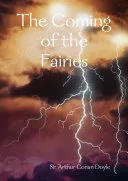
In 1922, Arthur Conan Doyle published "The Coming of the Fairies" to defend his belief in the Cottingley Fairies photographs.
Arthur Conan Doyle's "The Coming of the Fairies" details his personal investigation into the famous Cottingley Fairies photographs, published in 1922. The book outlines Doyle's conviction that the images, taken by Elsie Wright and Frances Griffiths, were genuine. He sought to explain his reasoning for supporting the two young girls and defend his belief against widespread skepticism. This work is not simply an account of the incident but a defense of his stance on phenomena that challenge conventional understanding.
This book appeals to readers interested in the intersection of rational inquiry and the unexplained, particularly within the history of spiritualism and early 20th-century belief systems. Those curious about Arthur Conan Doyle outside his Sherlock Holmes work, or specifically about the Cottingley Fairies incident, will find substantial material. It is for anyone who questions the limits of empirical evidence when faced with events that defy standard interpretation.
Published in 1922, "The Coming of the Fairies" sits within the broader context of early 20th-century spiritualism and psychical research. This era saw heightened interest in the supernatural, partly as a response to the trauma of World War I. Prominent figures like Doyle lent their influence to movements that sought evidence for an afterlife or unseen realities, often contrasting with the rise of scientific materialism. The book reflects a time when belief in fairies and spiritual phenomena held significant cultural sway, and when photographic evidence was a focal point for debates about the unseen.
💡 Why Read This Book?
• Gain insight into Arthur Conan Doyle's personal conviction regarding the Cottingley Fairies, moving beyond his fictional detective to understand his engagement with spiritualism. • Examine Doyle's specific methods of investigation and argumentation in the 1917 Cottingley Fairies case, understanding how he presented photographic evidence. • Appreciate the historical atmosphere of the early 20th century, a period marked by widespread interest in spiritualism and the unseen following World War I.
⭐ Reader Reviews
Honest opinions from readers who have explored this book.
❓ Frequently Asked Questions
What exactly are the Cottingley Fairies and why did Arthur Conan Doyle investigate them?
The Cottingley Fairies are a series of photographs taken by two young cousins, Elsie Wright and Frances Griffiths, in Cottingley, England, starting in 1917. Arthur Conan Doyle, a believer in spiritualism, investigated them because he was convinced the photographs provided genuine evidence of fairies, lending his support to the girls' claims.
When was 'The Coming of the Fairies' by Arthur Conan Doyle first published?
Arthur Conan Doyle's book, 'The Coming of the Fairies,' was first published in 1921, several years after the initial controversy surrounding the Cottingley Fairies photographs.
Did Arthur Conan Doyle believe the Cottingley Fairies photos were real?
Yes, Arthur Conan Doyle strongly believed the Cottingley Fairies photographs were authentic. He dedicated considerable effort to investigating the case and defending the authenticity of the images in his book.
What was the outcome of the Cottingley Fairies investigation?
Decades later, in the 1980s, one of the cousins, Elsie Wright, admitted that the fairies in the photographs were cutouts from a children's book, supported by hatbox-decal wings. Doyle, however, died long before this confession.
Besides the Cottingley Fairies, what else did Arthur Conan Doyle write about?
Arthur Conan Doyle wrote extensively on spiritualism and the paranormal. He authored several other books and articles defending spiritualist phenomena, including mediums, hauntings, and afterlife communication, distinct from his famous Sherlock Holmes detective stories.
How did the public and scientific community react to Doyle's book on the fairies?
The public reaction was divided, with many intrigued by Doyle's advocacy and others skeptical, given his firm belief. The scientific community largely remained unconvinced, often viewing it as a delusion or a hoax, especially as photographic techniques improved and scrutiny intensified over time.
🔮 Key Themes & Symbolism
Evidence and Belief
The core of "The Coming of the Fairies" revolves around Arthur Conan Doyle's struggle to reconcile empirical evidence with phenomena that defy conventional explanation. He presents the Cottingley Fairies photographs not just as images, but as crucial pieces of evidence supporting the existence of unseen realms. Doyle grapples with the nature of proof, questioning whether skepticism itself can be a barrier to truth. His work explores how belief systems are formed and defended, particularly when challenged by extraordinary claims. He champions an open-minded approach, suggesting that dismissal without thorough investigation is a failure of intellectual courage, a concept deeply relevant to modern discussions on pseudoscience and perception.
Spiritualism and the Unseen
This book is a significant artifact of the spiritualist movement, which gained considerable traction in the late 19th and early 20th centuries, particularly after the devastations of World War I. Arthur Conan Doyle, a prominent advocate, uses the Cottingley Fairies case to bolster the movement's credibility. He argues that the existence of fairies, as suggested by the photographs, is part of a larger, interconnected spiritual reality. The work positions the fairies not merely as folklore but as tangible manifestations of nature spirits or elemental beings, aligning with theosophical and other esoteric traditions that sought to explain the unseen forces governing the universe.
Photography as Proof
In "The Coming of the Fairies," photography is presented as a revolutionary tool for documenting the supernatural. Doyle meticulously analyzes the Cottingley photographs, discussing the technical aspects and the alleged circumstances of their creation to argue for their authenticity. This reflects a broader societal fascination with photography's ability to capture truth, even when that truth was otherworldly. The book highlights a key moment where new technology was being employed to investigate and validate claims of paranormal activity, raising questions about the reliability of photographic evidence and the interpretation of visual data in the pursuit of hidden realities.
Childhood Wonder and Rationality
A peculiar tension in the book is the juxtaposition of childlike innocence and sophisticated rationalization. The Cottingley Fairies were allegedly captured by two young girls, Elsie Wright and Frances Griffiths, whose supposed ability to interact with fairies Doyle champions. He contrasts their seemingly pure perception with the often jaded or closed-minded skepticism of adults. Doyle uses this dynamic to argue that children might possess a more direct connection to the natural and spiritual world, a perspective that challenges the purely rationalistic worldview often associated with adult scientific inquiry. This theme explores the potential loss of wonder and intuition as individuals mature.
💬 Memorable Quotes
Direct passages from the work, attributed to the author.
“My own conviction is that they are real.”
— This direct statement captures Doyle's unwavering belief in the authenticity of the Cottingley Fairies photographs. It serves as the foundational assertion upon which his entire investigation and defense of the phenomenon rests, demonstrating his personal commitment.
“The evidence is so strong that it is impossible to doubt.”
— Here, Doyle frames the Cottingley Fairies photographs and related testimonies as incontrovertible proof. This interpretation underscores his confidence in the evidentiary value of the images and the accounts surrounding them, dismissing potential doubts.
“It is a remarkable thing that the evidence should be so clear, and yet so many people refuse to accept it.”
— This sentiment expresses Doyle's frustration with skepticism. He perceives the evidence as overwhelmingly positive and struggles to comprehend why rational individuals would reject it, suggesting that prejudice or a lack of open-mindedness is the root cause of disbelief.
“The fairies are real, and they are with us.”
— A powerful, declarative statement that moves beyond mere belief to a proclamation of existence. This reflects Doyle's deeply held conviction and his desire to convince others of the tangible presence of these ethereal beings in our world.
💡 Key Ideas
Editorial paraphrase of the work's core concepts — not direct quotes.
I have taken the photographs as genuine, and I have no hesitation in saying that I believe in them.
This quote highlights Doyle's active role in validating the images. It's not just a passive acceptance but an active declaration of belief, emphasizing his satisfaction with the evidence presented to him and his willingness to publicly endorse it.
🌙 Esoteric Significance
Tradition
This work sits at the intersection of late Victorian/Edwardian spiritualism and broader folkloric traditions. While not strictly adhering to a formal lineage like Theosophy or Hermeticism, Doyle's belief in tangible elemental beings and nature spirits aligns with certain esoteric concepts of hidden worlds and vitalistic philosophies. It reflects a desire to find empirical validation for what might otherwise be dismissed as superstition, attempting to bridge the gap between the observable material world and the unseen spiritual or elemental realms.
Symbolism
The fairies themselves, as depicted through the Cottingley photographs and Doyle's interpretation, symbolize the persistent presence of the 'unseen' or 'otherworldly' within the mundane. They represent nature spirits, elemental forces, or even remnants of a more magical past intruding upon a technologically advancing, increasingly rationalistic world. The photographs, as a medium, symbolize the potential for modern technology to capture that which is beyond ordinary perception, acting as a conduit between the material and the ethereal.
Modern Relevance
Doyle's earnest defense of the Cottingley Fairies continues to fascinate, particularly in contemporary discussions surrounding belief, evidence, and the nature of reality. Modern pagan and nature-based spiritual paths often draw inspiration from folklore and the idea of elemental beings, finding resonance in Doyle's conviction, even if they acknowledge the Cottingley hoax. His work serves as a historical case study for critical thinking, the psychology of belief, and the enduring human fascination with the possibility of magic just beyond our sight.
👥 Who Should Read This Book
• Students of spiritualism and paranormal investigations seeking primary source material from a key historical figure. • Readers interested in the Cottingley Fairies hoax and its cultural impact, examining Arthur Conan Doyle's role. • Those curious about the intersection of literature, belief, and evidence in the early 20th century.
📜 Historical Context
Arthur Conan Doyle's "The Coming of the Fairies," published in 1921, emerged during a period of intense spiritualist fervor in Britain. The aftermath of World War I, which saw immense loss of life, fueled a widespread desire for contact with deceased loved ones and a search for solace in the supernatural. Spiritualism, with its séances and claims of spirit communication, offered a compelling alternative to traditional religious doctrines and emerging scientific materialism. Doyle, already a global celebrity due to Sherlock Holmes, became a prominent advocate for spiritualism, lending his considerable influence to its cause. His investigation into the Cottingley Fairies photographs, taken by Elsie Wright and Frances Griffiths in 1917, was a highly publicized effort to provide concrete evidence for the existence of fairies. This work placed him in direct opposition to more rationalist thinkers and scientists of the era, who often dismissed such phenomena as delusion or fraud. Figures like magician and skeptic Harry Houdini, while initially a spiritualist sympathizer, became a vocal opponent of fraudulent mediums, representing a significant counter-current to Doyle's beliefs.
📔 Journal Prompts
Arthur Conan Doyle's conviction regarding the Cottingley Fairies photographs.
The nature of evidence presented for the existence of fairies.
The contrast between Sherlock Holmes' rationality and Doyle's spiritualism.
Childhood perception versus adult skepticism in the fairy investigation.
The role of photography in documenting or creating belief in the supernatural.
🗂️ Glossary
Spiritualism
A religious movement characterized by belief in communication with the spirits of the dead through mediums, gaining significant popularity in the 19th and early 20th centuries.
Cottingley Fairies
A series of photographs taken by two young cousins, Elsie Wright and Frances Griffiths, in Cottingley, England, beginning in 1917, which they claimed depicted real fairies.
Elemental Beings
In esoteric philosophy, spirits or beings associated with the four classical elements: earth, air, fire, and water. Fairies were often categorized as such.
Psychical Research
The study of paranormal and psychic phenomena, such as telepathy, clairvoyance, and mediumship, often conducted by societies dedicated to investigating such claims.
Mediumship
The practice or ability of a person (a medium) to act as a conduit between the living and the spirits of the dead.
Rationalism
A belief that reason is the chief source and test of knowledge, often leading to skepticism towards claims not supported by empirical evidence or logical deduction.
Folklore
The traditional beliefs, customs, and stories of a community, passed through the generations by word of mouth, often including tales of supernatural beings.